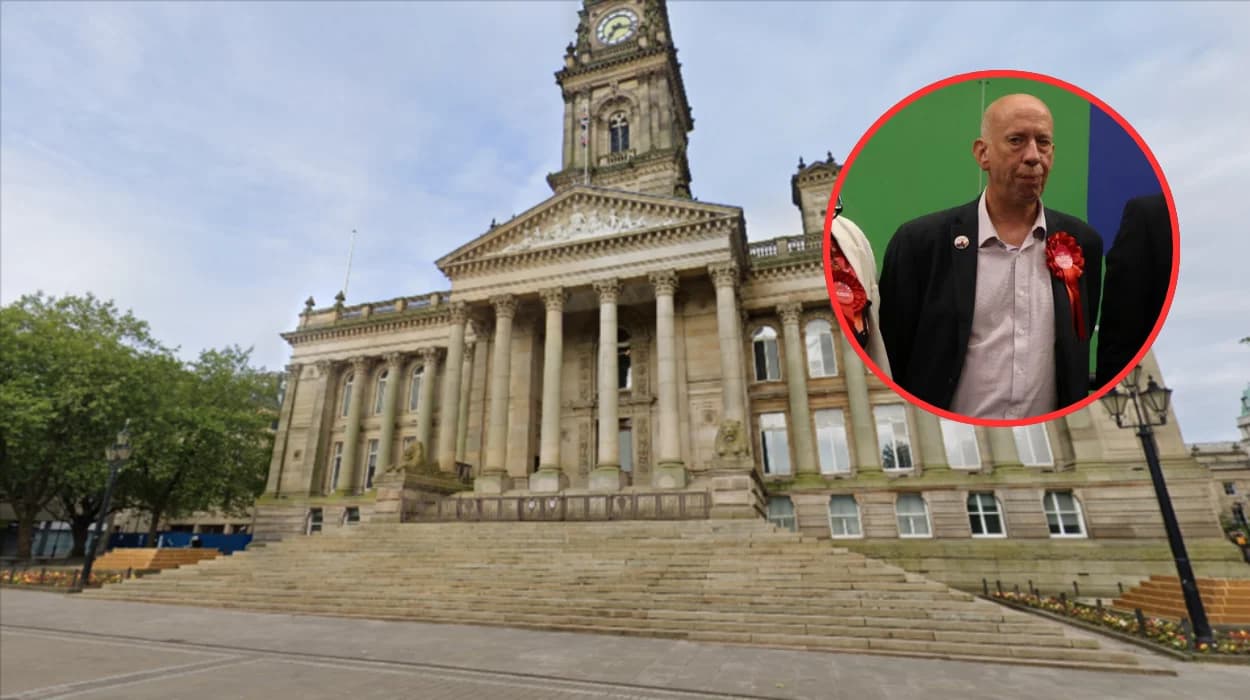
Key Points:
- Crucial Leadership Vote: Bolton Council will hold a pivotal annual general meeting at the Town Hall this week to formally appoint its new leader following the recent local elections.
- No Overall Control: The recent local elections concluded with the local authority remaining under no overall control, meaning no single political party holds an absolute majority of seats.
- Labour Seeking to Retain Power: The Labour Party, led by Councillor Nick Peel, remains the largest single political group on the council and will seek support from smaller, independent factions to form a minority administration.
- Conservative Opposition: The Conservative group, previously led by Councillor Martyn Cox, will seek to challenge or scrutinize the transition of power, having heavily contested leadership positions in preceding cycles.
- Role of Independents: Smaller localist parties, such as Horwich and Blackrod First Independents and Farnworth and Kearsley First, hold the balance of power and will dictate the outcome of the leadership vote via cross-party arrangements or abstentions.
- Annual Mayor Selection: Alongside the council leader selection, the ceremonial role of the Mayor of Bolton for the upcoming municipal year will be finalized during the same town hall proceedings.
Bolton (Bolton Today) May 18, 2026 - Bolton Council is poised to choose its new political leader during a critical annual general meeting at the local town hall this week, following highly contested local government elections that left the borough’s political landscape delicately poised. The highly anticipated assembly will see all 60 elected members gather in the civic chamber to cast their votes and determine who will pilot the minority-controlled local authority through the upcoming municipal year. With no single political party commanding an absolute majority, cross-party negotiations are reaching a fever pitch behind closed doors as faction leaders attempt to secure the threshold required to command the floor.
What Is the Current Political Makeup of Bolton Council?
The political equilibrium within Bolton Council remains highly fragmented, ensuring that any prospective leader must build fragile bridges across a divided floor. Following successive rounds of local elections, the borough has structurally solidified its status as an authority under "no overall control."
According to official data published by the electoral services team at Bolton Council, the authority is divided into 20 distinct electoral wards represented by 60 individual councillors. To achieve an outright working majority, a single political party would need to command at least 31 seats. Currently, the Labour Party stands as the largest single entity with 26 seats, closely trailed by the Conservative Party, whilst a robust contingent of third-party organizations and independent localist blocks fill out the remaining chamber benches.
The independent forces within the hall include the Liberal Democrats, the Green Party, Reform UK, and highly active municipalist parties such as Horwich and Blackrod First Independents, alongside Farnworth and Kearsley First. This diversification means that the larger mainstream blocks are completely dependent on the voting choices or strategic abstentions of smaller parties to pass budgets, enact policy frameworks, and establish executive leadership.
How Will the New Council Leader Be Chosen?
The constitutional mechanism for selecting the executive head of the local authority requires a formal democratic nomination and subsequent vote inside the Town Hall chamber. Under the established rules of English local government governance, the full council assembly serves as the ultimate decision-making body for appointing political leadership.
As outlined in the statutory guidelines compiled by the corporate governance secretariat of Bolton Council, any elected member can be proposed for the leadership role during the annual meeting. Once nominations are registered, the 60 councillors cast their votes. If an individual secures a clear majority of votes from the members present, they are duly appointed as Leader of the Council for a term determined by the chamber.
Upon successful appointment, the new leader is granted sole constitutional authority to determine the exact size of the executive cabinet, allocate specific portfolio responsibilities to individual cabinet members, and select a deputy leader to act in their absence. Because the leading bloc operates short of the 31-seat majority threshold, the vote frequently transforms into a tactical numbers game, where the abstention of a minor party can be just as influential as an outright vote of endorsement.
Who Are the Main Contenders and Factions in the Leadership Race?
The upcoming vote centers on a battle of strategic endurance between the mainstream political parties and the localized independent coalitions that hold the balance of power. Councillor Nick Peel, the leader of the Bolton Labour Group, enters the chamber as the incumbent frontrunner, having previously successfully unseated the minority Conservative administration through cross-party consensus.
As reported by political correspondents at Place North West, Councillor Nick Peel has consistently campaigned on a platform centred around the long-term structural regeneration of Bolton town centre, alongside the implementation of localised green initiatives to combat climate change. However, to sustain his minority administration, Peel must navigate deep policy divisions with opposing groups who view the town's current economic trajectory through a critical lens.
On the opposing benches, the Conservative group, which steered the council's minority administration for several years under the guidance of Councillor Martyn Cox, remains a significant force. The Tories are eager to leverage their voting block to challenge Labour’s executive policies. Meanwhile, the emergence of expanded representation from groups like Reform UK and the Green Party across wards like Astley Bridge, Breightmet, and Halliwell adds further unpredictability to the traditional red-versus-blue chamber dynamics.
Explore More Bolton Council News
Cllr Mohammed Iqbal Sworn In as Bolton Mayor, Bolton 2026
Cllr David Wilkinson Loses Westhoughton Seat in Bolton Council 2026
What Part Do Independent Groups Play in the Town Hall Vote?
In a divided chamber, localist independent groups function as the ultimate kingmakers. Factions representing distinct geographic townships within the borough—such as Horwich, Blackrod, Farnworth, and Kearsley—frequently discard traditional national partisan alignments to secure targeted concessions for their respective neighbourhoods.
In previous leadership contests, the path to power was explicitly paved by these localized agreements. As recorded in the historical legislative archives of the 2023 Bolton Metropolitan Borough Council election, the Labour Party was successfully able to displace the Conservative minority administration and install Councillor Nick Peel as leader solely because they garnered external support. During that vital chamber vote, councillors aligned with the One Kearsley faction voted actively in approval of the Labour nomination, whilst the elected representatives for the Horwich and Blackrod First Independents chose to strategically abstain, thereby lowering the mathematical threshold required for victory.
This year, the independent groups have signalled that their votes cannot be taken for granted. Leaders of the localist factions have repeatedly emphasized that their primary allegiance remains to their specific ward infrastructure, school budgets, and green-belt preservation rather than supporting the broader political ambitions of the major Westminster parties.
What Are the Immediate Challenges Facing the Incoming Leader?
The individual who secures the chain of political office this week will inherit a complex ledger of socio-economic pressures, infrastructure demands, and structural deficits. Chief among these concerns is the ongoing revitalization of Bolton's central business district, which has faced significant public scrutiny over retail decline and infrastructural stagnation.
In public commentary documented by regional municipal development forums, community stakeholders have expressed growing impatience regarding the visible decay of the town centreter, stating that while there has been encouraging news regarding potential future property developments, tangible change remains slow to materialize. The incoming leader will be tasked with transforming these commercial blueprints into physical reality while simultaneously managing strict fiscal limitations.
Beyond town centre regeneration, the new leader must navigate the contentious boundaries of the Local Government Transparency Code, manage shifting school and council budgets, and oversee complex arm's-length delivery models like Bolton Cares and the Integrated Care Partnership. Striking a balance between funding essential adult social care services and maintaining basic public amenities will require high-level political diplomacy, particularly when every major policy vote requires consensus from rival parties.
How Will the Mayoralty Be Decided at the AGM?
While the selection of the council leader dictates the political and economic policy of the borough, the annual general meeting also facilitates the formal installation of the Mayor of Bolton, a historic and prestigious civic role. For the current municipal period, the council has advanced Councillor Mohammed Iqbal to serve as the town's First Citizen.
According to biographical records maintained by the civic secretariat at Bolton Council, Councillor Mohammed Iqbal represents a historic appointment for the borough, having built a long career within the regional transport and haulage industries after moving to Bolton from Kashmir at the age of 12. Having served as a dedicated ward councillor for 18 years, including tenures as Chair of Scrutiny and Planning Committees, Iqbal will assume the non-political role alongside his wife and chosen Mayoress, Sayda.
In an official pre-installation statement released via the municipal communications department, Councillor Mohammed Iqbal stated:
"I feel deeply honoured to have been chosen to represent the people of Bolton. It is the greatest honour of my life. Bolton is a town full of diversity, strength, and opportunity, and I look forward to meeting people from all walks of life and representing our town with pride throughout the coming year."
During his civic term, Iqbal will champion four local charitable organisations: Bolton Hospice, Emmaus Bolton, the Endeavour Project, and Raise the Youth.
What Have Political Leaders Said Ahead of the Pivotal Vote?
As the hours tick down toward the town hall assembly, statements from key political figures highlight the tense atmosphere underlying the upcoming democratic process. Faction leaders are balancing public confidence with the reality of an unstable chamber floor.
As reported by senior municipal reporters for The Bolton News, the transition of executive control in no-overall-control authorities is rarely smooth, with outgoing leaders frequently highlighting the volatility of minority governance. Commenting on the nature of leading a fragmented council prior to the current transition, the former Conservative Leader, Councillor Martyn Cox, stated that navigating a minority administration requires constant negotiation, noting that holding power under such conditions means every single policy framework is subjected to intense cross-party scrutiny.
Responding to the ongoing governance challenges and outlining his vision for the borough's future stability, the incumbent Labour Leader, Councillor Nick Peel, stated that his group remains entirely committed to delivering an ambitious programme of town centre regeneration and structural reform, affirming that despite the lack of an outright majority, the council must prioritize progressive leadership over political gridlock to ensure Bolton receives the investment it urgently requires.