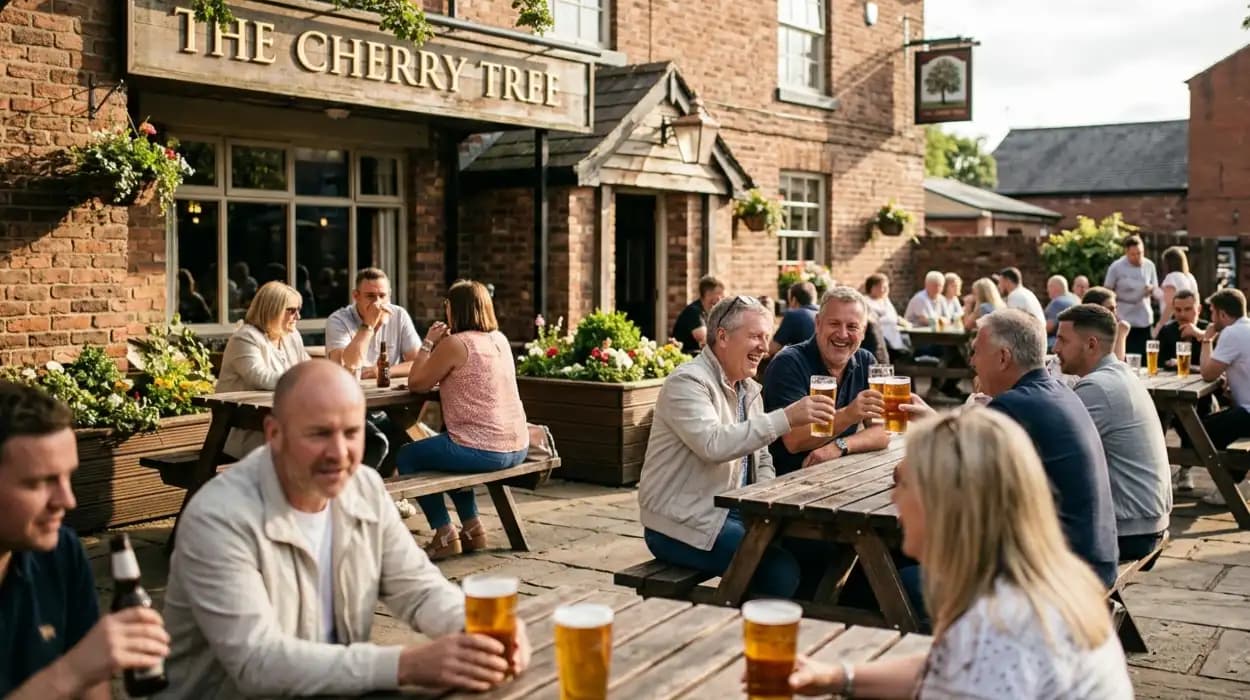
Outdoor hospitality venues occupy a critical position in the social and economic fabric of Greater Manchester. A beer garden is an open-air space attached to a licensed public house or bar where patrons consume alcoholic and non-alcoholic beverages. In the Metropolitan Borough of Bolton, these outdoor spaces serve as essential communal gathering points during periods of elevated temperatures and fair weather. Data from the Office for National Statistics indicates that the hospitality sector contributes significantly to the local economy, and seasonal outdoor trading provides a substantial percentage of annual public house revenue. Bolton Today has compiled this comprehensive guide to examine the structural components, historical contexts, and premier geographic locations of outdoor drinking spaces across the borough.
What Defines the Best Beer Gardens in Bolton?
The best beer gardens in Bolton feature spacious outdoor seating layout configurations, scenic structural vantage points, comprehensive weather-protection infrastructure like heated umbrellas, child-friendly play zones, dog-accessible spaces, and a diverse transactional menu containing premium cask ales and contemporary food options.
The composition of a premium outdoor hospitality space requires precise architectural and operational design. Modern consumers demand multi-functional environments that accommodate varying meteorological conditions. Structural engineering plays a vital role, as operators install heavy-duty, motorised canvas awnings and commercial-grade external radiant heaters to mitigate the sudden rainfall patterns characteristic of North West England.
Spatial distribution is another core element. High-performing venues separate distinct patron demographics to optimize comfort. For example, premier beer gardens isolate dedicated children’s play areas away from main bar service zones to preserve a tranquil atmosphere for adult patrons. Furthermore, the modern outdoor hospitality framework requires robust digital integration. Establishments incorporate outdoor wireless access points and application-based table ordering protocols, which reduce physical queues at indoor service counters and accelerate transaction speeds.
Environmental aesthetics represent the final core component. Venues situated in rural or semi-rural pockets of the Bolton borough utilize natural topographies to maximise aesthetic appeal. This includes panoramic views of the West Pennine Moors or close proximity to local water infrastructure like reservoirs and streams. In urban settings, operators utilize vertical green walls, native floral arrangements, and architectural timber decking to insulate patrons from ambient street noise and vehicular emissions.
What Is the History of Outdoor Drinking Spaces in Greater Manchester?
The history of outdoor drinking spaces in Greater Manchester dates back to nineteenth-century public pleasure grounds and traditional coaching inn courtyards, which evolved following the passage of the landmark UK Licensing Act 2003 and the national indoor smoking ban.
Historically, public houses in the industrial towns of Lancashire, including the manufacturing hub of Bolton, prioritised indoor spatial allocation to maximize thermal insulation during winter months. Early external spaces were strictly utilitarian, serving as stables or delivery yards for industrial dray horses. The concept of deliberate outdoor leisure drinking spaces emerged in the mid-1800s with the establishment of public pleasure gardens, which provided industrial factory workers with open-air recreational activities away from textile mills.
The modern proliferation of the British beer garden occurred due to major legislative changes implemented in the twenty-first century. The first catalyst was the implementation of the Licensing Act 2003, which took full legal effect in November 2005. This legislation deregulated mandatory licensing hours, allowing public houses to flexibly manage their operating schedules and extend outdoor service into the evening hours under strict local municipal oversight.
The second, more significant catalyst occurred on July 1, 2007, with the implementation of the Health Act 2006. This statute banned smoking inside all enclosed public places and workplaces in England. To prevent an immediate loss of patronage, public house operators across Bolton rapidly redeveloped their external footprints. Licensees invested capital into timber smoking shelters, which rapidly transformed into fully realized beer gardens equipped with extensive seating options, ambient lighting systems, and decorative landscaping.
Explore More Things To Do In Bolton
Best Independent Coffee Shops in Bolton Town Centre
Best Sunday Roasts in Bolton Pubs, 2026
Where Are the Top Countryside Beer Gardens Located in Bolton?
The top countryside beer gardens in Bolton are located across the elevated northern and western peripheries of the borough, specifically within the rural districts of Horwich, Turton, Edgworth, and the scenic surrounding valleys of the West Pennine Moors.
The Blundell Arms (Horwich)
The Blundell Arms is situated on Chorley Old Road on the elevated slopes of Horwich. This historical establishment features a sprawling, terraced lawn that provides unobstructed panoramic views across the lower Cheshire Plain and the industrial topography of the Bolton basin. Managed under the Chef & Brewer collection, the venue integrates traditional stone architecture with an expansive beer garden layout. The outdoor space incorporates fully heated seating booths, umbrellas, and a dedicated dog-friendly policy where water bowls and animal treats are supplied directly by staff.
The Strawbury Duck (Entwistle)
Located on Overshores Road in the rural locality of Entwistle, near Turton, The Strawbury Duck sits nestled beside the Entwistle and Wayoh reservoirs. The beer garden is defined by its immediate proximity to native conifer woodlands and active walking trails. The outdoor layout utilises rustic timber picnic benches arranged within a stone-walled courtyard context. This geography makes the establishment a primary rest destination for outdoor hikers, cyclists, and nature tourists utilizing the local rail network via the nearby Entwistle railway station.
The White Horse (Edgworth)
The White Horse is positioned at 2-4 Bury Road in the semi-rural village of Edgworth. This venue features a highly structured, modern beer garden terrace that overlooks the local countryside. Operated under Star Pubs Trading Limited, the outdoor zone is designed to blend village aesthetics with contemporary premium amenities. The establishment utilises a multi-level stone terrace configuration, incorporating external television screens for live sporting events, overhead ambient string lighting, and direct table-service infrastructure for seasonal dining options.
Which Bolton Beer Gardens Offer the Largest Outdoor Capacities?
The Bolton beer gardens offering the largest outdoor capacities consist of large-scale community hubs and historical urban public houses located along major transport corridors, notably featuring destinations such as The Stork Tavern and The Bee Hive.
The Stork Tavern (Halliwell)
The Stork Tavern, situated on Halliwell Road, possesses one of the largest physical outdoor garden footprints within the urban boundary of the Bolton borough. The venue features a vast rear lawn section capable of accommodating large patron volumes simultaneously. The spatial design allows for the deployment of multiple large-format timber picnic arrays, making it a primary regional destination for families and large social cohorts during peak summer operations.
The Bee Hive (Lostock)
The Bee Hive is located at 991 Chorley New Road in the district of Lostock. Positioned within immediate walking distance of the Toughsheet Community Stadium, the home venue of Bolton Wanderers Football Club, this Greene King establishment features a highly expansive external footprint. The beer garden is engineered to handle substantial foot traffic, particularly on match days and event weekends, utilisinging wide tarmacadam and paved patio areas alongside traditional grass spaces to optimize patron movement and capacity limits.
The Bolton Castle (Tonge Moor)
The Bolton Castle is situated at the busy intersection of Tonge Moor Road and Crompton Way. This Joseph Holt establishment features a highly functional, secure beer garden zone alongside its traditional internal layout. The exterior layout is securely enclosed and optimised for urban patrons, incorporating traditional outdoor seating benches that align with the pub's active community entertainment schedules, which include outdoor community events and weekend sports broadcasting.
How Do Outdoor Venues Impact the Bolton Economy and Environment?
Outdoor venues impact the Bolton economy by generating critical seasonal hospitality revenue, increasing local employment opportunities, and fostering urban biodiversity through targeted sustainable landscaping practices, ecological native planting schemes, and green space preservation.
The financial implications of beer gardens on the Bolton hospitality sector are measurable. Data from British Beer and Pub Association reports show that well-designed outdoor spaces can increase an establishment's overall summer trading turnover by more than 30 percent. During periods of prolonged sunshine, consumer spending shifts heavily toward al fresco dining and cold beverage consumption. This surge requires public houses to recruit additional seasonal labor, including bar staff, table servers, and maintenance technicians, thereby lowering local unemployment indices within the Greater Manchester region.
From an environmental perspective, beer gardens function as important pockets of urban green infrastructure. In dense urban sectors of Bolton, these spaces counteract the urban heat island effect, a phenomenon where built environments absorb and retain thermal energy at higher rates than rural surroundings. The inclusion of permeable grass lawns, perimeter hedgerows, and mature tree canopies allows for natural rainwater infiltration, which reduces the total volume of surface water runoff entering the municipal sewer systems managed by United Utilities.
Furthermore, managed gardens support regional biodiversity action plans. By selecting insect-attracting flora, such as lavender, buddleja, and native wildflower varieties, public house operators create micro-habitats for crucial pollinating insects, including honeybees and aphid-eating hoverflies. These botanical choices link urban core zones with surrounding ecological corridors, ensuring that local wildlife populations can migrate safely between isolated public parks and the wider West Pennine countryside.
What Future Trends Are Transforming Modern Beer Gardens?
Future trends transforming modern beer gardens involve the integration of sustainable architectural designs, advanced renewable energy systems, automated smart-ordering technologies, and weather-resilient building materials that facilitate year-round external commercial operations.
The concept of the seasonal beer garden is undergoing a permanent structural shift. Hospitality operators across Bolton increasingly view external areas as permanent, year-round revenue generators rather than temporary summer amenities. To achieve this operational longevity, architectural specifications now incorporate bioclimatic pergolas. These systems feature motorized, tilting aluminum louvers that adjust dynamically to wind speed, solar positioning, and precipitation, providing an airtight overhead seal during heavy downpours while maintaining ventilation during summer heatwaves.
Energy transition initiatives are also reshaping these spaces. Traditional gas-powered patio heaters, which emit high levels of carbon dioxide, are being systematically phased out due to environmental regulations and volatile fuel costs. In their place, venues deploy ultra-low glare infrared electric heaters powered by onsite renewable energy frameworks, such as rooftop solar photovoltaic arrays installed on primary pub buildings. These infrared systems heat objects and human bodies directly via electromagnetic waves, rather than warming the surrounding air currents, maximizing thermal efficiency in open environments.
Digital infrastructure continues to evolve beyond basic mobile phone applications. Emerging venues are testing integrated geofencing protocols and near-field communication chips embedded directly within outdoor tables. This automation allows for precise customer location tracking, enabling service staff to deploy food and beverage items to exact coordinates within expansive outdoor environments without error.
Finally, inclusive design practices are transforming structural accessibility layouts. Future beer garden redevelopments prioritise step-free access ramps, tactile paving paths for visually impaired patrons, and lowered service counters in outdoor bars. These modifications ensure compliance with the Equality Act 2010, allowing all members of the Bolton community to utilize outdoor spaces equitably as public houses adapt to meet modern social, technological, and environmental standards.
FAQS
What is a beer garden?
A beer garden is an outdoor seating area attached to a pub, bar, or hospitality venue where customers can enjoy drinks and food in an open-air environment.