Key Points
- Funding Secured: An allocation of £81,490 has been formally approved within Bolton Council's budget to fully refurbish and repaint the deteriorating 'Ghost Train' sculpture in Horwich.
- Source of Capital: The restoration works will be completely funded via a portion of the £1.35 million in one-off windfall funds recently returned to Bolton Council from the Greater Manchester Waste Authority.
- Historical Significance: Installed at an entrance roundabout near the Tesco store within the Middlebrook Retail Park, the artwork was designed as a gleaming white monument to commemorate Horwich’s prestigious history in railway locomotive manufacturing.
- Severe Deterioration: Over decades of exposure and zero upkeep, the non-galvanised structure rusted so severely that local political figures described it as a hole-ridden "train wreck" that even local scrap metal merchants would refuse to touch.
- Political Catalyst: The campaign to save the landmark was spearheaded by Councillor David Grant, leader of the Horwich and Blackrod First Independence party, who repeatedly challenged the local authority over its neglect.
- Official Preservation Pledge: Bolton Council's cabinet member for culture, Councillor Nadeem Ayub, confirmed that structural assessments have been ordered to return the piece to its original aesthetic form and implement long-term preventative measures against future corrosion.
Horwich (Bolton Today) May 19, 2026 - A long-neglected public art installation symbolising the rich industrial heritage of Horwich is finally set to undergo a comprehensive £81,490 restoration. Bolton Council has officially allocated the dedicated capital fund within its newly approved budget to rescue the decaying ‘Ghost Train’ sculpture, positioned at a prominent gateway to the Middlebrook Retail Park. The local landmark, which has suffered from decades of severe rust, structural degradation, and environmental weathering, will be completely overhauled, blast-cleaned, repaired, and repainted to prevent further atmospheric erosion. The financial injection follows prolonged campaigning from regional policymakers who warned that the dilapidated state of the monument was actively damaging the cultural image of the town.
The structural revival will be financed entirely through surplus capital returned to the local authority. As documented in council budget proceedings, the £81,490 required for the venture has been pulled from a larger £1.35 million one-off windfall fund distributed back to Bolton Council by the Greater Manchester Waste Authority. Structural engineering officers have now been instructed to formally evaluate the extent of the metalwork decay and outline an exhaustive schedule of preservation works. This operational turnaround comes after initial cross-party efforts to secure funding from commercial developers through social value clauses failed to yield immediate results, forcing the local authority to intervene directly utilizing public funds.
Why Is the Horwich Ghost Train Statue Culturally Significant?
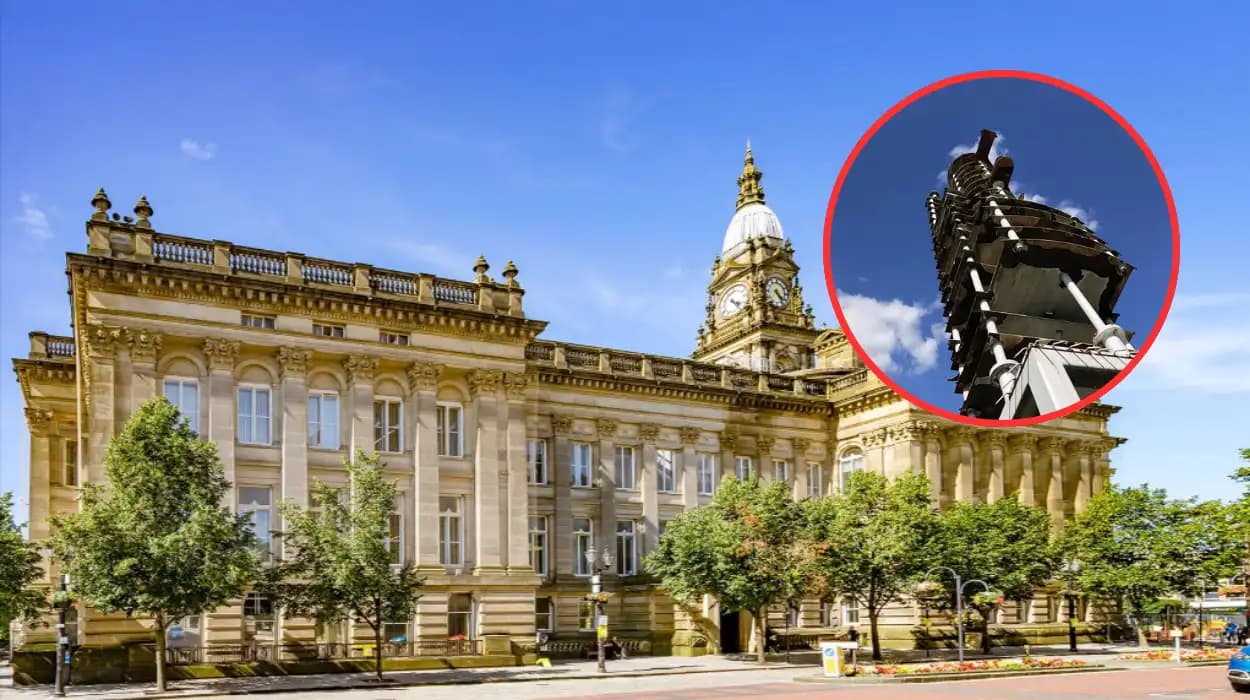
The 'Ghost Train' sculpture was originally commissioned and erected to serve as a visual testament to the town's defining industrial past. Situated on a major roundabout near the current Middlebrook Tesco supermarket, the monument depicts a locomotive engine dramatically emerging from the earth, angled dynamically toward the sky.
When it was first unveiled to the public, the structure boasted a pristine, gleaming white finish designed to capture the attention of visitors entering the expansive retail complex. Local historians and town planners intended the public art piece to act as a permanent, reverent reminder of the Horwich Railway Works, a massive engineering hub that opened in the late 19th century and drove the socioeconomic development of the region for generations by manufacturing hundreds of steam locomotives.
How Badly Had the Art Installation Deteriorated Over the Years?
Despite its initial reception as a highly celebrated local landmark, the sculpture became a textbook example of municipal neglect. Because the steel framework of the train structure was never properly galvanised during its original fabrication, it possessed no inherent barrier against the damp North West climate. Over the years, the protective white paint completely chipped away, exposing raw iron to persistent moisture and road salt from the busy roundabout.
The unchecked deterioration gradually transformed the glistening white monument into a dark, oxide-red eyesore. Large holes formed through the metal skin of the train casing, and internal structural beams began to compromise. The visual decline reached such a state that passing motorists and local residents frequently complained that the entrance to one of the UK’s premier retail parks looked unkempt and abandoned.
What Did Local Politicians Say About the State of the Sculpture?
The campaign to force a council intervention was brought to a head by local elected officials who argued that the local authority was showing open contempt for Horwich's identity. As reported by local democracy reporter Chris Gee of the Manchester Evening News, the leader of the Horwich and Blackrod First Independence party, Councillor David Grant, delivered a scathing assessment to Bolton’s full council chamber prior to the budget approval, stating that:
“No care and attention has been given to the 'Ghost Train' that sits at the entrance to the largest retail space in the country. It should also be a historical reminder of the town of Horwich's historic contribution to the railways but is instead a rusted, hole-ridden bit of scrap metal so corroded even the local scrap merchants won't touch it.”
Councillor Grant further highlighted the broader socio-cultural impact of leaving public art to decay in full view of thousands of daily shoppers. Writing on the matter, journalist Dan Dougherty of The Bolton News noted that Councillor Grant pointedly argued the following:
“The ghost train was not galvanised and has deteriorated to the extent that it is simply a rusted train wreck on a roundabout contributing to the image of decline to our area. It shows a distinct lack of appreciation to a town's history, culture, and image.”
To remedy the issue without draining hard-pressed taxpayer resources, Councillor Grant had initially suggested that the council's planning department should attach strict Section 106 legal conditions to incoming housing developers working on new estate projects across Horwich. He argued that these private building firms should be legally mandated to contribute financial compensation toward fixing up local public artwork as part of their community infrastructure requirements.
Explore More Horwich News
Hong Kong Racing Refreshes Horwich Plans Again 2026
Vernon Kay & Tess Daly Warn Daughters on Careers Amid Family Shift, Bolton 2026
How Did Bolton Council Respond to the Heritage Concerns?
The ruling cabinet at Bolton Council initially sought to explore alternative corporate avenues before committing direct public funds to the restoration project. In early council sessions addressing the complaints, the cabinet member for culture, Councillor Nadeem Ayub, clarified that the local authority was actively exploring external avenues. As recorded by The Bolton News, Councillor Ayub initially stated:
“There have been positive discussions between the council and developers and those parties are seeking to improve the Ghost Train through social value opportunities. In the meantime, I've asked officers to assess the work on how we can refurbish it to both bring it back to its former glory and protect it from deterioration.”
However, as private sector social value negotiations failed to secure immediate, guaranteed cash injections, the council leadership chose to utilise a portion of the unallocated windfall cash received from regional waste management efficiencies.
Following the definitive budget vote on February 18, which solidified the 2026/27 fiscal strategy, the council formally set aside the required £81,490. Speaking during the decisive financial meeting, as reported by Chris Gee of the Manchester Evening News, Councillor Ayub defended the public expenditure by reiterating the landmark's emotional and historical value to the community:
“The Horwich ghost train sculpture is a much-loved local landmark. It has long needed refurbishment and we've tried to look for solutions. Allocating £81,000 will ensure that this unique piece of our cultural heritage is preserved and well-restored for future generations.”
What Specific Restoration Works Will Be Carried Out on the Statue?
The designated £81,490 allocation has been rigidly ring-fenced within the municipal budget under a line item specifically entitled "refurbishing and repainting the Horwich ghost train sculpture." Because the structural integrity of the steel has been deeply compromised by decades of rust, the remediation strategy cannot rely on a simple coat of cosmetic paint.
According to preliminary outlines provided by Bolton Council’s environmental and highways teams, the restoration will require a multi-stage engineering approach:
Structural Assessment and Stabilization
Before any aesthetic work begins, specialised contractors will be brought on-site to inspect the foundational anchors of the sculpture on the Middlebrook roundabout. Engineers will determine whether the internal structural ribbing has retained sufficient load-bearing strength or if supplementary steel plates must be welded inside the chassis to reinforce the upward-pointing locomotive.
Rust Eradication and Surface Treatment
Contractors will be required to build specialized scaffolding around the roundabout installation, likely necessitating temporary off-peak traffic management. The entire exterior surface will undergo industrial blast-cleaning—potentially shot-blasting or grit-blasting—to forcefully strip away decades of oxidised metal flakes, deeply embedded corrosion, and remnants of the original failed paint layers.
Metalwork Reconstruction
Once the raw, uncorroded metal base is exposed, technicians will patch up the numerous holes that have punctured the train's outer skin. This phase will involve precision welding to piece back the structural areas that Councillor Grant described as "hole-ridden."
Weatherproofing and Final Painting
To ensure that public funds are not wasted on a short-term fix, the council's specification demands a robust weatherproofing strategy. The treated steel will be coated with high-grade, industrial-strength anti-corrosive primers. Following the protective undercoats, teams will apply a specialized, UV-resistant white gloss finish designed to mirror the original aesthetic concept of a phantom steam engine fading into the sky, while fully insulating the structure against the elements for decades to come.
What Is the Timeline and Wider Context for the Middlebrook Area?
The refurbishment of the 'Ghost Train' comes at a time when the surrounding Middlebrook complex continues to position itself as a premier economic engine for the region. The complex officially bills itself as "the largest integrated and sustainable employment, leisure, sports, and retail scheme in the United Kingdom." With millions of visitors arriving annually via the nearby M61 motorway and the Horwich Parkway railway station, local business owners have welcomed the investment, noting that an attractive entryway aesthetic is vital for maintaining consumer confidence and driving footfall.
With the budget now formally approved and the funds fully secured from the Greater Manchester Waste Authority rebate, council officers are finalizing the procurement process to select an engineering contractor. The physical restoration work on the roundabout is projected to commence later in the current financial year, marking the end of a multi-year saga of civic neglect and restoring a vital nod to Horwich's proud blue-collar history.