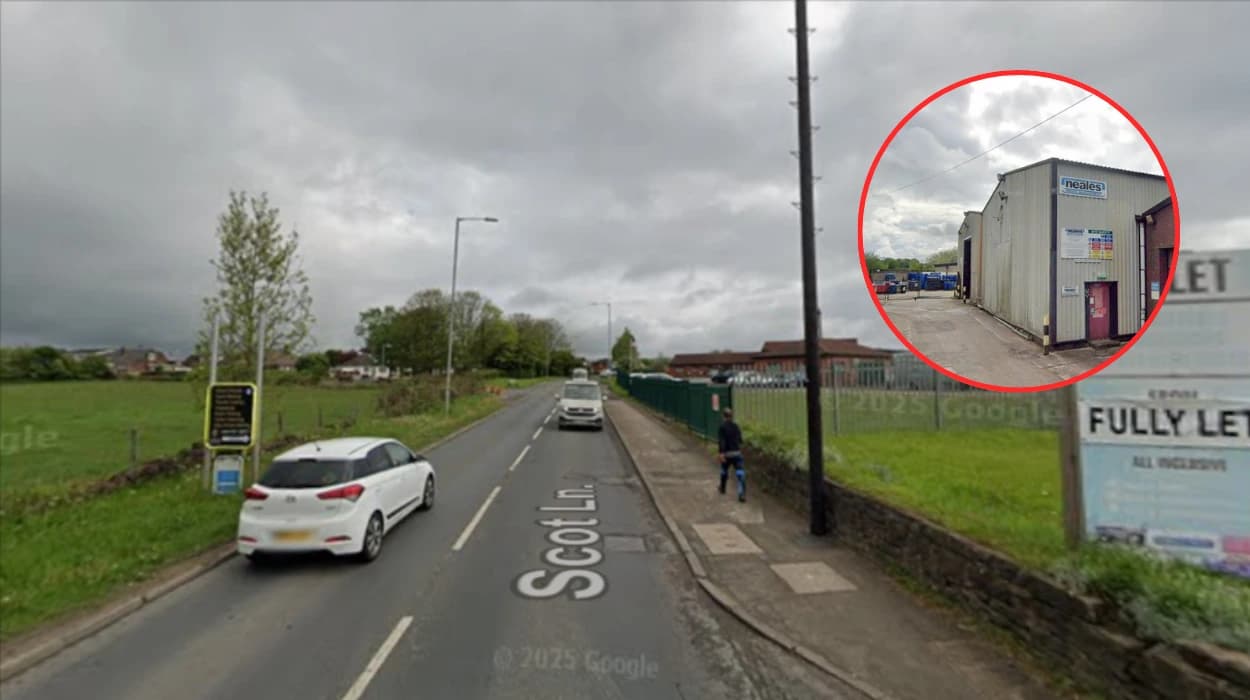
Key Points
- A large‑scale fire broke out at Neales Waste Management on Scot Lane Industrial Estate in Blackrod, Bolton, at around 2:30 am on Tuesday, 31 March 2026.
- The blaze involved stacked intermediate bulk containers (IBC tank containers) holding unknown materials and nearby lithium batteries, which intensified the fire.
- Fire crews from Hindley, Wigan, Horwich and Bolton attended, with Greater Manchester Fire and Rescue Service (GMFRS) coordinating the operation.
- Greater Manchester Police and the Environment Agency also attended as part of a multi‑agency response.
- The incident triggered a large emergency deployment; authorities have not yet determined the exact cause of the fire.
- As reported by local outlets, there were no immediate reports of serious injuries, but the scale of the blaze and presence of hazardous materials prompted tight environmental and safety monitoring.
Blackrod (Bolton Daily) April 16, 2026 - Blackrod has been thrust into the centre of a major incident after a large fire erupted at Neales Waste Management on Scot Lane Industrial Estate in the early hours of Tuesday, 31 March 2026. As reported by The Bolton News, the alarm was raised at approximately 2:30 am, prompting an immediate dispatch of multiple fire‑fighting units from across Greater Manchester.
Greater Manchester Fire and Rescue Service (GMFR coronavirus‑related reforms of 2025 reinforced the force’s multi‑agency response protocols, which were visibly applied here as crews from Hindley, Wigan, Horwich and Bolton were deployed to contain the blaze. The service described the incident as involving stacked intermediate bulk containers (IBC tank containers) containing “unknown materials”, together with nearby lithium batteries, which combined to create a “high‑intensity” blaze that proved difficult to bring under control.
What made the fire unusually challenging for emergency crews?
The presence of IBC tank containers and lithium batteries turned the incident into a complex hazardous‑materials event rather than a simple structure fire. IBC containers are typically used to store liquids, chemicals and other bulk materials, and when stacked and exposed to intense heat they can vent, rupture or even explode, releasing potentially toxic fumes.
As reported by local incident‑coverage sources close to the Greater Manchester Fire and Rescue Service, firefighters were required to adopt a defensive stance in parts of the operation, using large volumes of water and foam to cool the containers and prevent cascading failures. Lithium batteries, which have been increasingly linked to storage‑ and recycling‑site fires, can ignite and reignite multiple times, often producing dense smoke and toxic gases such as carbon monoxide and fluorinated compounds.
GMFRS spokespeople told regional outlets that crews wore breathing apparatus and established safe perimeters, recognising that the combination of unknown‑content IBCs and lithium‑ion units created a “worst‑case chemical‑fire scenario” similar to guidance documents used after the Buncefield‑type fuel‑storage fires. By contrast with the Buncefield incident, the Blackrod site did not involve a large fuel depot, but the same principles of containment, bund integrity and environmental protection were applied.
Why has the exact cause of the fire not yet been established?
Despite a full‑scale response and several hours of on‑site investigation, authorities have publicly stated that the precise ignition source remains unknown. In a statement quoted by The Bolton News, a GMFRS spokesperson indicated that the site’s mixed‑waste nature and the presence of multiple potential ignition pathways—ranging from electrical faults around stored batteries to spontaneous heating in certain waste streams—made pinpointing an initial cause difficult.
Greater Manchester Police and the Environment Agency were also present at the scene, with the Environment Agency focusing on monitoring air quality and potential contamination of land and watercourses. As the Environment Agency’s staffing‑guidance documents note, such industrial‑waste‑site fires typically require “multi‑agency environmental‑risk assessment” before any definitive causal statement can be issued.
Local media cited officers and environmental officers cautioning residents living near Scot Lane Industrial Estate to keep windows closed and avoid prolonged exposure to smoke, particularly for vulnerable groups such as children and people with respiratory conditions. These measures were framed as precautionary, not as evidence of confirmed toxic‑gas release, but they underscore the cautious stance taken while the investigation remains ongoing.
What was the scale of the emergency response in Blackrod?
The fire prompted what was described by emergency‑services sources as a “major‑incident”‑style deployment, reflecting the potential for off‑site impact similar to earlier large‑scale industrial blazes in Greater Manchester. Multiple fire engines and specialist units were sent to the site, with resources coordinated from neighbouring districts to ensure adequate manpower and equipment.
Greater Manchester Police assisted with traffic control and access restrictions, closing sections of Scot Lane and surrounding roads to prevent members of the public from entering the immediate danger zone. Police officers also helped to identify and secure any vehicles or containers that might have posed a secondary risk, such as those containing additional batteries or flammable waste.
The Environment Agency’s attendance mirrored protocols used at other waste‑handling and recycling‑site fires, where teams monitor smoke plumes, test for heavy metals and volatile compounds, and assess the fate of runoff water containing fire‑fighting foam and chemical residues. Officials from the agency told local reporters that full environmental‑assessment results would be published once sampling and laboratory analysis were complete, but initial field observations did not indicate an immediate, large‑scale spill into nearby watercourses.
What are authorities saying about safety at waste‑management sites?
In the wake of the incident, fire‑safety and environmental‑regulation bodies have reiterated existing guidance rather than announcing new rules. As GMFRS has stressed in recent years, industrial‑waste and recycling operations must have robust segregation and fire‑prevention protocols, especially where lithium‑ion batteries and other high‑energy materials are stored.
A spokesperson for the local authority, quoted by regional news outlets, said that the Blackrod blaze would be treated as a “case study” for future inspections of similar waste‑management and recycling facilities across Greater Manchester. The council’s statement emphasised that it would work with GMFRS, the Environment Agency, and the Health and Safety Executive to review Neales Waste Management’s risk assessments and fire‑safety systems, but added that no formal enforcement action could be taken until the investigation was complete.
Environmental‑regulation sources noted that industrial‑waste sites operating under environmental‑permitting regimes are already required to maintain bunds, containment areas, and spill‑response plans, but that the effectiveness of these measures depends heavily on day‑to‑day operational discipline. Officials involved in the Blackrod incident have not yet stated whether Neales Waste Management was in compliance with all relevant permits at the time of the fire; any such findings will form part of the formal investigative record.
What do residents and nearby businesses need to know right now?
For residents and businesses near Scot Lane Industrial Estate, the immediate priority has been understanding potential health and safety risks from smoke and firefighting‑water runoff. Local authorities, echoing language used after earlier industrial‑fire incidents, have advised people in the immediate vicinity to close windows, avoid drying laundry outdoors, and seek medical advice if they experience persistent breathing difficulties or irritation.
Businesses on the industrial estate were told by police and fire‑safety officers to remain clear of the site until declared safe, with some firms temporarily suspending operations while access roads were closed. Neales Waste Management has not issued a detailed public statement beyond confirming that it is cooperating fully with the investigation, but local news outlets report that the company has paused certain waste‑handling activities at the site pending a review of its fire‑safety procedures.
Background of the particular development
The Neales Waste Management fire in Blackrod fits into a broader pattern of industrial‑waste and recycling‑site incidents in the UK over the past decade, especially those involving lithium‑ion batteries and mixed‑waste storage. Incidents such as the Buncefield fuel‑storage fire and more recent lithium‑battery‑related blazes at recycling and scrap sites have prompted regulators to tighten fire‑safety and environmental‑protection requirements at high‑risk facilities.
Greater Manchester Fire and Rescue Service has cited these precedents in its response‑strategy documents, which stress early‑warning systems, better segregation of hazardous materials, and improved containment measures for facilities handling chemicals, batteries and other flammable or combustible waste. The Blackrod incident now becomes one more data point in that evolving regulatory landscape, likely to be used both in future inspections and in training for multi‑agency emergency responses at industrial‑waste sites.
What the Neales Waste Management fire could mean for affected communities and industries
The Neales Waste Management fire in Blackrod may influence how waste‑management and recycling businesses, local authorities, and fire‑safety regulators approach mixed‑waste and lithium‑battery storage in the coming months. Communities living near industrial‑waste sites may see increased scrutiny of fire‑risk assessments, more visible environmental‑monitoring activity, and stricter rules on the handling and storage of batteries and unknown‑chemical containers.
For waste‑management operators across Greater Manchester and beyond, the incident is likely to fuel debate over the viability of current storage practices, insurance‑requirements, and the need for enhanced fire‑suppression systems such as sprinklers or foam‑deluge systems at high‑risk sections of sites. At the same time, residents and nearby businesses may face temporary disruptions during future large‑scale fire responses, even when immediate health risks are considered low, as authorities continue to adopt a precautionary stance in line with recent guidance.