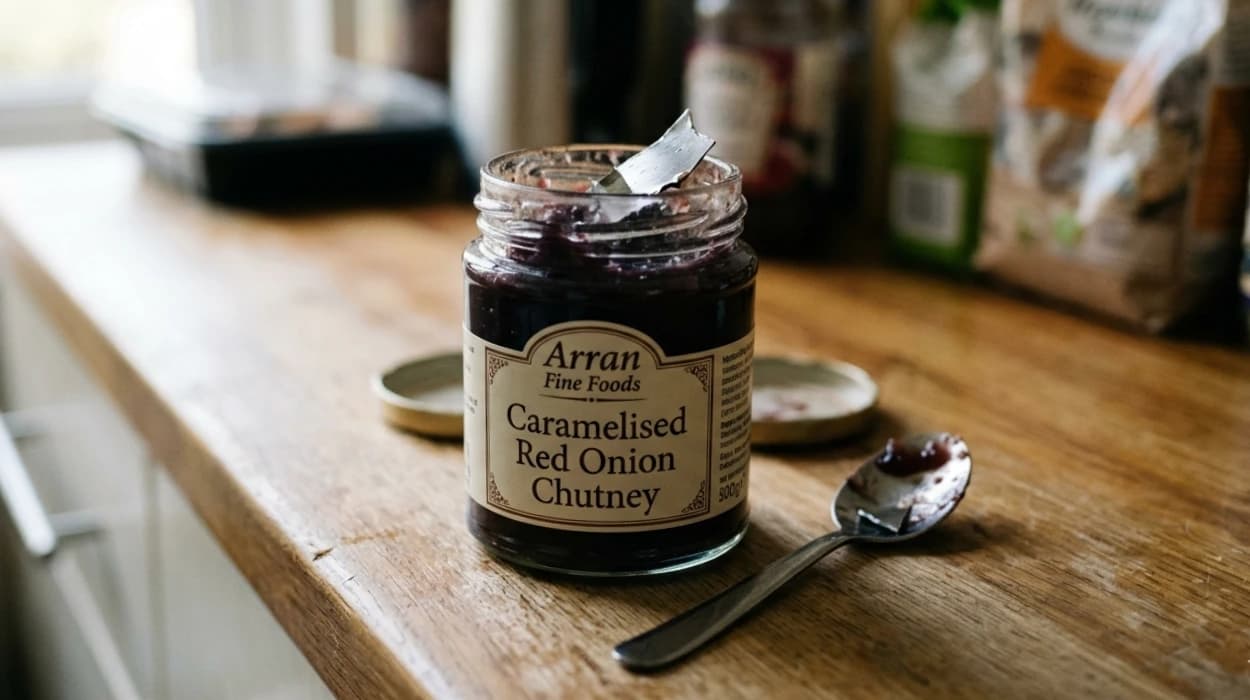
Fox's Burton's Companies issued the food safety recall because specific batches of Arran Fine Foods Caramelised Red Onion Chutney contain metal pieces. The presence of foreign physical matter poses a severe health hazard, making the product unsafe for human consumption.
On 28 May 2026, Fox's Burton's Companies (FBC) UK initiated a major product recall in partnership with the Food Standards Agency (FSA). The regulatory classification for this announcement is reference FSA-PRIN-26-2026. The contamination involves physical fragments of metal that entered the manufacturing line during production. Physical contaminants like metals present physical injury risks, such as mouth lacerations, dental damage, internal perforations, and choking hazards.
The scope of this recall spans 14 separate batch configurations distributed across commercial supply networks. The affected items are distributed nationwide across major grocery retailers, including Sainsbury's and Tesco. Immediate removal protocols require merchants to pull stock from retail infrastructure. Merchants must display point-of-sale notices detailing the return procedure at all physical store entrances and customer service desks.
Which specific product sizes and batch dates are affected?
The product recall affects 14 batches of Arran Fine Foods Caramelised Red Onion Chutney distributed in 195g glass jars and large 1.35kg catering tubs. The affected products feature expiry dates spanning from July 2027 through February 2029.
The manufacturing contamination impacts two distinct packaging styles designed for separate consumer groups. The smaller 195g jars target retail shoppers, whereas the larger 1.35kg containers target catering services and commercial kitchens. Consumers must cross-reference the exact best-before dates on their packaging to determine if their item is part of the recalled stock.
Retail Size Batches (195g Pack Size)
The retail distribution network contains eight specific product configurations. Consumers can locate the best-before dates printed on the lid or back label of the glass jars. The specific retail dates under the emergency recall order include:
- 25 November 2028
- 07 January 2029
- 14 January 2029
- 15 January 2029
- 26 January 2029
- 27 January 2029
- 02 February 2029
- 03 February 2029
Catering Size Batches (1.35kg Pack Size)
Commercial kitchens, restaurants, and wholesale buyers use the larger bulk containers. These large plastic tubs are distributed to food preparation facilities across the United Kingdom. The six specific catering dates under active recall include:
- 28 April 2027
- 29 April 2027
- 07 July 2027
- 28 July 2027
- 09 August 2027
- 16 August 2027
- 17 August 2027
What steps should consumers take if they purchased the recalled chutney?
Consumers who own the recalled chutney must stop using the product immediately and return it to their local retail store for a full financial refund. Shoppers do not need to present their original paper purchase receipt to claim this refund.
The Food Standards Agency issued a strict "do not eat" directive regarding the affected condiment jars. Consuming contaminated chutney increases physical health risks, so households must check their pantries immediately. The recovery protocol provides clear steps for both physical returns and consumer inquiries.
Physical Retail Return Procedure
The return mechanism functions directly through the retail location where the item was originally bought. Outlets like Tesco and Sainsbury's have removed the product from their active online inventories. Physical stores are required to handle all consumer handovers. Retail personnel process the return automatically, restoring the full purchase amount to the original payment method or cash equivalent.
Customer Care and Corporate Contact Channels
Fox's Burton's Companies established dedicated channels for public inquiries regarding manufacturing batches or wholesale distribution. Consumers who cannot return the item to a physical store can contact corporate representatives directly. The official consumer care department operates via two primary channels:
- Email Support: careline@fbc-uk.com
- Telephone Helpline: 0800 591 886
How do foreign body metal contaminations occur in food manufacturing plants?
Foreign body metal contamination occurs when industrial machinery components experience mechanical failure, friction, or structural degradation during high-speed processing. Common sources include fractured blending blades, loose bolts, broken conveyor system links, and damaged processing screens.
Industrial food production lines use large mechanical systems to mix, cook, wash, and package condiments. In chutney production facilities, raw ingredients like red onions, sugar, vinegar, and spices undergo automated peeling, chopping, and boiling. During these physical transformations, processing machinery experiences continuous mechanical friction. If preventive maintenance protocols fail, tiny metallic shards can detach from mixing paddles or container walls and enter the food mixture.
Manufacturing plants use specialized inspection hardware to find structural debris before products leave the factory floor. Industrial food-grade metal detectors and advanced X-ray inspection machinery monitor packaging lines to flag foreign matter. If a detector experiences calibration drift, or if a fragment falls below the operational detection threshold, contaminated items can bypass safety checks and enter the commercial supply chain.
Explore More Things To Do In Bolton
Best Afternoon Tea Venues: Bolton Today Guide | Bolton
The Best Local Takeaways and Top Culinary Favorites in Bolton
What are the legal responsibilities of food manufacturers during a safety recall?
Food manufacturers must report safety defects to regulators immediately under the General Food Law Regulation EC 178/2002. Companies are required to stop product distribution, pull items from shelves, and inform the public about potential health risks.
The regulatory network across the United Kingdom enforces clear legal obligations for food business operators when products fail strict safety standards. The statutory framework dictates a multi-tiered corporate response when a business discovers that a distributed item presents a physical threat to the population.
Statutory Notification Requirements
When a company like Fox's Burton's Companies identifies a foreign object hazard, the operator must inform the Food Standards Agency within statutory deadlines. The report must detail the specific nature of the contamination, total volume produced, batch codes, and geographic distribution lists. Failure to report safety defects constitutes a breach of food safety regulations and can result in financial penalties or criminal prosecution.
Supply Chain Isolation and Public Notice Duties
The manufacturer must coordinate with wholesale partners and supermarket conglomerates to isolate the affected stock. This process involves executing full inventory tracing across distribution hubs. Simultaneously, companies must design and supply highly visible point-of-sale notices for retail locations. These public alerts must state the exact product details, health risks, and return procedures clearly, ensuring consumer safety remains protected.
How do retail stores remove recalled food products from commercial circulation?
Retail stores remove recalled food products by issuing automated point-of-sale blocks that stop transactions at checkout tills. Staff members physically clear the affected items from shelves and transport them to isolated quarantine zones within warehouses.
Modern supermarkets use digital enterprise resource planning networks to manage food safety recalls. When the Food Standards Agency publishes an alert, retail corporate offices update their central barcode inventory database. This electronic update ensures that if a consumer attempts to purchase a recalled item, the checkout screen blocks the sale automatically, preventing the transaction from completing.
At the store level, stock managers use handheld inventory terminals to locate the exact positions of recalled batches on store shelves. Workers pull the affected items from the retail floor and place them in designated warehouse quarantine cages. This physical separation prevents items from being mixed back into sellable inventory. The quarantined items are eventually destroyed or returned to the manufacturer for investigation, ensuring complete removal from the consumer market.
What health risks are associated with consuming physical metal fragments in food?
Consuming metal fragments in food causes acute internal physical trauma, including gastrointestinal tract lacerations, dental fractures, and internal bleeding. If a sharp piece punctures the stomach or intestinal walls, it can lead to severe infections.
Physical contaminants in packaged food are classified as hard foreign objects. Unlike bacterial or viral pathogens, which cause biological infections over hours or days, physical contaminants cause immediate injury upon ingestion. The human digestive tract is lined with sensitive tissue that is easily damaged by hard, sharp fragments.
Upper Digestive Tract Traumas
The first point of physical contact occurs in the mouth, throat, and oesophagus. Attempting to chew food that contains hidden metal fragments can fracture teeth, damage dental work, and cause deep cuts to the tongue or gums. If a fragment is swallowed, it can lodge in the narrow tissue of the esophagus, causing severe pain, difficulty swallowing, and choking hazards.
Lower Gastrointestinal Punctures and Complications
Once a metal piece enters the stomach and intestines, the muscular contractions of digestion can force the fragment into the protective tissue linings. A complete puncture of the stomach or intestinal wall allows digestive fluids and bacteria to escape into the abdominal cavity. This medical emergency can lead to peritonitis, a severe inflammation that requires immediate surgical intervention and antibiotic treatment.
How does the Food Standards Agency monitor and enforce product recalls in the UK?
The Food Standards Agency monitors and enforces product recalls by publishing official Product Recall Information Notices to the public. The agency coordinates with local trading standards officers to audit retail stores and confirm non-compliant stock is removed.
The Food Standards Agency operates as the primary non-ministerial government department responsible for public health protections regarding food safety in England, Wales, and Northern Ireland. The organization uses systematic monitoring networks to oversee the removal of hazardous products from the commercial marketplace.
Publication of Safety Alerts
The primary tool for public notification is the Product Recall Information Notice network. When a hazard is confirmed, the agency publishes the specific details on its national database and sends out automated alerts to consumer groups, medical networks, and media outlets. These notices provide uniform data, including batch identification details, brand images, and consumer directives, ensuring clear and consistent communication.
Enforcement and Local Authority Audits
The agency partners with local authority Environmental Health Officers and Trading Standards teams to verify compliance. Local officers conduct unannounced site visits at retail stores, distribution centers, and warehouses to ensure that recalled items have been removed from shelves and that point-of-sale signs are clearly displayed. If a retailer fails to comply with a recall order, enforcement teams can seize the items and initiate legal proceedings under national food safety laws.
What long-term impact do product recalls have on food brands and manufacturing systems?
Product recalls cause significant financial losses from inventory destruction, logistics expenses, and regulatory penalties. Furthermore, companies often face long-term damage to consumer trust and brand reputation, which can lead to lower market share.
The operational consequences of a major product recall extend far beyond the immediate collection of contaminated goods. Food processing companies must invest significant capital to fix the root causes of safety failures and rebuild their standing in the market.
Financial Strain and Operational Costs
The direct costs of a product recall involve several operational expenses, including pulling stock from retailers, shipping contaminated items back to central facilities, and safely destroying the food. Manufacturers must also compensate retail partners for lost sales shelf space and handle administrative processing fees. Additionally, processing facilities must halt production lines to run deep cleans, complete engineering overhauls, and recalibrate inspection machinery, leading to expensive downtime.
Quality Management System Overhauls
To restore regulatory compliance and consumer confidence, companies must upgrade their Hazard Analysis Critical Control Point systems. These adjustments usually involve installing more sensitive metal detectors, adding real-time optical sorting machinery, and scheduling more frequent maintenance checks. Operators must also retrain personnel on safety tracking procedures, ensuring that manufacturing stages are monitored closely to prevent future contamination events.
How can consumers stay informed about urgent food safety alerts in the United Kingdom?
Consumers can stay informed about urgent food safety alerts by signing up for direct email updates from the Food Standards Agency website. Shoppers can also monitor news updates from trusted local outlets like Bolton Today.
Staying up to date on food recalls is essential for protecting household health, as many pantry items have long shelf lives. Since products like caramelised onion chutney can sit in cupboards for months, consumers need reliable ways to track safety updates.
The Food Standards Agency offers a free subscription service that lets users customise alerts based on specific food categories, allergy profiles, or contamination types. When a manufacturer issues a recall, subscribers receive a direct text or email notification containing batch details and safety instructions. Checking these updates regularly helps families find and remove contaminated items before they are eaten.
In addition to official government platforms, local news organizations provide critical support by sharing safety alerts within the community. Outlets like Bolton Today monitor national recall databases and share urgent warnings to help residents protect their families. By combining official government updates with local news reports, consumers can keep their pantries safe and avoid hazardous products.
FAQS
Who issued the recall?
The recall was issued by Fox's Burton's Companies in coordination with the Food Standards Agency.