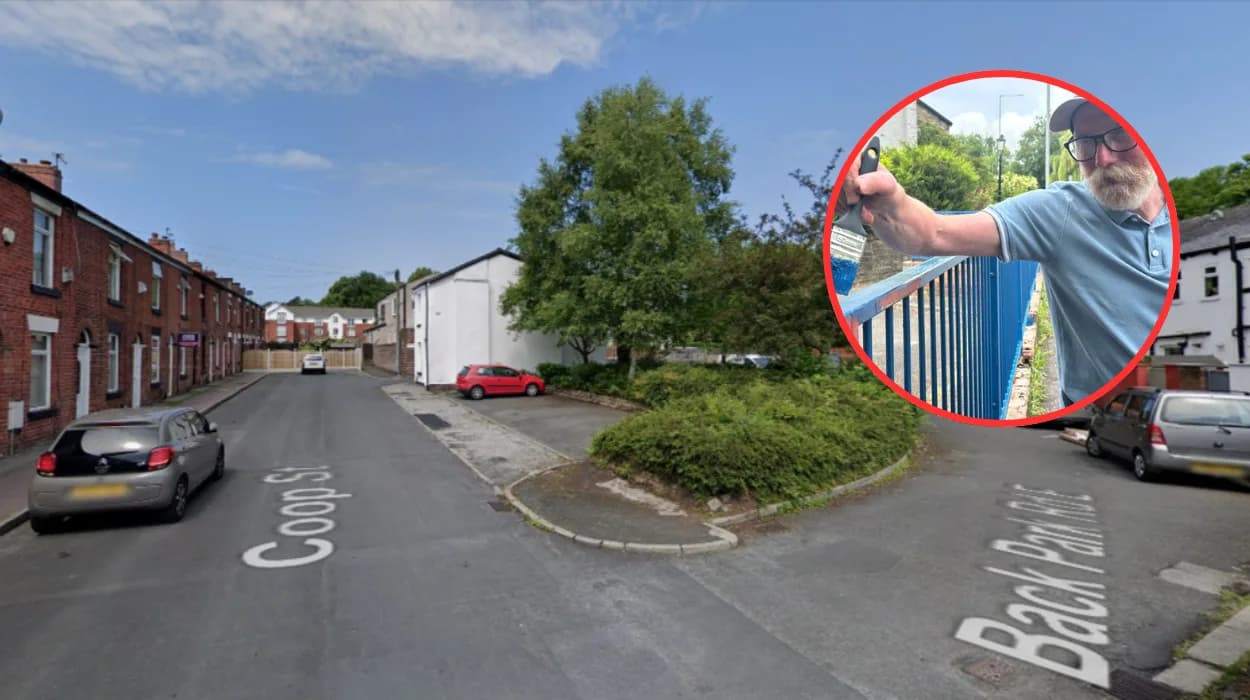
Key Points
- Three-Decade Delay Over: Residents in Astley Bridge have successfully resolved a 30-year issue concerning neglected roadside railings.
- Grassroots Intervention: Instead of waiting for local council intervention, all three ward councillors joined forces directly with community volunteers to physically paint the infrastructure.
- Key Locations Upgraded: The structural refresh targeted the railings on Park Avenue leading directly onto Moss Bank Way, with parallel improvement projects taking place around Coop Street.
- Funding Mechanism Secured: Critical financial backing for the purchase of paint and materials was channelled through the local voluntary group, Friends of Astley Bridge.
- Upcoming Improvements: Beyond the freshly painted barriers, new community planters are scheduled to be installed nearby to further boost the aesthetic appeal of the district.
- Comprehensive Environmental Action: Long-term community volunteer Andy Capstick has spearheaded parallel cleaning efforts, including the removal of overgrown shrubbery, managing missing bollards, the dealing with damaged signage, and organising routine litter picks.
Astley Bridge (Bolton Today) July 4, 2026 - A long-neglected urban fixture in the heart of Astley Bridge has finally been transformed following a dedicated community-led project, concluding a painful 30-year wait for local residents. In a direct display of grassroots civic action, community members united alongside all three of their elected ward councillors to manually repaint a prominent stretch of roadside railings on Park Avenue leading onto Moss Bank Way. The collaborative restoration scheme bypassed traditional municipal wait times by relying on volunteer manpower, which will soon be supplemented by the installation of newly built community floral planters to revitalise the primary thoroughfare.
The successful infrastructure upgrade was executed on the ground by Councillors Ryan Bailey and Toby Hewitt, working shoulder-to-shoulder with veteran local resident Andy Capstick, who has lived adjacent to the site for three decades. Financial resources for the trade materials and specialised paint were formalised and secured through the Friends of Astley Bridge, a local community group coordinated behind the scenes by Councillor Hilary Fairclough. This hands-on approach marks an emerging shift in how localized environmental and aesthetic concerns are handled in the Bolton district, establishing a collaborative framework between residents and their political representatives to implement immediate structural changes.
Why did the Astley Bridge railings require a community revamp?
As reported by Joe Regent, Reporter of The Bolton News, the roadside railings situated along Park Avenue had fallen into a severe state of structural neglect, detracting from the neighbourhood's appearance for a generation. For thirty years, the peeling and corroded safety barriers sat exposed to harsh North West weather elements without routine maintenance from centralized local authority teams. Because the location serves as a critical junction leading onto the heavily commuted Moss Bank Way, its deterioration remained a persistent source of frustration for those living in the immediate vicinity.
The aesthetic decay of the railings ran parallel to wider environmental challenges facing the peripheral streets of the ward. According to the published journalistic findings of Joe Regent from The Bolton News, the surrounding public paths had become plagued with a series of minor infrastructure failures, including missing security bollards, damaged directional street signs, overgrown wild shrubbery, and persistent litter accumulation. Traditional reporting channels to the local authority had failed to yield rapid results due to backlogs, leading locals to seek alternative, faster methods of community restoration.
Who spearheaded the volunteer restoration on Park Avenue?
The physical labour required to complete the painting project was driven by a tight-knit team consisting of newly elected political figures and an institutional local volunteer. As documented by Joe Regent of The Bolton News, Councillor Ryan Bailey and Councillor Toby Hewitt actively participated in the physical application of the paint alongside resident Andy Capstick. Rather than limiting their involvement to administrative oversight, the elected officials chose to personally handle the manual upkeep.
Mr Capstick, a resident of nearby Coop Street for over 30 years, served as the primary catalyst for the project. His deep familiarity with the area's minor maintenance deficits allowed the team to target their physical interventions accurately. As detailed in the original reporting by Joe Regent of The Bolton News, Mr Capstick has built a widespread local reputation for his proactive, uncompromising stance on local cleaning matters, frequently engaging in self-directed litter picks and vegetation management to preserve the local landscape.
Explore More Astley Bridge News
People's Postcode Lottery Winners in Astley Bridge Bolton 2026
Cannabis Farm Waste Dumped on Scout Road in Bolton 2026
What did resident Andy Capstick state about the project's success?
The resolution of the three-decade-old issue drew strong praise from the community's leading volunteer, who emphasized the importance of action-oriented leadership over mere rhetoric. As reported by Joe Regent of The Bolton News, Andy Capstick stated that
“I've wanted this issue sorted here for 30 years. This is great because we're getting stuff done, that's all I wanted.”
Mr Capstick further highlighted the value of having newly elected representatives who are willing to engage directly with physical community improvements. As reported by Joe Regent of The Bolton News, Andy Capstick later added that his satisfaction stemmed from working
“with somebody who does stuff, not talks stuff. And this is great because we've got three councillors and a volunteer working together, and that's how things will change in this town.”
How did Councillor Ryan Bailey describe his commitment to the ward?
For the newly elected representatives of Astley Bridge, the painting initiative served as a tangible manifestation of campaign promises made to the local electorate regarding hands-on visibility. As reported by Joe Regent of The Bolton News, Councillor Ryan Bailey stated that
“Living in Astley Bridge all my life, as I got elected, I just made a promise that I wouldn't not get stuck in.”
The councillor also noted that building structured relationships with pre-existing volunteer networks, such as local litter-picking groups, remains essential to reviving older neighbourhoods. As reported by Joe Regent of The Bolton News, Councillor Ryan Bailey remarked that
“I'm happy to get out and do bits, but it's brilliant that we've got the litter pickers. We can work alongside them. It's great that we've got a good relationship with the other councillors—in the real world, you've just got to get stuck in. And it makes the place a much better place.”
How was the funding for the structural upgrade organized?
Bypassing standard council procurement queues meant that an alternative financial mechanism had to be rapidly established to purchase industrial-grade weatherproofing paint and application tools. As reported by Joe Regent of The Bolton News, Councillor Hilary Fairclough assumed the responsibility of organizing the necessary funding streams internally via the Friends of Astley Bridge, an independent community group dedicated to localized environmental projects.
By utilizing community-held funds rather than relying on the municipal budget of Bolton Council, the group obtained their materials without undergoing lengthy administrative authorization processes. This financial independence allowed the physical work to commence within days of the initial site discussions between the ward councillors and Mr Capstick, providing a template for future micro-scale infrastructure revamps across the borough.
What statement did Councillor Hilary Fairclough issue regarding the teamwork?
The collaborative approach received formal commendation from the senior political figures involved, who praised the speed and efficiency achieved by merging political office with local volunteerism. As reported by Joe Regent of The Bolton News, Councillor Hilary Fairclough stated that
“It's gone really well, to be fair, we decided as councillors we could do this.”
Councillor Fairclough specifically recognized the relentless, long-term environmental work carried out by the neighborhood's lead volunteer across the broader district. As reported by Joe Regent of The Bolton News, Councillor Hilary Fairclough concluded that
“They did a brilliant job between them with Andy Capstick, with all he does for the environment. They made an excellent team. It's nice to see people that roll up their sleeves and get on with it.”
What are the next steps for the Astley Bridge environment?
The restoration of the Park Avenue railings marks the beginning of a broader, sustained environmental plan for the Astley Bridge sector. According to the journalistic coverage by Joe Regent of The Bolton News, two brand-new street planters are slated for immediate installation right beside the freshly painted metal railings. These elements will be continuously maintained and monitored by Mr Capstick to ensure they remain free of litter and vandalism.
Furthermore, attention is shifting toward resolving the outstanding issues raised during the initial site assessments on Coop Street. Mr Capstick's broader maintenance campaign continues to tackle overgrown shrubbery, missing bollards, and damaged highway signs in communication with the ward's elected officials. The successful completion of the railings has established an open channel of communication, ensuring that future environmental defects can be tackled using the same combined volunteer-led strategy.
How does this project reflect broader municipal trends in Bolton?
The Park Avenue project highlights an increasing trend across Greater Manchester where localized communities choose self-reliance over centralized municipal dependence for minor civic repairs. With local authority budgets facing tightening constraints, minor cosmetic and non-hazardous structural defects are frequently de-prioritized. By rolling up their sleeves and handling the paintwork directly, the Astley Bridge councillors and residents have demonstrated that small-scale partnerships can successfully preserve community pride without putting an extra burden on public funds.