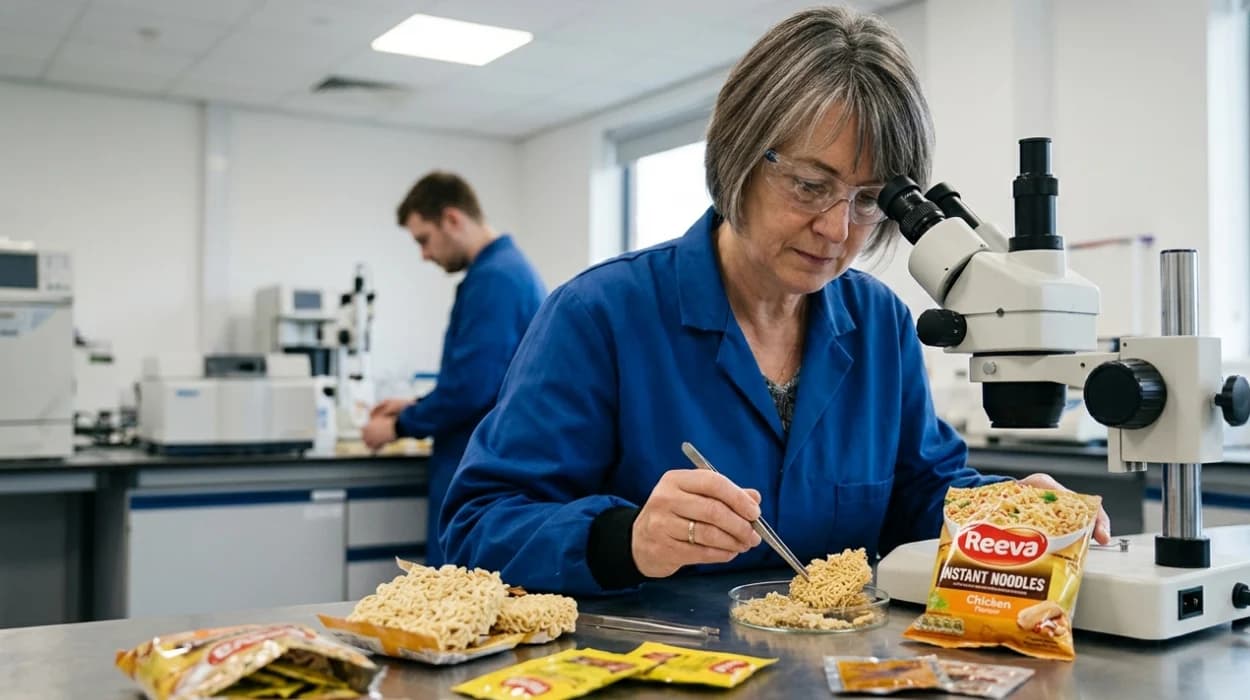
The safety of processed, shelf-stable foods remains a critical priority for public health regulators and consumers across the United Kingdom. In July 2026, international health agencies launched comprehensive investigations into a multi-country foodborne illness link involving instant noodles. Food Standards Agency investigators, alongside the European Centre for Disease Prevention and Control, identified specific bacterial vectors within the global convenience food supply chain.
For residents across Bolton and the wider Greater Manchester region, understanding the biological mechanisms of foodborne pathogens, industrial production risks, and proper domestic preparation techniques protects households from preventable infections. This guide by Bolton Today provides factual, data-driven information regarding the transmission, prevention, and clinical realities of bacterial contamination in dried food products hitting local store shelves.
What is Salmonella, and how does it enter processed foods?
Salmonella is a genus of rod-shaped, Gram-negative bacteria belonging to the Enterobacteriaceae family that causes salmonellosis, a leading cause of bacterial foodborne gastroenteritis globally. The organism primarily colonizes the intestinal tracts of domesticated livestock, wild animals, birds, and amphibians.
The bacterium enters the human food supply chain through direct or indirect contact with fecal material. In industrial manufacturing environments, contamination occurs through raw agricultural ingredients, compromised water systems, or inadequate sanitation of machinery. The pathogen possesses high resistance to dry environments, allowing it to survive for extended periods in low-moisture foods. When dehydrated, the cellular structure undergoes a metabolic slowdown, entering a dormant state without dying.
Dried items, including 4 specific categories—powdered milk, infant formula, flour, and instant noodles—do not support active bacterial replication due to low water activity. However, the infectious dose remains low, meaning a small number of viable cells can cause clinical illness when ingested. In the 2026 international investigation, microbiologists identified the specific strain Salmonella Stanley ST2045 within dried spice packets and noodle matrices. Testing by European food safety labs also isolated secondary strains, specifically Salmonella Richmond, Salmonella Newport, and Salmonella Senftenberg, pointing to systemic sanitation issues rather than a single ingredient failure.
Why are instant noodles susceptible to bacterial contamination?
Instant noodles are vulnerable to bacterial contamination because their production involves multiple complex ingredients, including agricultural grains, dried vegetables, dehydrated proteins, and raw spices. If any single component undergoes insufficient processing, the final packaged product carries viable pathogens into domestic kitchens.
Industrial production lines process thousands of kilograms of raw wheat flour, water, and alkaline salts daily to create the noodle dough. The manufacturing sequence includes steaming, cutting, folding, and dehydrating via deep-frying or hot-air drying. While the high temperatures used during the drying phase eliminate surface pathogens on the noodle cake, post-processing vulnerabilities emerge during cooling and packaging.
The primary vector for pathogen introduction is often the separate flavor seasoning packet. These packets contain complex dry mixtures, including 5 common additives: dehydrated meat powders, pulverized sea salt, monosodium glutamate, dried chives, and raw ground spices. Raw spices, such as black pepper, chili powder, and garlic powder, are harvested in open agricultural environments where animal intrusion occurs. If these agricultural inputs do not undergo validated microbial reduction steps—such as steam sterilization, irradiation, or controlled heat treatments—the bacterial cells survive the milling process. When packaged in airtight foil sachets, the low moisture level preserves the bacteria until a consumer prepares the food.
How did the 2026 Salmonella noodle outbreak develop?
The 2026 Salmonella noodle outbreak originated from a manufacturing facility in Ukraine, spreading across the United Kingdom and 13 European Union countries through commercial wholesale distribution networks. Epidemiological tracking confirmed over 100 cases of illness linked to a single brand of flavoured instant noodles.
The earliest confirmed infections occurred in November 2025, but the low baseline frequency of the Salmonella Stanley ST2045 strain delayed initial detection. The health ministry of Denmark first recognized the statistical anomaly in March 2026, using the European infectious disease surveillance platform EpiPulse to alert neighboring nations. By April 2026, food safety inspectors in Germany isolated the matching genetic strain from retail samples of chicken-flavoured noodles.
Whole Genome Sequencing analysis conducted by the European Food Safety Authority established a direct match between the human patient isolates and the food samples. The distribution chain involved a primary manufacturer, Euro Food Service located in Ukraine, which produced instant noodle products under the Reeva Foods brand name. The contaminated lots moved through a centralized logistics hub in Poland before arriving at international specialty markets, ethnic grocery shops, and independent supermarkets across Europe. By late June 2026, public health registries documented 106 confirmed cases across 14 nations, including Austria, Czechia, Denmark, Estonia, France, Germany, Hungary, Latvia, Lithuania, the Netherlands, Norway, Poland, Sweden, and the United Kingdom.
What are the clinical symptoms of a Salmonella infection?
The clinical symptoms of a Salmonella infection include acute watery diarrhoea, severe abdominal cramps, high fever, nausea, and persistent vomiting. These clinical manifestations appear within 6 to 72 hours following the ingestion of food containing viable bacterial cells.
The pathogenetic mechanism begins when the ingested bacteria survive the acidic environment of the human stomach and enter the small intestine. The organisms adhere to the intestinal mucosal lining, invading the epithelial cells of the ileum and colon. This cellular invasion triggers a profound inflammatory response from the host immune system, leading to the synthesis of inflammatory cytokines. The resulting inflammation impairs the fluid absorption capabilities of the intestines while actively stimulating fluid secretion, causing rapid dehydration.
The severity of the disease varies based on the immunological status of the host and the specific bacterial load consumed. In healthy adults, the condition behaves as a self-limiting acute gastroenteritis, with symptoms resolving spontaneously within 4 to 7 days. However, the 2026 outbreak data revealed an unusual demographic trend: the median age of affected patients was low, with 33 confirmed cases occurring in children under the age of 10 years. Out of the 106 total cases, 49 individuals required inpatient hospital treatment to manage severe complications.
Who faces the highest risk of severe medical complications?
Individuals facing the highest risk of severe medical complications include young children under five years, adults over 65 years, pregnant women, and people with compromised immune systems. These populations possess less resilient immune responses, making them vulnerable to systemic bacterial invasions.
In high-risk patient groups, the physiological consequences extend beyond localized intestinal inflammation. The mucosal barrier of the intestine can break down, allowing the Salmonella bacteria to cross into the mesenteric lymph nodes and enter the vascular bloodstream. This systemic condition, known as bacteremia, distributes the pathogen to distant anatomical sites, potentially causing life-threatening secondary infections. These secondary conditions include endocarditis (heart valve infection), osteomyelitis (bone infection), and septic arthritis (joint fluid infection).
Children experience rapid dehydration due to their smaller body mass and higher fluid turnover rates. Clinical signs of critical dehydration in pediatric patients include decreased urinary output, dry mucous membranes, lethargy, and a lack of tear production during crying. For individuals with weakened immune systems—such as patients undergoing active oncology chemotherapy, organ transplant recipients taking immunosuppressive drugs, or individuals with advanced HIV—the body cannot contain the primary infection, requiring aggressive intravenous antibiotic protocols to prevent septic shock.
How can consumers safely prepare instant noodles to eliminate risk?
Consumers can safely prepare instant noodles by boiling the dried noodle cake and the seasoning powder packets in water reaching 100 degrees Celsius for a minimum duration specified on the commercial packaging instructions.
Thermal processing remains the most effective domestic method for destroying foodborne pathogens. Salmonella species are heat-sensitive organisms that die when exposed to temperatures above 70 degrees Celsius for sustained periods. The primary risk factor identified in recent public health surveys involves improper consumption habits among adolescents and children. Investigators discovered that multiple young patients consumed the instant noodle blocks dry and raw, crushing the noodles inside the plastic wrap and applying the raw seasoning powder directly to the dry product as a snack.
To guarantee safety, households across the Bolton borough must view instant noodles as a raw product requiring complete cooking rather than a ready-to-eat food item. Kitchen preparation must follow a structured sequence to achieve complete pasteurization:
1.Verify Product Status:Check Recall Lists.
Consult the Food Standards Agency website to ensure the package batch code does not match active product recall notices from the manufacturer.
2.Boil Liquid Component:Bring Water to 100°C.
Measure the exact volume of clean water required by the label instructions and bring the liquid to a rolling boil in a clean saucepan.
3.Integrate Ingredients:Submerge Noodles and Seasoning.
Add both the dried noodle cake and the complete contents of the seasoning packets into the boiling water, ensuring all dry material is fully submerged.
4.Maintain Heat Cycle:Cook for 3 to 5 Minutes.
Maintain active boiling over a direct heat source for the full duration specified on the packet, ensuring the internal temperature of the liquid remains above 74 degrees Celsius.
5.Sanitize Contact Surfaces:Wash Hands and Utensils.
Wash hands with warm water and soap for 20 seconds, and thoroughly clean the outer packaging disposal zone to prevent cross-contamination.
What regulatory protocols manage food safety recalls in the UK?
Regulatory protocols managing food safety recalls in the UK involve coordinated actions between the Food Standards Agency, local authorities, and commercial food businesses to identify, isolate, and remove contaminated items from the consumer marketplace.
The statutory framework operates under the Food Safety Act 1990 and General Food Law Regulation EC 178/2002. When a food business operator or government laboratory discovers a microbiological hazard, the company must immediately notify the Food Standards Agency. The response structure utilizes 2 distinct escalation actions: a Product Withdrawal, which pulls affected inventory from store shelves before it reaches consumers, and a Product Recall, which requires businesses to inform the public that items already purchased present a safety risk.
Local authority environmental health officers and Bolton Trading Standards units enforce these measures at the regional level, ensuring retail compliance across the town centre and surrounding districts. Retailers must display physical Product Recall Notices at point-of-sale terminals, detailing the specific brand name, product description, packet size, batch numbers, and expiry dates. The long shelf-life of dehydrated goods complicates this process, as instant noodles often remain in home pantries for 12 to 24 months. Public health authorities advise anyone in Bolton possessing items matching the active recall criteria to either return the goods to the shop of purchase for a financial refund or dispose of them permanently in sealed domestic refuse bins.
How can automated systems prevent industrial food contamination?
Automated systems can prevent industrial food contamination by providing continuous monitoring of thermal kill steps, electronic validation of ingredient sourcing, and real-time environmental testing inside automated manufacturing lines.
Modern food processing facilities reduce human error by integrating advanced digital control technologies. Hazard Analysis Critical Control Point protocols require factories to identify precise locations where contamination risks occur. In instant noodle manufacturing, automated sensors monitor critical metrics such as the oil temperature during deep-frying or the air humidity during thermal drying. If the temperature drops below the validated parameter required to eliminate pathogens, the automated software halts the production line, preventing unpasteurized products from advancing to the packaging stations.
Supply chain visibility uses digital tracking tools to isolate contaminated components before mixing occurs. Every incoming ingredient batch receives a unique digital barcode containing details regarding geographic origin, processing date, and laboratory clearance certificates. If a spice supplier reports a pathogen issue, the industrial database immediately identifies every finished product batch containing that specific ingredient lot. Furthermore, facility operators use continuous environmental monitoring programs, using rapid DNA-sequencing tools to check manufacturing equipment surfaces for the presence of Salmonella biofilms, preventing large-scale cross-contamination incidents before goods leave the facility and head to distribution centers supplying Greater Manchester and Bolton vendors.
What are the long-term public health impacts of dry-goods outbreaks?
The long-term public health impacts of dry-goods outbreaks include reduced consumer trust in shelf-stable foods, increased financial burdens on healthcare systems, and the implementation of stricter international imports testing legislation.
Foodborne illness outbreaks involving dried commodities challenge long-held assumptions regarding food preservation. Historically, consumers and public health officials viewed dehydrated items as inherently safe options due to the lack of moisture needed for bacterial growth. Outbreaks involving low-water-activity foods force regulatory bodies to update safety standards, mandating that manufacturers validate all raw agricultural inputs prior to blending. This shift increases operational costs for manufacturers, which often results in higher retail prices for baseline food items at local Bolton supermarkets.
The clinical aftermath extends beyond acute care expenses. A percentage of individuals recovering from severe salmonellosis develop long-term post-infectious complications. These conditions include 3 specific medical diagnoses: Reactive Arthritis (joint inflammation triggered by an infection), Irritable Bowel Syndrome (persistent gastrointestinal dysfunction), and arterial inflammation. By tracking these chronic outcomes, epidemiology departments can accurately quantify the true economic impact of industrial food system failures, demonstrating that proper food hygiene investment saves significant public health resources over time.
FAQS
What is Salmonella?
Salmonella is a group of bacteria that causes foodborne illness (salmonellosis). Infection typically results in diarrhoea, fever, stomach cramps, nausea, and vomiting after consuming contaminated food or water.