Key Points
- Project Extension: Bolton Council extends its anti-social driving project to Westhoughton after successfully implementing it in other parts of the borough.
- Identifying Top Speeders: The project starts by identifying the top ten persistent offenders in the target area and then passing on the details to Greater Manchester Police (GMP).
- High Success Rate: Council officials claim that more than 80% of offenders change their ways after being warned by the police through home visits and letters.
- Technologies and Intelligence: The system makes use of high tech ANPR cameras which are combined with intelligence from the GMP along with collision statistics to select installation sites.
- Confirmation of the Agreement: Dwayne Lowe, Deputy Director of Highways and Planning at Bolton Council, confirms the agreement of GMP to extend the project to Westhoughton, although the locations of the cameras have not yet been selected.
- Ward Successes and Diversion Tactics: The technology has proved useful in the Rumworth ward, including Deane Road and St Helens Road, although Councillors point out that drivers are deliberately diverting from the static camera location.
- Regional Funding: TfGM has decided to fund the wider implementation of the road safety scheme in the region.
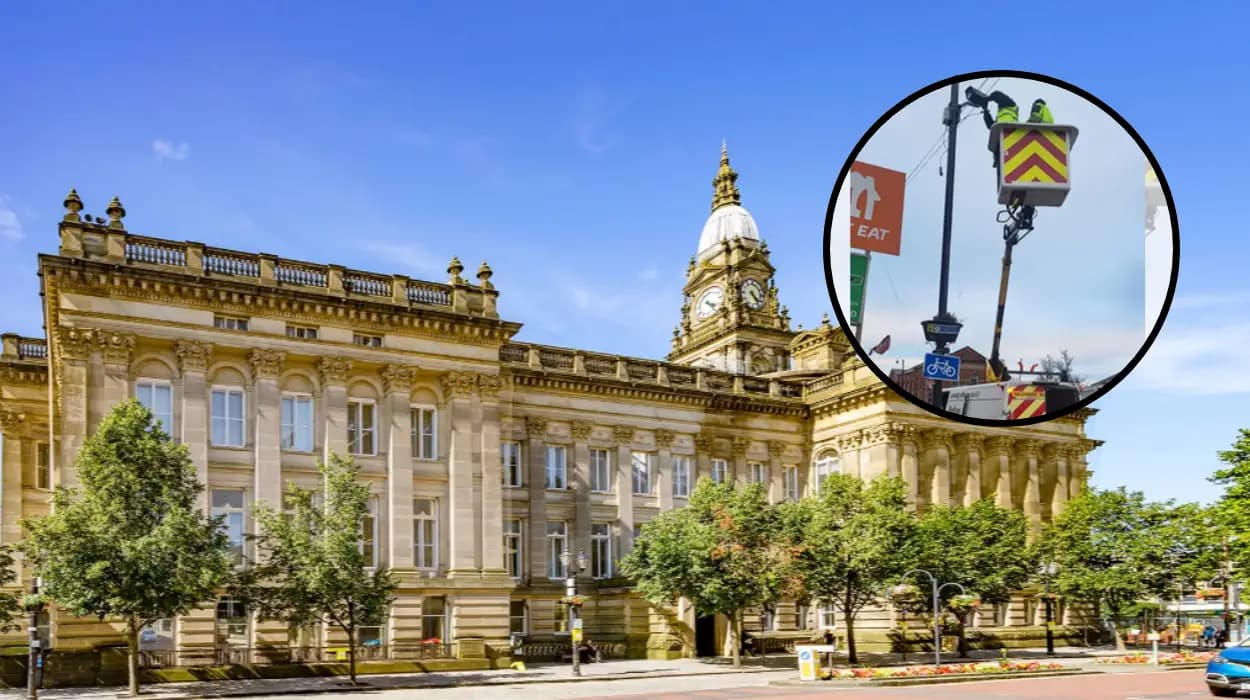
Bolton (Bolton Today) August 29, 2026 – New high-technology cameras targeted at catching persistent speeders and anti-social drivers are set to be installed across Westhoughton as part of an expanding borough-wide road safety initiative.
Following successful trial operations in several areas across Bolton, local authorities and law enforcement have agreed to extend the anti-social driving initiative into Westhoughton. The scheme operates through a tri-party collaboration involving Bolton Council, a specialized camera and data supplier, and Greater Manchester Police (GMP). Under the operational framework, advanced camera systems capture vehicle registration details to identify the top ten most persistent speed violators in a targeted area. Once identified, these individuals are handed over to GMP officers, who issue warning letters or conduct direct home visits—a strategy that local leaders say successfully alters bad driving habits in the vast majority of cases.
What Is the Main Objective of the New Anti-Social Driving Scheme?
As reported by Isobel Forbes of The Bolton News, the initiative aims to target persistent speeders and anti-social drivers in high-risk residential zones by deploying specialized camera units designed to capture registration details of repeat offenders.
The project, which has been operational in parts of Bolton for nearly three years, relies on data-driven surveillance rather than traditional speed traps. Once camera systems harvest registration plate data over a set monitoring period, analysts evaluate the entries to isolate the ten most frequent traffic offenders in that specific locality.
As reported by Isobel Forbes of The Bolton News, Dwayne Lowe, deputy director of highways and planning at Bolton Council, explained the operational procedure during an address to municipal leaders:
"Once we’ve captured the top ten offenders in an area, we pass details to GMP who commit to knocking on the door."
According to municipal statistics released during recent committee briefings, the direct intervention model has delivered an impressive success rate. As reported by Isobel Forbes of The Bolton News, Dwayne Lowe stated that
"Eight out of ten of those offenders started to drive under the speed limit after that visit,"
highlighting that more than 80 per cent of motorists targeted by the scheme subsequently alter their behind-the-wheel behaviour.
How Does the Camera Technology Identify Priority Locations?
As reported by Isobel Forbes of The Bolton News, the anti-social driving camera technology has been hailed as a "game changer" by council officials, leveraging a combination of collision statistics and police intelligence to determine placement.
The units utilize advanced Automatic Number Plate Recognition (ANPR) systems capable of monitoring traffic density, vehicle speed, and repeated infractions over extended intervals. Rather than indiscriminately monitoring all motorists for minor single-offence infractions, the software prioritizes patterns of dangerous and persistent speeding.
As reported by Isobel Forbes of The Bolton News, Dwayne Lowe emphasized that location selection requires rigorous data analysis:
"We carry statistics so we know the roads where there have been incidents, and we have intelligence from police colleagues."
However, local authority leaders acknowledge that structural and technical constraints mean not every requested thoroughfare can accommodate the hardware. As reported by Isobel Forbes of The Bolton News, Dwayne Lowe added:
"Not every road is suitable unfortunately. We are keen to roll them out as much as possible."
Where Has the Anti-Social Driving Scheme Been Successfully Deployed?
As reported by Isobel Forbes of The Bolton News, the anti-social driving camera scheme has already seen active deployment in several key areas across the borough of Bolton, including the Rumworth ward, the A58 Ring Road, the Ladybridge Estate, and Bromley Cross.
In the Rumworth ward specifically, cameras were positioned along major thoroughfares such as St Helens Road and Deane Road, both of which have historically suffered from high collision rates, serious accidents, and frequent reports of street racing.
Local representatives from affected wards have voiced strong support for the positive changes observed since the hardware was deployed. As reported by Isobel Forbes of The Bolton News, Councillor Ayyub Patel stated:
"One fatality on our roads is one too many. Residents feel very strongly about road safety."
Addressing the direct impact on his constituents, Councillor Patel noted the tangible results witnessed during the initial trial phase. As reported by Isobel Forbes of The Bolton News, Cllr Ayyub Patel added:
"The behaviour cameras you mentioned were piloted in my ward, Rumworth, and we have seen a behavioural change. More needs to be done, and any work to improve road safety is welcomed."
Explore More Bolton Traffic News
M61 Delays After Unreported Crash Damages Barrier Near Bolton 2026
M60 Motorway Reopens After Major Multi-Vehicle Crash: Bolton 2026
What Specific Agreements Have Been Made for Westhoughton?
As reported by Isobel Forbes of The Bolton News, formal approval has been reached between local authority executives and police chiefs to expand both the existing infrastructure in Rumworth and roll out a brand-new installation phase in Westhoughton.
During a meeting of Bolton Council’s Place Scrutiny Committee held on August 18, highways officers formally confirmed that law enforcement had greenlit the geographical expansion. However, officials noted that exact road placements within Westhoughton are undergoing final site evaluations.
As reported by Isobel Forbes of The Bolton News, Dwayne Lowe confirmed the operational status to committee members, saying:
"We would love to expand them more, but need to be aware of GMP resources. There has been an agreement made with GMP for the expansion, but I'm not sure where the exact expansion is."
The expansion effort is also receiving financial backing from regional transport authorities. Transport for Greater Manchester (TfGM) has committed funding to support the broader rollout of the technology, ensuring that local councils and police forces have the resources required to maintain the monitoring apparatus and execute follow-up visits.
What Challenges and Concerns Have Been Raised by Local Councillors?
As reported by Isobel Forbes of The Bolton News, despite the overall success of the initiative, elected members have raised concerns regarding driver workarounds and the displacement of speeding onto non-monitored residential side streets.
Councillors pointed out that persistent offenders quickly become familiar with fixed camera locations, intentionally altering their commuting and driving routes to bypass detection zones while continuing to drive recklessly elsewhere in the community.
Speaking during the Place Scrutiny Committee meeting, local representatives highlighted recent road traffic collisions to illustrate that anti-social driving remains a persistent threat. As reported by Isobel Forbes of The Bolton News, Councillor Ismail Ibrahim pointed out that the Rumworth ward continued to experience its "fair share of problems," referencing two recent serious traffic accidents in the vicinity.
Addressing the issue of route diversion, Councillor Ibrahim urged transport planners to carefully select camera sites to prevent offenders from circumventing enforcement. As reported by Isobel Forbes of The Bolton News, Cllr Ismail Ibrahim stated:
"It's important to get locations correct because some of these drivers know where these locations are and purposely change routes to avoid recognition."
Acknowledging the dual nature of camera deterrence, Councillor Ibrahim emphasized that moving traffic to adjacent streets does not fully solve the underlying hazard. As reported by Isobel Forbes of The Bolton News, Cllr Ismail Ibrahim added:
"I know it changes driving behaviour. People who know where these cameras are situated divert, and we're displacing the problem, so that would need to be taken into consideration."
How Does This Project Fit Into Broader Road Safety Initiatives in Greater Manchester?
As reported by Isobel Forbes of The Bolton News, the expansion of anti-social driving cameras in Westhoughton forms part of a much wider, multi-agency push across Greater Manchester to drastically reduce road fatalities and serious injuries.
In addition to targeted anti-social driving cameras, Greater Manchester Police and local councils have been rolling out high-tech "VECTOR-SR" ultra speed cameras throughout the borough, including deployments on major routes such as Chorley New Road in Horwich and Halliwell Road in Bolton. These complementary systems operate 24 hours a day, utilizing sophisticated infrared vision to capture dual-direction speeding violations without the need for visible flashes.
Local council cabinet members responsible for public safety have repeatedly emphasized that camera technology must be paired with personal driver accountability. Officials stress that while technology serves as a vital enforcement tool, long-term road safety depends on drivers respecting speed limits and recognizing that reckless driving carries life-altering consequences for local communities.
With joint funding secured from Transport for Greater Manchester and operational commitments locked in from Greater Manchester Police, highways teams are continuing their technical assessments across Westhoughton. Final camera site announcements and installation timetables are expected to be published following further review by council highways engineers and police transport teams.