Key Points
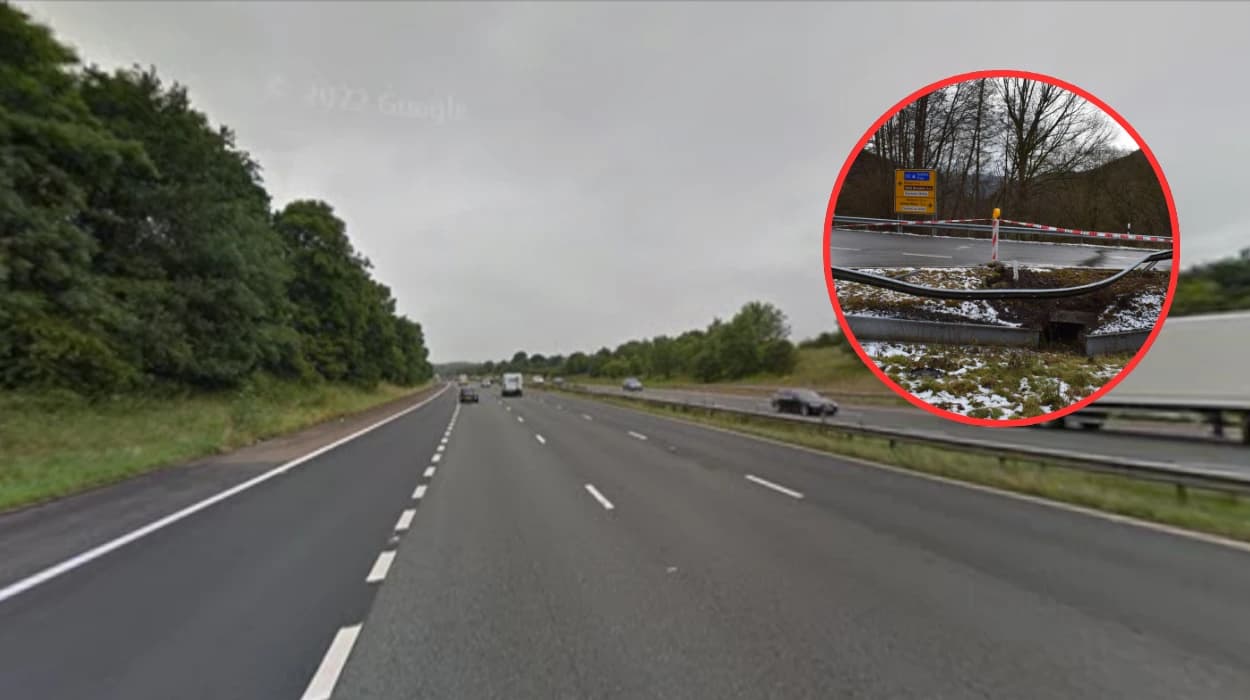
- Emergency Infrastructure Work: National Highways was forced to execute urgent repairs to approximately 50 metres of damaged central reservation barrier on the M61 motorway between Junction 6 (Horwich) and Junction 8 (Chorley).
- Significant Commuter Disruption: Northbound motorists faced severe morning rush-hour delays exceeding 50 minutes, with tailbacks and congestion stretching three miles back towards Manchester.
- Unreported Collision: Greater Manchester Police confirmed the damage stemmed from a road traffic collision that had gone entirely unreported by those involved, with the severe structural disruption only coming to light on Monday morning.
- Multi-Lane Closures: Lane closures were instituted across both directions of the motorway—lanes two and three northbound and lane three southbound—to protect workforce safety during structural barrier restoration.
- Compounded Local Network Gridlock: Commuter chaos across the Bolton borough was intensified by a simultaneous closure on St Peter’s Way due to a separate concern-for-welfare incident handled by emergency services.
- Full Reopening by Midday: National Highways announced the complete reopening of all lanes shortly before 12:00 PM after repair crews successfully restored the safety barrier and cleared traffic bottlenecks.
Bolton (Bolton Today) August 3, 2026 - Thousands of morning commuters traveling through Greater Manchester and Lancashire experienced extensive travel disruption following a major, unreported collision on the M61 motorway near Bolton. Emergency maintenance crews were deployed during the peak morning rush hour to repair approximately 50 metres of severely compromised central reservation barrier between Junction 6 for Horwich and Junction 8 for Chorley. The emergency intervention necessitated long-term lane closures in both directions, triggering severe congestion that backed up for miles towards Manchester and cascaded across local feeder roads throughout the borough.
What Caused The Major Traffic Delays On The M61 Near Bolton?
As reported by Isobel Forbes of The Bolton News, the widespread disruption across the regional road network was caused by emergency engineering works required to restore a substantial section of damaged metal safety fencing separating the northbound and southbound carriageways of the M61.
National Highways inspectors identified that roughly 50 metres of the central reservation barrier had been structurally ruined. The physical damage presented an immediate potential hazard to high-speed traffic, necessitating immediate lane restrictions to allow heavy maintenance vehicles and structural engineers safe access to the median strip.
Because central reservation barriers serve as critical safety apparatus designed to absorb kinetic energy and prevent cross-median vehicle crossovers during high-speed crashes, damaged sections must be replaced immediately under strict safety regulations. Consequently, traffic management systems were deployed during the early hours of Monday morning, severely throttling highway capacity at a time when vehicle volume traditionally reaches its daily peak.
Why Was The Central Reservation Barrier Damage Left Unreported?
According to reporting by Isobel Forbes of The Bolton News, law enforcement officials confirmed that the road traffic collision responsible for destroying 50 metres of safety steel had not been formally reported to the emergency services when it occurred.
Police stated that the incident went unrecorded over the weekend, leaving authorities entirely unaware of the severe structural failure until routine highway patrols and monitoring systems identified the destruction on Monday morning. In standard traffic protocols, drivers involved in collisions that cause damage to public infrastructure or highway safety equipment are legally required to notify the police and highway management authorities immediately.
Because the collision went unreported, National Highways was unable to schedule preventative overnight maintenance during low-volume hours. Instead, the agency had no choice but to initiate high-priority emergency lane closures during the busiest travel window of the week, leaving commuters to absorb the operational consequences of the unreported crash.
How Severely Were Northbound And Southbound Carriageways Impacted?
As detailed by reporter Isobel Forbes in The Bolton News, traffic flow was severely restricted along the M61 artery in both directions between Junction 6 (Horwich) and Junction 8 (Chorley).
To facilitate safe working space for structural repair crews along the central median strip:
- Northbound Carriageway: Lanes two and three were completely shut down, forcing all northbound traffic into a single lane.
- Southbound Carriageway: Lane three was closed to create an adequate safety buffer zone for maintenance personnel.
The severe restriction on northbound capacity created an immediate bottleneck. National Highways registered queues stretching over three miles, with tailbacks extending back towards the Manchester outer orbital network. Drivers navigating the northbound stretch experienced delays peaking at 52 to 60 minutes above typical travel durations, stranding thousands of workers, commercial hauliers, and public transport vehicles during peak operating hours.
What Official Statements Were Released By National Highways And Police?
During the height of the morning gridlock, official channels issued regular status updates to inform the travelling public of operational developments.
As reported by Isobel Forbes of The Bolton News, a spokesperson for National Highways outlined the initial severity of the incident early Monday morning:
"Lanes two and three of the M61 are currently closed northbound between J6 and J8. Lane three is closed southbound. Emergency barrier repairs are required due to 50 metres of central reservation barrier damage following a road traffic collision. There are 52 minutes of delays and three miles of congestion northbound."
The agency maintained continuous monitor coverage of the repairs while police investigated the underlying circumstances of the unreported impact. Following intensive restoration work carried out by on-site engineers, National Highways issued a subsequent statement shortly before midday confirming the resolution of the incident:
"Emergency works complete. All lanes now open on the M61 both ways between J6 Bolton and J8 Chorley. There are no significant delays or congestion in the area. Have a safe journey."
Explore More Bolton Traffic News
M60 Motorway Reopens After Major Multi-Vehicle Crash: Bolton 2026
M61 and M62 Motorists Face Severe Delays in Bolton 2026
How Did Additional Incidents On St Peter’s Way Compound Bolton’s Gridlock?
The motorway disruption did not occur in isolation; rather, it coincided with additional emergency interventions across Bolton's secondary road network, culminating in widespread borough traffic gridlock.
As Isobel Forbes reported for The Bolton News, local traffic conditions were further strained by an emergency closure on St Peter’s Way—one of Bolton’s most critical urban arterial links connecting the town centre directly to the regional motorway system. Emergency services were compelled to temporarily close sections of St Peter’s Way following a separate concern-for-welfare incident.
The simultaneous restriction of both the M61 motorway and St Peter's Way created a severe compound traffic crisis. Drivers seeking to bypass the M61 queue by diverting onto local Bolton routes immediately encountered secondary gridlock on municipal roads, overwhelming local intersections in Farnworth, Westhoughton, and Horwich for several hours.
When Were The Repair Works Completed And Normal Traffic Restored?
The high-priority barrier repair operations were completed shortly before 12:00 PM on Monday. Maintenance teams worked under expedited safety protocols to remove distorted steel fencing, anchor replacement support posts, and install new barrier beams across the affected 50-metre zone.
Once structural integrity checks were verified by site inspectors, National Highways systematically lifted the lane closures on both the northbound and southbound carriageways between Junction 6 and Junction 8. By early afternoon, traffic volumes across the M61 had stabilized, with queue lengths dissipating entirely and transit speeds returning to standard limits.
What Legal And Safety Protocols Apply To Unreported Motorway Collisions?
Under United Kingdom traffic law, specifically Section 170 of the Road Traffic Act 1988, drivers involved in an accident that causes damage to property or highway infrastructure—such as central reservation crash barriers, street lighting, or signage—are subject to strict statutory requirements.
Statutory Duties of Motorists
- Stop and Exchange Details: Drivers must stop at the scene and provide personal identification, vehicle registration numbers, and insurance details to any person having reasonable grounds to require them.
- Mandatory Reporting Window: If personal details are not exchanged at the scene for any reason, the driver must report the collision at a police station or to a police constable as soon as reasonably practicable, and in any case within 24 hours.
- Infrastructure Damage Notification: Failing to report damage caused to motorway infrastructure is a legal offense that carries potential penalties, including driver licence points, substantial fines, and potential disqualification.
Furthermore, National Highways retains legal mechanisms to recover the financial costs of infrastructure repair from the insurance providers of at-fault drivers. When collisions go unreported, law enforcement agencies utilize camera networks, collision debris forensics, and automated number plate recognition (ANPR) systems to identify the responsible vehicles and uphold legal compliance.