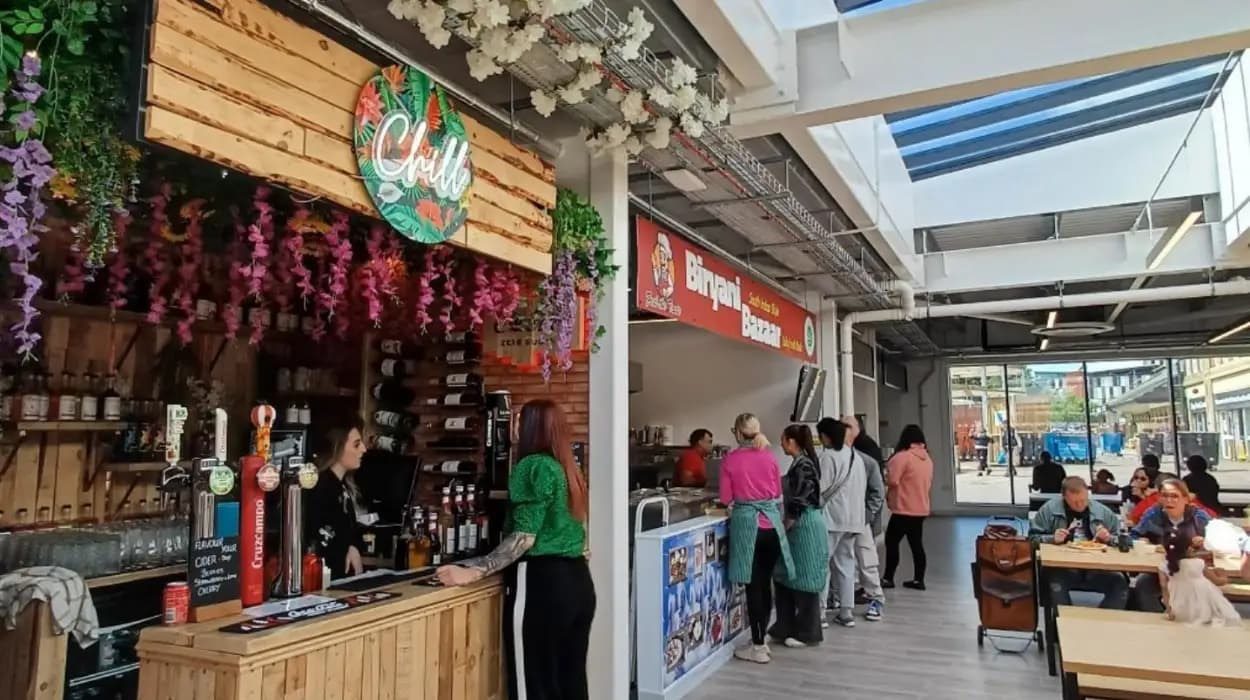
Bolton is widely recognised for its industrial heritage, historic markets, textile legacy, and Victorian architecture. Equally important is its food culture, which reflects centuries of Lancashire traditions, working-class communities, agricultural practices, and later multicultural influences. Traditional foods found in and around Bolton Town Centre preserve recipes that developed through farming, milling, meat production, baking, and local commerce across several centuries.
Today, visitors exploring Bolton Town Centre attractions can experience this culinary heritage through independent bakeries, historic markets, cafés, delicatessens, pubs, and family-owned businesses. Many traditional Lancashire dishes remain available in authentic forms, while others have evolved to suit modern tastes without losing their historical identity.
Food history provides valuable insight into Bolton's social development. Meals eaten by textile workers, miners, farmers, and market traders demonstrate how geography, industry, and local agriculture shaped everyday life. Understanding these foods also helps visitors appreciate why Bolton continues to celebrate Lancashire culinary traditions alongside its diverse contemporary food scene.
Why is Bolton known for traditional Lancashire food?
Bolton's traditional food developed through Lancashire agriculture, textile industry growth, Victorian market trading, and working-class communities. Local recipes emphasised affordable ingredients, seasonal produce, dairy products, oats, potatoes, beef, and baking traditions that remain central to Bolton's culinary identity today.
Bolton formed part of the historic county of Lancashire, one of England's most influential industrial regions during the eighteenth and nineteenth centuries. Before industrialisation transformed the town into a global cotton manufacturing centre, agriculture dominated the surrounding countryside. Farms produced dairy products, oats, barley, vegetables, beef, and lamb that supplied local markets.
The Industrial Revolution dramatically increased Bolton's population. Textile mills employed tens of thousands of workers who required inexpensive, filling meals. Families developed recipes using locally available ingredients that provided energy for physically demanding work. Many traditional Lancashire dishes originated during this period because they maximised nutrition while remaining affordable.
Bolton Market became one of the town's most significant institutions. Farmers, butchers, fishmongers, bakers, cheesemakers, and traders gathered to sell regional produce. The market encouraged food traditions to spread across communities while supporting local agriculture and manufacturing.
Traditional foods also reflected seasonal preservation methods. Before refrigeration became common, curing, pickling, baking, and slow cooking helped families preserve ingredients throughout the year. These techniques remain evident in several Lancashire recipes served today.
Modern Bolton retains many historic food businesses alongside contemporary restaurants. Visitors therefore experience both authentic regional cuisine and newer culinary influences introduced through successive waves of migration.
Which traditional foods should every tourist try in Bolton Town Centre?
Visitors should experience Lancashire Hotpot, Butter Pie, Black Pudding, Eccles Cake, Chorley Cake, Manchester Tart, Lancashire Cheese, Meat and Potato Pie, Parkin, and classic fish and chips because these dishes represent centuries of regional culinary history.
These foods collectively illustrate Lancashire's agricultural economy, industrial workforce, baking heritage, and market traditions. Each recipe developed under different historical circumstances while remaining closely associated with North West England.
Lancashire Hotpot
Lancashire Hotpot remains one of Britain's most recognised regional dishes. It traditionally combines lamb, onions, stock, and sliced potatoes baked slowly until tender.
The dish emerged during the nineteenth century when textile workers needed meals that required minimal supervision. Families placed ingredients inside heavy cooking pots before beginning work, allowing food to cook slowly throughout the day.
Its simplicity reflects Lancashire's farming economy, where sheep farming supplied affordable meat across upland regions.
Butter Pie
Butter Pie occupies a distinctive place within Lancashire cuisine.
The pie contains potatoes, onions, butter, and seasoning enclosed within pastry. It became especially popular because Roman Catholic communities avoided meat on Fridays, creating demand for satisfying vegetarian meals.
Bolton bakeries continue producing Butter Pie using recipes closely resembling Victorian versions.
Lancashire Black Pudding
Black Pudding originated from traditional livestock farming, where communities used every edible part of slaughtered animals.
Prepared from pork blood, oatmeal, fat, and spices, Black Pudding represented economical food production while delivering high nutritional value.
Today, many visitors sample Black Pudding as part of a traditional English breakfast or alongside local market produce.
Meat and Potato Pie
Meat and Potato Pie remains one of Lancashire's defining comfort foods.
The combination of diced beef, potatoes, gravy, and pastry reflects the practical cooking methods developed during industrial expansion. Local bakeries continue preparing handmade versions throughout Greater Manchester and Lancashire.
Lancashire Cheese
Lancashire Cheese production dates back several centuries.
Farmhouses originally produced cheese using milk collected from several daily milkings, creating its distinctive crumbly texture. Modern producers continue manufacturing traditional, creamy, and tasty varieties protected by recognised production standards.
Eccles Cake
Although originating in nearby Eccles, Eccles Cake became firmly established throughout Greater Manchester and Bolton.
The pastry contains currants, butter, sugar, and spices enclosed inside flaky pastry before baking.
Market traders widely distributed Eccles Cakes during the nineteenth century, making them popular across Lancashire.
Chorley Cake
Chorley Cake differs from Eccles Cake despite frequent comparisons.
Its pastry uses shortcrust rather than flaky pastry, creating a denser texture. Currants remain the principal filling.
The recipe demonstrates how neighbouring Lancashire towns developed distinctive baking traditions despite geographical proximity.
Manchester Tart
Manchester Tart represents another regional dessert frequently available across Greater Manchester.
Traditional recipes combine raspberry jam, custard, coconut, and maraschino cherries inside pastry.
Victorian cookbooks popularised the dessert across northern England, including Bolton households.
Parkin
Parkin originated across Lancashire and Yorkshire.
The cake combines oatmeal, ginger, treacle, and syrup to create a dense, moist texture.
Historically associated with autumn celebrations and Bonfire Night, Parkin remains widely available during seasonal events.
Traditional Fish and Chips
Although fish and chips became a national British meal, Lancashire played an important role in its popularity.
Industrial towns supported numerous fish and chip shops because affordable fried food suited expanding urban populations.
Freshly prepared fish and chips remain an essential experience for many visitors exploring Bolton.
How did Bolton's industrial history influence local food traditions?
Industrialisation transformed Bolton's food culture by increasing urban populations, expanding market trade, encouraging affordable recipes, supporting bakery businesses, and creating filling meals suitable for textile workers, miners, engineers, and factory employees throughout the nineteenth century.
Bolton's cotton mills dominated the local economy from the late eighteenth century onwards.
Factory workers typically worked long hours under physically demanding conditions. Meals therefore emphasised carbohydrates, protein, and affordable ingredients that sustained energy throughout the working day.
Pie production expanded rapidly because pies travelled easily and remained filling. Local bakeries supplied workers purchasing food before or after shifts.
Markets also expanded as industrial employment increased disposable income. Improved transport allowed fresh produce, meat, dairy products, and imported goods to reach Bolton more efficiently than earlier generations experienced.
Railway development strengthened connections between agricultural producers and urban consumers. Farmers surrounding Bolton supplied vegetables, dairy, and livestock directly into expanding town markets.
Industrial prosperity therefore diversified food availability while preserving longstanding Lancashire recipes.
What role has Bolton Market played in preserving traditional food?
Bolton Market has protected regional food traditions by supporting independent traders, local farmers, specialist bakers, butchers, cheesemakers, and family businesses while maintaining direct links between consumers and Lancashire agricultural producers for centuries.
Bolton Market traces its origins to medieval trading rights granted centuries before industrialisation.
Successive market developments expanded facilities as Bolton's population increased. Victorian market halls introduced improved sanitation, permanent stalls, and year-round trading.
Traditional food businesses benefited because customers valued trusted local suppliers.
Butchers maintained regional meat preparations.
Cheesemakers supplied locally produced Lancashire Cheese.
Bakers continued producing pies, cakes, breads, and seasonal specialities.
Fishmongers connected inland Bolton with coastal fishing industries through expanding railway networks.
Modern markets preserve this historical role by supporting independent food producers alongside contemporary retailers.
Visitors seeking authentic regional food often begin their culinary exploration within Bolton Market because numerous traditional products remain available in one location.
To experience this historic landmark in person today, consult our comprehensive [Traditional Bolton Dishes and Their Historical Origins] for itineraries and visiting parameters.
Which traditional desserts represent Bolton and Lancashire heritage?
Lancashire desserts reflect agricultural production, seasonal celebrations, Victorian baking traditions, and household recipes. Eccles Cakes, Chorley Cakes, Manchester Tart, Parkin, Treacle Tart, and traditional puddings continue representing regional culinary heritage across Greater Manchester.
Desserts developed differently from everyday meals because they often marked celebrations, religious festivals, or market days.
Sugar became increasingly affordable during the nineteenth century due to expanding global trade.
Bakers therefore experimented with fruit fillings, pastry, syrups, treacle, spices, and preserved ingredients.
Currants became especially important because they stored well and travelled efficiently through commercial trade networks.
Treacle featured prominently because it added sweetness while remaining economical.
Oatmeal reflected Lancashire's agricultural landscape before wheat became dominant.
Many historic recipes therefore combined imported ingredients with locally produced dairy products and grains.
These desserts continue appearing in independent bakeries, tearooms, and cafés throughout Bolton today.
How has immigration influenced Bolton's food culture?
Immigration expanded Bolton's culinary landscape by introducing South Asian, Middle Eastern, Eastern European, African, and Mediterranean cuisines while traditional Lancashire foods remained important parts of the town's historic identity and local hospitality industry.
Post-war migration significantly diversified Bolton's population.
Communities arriving from Pakistan, India, Bangladesh, the Caribbean, Eastern Europe, Africa, and the Middle East established restaurants, bakeries, grocery shops, and cafés.
These businesses transformed Bolton into one of Greater Manchester's diverse food destinations.
Traditional Lancashire recipes nevertheless retained cultural importance.
Many independent cafés continue serving classic English breakfasts featuring Lancashire Black Pudding.
Historic bakeries still produce Butter Pie, Meat and Potato Pie, and regional cakes.
Modern visitors therefore experience both historic Lancashire cuisine and internationally influenced food culture within walking distance across Bolton Town Centre.
This combination reflects Bolton's continuing economic and demographic development.
Where can visitors experience authentic traditional food in Bolton Town Centre?
Visitors find authentic traditional foods through Bolton Market, independent bakeries, historic cafés, traditional pubs, delicatessens, family-owned food businesses, and long-established fish and chip shops that continue serving regional Lancashire recipes throughout the town centre.
Independent businesses preserve many recipes passed through several generations.
Traditional bakeries continue producing handmade pies using established methods.
Markets provide direct access to local cheeses, baked goods, meats, preserves, and seasonal produce.
Historic pubs frequently include Lancashire dishes within their menus, particularly Lancashire Hotpot during colder months.
Specialist delicatessens stock regional products that visitors can purchase as edible souvenirs.
Seasonal food festivals also showcase traditional producers alongside contemporary chefs, encouraging greater public awareness of Lancashire's culinary heritage.
Supporting independent businesses helps preserve traditional recipes that contribute to Bolton's distinctive cultural identity.
Why does traditional food remain important to Bolton's heritage?
Traditional food preserves Bolton's social history, agricultural heritage, industrial development, family traditions, regional identity, and community memory. Historic recipes connect modern residents and visitors with generations who shaped Lancashire through farming, manufacturing, commerce, and local culture.
Food provides historical evidence beyond written records.
Recipes reveal agricultural practices.
Cooking methods demonstrate technological development.
Market traditions illustrate commercial networks.
Regional ingredients reflect environmental conditions.
Working-class meals document industrial society.
Together, these elements create an accessible understanding of Bolton's past.
Museums, heritage organisations, archives, and community groups increasingly recognise food history as an important component of cultural preservation.
Traditional Lancashire recipes therefore remain relevant to tourism, education, genealogy, and local identity.
Visitors who explore Bolton through its food gain insight into everyday life that architecture and monuments alone cannot provide.
As Bolton continues balancing regeneration with heritage conservation, traditional foods remain living expressions of the town's historical character. They connect medieval market traditions, Victorian industrial expansion, twentieth-century community life, and modern multicultural development into one continuous story that visitors can experience through every meal.
FAQS
What is the most famous traditional food in Bolton?
Lancashire Hotpot is one of Bolton's most famous traditional dishes. It consists of slow-cooked lamb, onions, and sliced potatoes, reflecting the town's historic Lancashire culinary heritage.