Bolton is widely recognised for its industrial heritage, textile history, and market town character. Beyond its busy shopping streets and sporting venues, the borough contains extensive countryside, historic estates, reservoirs, woodlands, landscaped parks, and protected nature reserves that offer peaceful environments throughout the year. These landscapes preserve centuries of environmental and cultural history while providing opportunities for walking, wildlife observation, photography, heritage exploration, and quiet recreation.
Located on the north-western edge of Greater Manchester, Bolton covers approximately 140 square kilometres. Around one-third of the borough lies within protected countryside, including sections of the West Pennine Moors. Historic country parks, reservoirs built during the Victorian era, medieval woodland remnants, and restored estates collectively create one of the region's most varied collections of tranquil green spaces.
These locations also illustrate how former agricultural land, private estates, industrial water infrastructure, and moorland have evolved into publicly accessible landscapes. Their continued preservation reflects changing attitudes toward conservation, public health, biodiversity, and heritage management.
Why is Bolton considered one of Greater Manchester's most peaceful destinations?
Bolton combines protected countryside, historic estates, Victorian reservoirs, woodland reserves, landscaped parks, and open moorland within a compact borough. These environments preserve centuries of natural and cultural heritage while offering quiet places away from urban activity throughout every season of the year.
Unlike many large urban centres, Bolton's development left significant green corridors between expanding industrial districts. During the nineteenth century, reservoirs supplied clean water for textile mills and growing communities. Large private estates later became public parks, while sections of ancient woodland survived agricultural and industrial expansion.
Today, Bolton benefits from numerous protected landscapes managed by Bolton Council, the Woodland Trust, United Utilities, Natural England, Lancashire Wildlife Trust, and local conservation organisations. These bodies maintain habitats supporting birds, mammals, insects, amphibians, and native woodland ecosystems.
The borough's varied topography also contributes to its peaceful character. Valleys, hills, reservoirs, woodlands, and moorland naturally disperse visitors across many locations instead of concentrating tourism in one area. As a result, visitors often find quiet walking routes even during busy holiday periods.
To experience these tranquil landscapes in person today, consult our comprehensive [Historic Retreats and Quiet Places Around Bolton] for itineraries and visiting parameters.
Which historic country parks offer the most peaceful surroundings in Bolton?
Historic country parks preserve former aristocratic estates, mature woodland, ornamental gardens, lakes, and open meadows. These landscapes demonstrate how private estates evolved into protected public spaces while maintaining architectural, ecological, and historical significance across successive centuries.
Smithills Estate
Smithills Estate represents one of Bolton's largest historic landscapes. Covering more than 2,000 acres, the estate includes farmland, woodland, streams, gardens, moorland, and the medieval Smithills Hall.
The estate's recorded history extends back to the fourteenth century. Successive owners expanded agricultural land, constructed formal gardens, and developed extensive woodland management systems. During the twentieth century, significant portions entered public ownership and conservation management.
Modern restoration programmes have improved footpaths, restored woodland habitats, protected veteran trees, and increased biodiversity. Visitors frequently encounter quiet woodland trails despite the estate's popularity.
Moses Gate Country Park
Moses Gate Country Park illustrates environmental transformation through land restoration. Much of the area once supported coal mining and heavy industry before reclamation projects created lakes, wetlands, grasslands, and woodland.
The park now supports numerous bird species alongside dragonflies, butterflies, and aquatic wildlife. Its separated lakes and wooded trails provide peaceful settings throughout the year.
Queens Park
Opened in 1866, Queens Park represents Victorian public park design. Wealth generated during Bolton's industrial expansion funded landscaped gardens, ornamental lakes, tree-lined avenues, bridges, and formal planting schemes.
Although located close to the town centre, mature vegetation creates surprisingly secluded walking areas that remain popular with local residents seeking relaxation.
Where can visitors find Bolton's quietest reservoirs and waterside walks?
Bolton's Victorian reservoirs combine engineering heritage with peaceful natural scenery. Originally constructed for public water supply, these landscapes now provide quiet walking routes, wildlife habitats, panoramic viewpoints, and opportunities for observing seasonal environmental change throughout the year.
Jumbles Reservoir
Completed during the nineteenth century, Jumbles Reservoir formed part of Bolton's expanding water supply network. The surrounding woodland has matured over generations, producing sheltered walking routes that remain calm outside peak summer weekends.
Woodland birds, waterfowl, and seasonal wildflowers contribute to the area's ecological value.
Wayoh Reservoir
Wayoh Reservoir lies north of Bolton near Edgworth. Constructed in the 1870s, it became an important component of the region's drinking water infrastructure.
The circular walking route attracts photographers because reflections frequently mirror surrounding hills and woodland. Early mornings often provide exceptionally peaceful conditions.
Entwistle Reservoir
Completed in 1838, Entwistle Reservoir became one of the earliest large reservoirs supplying Bolton. The surrounding woodland supports diverse bird populations including woodland specialists and migratory visitors.
Historic stone structures associated with Victorian water engineering remain visible along sections of the route.
Turton and High Rid Reservoirs
These neighbouring reservoirs occupy valleys shaped long before industrialisation. Their relatively remote setting attracts walkers seeking extended countryside routes away from urban traffic.
The surrounding mixed woodland offers notable seasonal colour during autumn.
Which woodland areas provide the quietest nature experiences?
Bolton's woodlands preserve ancient ecological systems, restored plantations, and mature broadleaf forests. These habitats support native wildlife, improve biodiversity, reduce environmental noise, and create shaded walking environments suitable for peaceful recreation throughout every season.
Barrow Bridge Woodlands
The historic village of Barrow Bridge developed during the nineteenth century as a planned mill settlement. Woodland surrounding the village retains much of its rural character despite nearby urban development.
Stone bridges, woodland streams, and mature trees create an atmosphere distinctly different from Bolton's commercial centre.
Longworth Clough
Longworth Clough combines ancient woodland characteristics with upland stream habitats. Moss-covered rocks, native oak trees, and shaded pathways contribute to a tranquil landscape supporting birds, fungi, and woodland plants.
Seven Acres Country Park
Seven Acres Country Park protects woodland, grassland, wetlands, and ponds. Habitat restoration has increased biodiversity while providing relatively quiet walking opportunities.
Interpretation boards explain conservation management and local ecology.
Hall Lee Bank Park
Although smaller than Bolton's larger country parks, Hall Lee Bank Park contains mature woodland and riverside habitats that create unexpectedly peaceful surroundings close to residential neighbourhoods.
Why are the West Pennine Moors among Bolton's most tranquil landscapes?
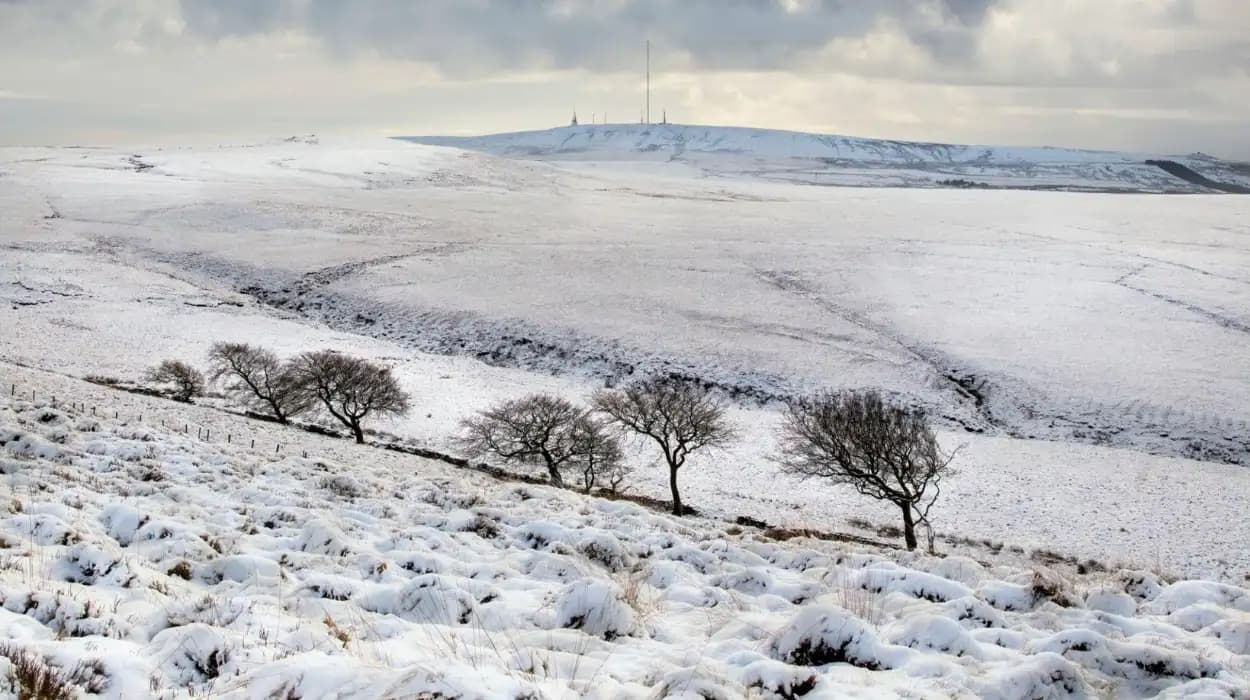
The West Pennine Moors preserve extensive upland habitats shaped by geology, agriculture, and historic land management. Their open landscapes provide panoramic views, reduced visitor density, internationally important wildlife habitats, and exceptional opportunities for quiet walking and landscape photography.
The West Pennine Moors occupy elevated land across Lancashire and Greater Manchester. Large sections bordering Bolton remain protected countryside supporting blanket bog, heathland, grassland, and upland bird populations.
These habitats developed over thousands of years through natural processes and historic grazing practices. Peat soils also store significant quantities of carbon, making conservation increasingly important within climate policy.
Winter Hill
Winter Hill rises approximately 456 metres above sea level and provides extensive views across Greater Manchester, Lancashire, Cheshire, and North Wales during clear weather.
Despite its popularity, the network of surrounding paths allows visitors to disperse across large areas, creating numerous peaceful walking opportunities.
Rivington Moor
Adjacent to Bolton, Rivington Moor combines open moorland with reservoirs, woodland, and historic estate landscapes. The area's broad horizons and changing weather create dramatic scenery throughout the year.
Walker Fold
Walker Fold remains one of the quieter access points into the moorland landscape. The surrounding valleys provide gentle walking routes suitable for visitors seeking solitude.
How do Bolton's heritage villages create peaceful visitor experiences?
Historic villages preserve traditional settlement patterns, stone architecture, woodland settings, rivers, and agricultural landscapes. Their slower pace contrasts with urban development while illustrating Bolton's medieval and industrial evolution through surviving buildings and carefully maintained public spaces.
Barrow Bridge
Barrow Bridge developed as a model village during the nineteenth century for workers employed in nearby textile mills.
Stone cottages, narrow lanes, mature trees, and surrounding woodland maintain much of the settlement's original appearance. Conservation policies help preserve its architectural integrity.
Chapeltown
Chapeltown remains a small rural settlement surrounded by countryside. Historic buildings reflect agricultural traditions that predate Bolton's industrial expansion.
Nearby walking routes connect visitors with reservoirs, woodland, and moorland.
Edgworth
Edgworth combines traditional village character with proximity to several reservoirs and countryside walking routes. Historic stone buildings continue to define its visual identity.
What role do protected nature reserves play in preserving Bolton's peaceful landscapes?
Nature reserves protect sensitive habitats, native wildlife, and ecological diversity through conservation management. Restricted development, habitat restoration, scientific monitoring, and public education ensure these peaceful environments remain available for future generations while supporting regional biodiversity.
Protected areas across Bolton support breeding birds, mammals, reptiles, amphibians, insects, fungi, and native plant communities.
Conservation organisations undertake habitat management using evidence-based ecological practices. Examples include woodland thinning, pond restoration, meadow management, invasive species removal, and peatland conservation.
Long-term biodiversity monitoring records changes in wildlife populations and informs future conservation decisions.
Educational programmes encourage responsible access while explaining the ecological significance of protected habitats.
How have Bolton's peaceful landscapes changed since the Industrial Revolution?
Industrialisation transformed Bolton through textile manufacturing, mining, reservoirs, transport infrastructure, and urban expansion. Conservation initiatives during the twentieth century restored many landscapes, allowing former industrial environments to become valued recreational and ecological assets supporting heritage preservation and biodiversity.
Before industrialisation, much of Bolton consisted of scattered farming communities surrounded by woodland, pasture, and open moorland.
During the late eighteenth and nineteenth centuries, textile mills expanded rapidly. Coal mining, quarrying, canals, railways, and reservoirs altered large areas of countryside.
Public concern regarding overcrowding, pollution, and public health encouraged investment in parks and open spaces. Victorian civic leaders promoted landscaped parks as essential public amenities.
Following industrial decline during the twentieth century, extensive restoration transformed former industrial sites into country parks, woodland reserves, and wildlife habitats.
These projects demonstrate how environmental recovery can preserve historical landscapes while improving ecological resilience.
Why do Bolton's peaceful places remain important for future generations?
Bolton's tranquil landscapes preserve environmental history, cultural heritage, biodiversity, and public wellbeing. Continued conservation protects historic estates, reservoirs, woodland, and moorland while ensuring future generations benefit from accessible green spaces that document centuries of regional development.
Climate change, biodiversity loss, and urban growth have increased the importance of conserving accessible natural environments.
Ancient woodland stores carbon, reservoirs support freshwater ecosystems, wetlands reduce flood risk, and moorland protects internationally significant peat habitats.
Historic parks continue preserving Victorian landscape architecture, while former estates maintain archaeological features reflecting centuries of land management.
Educational institutions increasingly use Bolton's countryside for ecological research, environmental science, geography, archaeology, and local history studies. These landscapes provide practical examples of sustainable conservation and historical preservation.
Tourism also contributes to conservation awareness. Visitors who understand the historical significance of these landscapes are more likely to support responsible recreation and heritage protection.
Bolton's peaceful places therefore represent far more than scenic destinations. They document the borough's transformation from medieval agricultural communities through industrial expansion and into a modern landscape where heritage conservation and environmental stewardship work together. Their continued protection ensures that future generations will inherit not only attractive countryside but also a living historical record embedded within woodland, reservoirs, country parks, villages, and the upland landscapes of the West Pennine Moors.
FAQS
Where are the quietest places to visit in Bolton?
Some of Bolton's quietest locations include Smithills Estate, Jumbles Country Park, Wayoh Reservoir, Entwistle Reservoir, Moses Gate Country Park, Barrow Bridge, Seven Acres Country Park, and the West Pennine Moors.