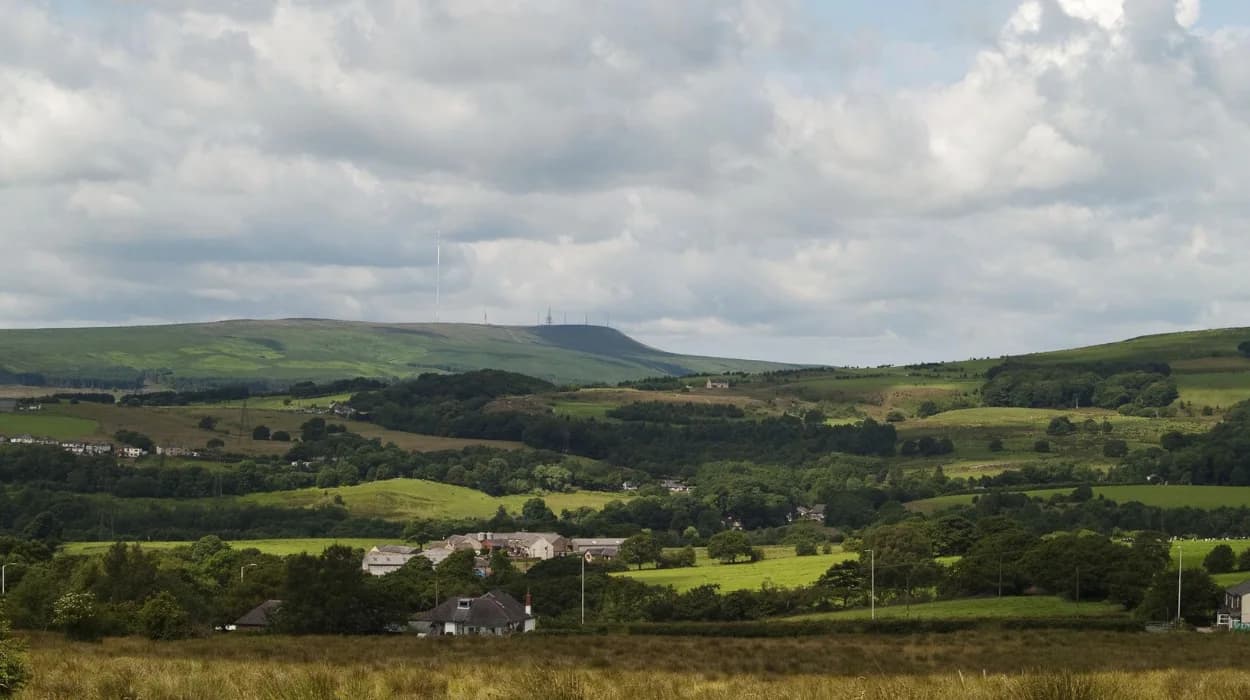
Historic retreats and quiet places around Bolton are landscapes, religious sites, country estates, reservoirs, woodlands, parks, and moorland environments that have provided refuge, reflection, recreation, and conservation across centuries. Together they preserve Bolton's rural heritage alongside its industrial and cultural history.
Bolton is widely recognised for its role in Britain's Industrial Revolution, yet the borough also contains an extensive network of peaceful landscapes that have remained largely unchanged despite centuries of urban development. Ancient woodland, medieval parish land, Victorian public parks, reservoirs, country estates, and upland moors demonstrate how natural environments continued to shape community life alongside factories and textile mills.
These locations served different historical purposes. Some functioned as private estates belonging to influential Lancashire families. Others supplied drinking water during rapid industrial expansion. Religious communities used isolated landscapes for contemplation, while Victorian civic leaders established public parks to improve health and recreation for growing urban populations.
Today these historic retreats continue to protect biodiversity, preserve archaeological remains, and provide access to landscapes that illustrate Bolton's transformation from medieval farming settlements into one of northern England's leading industrial centres.
Why did Bolton develop so many peaceful historic landscapes?
Bolton developed numerous peaceful landscapes because medieval agriculture, estate management, water supply projects, religious traditions, and Victorian public health reforms preserved significant green spaces despite rapid industrialisation during the eighteenth and nineteenth centuries.
Before industrialisation, Bolton consisted primarily of scattered agricultural settlements surrounded by woodland, pasture, rivers, and open moorland. Medieval manorial estates controlled much of the surrounding countryside, while common grazing land supported local farming communities.
The Industrial Revolution dramatically altered Bolton after the late eighteenth century. Cotton spinning, coal mining, engineering, and textile manufacturing attracted thousands of workers. Between 1801 and 1901, Bolton's population increased from approximately 17,000 residents to more than 168,000, according to historical census records.
Despite this rapid expansion, several landscapes escaped urban development because they fulfilled essential functions. Reservoirs protected municipal water supplies. Country estates remained under private ownership. Woodland survived where terrain restricted construction. Public parks received legal protection through municipal planning.
The result is a remarkable collection of historic retreats that reveal different chapters of Bolton's environmental, architectural, and social history.
How has Smithills Estate preserved centuries of Bolton's history?
Smithills Estate preserves more than 800 years of Bolton's history through its medieval manor house, agricultural landscapes, woodland, moorland, historic farms, and conservation projects that protect one of Lancashire's most significant heritage estates.
Smithills Estate occupies approximately 2,000 acres on Bolton's western edge. The estate centres on Smithills Hall, whose oldest surviving sections date from the fourteenth century. Over subsequent centuries, wealthy families including the Radcliffe family expanded the property into an important Lancashire country estate.
The surrounding landscape reflects continuous agricultural management over hundreds of years. Historic field boundaries, stone walls, ancient woodland, farm buildings, and moorland remain visible today.
During the Industrial Revolution, the estate stood in striking contrast to Bolton's expanding textile districts. While mills dominated the town centre, Smithills retained its rural character through controlled estate management.
Modern conservation work has strengthened this historical legacy. Woodland restoration, improved public access, habitat management, and archaeological recording preserve the estate's environmental and historical significance for future generations.
To experience this historic landscape in person today, consult our comprehensive [Peaceful Places in Bolton Where Tourists Can Escape Busy Crowds and Relax] for itineraries and visiting parameters.
Why is Jumbles Country Park historically important?
Jumbles Country Park represents Bolton's nineteenth-century water infrastructure while preserving an attractive rural valley that later evolved into one of the borough's most valued recreational and conservation landscapes.
Jumbles Reservoir opened in 1902 as part of Bolton's expanding municipal water supply network. Reservoir construction reflected the growing demands created by industrialisation and population growth.
Reliable drinking water became essential as textile production expanded and residential districts developed rapidly. Reservoir engineering transformed valleys throughout Greater Manchester during this period.
The surrounding woodland and grassland gradually developed into a protected country park. Wildlife habitats expanded naturally around the reservoir, creating an important ecological resource alongside its engineering heritage.
Today visitors encounter both industrial history and environmental conservation. Stone embankments, historic water management structures, mature woodland, and carefully maintained walking routes illustrate the long-term relationship between infrastructure and landscape preservation.
What makes Rivington one of Bolton's most significant historic retreats?
Rivington combines aristocratic estate history, Victorian engineering, religious symbolism, and protected moorland into one of North West England's most historically significant heritage landscapes.
Although administratively located outside Bolton's modern boundary, Rivington has maintained close historical connections with Bolton residents for generations.
The area's historical importance increased during the nineteenth century through the work of William Hesketh Lever, later Lord Leverhulme. Lever purchased extensive land and commissioned ornamental structures, gardens, pathways, bridges, and the famous Pigeon Tower.
The wider Rivington landscape also formed part of Liverpool's major water supply system. Reservoir construction between the 1850s and early twentieth century transformed local valleys while preserving extensive woodland and moorland.
Today Rivington Terraced Gardens represent one of Britain's largest heritage landscape restoration projects. Conservation organisations continue restoring original architectural features using historical plans and archaeological evidence.
The surrounding moorland also contains prehistoric archaeological remains including Bronze Age features that demonstrate human occupation extending back thousands of years.
How do Moses Gate Country Park and the River Croal reflect Bolton's environmental history?
Moses Gate Country Park demonstrates how former industrial land, river valleys, wetlands, and woodland have been restored into protected green spaces that preserve Bolton's environmental transformation across multiple centuries.
The River Croal shaped settlement patterns long before industrialisation. Watercourses supported agriculture, powered early mills, and later supplied factories during Bolton's manufacturing expansion.
Industrial activity altered much of the valley through mining, quarrying, and engineering. By the twentieth century, environmental restoration became an increasing priority.
Moses Gate Country Park emerged through landscape regeneration programmes that converted former industrial land into accessible natural habitats.
The park now contains wetlands, woodland, lakes, grassland, and restored river corridors. These environments support diverse wildlife while illustrating successful environmental recovery.
Historic transport routes, industrial archaeology, and surviving landscape features demonstrate how conservation has integrated Bolton's industrial legacy with ecological restoration.
Why are Bolton's ancient woodlands historically valuable?
Bolton's ancient woodlands preserve ecological continuity, medieval land management, historic boundary systems, and biodiversity that predate the Industrial Revolution by several centuries.
Ancient woodland refers to land continuously wooded since at least 1600 in England. These habitats contain distinctive plant communities, veteran trees, and soils that developed over hundreds of years.
Examples include woodland within Smithills Estate, Hall Lee Bank Park, Barrow Bridge surroundings, and sections bordering the West Pennine Moors.
Many woodlands supplied timber, charcoal, fencing materials, and fuel during the medieval and early modern periods. Estate owners carefully managed woodland through rotational coppicing, selective harvesting, and boundary maintenance.
Today these landscapes support nationally important wildlife including ancient woodland indicator species such as bluebells, wood anemones, and wild garlic.
Historic woodland also protects archaeological evidence including former trackways, boundary banks, abandoned quarries, and agricultural remains.
What role did Victorian parks play in creating quiet public spaces?
Victorian public parks improved public health by providing accessible green spaces where industrial workers could enjoy fresh air, recreation, exercise, and peaceful surroundings away from crowded urban neighbourhoods.
The nineteenth century witnessed rapid urban growth throughout industrial Britain. Overcrowded housing, pollution, and poor sanitation prompted municipal authorities to invest in public parks.
Queens Park opened in 1866 following public subscription and municipal support. The park represented Victorian beliefs that carefully designed landscapes improved both physical health and moral wellbeing.
Formal gardens, tree-lined avenues, ornamental lakes, bandstands, and open lawns reflected contemporary landscape design principles.
These parks became important civic institutions. Families attended concerts, sporting events, and community celebrations while also enjoying quiet recreational walks.
Many original Victorian design features remain preserved through ongoing heritage management, demonstrating nineteenth-century approaches to urban planning and public welfare.
How have Bolton's reservoirs become places of heritage and tranquillity?
Bolton's reservoirs evolved from essential engineering infrastructure into protected landscapes where industrial heritage, wildlife conservation, recreation, and environmental education coexist within peaceful natural surroundings.
Reservoir construction accelerated throughout the nineteenth century to meet increasing industrial and domestic water demand.
Examples include Jumbles Reservoir, Belmont Reservoir, Delph Reservoir, and Wayoh Reservoir. Each illustrates different stages in regional water management development.
Victorian engineers selected upland valleys because natural topography supported efficient dam construction and water storage.
Over time, surrounding woodland matured naturally while conservation policies protected habitats for birds, mammals, insects, and aquatic species.
Today reservoirs attract walkers, birdwatchers, photographers, and historians interested in both engineering heritage and environmental conservation.
Historic dams, overflow structures, stone spillways, and maintenance buildings continue demonstrating Victorian civil engineering excellence.
Why do the West Pennine Moors remain one of Bolton's quietest historic landscapes?
The West Pennine Moors preserve prehistoric archaeology, medieval grazing traditions, upland ecology, historic transport routes, and panoramic landscapes that have remained largely undeveloped for centuries.
The West Pennine Moors extend across Lancashire and Greater Manchester, forming one of the region's largest protected upland environments.
Human activity here extends back thousands of years. Archaeological investigations have identified prehistoric burial sites, Bronze Age monuments, ancient trackways, and early farming evidence.
Medieval communities used the moors primarily for grazing sheep and cattle. Stone boundary markers and historic packhorse routes remain visible across sections of the landscape.
Industrialisation increased recreational access as nearby urban populations sought cleaner air and open countryside.
Today the moors remain designated for environmental protection due to internationally significant peatland habitats, bird populations, and biodiversity.
The landscape also plays an important environmental role by storing carbon, regulating water flow, and supporting habitat restoration initiatives.
How are Bolton's historic retreats protected for future generations?
Historic retreats around Bolton are protected through heritage designation, conservation management, environmental legislation, charitable ownership, local authority planning, archaeological research, and long-term restoration programmes.
Protection involves cooperation between multiple organisations including local authorities, conservation charities, heritage trusts, environmental agencies, and volunteer groups.
Historic buildings receive statutory listing where architectural significance warrants legal protection. Conservation areas preserve broader historic landscapes. Country parks operate under long-term environmental management plans.
National organisations including the Woodland Trust, National Trust, Historic England, and Natural England contribute expertise, research, and funding across different heritage sites where applicable.
Archaeological surveys continue identifying previously undocumented landscape features. Habitat restoration improves biodiversity while respecting historical character.
Educational programmes also strengthen preservation by encouraging local communities to understand the historical importance of Bolton's natural heritage.
Climate adaptation increasingly forms part of conservation planning through woodland expansion, peatland restoration, flood management, and biodiversity enhancement.
What do Bolton's quiet historic places reveal about the borough's identity?
Bolton's historic retreats reveal that the borough's identity extends beyond industrial achievement to include environmental stewardship, medieval heritage, landscape conservation, public health reform, and centuries of continuous interaction between people and nature.
The borough's peaceful landscapes preserve evidence from every major historical period. Medieval estates illustrate feudal landownership. Ancient woodland reflects early environmental management. Reservoirs demonstrate Victorian engineering innovation. Public parks embody nineteenth-century social reform. Moorland protects prehistoric archaeology and internationally important ecosystems.
Together these places challenge the perception that Bolton's history consists solely of cotton mills and industrial expansion. Instead, they demonstrate how communities consistently balanced economic development with the preservation of natural landscapes.
Modern restoration projects reinforce this legacy by protecting architectural heritage, improving biodiversity, and expanding public access without compromising historical integrity.
For historians, genealogists, educators, and visitors, Bolton's quiet retreats provide living evidence of how landscapes evolve while retaining connections to earlier generations. Their continued preservation ensures that future research, education, and recreation remain rooted in authentic historical environments, making these tranquil spaces essential components of Bolton's cultural heritage rather than simply attractive places to visit.
FAQS
What are the best historic retreats around Bolton?
Some of the best historic retreats around Bolton include Smithills Estate, Rivington, Jumbles Country Park, Moses Gate Country Park, Barrow Bridge, the West Pennine Moors, and Queens Park, all of which combine heritage with peaceful natural surroundings.