Astley Bridge is a historic district in the northern part of Bolton, Greater Manchester. Developed from a small rural settlement into an important industrial community during the eighteenth and nineteenth centuries, the area combines historic landmarks, green spaces, local food venues, and surviving evidence of Lancashire's textile heritage. A day in Astley Bridge offers visitors an opportunity to understand the relationship between industrial growth, suburban development, and community life in Bolton.
For visitors seeking a balanced itinerary, Astley Bridge provides a compact destination where history, recreation, and local culture remain closely connected. Its historic churches, former mill sites, public parks, and established commercial areas illustrate more than two centuries of social and economic change.
Why is Astley Bridge an ideal destination for a day trip?
Astley Bridge combines industrial heritage, Victorian development, public green spaces, and modern amenities within a compact area. Visitors can explore historic sites, enjoy local food, walk through parks, and understand Bolton’s transformation from a textile-producing town into a modern urban community.
Located approximately two miles north of Bolton town centre, Astley Bridge developed around the crossing point of the River Astley. The area's strategic location contributed to its growth during the Industrial Revolution. Textile manufacturing expanded rapidly across Bolton during the late eighteenth century and throughout the nineteenth century, bringing population growth and urban development to districts such as Astley Bridge.
Today, visitors encounter a landscape where historic and modern features coexist. Former industrial areas have been redeveloped, while churches, public buildings, roads, and parks preserve evidence of earlier periods. The district remains one of Bolton's most recognisable suburban communities.
A successful day itinerary in Astley Bridge follows three themes. These themes include local heritage sites, examples include churches and former mill districts; public green spaces, examples include public parks and recreational grounds; and food establishments, examples include cafés, bakeries, and restaurants serving local residents.
Understanding these elements provides valuable context before exploring the area.
How should visitors begin their morning in Astley Bridge?
Visitors should begin their morning by exploring Astley Bridge’s historic core, where nineteenth-century development patterns, religious architecture, and former industrial infrastructure reveal the foundations of the area's growth during Bolton’s textile era.
Morning exploration provides the clearest opportunity to examine Astley Bridge's historical landscape before commercial areas become busier later in the day.
The district takes its name from the historic crossing over the River Astley. Watercourses played a critical role in early settlement patterns throughout Lancashire. Before industrialisation, the surrounding area consisted primarily of agricultural land and scattered farmsteads.
Significant change occurred between 1770 and 1900. During this period, Bolton became one of Britain's leading cotton manufacturing centres. The town's population increased dramatically as mills, workshops, and supporting industries expanded.
Astley Bridge benefited from this economic growth. Improved transportation links connected the district to Bolton and neighbouring communities. Residential streets emerged to accommodate workers and middle-class residents employed by the textile industry.
One of the most important surviving landmarks is the parish church of St Paul's. Constructed during the nineteenth century, the building reflects Gothic Revival architectural influences that became popular across Britain. Churches served multiple functions beyond religious worship. They acted as educational centres, community meeting places, and charitable institutions.
Architectural features commonly associated with Victorian ecclesiastical buildings include pointed arches, stone construction, stained-glass windows, and prominent towers. These characteristics remain visible in Astley Bridge today.
Walking through the older streets reveals a mixture of housing styles. Terraced houses built for industrial workers stand alongside larger residences constructed for business owners and professionals. This diversity reflects the social structure of nineteenth-century Bolton.
The built environment provides direct evidence of industrial prosperity. Many streets retain their original layout despite subsequent redevelopment.
What local history can visitors discover during a walk through Astley Bridge?
A walk through Astley Bridge reveals evidence of textile manufacturing, Victorian urban planning, religious development, and twentieth-century suburban expansion. Historic street patterns, former mill locations, and surviving civic structures illustrate the area's long-term transformation.
The history of Astley Bridge cannot be separated from Bolton's wider industrial story.
By the mid-nineteenth century, cotton spinning and weaving dominated the local economy. Lancashire became the world's leading cotton-producing region. Bolton alone contained hundreds of textile-related businesses during the industry's peak years.
Although many mills have disappeared, former industrial sites continue to shape the local landscape. Redeveloped commercial premises and residential developments often occupy locations once associated with manufacturing.
Industrial growth encouraged the construction of supporting infrastructure. These developments included schools, examples include church schools and municipal schools; public utilities, examples include water systems and sanitation facilities; and transportation networks, examples include tram routes and improved roads.
Historical records demonstrate the scale of population growth. Bolton's population expanded from approximately 17,000 in 1801 to more than 180,000 by the early twentieth century. Astley Bridge absorbed part of this increase through residential construction and commercial development.
Visitors interested in heritage interpretation should observe building materials and street layouts. Stone and brick structures reflect local construction traditions. Straight road alignments often indicate planned Victorian development rather than earlier rural settlement patterns.
The district also reflects changing patterns of public life. During the nineteenth century, churches, working men's clubs, educational institutions, and charitable organisations played major roles in community identity.
Many of these functions evolved throughout the twentieth century. Economic restructuring reduced the dominance of textile manufacturing, while retail and service industries became increasingly important.
To experience this historic landscape in person today, consult our comprehensive How to Spend a Day in Astley Bridge: Food, Parks, and Local History for itineraries and visiting parameters.
The surviving urban fabric provides valuable evidence for understanding how industrial communities adapted to changing economic conditions.
Which parks and green spaces should visitors explore in Astley Bridge?
Astley Bridge offers accessible green spaces that reflect Victorian public health reforms and modern recreational priorities. Parks provide opportunities for walking, relaxation, wildlife observation, and understanding how urban communities incorporated public open space into industrial environments.
Public parks became increasingly important during the nineteenth century. Rapid industrialisation created crowded urban environments across Britain. Reformers argued that green spaces improved public health, social welfare, and quality of life.
Astley Bridge benefits from several recreational areas that continue this tradition.
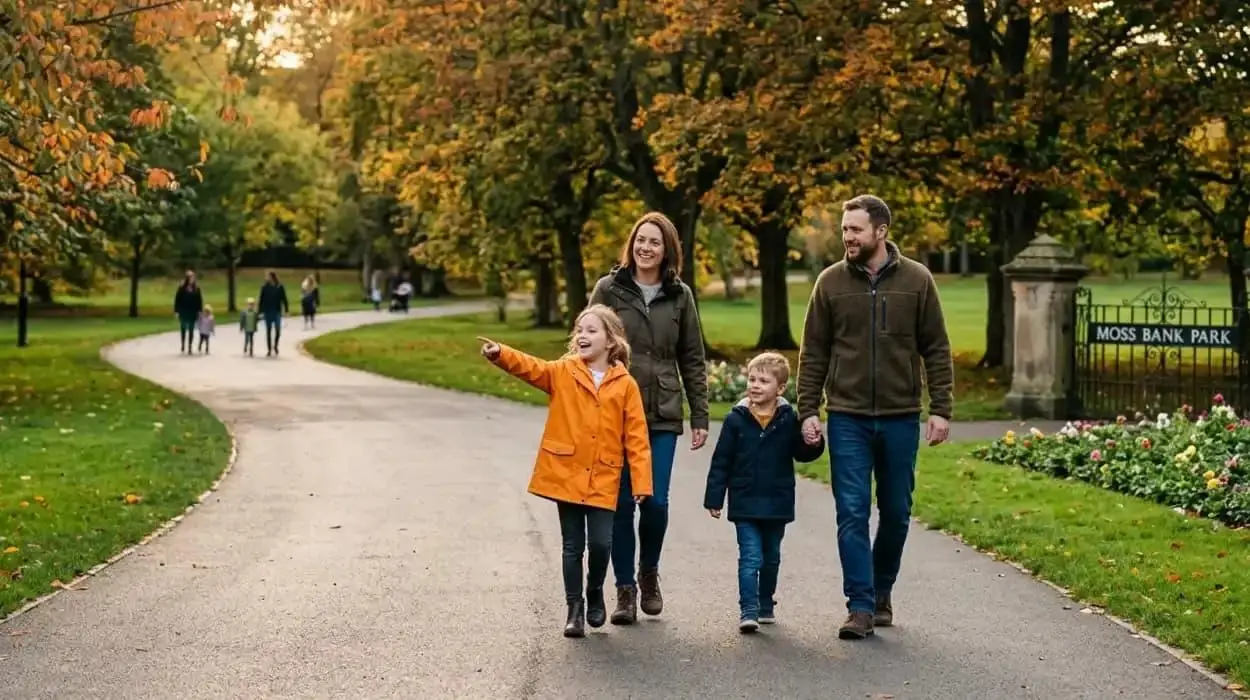
Moss Bank Park is among the most significant nearby green spaces serving the northern Bolton area. The park contains woodland, walking routes, recreational facilities, and open grassland. Visitors can observe how managed landscapes provide environmental benefits within an urban setting.
Victorian planners increasingly recognised the value of accessible public parks. Municipal authorities across Britain invested in recreational grounds to serve growing populations.
Green spaces perform several functions. These functions include environmental management, examples include biodiversity conservation and tree planting; recreation, examples include walking and sports; and community engagement, examples include public events and social gatherings.
The area's mature trees and landscaped sections also reflect long-term stewardship. Urban forestry initiatives contribute to air quality improvement and habitat creation.
Walking routes allow visitors to observe local geography. The terrain demonstrates how natural features influenced settlement development. Rivers, slopes, and transportation corridors all shaped patterns of growth.
For heritage-focused visitors, parks provide a useful contrast with the district's industrial history. They illustrate changing attitudes toward public space and urban planning during the nineteenth and twentieth centuries.
Modern conservation efforts ensure that these green spaces remain valuable community assets.
Where can visitors enjoy food and local dining during their day?
Astley Bridge offers a range of cafés, bakeries, restaurants, and takeaway establishments that reflect both traditional Lancashire food culture and the area's increasingly diverse modern population. Local dining forms an important part of understanding community life.
Food establishments often reveal significant aspects of local history.
Historically, industrial communities relied upon bakeries, markets, public houses, and small shops that served workers and residents. These businesses formed essential components of neighbourhood economies.
Modern Astley Bridge retains this tradition through a diverse range of independent and established food venues.
Visitors beginning their day can find cafés serving breakfast and refreshments. Traditional offerings often reflect broader northern English culinary traditions. Common examples include full English breakfasts, locally baked goods, and tea-based refreshments.
Lunch options illustrate the area's demographic evolution. Contemporary Bolton has become increasingly diverse, contributing to a wider variety of cuisines.
Commercial centres within Astley Bridge support restaurants and food businesses representing different culinary traditions. This diversity reflects broader patterns of migration and cultural exchange throughout Greater Manchester.
Food history forms an important aspect of local heritage. Lancashire's industrial workforce required affordable and filling meals. Traditional regional dishes emerged from practical economic conditions and available ingredients.
Examples include Lancashire hotpot, meat-and-potato combinations, and bakery products associated with working-class communities.
Dining establishments also function as social spaces. Historically, public houses, cafés, and community venues provided opportunities for social interaction beyond workplaces and homes.
Modern businesses continue this role by supporting local economic activity and community engagement.
Visitors who include food experiences within their itinerary gain a broader understanding of Astley Bridge as a living community rather than solely a historic destination.
How did industrialisation shape the modern character of Astley Bridge?
Industrialisation transformed Astley Bridge from a rural settlement into a densely populated suburban district. Textile manufacturing, transportation improvements, and urban development created the foundations of the community that exists today.
Industrialisation remains the most important force in Astley Bridge's historical development.
Before the late eighteenth century, the area consisted primarily of agricultural land. Economic activity centred on farming and small-scale domestic production.
The Industrial Revolution altered these conditions dramatically.
Mechanised textile production increased demand for labour and infrastructure. Bolton became internationally recognised for cotton spinning and related industries. This growth attracted workers from surrounding rural districts and other regions.
Population increases required housing construction. New residential streets appeared across expanding suburban areas, including Astley Bridge.
Industrial development also encouraged investment in transportation.
Infrastructure improvements included roads, examples include improved turnpike routes; rail connections, examples include regional railway networks; and public transport systems, examples include tram services introduced during later periods.
These developments improved mobility and strengthened commercial links.
Economic prosperity supported civic improvements. Educational institutions expanded. Religious organisations constructed new buildings. Local authorities invested in public services.
The twentieth century introduced significant challenges. Global competition and technological change contributed to the decline of Britain's cotton industry.
Many mills closed during the mid-twentieth century. Communities across Lancashire experienced economic restructuring.
Astley Bridge adapted through commercial diversification and residential development. Former industrial sites found new uses, while public investment supported regeneration initiatives.
This transition illustrates broader patterns affecting many former industrial districts throughout northern England.
What historic landmarks remain visible in Astley Bridge today?
Several historic landmarks remain visible in Astley Bridge, including religious buildings, Victorian streetscapes, civic structures, and surviving elements of the industrial landscape. These features provide tangible connections to the area's nineteenth-century development.
Historic landmarks help visitors interpret local history through physical evidence.
Religious buildings remain among the most prominent structures. Churches constructed during the nineteenth century reflect population growth and community organisation during the industrial era.
Architectural characteristics often include stone masonry, Gothic Revival detailing, and prominent towers visible from surrounding streets.
Residential architecture also contributes to local heritage significance.
Housing types include workers' terraces, examples include late Victorian brick terraces; suburban villas, examples include larger residences built for professionals; and interwar housing, examples include developments from the 1920s and 1930s.
Together, these structures document changing social and economic conditions.
Former commercial buildings provide additional evidence of local development. Shops, community halls, and institutional buildings illustrate the services required by expanding populations.
Historic street alignments remain particularly important. Urban historians frequently use street patterns to understand settlement growth and planning priorities.
Preservation efforts help maintain these assets. Heritage awareness has increased substantially during recent decades. Local organisations, historians, and community groups continue documenting Astley Bridge's past.
The preservation of historic environments supports education, tourism, and community identity.
Why does Astley Bridge remain important to Bolton's heritage today?
Astley Bridge remains important because it preserves evidence of Bolton's industrial growth, suburban expansion, community development, and cultural evolution. The district demonstrates how local history continues to shape modern identity and urban life.
Heritage significance extends beyond individual buildings.
Astley Bridge represents a broader historical process that affected communities throughout Britain during the Industrial Revolution. The district illustrates how economic change influenced settlement patterns, architecture, public institutions, and daily life.
Historical research continues to reveal new information about local development. Archival records, census data, maps, and municipal documents provide valuable evidence for understanding past communities.
Educational institutions frequently use local history to teach broader historical themes. These themes include industrialisation, examples include textile manufacturing; urbanisation, examples include suburban growth; and social change, examples include shifts in employment and community organisation.
Heritage preservation also contributes to cultural continuity.
Residents benefit from understanding how previous generations shaped the environment they inhabit today. Visitors gain insight into the historical forces that transformed northern England.
Astley Bridge demonstrates the lasting relationship between place and history. Its churches, streets, parks, commercial areas, and surviving industrial landscapes form an interconnected historical record spanning more than two centuries.
A full day spent exploring the district provides far more than recreational value. It offers a structured introduction to the development of Bolton, the growth of Lancashire's textile economy, and the continuing importance of preserving local heritage. Through its food culture, public parks, and historical landmarks, Astley Bridge remains an accessible and informative destination for anyone seeking to understand the evolution of one of Bolton's most distinctive communities.
FAQS
What is the best way to explore Astley Bridge?
Walking is the best way to explore Astley Bridge, allowing visitors to discover historic streets, local landmarks, parks, and independent food venues at a relaxed pace.