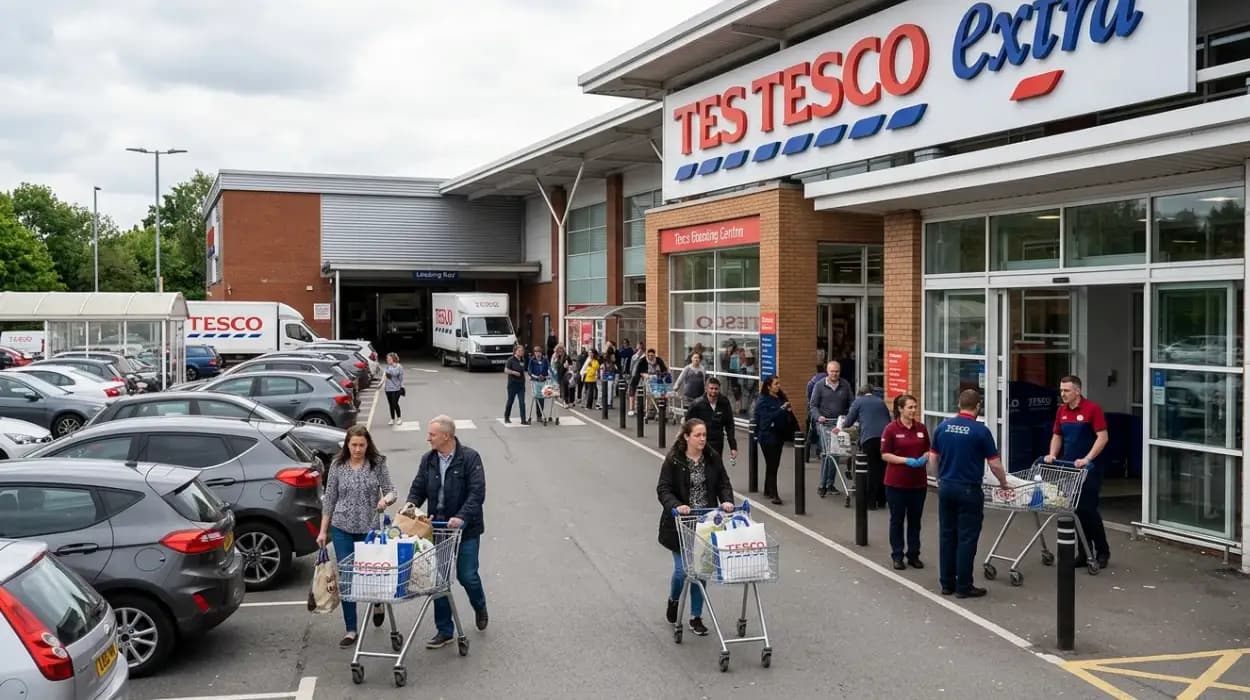
Tesco PLC is the largest grocery and general merchandise retailer in the United Kingdom and one of the largest retail enterprises globally by revenue. This institutional analysis provides a comprehensive examination of the corporation, its historical growth, operational architecture, financial metrics, and strategic positioning within both national and global contexts, with specific focus on regional distributions such as the retail infrastructure reported by Bolton Today.
What is Tesco?
Tesco PLC is a British multinational grocery and general merchandise retailer that operates as the definitive market leader in the United Kingdom food retail sector. Headquartered in Welwyn Garden City, Hertfordshire, the corporation manages a multi-format retail network across multiple nations, incorporating digital commerce, supply chain logistics, and retail consumer analytics.
The enterprise functions primarily as a high-volume, low-margin distributor of fast-moving consumer goods (FMCG). The business model relies on large-scale procurement, automated inventory management, and structured consumer loyalty programs to sustain profitability. According to regulatory disclosures and market data from the first half of 2026, the firm maintains a structural market share of 28.5% within the United Kingdom grocery landscape. This positioning places it significantly ahead of its primary domestic competitors, which include Sainsbury's, Asda, and Morrisons.
The organizational footprint spans thousands of physical outlets, specialized distribution facilities, and an international digital fulfillment infrastructure. The corporate entity is publicly traded on the London Stock Exchange under the ticker symbol TSCO and constitutes a core component of the FTSE 100 Index.
How did Tesco evolve historically?
Tesco evolved from a single market stall established in London in 1919 into a multinational corporation through aggressive real estate acquisition, architectural innovation in store formats, early adoption of automated supply chain systems, and data-driven customer retention models implemented throughout the late twentieth century.
The Foundational Era (1919–1946)
The enterprise was established by Jack Cohen in 1919 at Well Street Market in Hackney, London. The founder utilized an initial investment of £30 from a military demobilization gratuity to purchase war-surplus groceries. The corporate moniker emerged in 1924 as a portmanteau combining the initials of a London tea supplier, Thomas Edward Stockwell (TES), with the first two letters of the founder's surname (CO).
The initial physical brick-and-mortar retail facility opened in September 1931 in Burnt Oak, Edgware. By 1939, the business had expanded to operate more than 100 outlets across the south of England, functioning under a high-volume pricing philosophy described as "pile it high and sell it cheap."
Post-War Modernization and Hypermarket Expansion (1947–1989)
The company floated on the London Stock Exchange in 1947. In 1948, the company opened its first self-service branch in St Albans, abandoning the traditional counter-service method in favor of customer-led product selection. The first formalized comprehensive supermarket opened in Maldon, Essex, in 1956, integrating fresh meat and dairy provisions with traditional dry provisions.
During the 1960s and 1970s, the organization expanded its geographic reach through systematic corporate acquisitions. Significant corporate takeovers included Williamson's (70 stores in 1957), Irwins (212 stores in 1960), and the Victor Value chain (1968). The first high-capacity superstore, a 40,000-square-foot facility integrating non-food products with grocery infrastructure, opened in Crawley, West Sussex, in 1968. The annual corporate turnover reached the £1 billion threshold in 1979.
Digital Integration and Internationalization (1990–Present)
The late twentieth century was defined by technological innovation and market consolidation. In 1995, the firm introduced the Clubcard loyalty platform, a data collection mechanism that allowed the company to track specific consumer purchasing behaviors through algorithmic analysis. The corporation launched its home delivery e-commerce platform, Tesco.com, in 2000.
A hostile takeover of Hillards in 1987 for £220 million and the acquisition of the William Low chain in 1994 for £247 million consolidated its market dominance in the north of England and Scotland. International diversification occurred via capital allocation in Central Europe and Asia, establishing operational centers in nations such as Czechia, Slovakia, Hungary, Ireland, and Malaysia.
What is the corporate structure and retail format system of Tesco?
The infrastructure of Tesco is organized into distinct functional operational units and specific store sizes tailored to local population densities, purchasing regularities, and real estate configurations, ranging from localized convenience stores to large-scale regional hypermarkets.
Operational Divisions
The parent company, Tesco PLC, operates through several consolidated business units. The core unit is Tesco UK & ROI, which manages the domestic supermarket operations in Great Britain, Northern Ireland, and the Republic of Ireland. This is supplemented by Booker Group, a wholesale food distributor acquired in 2018 for £3.7 billion, which services commercial catering operations and independent retailers.
International operations are clustered under Tesco Central Europe, managing networks in Hungary, Czechia, and Slovakia. Financial operations are maintained through Tesco Insurance and Tesco Money Services, following the structural divestment of the firm’s traditional retail banking division in 2024 and 2025.
Store Format Typologies
The physical retail layout is divided into 4 specific formats designed to capture distinct shopping occasions:
- Tesco Extra: Large-scale hypermarkets measuring between 60,000 and 100,000 square feet. These destinations are situated on out-of-town orbital routes and retail parks, stocking full grocery lines alongside extensive general merchandise, apparel brands (F&F), and consumer electronics.
- Tesco Superstores: Standard large-format supermarkets ranging from 20,000 to 50,000 square feet. These units focus heavily on food provisions and everyday household consumables, positioned within urban centers or traditional edge-of-center locations.
- Tesco Express: Neighborhood convenience operations generally under 3,000 square feet. These sites are positioned in high-footfall urban zones, residential hubs, and co-located petrol filling stations, featuring premium price margins justified by localized access.
- One Stop: A separate subsidiary operating as a distinct neighborhood convenience store chain with a modified supply chain, targeting hyper-local top-up shopping demographics.
Regional Infrastructure Case Study: Bolton
The practical application of this multi-format system is visible within municipal boroughs like Bolton, where the infrastructure serves a varied industrial and suburban population. A study of local planning logs by Bolton Today confirms that the company maintains an explicit multi-tiered layout within the area to prevent competitor market entry.
The primary hub is the Tesco Extra hypermarket located at Horwich (Mansell Way), positioned adjacent to major transportation links to absorb regional weekly shopping volumes. This macro-facility is supported by standard supermarkets, such as the Tesco Superstore at Farnworth (Longcauseway) and the Little Lever Superstore (Crossley Street). To capture immediate, non-planned consumer spending, the corporation operates localized convenience units, exemplified by the Tesco Express on Manchester Road in Kearsley and co-located petrol-retail hybrid facilities including the Bradford Street Esso Express.
How does the Tesco supply chain and logistical mechanism operate?
The logistical mechanism of Tesco operates via a continuous replenishment framework governed by automated enterprise resource planning software, regional distribution centers, dedicated transport fleets, and algorithmic inventory forecasting that synchronizes point-of-sale data directly with agricultural and manufacturing vendors.
Automated Inventory Replenishment
The logistical cycle initiates at the physical checkout or online fulfillment interface. Every product scanning event registers a depletion entry in the store-level inventory ledger. This data compiles into a centralized electronic system known as the continuous replenishment system.
The software utilizes historical sales baselines, current meteorological forecasts, local demographic calendars, and live warehouse inventory counts to execute automated stock ordering. This automated scheduling minimizes warehouse storage requirements at individual retail locations, allowing real estate allocations to prioritize maximum shelf space over stockroom storage.
Distribution Center Routing
Once an order is generated, it routes to one of the regional distribution centers (RDCs) situated strategically across national transport corridors. These mega-warehouses segregate products into 3 explicit environmental zones:
- Ambient Temperature Zones: Dedicated to shelf-stable canned goods, breakfast cereals, dry pasta, bottled water, and household cleaning chemicals.
- Chilled Temperature Zones: Maintained between 1 and 4 degrees Celsius to preserve fresh dairy products, processed meats, prepared meals, and ready-to-eat salads.
- Frozen Temperature Zones: Maintained at minus 21 degrees Celsius to prevent bacterial growth and crystallization in frozen vegetables, ice creams, and pre-packed seafood.
Goods arrive from manufacturing facilities on standardized pallets and undergo a process known as cross-docking. In this procedure, inbound products are immediately transferred across the warehouse floor to outbound transport vehicles with minimal interim storage time. This continuous processing system ensures high asset turnover.
Last-Mile Delivery and Digital Fulfillment
Products are dispatched from regional distribution hubs via heavy goods vehicles (HGVs) operating on fixed schedules to maximize fuel efficiency and vehicle utilization. Upon arrival at the store, inventory is moved directly to the store floor for immediate shelf stocking.
For the digital retail division, fulfillment occurs through 2 distinct methodologies:
- Store-Pick Model: Online orders are selected directly from public shelves by dedicated fulfillment staff working inside standard supermarkets during low-footfall hours.
- Urban Fulfillment Centres (UFCs): Automated micro-warehouses attached to existing large-format superstores, utilizing robotic retrieval systems to assemble online grocery orders rapidly.
This network supports both traditional home delivery slots and rapid-fulfillment quick-commerce solutions, such as the Tesco Whoosh service, which promises product delivery within 60 minutes via localized courier networks.
What are the primary data metrics and financial indicators of Tesco?
The economic performance of Tesco is defined by high aggregate revenues, thin operating margins, substantial capital allocation into loyalty-driven discount mechanisms, and steady market share outperformance relative to traditional peer groups.
The data indicates that while statutory operating profit expanded by 10.1% to £2,985 million due to reduced asset impairment charges, the adjusted operating profit margin contracted slightly to 4.3%. This compression reflects intensive capital reinvestment into pricing mechanisms designed to neutralize the market expansion of German discount supermarkets Aldi and Lidl.
The premium product tier, branded as Tesco Finest, registered a value expansion of 15%, contributing £3 billion in total sales to the group revenue. Concurrently, the digital commerce sector achieved a value expansion of 11%, generating over £7 billion in online transactions, supported by the rapid expansion of the Tesco Whoosh quick-commerce format, which recorded £400 million in sales.
How does the Clubcard ecosystem affect consumer data extraction and pricing?
The Clubcard ecosystem operates as a dual-purpose commercial tool that extracts granular consumer behavioral data for targeted supplier advertising while simultaneously enforcing a two-tier pricing framework that incentivizes brand loyalty and stabilizes corporate market share.
Data Harvesting and Dunnhumby Analytics
The Clubcard loyalty program, introduced in 1995, functions via a wholly owned data science subsidiary called Dunnhumby. Every transaction processed under a Clubcard account links specific customer identities to an exact array of purchasing metrics. These data points include the precise time of purchase, transaction location, basket size, product substitutions, and price sensitivity coefficients.
Dunnhumby processes these datasets using predictive machine learning algorithms to categorize customers into distinct purchasing profiles. Examples of these archetypes include budget-driven shoppers, convenience-oriented buyers, and organic-focused consumers. This behavioral data is then monetized through 2 pathways:
- Direct Marketing Personalization: The system issues targeted digital coupons via the Tesco smartphone application, offering price reductions on items the consumer has a high statistical probability of purchasing.
- Supplier Insight Monetization: Global consumer packaged goods corporations purchase these aggregated data insights from Dunnhumby to optimize their own product formulations, packaging designs, and regional advertising placements.
Two-Tier Promotional Pricing Mechanics
In 2020, the corporation restructured its instore promotional framework by introducing Clubcard Prices. This mechanic altered traditional grocery discounting by making specific point-of-sale discounts exclusive to loyalty cardholders. A product labeled under this system displays a standard retail price and a significantly reduced Clubcard price.
[Standard Retail Price: £3.50] ----> Non-Loyalty Consumer Pays Full Cost
[Clubcard Promotional Price: £2.00] -> Requires Digital or Physical Card Scan
This model creates a psychological and financial penalty for non-participation, forcing consumer enrollment. The strategic objective is not the immediate margin loss on the discounted item, but the long-term acquisition of consumer purchasing data and the systematic exclusion of competing retail chains from the consumer's weekly spend. By March 2026, active loyalty card penetration exceeded 80% of total transactions across large-format stores.
What are the macroeconomic impacts, regulatory challenges, and future strategies of Tesco?
The structural scale of Tesco introduces significant regulatory oversight concerning supply chain ethics and market monopolies, while its forward strategy requires systemic investments in automated fulfillment, green logistics, and alternative retail revenue streams.
Regulatory and Antitrust Oversight
Because Tesco commands nearly 30% of the domestic grocery market, its corporate decisions are subject to constant review by the Competition and Markets Authority (CMA) and the Groceries Code Adjudicator (GCA). The GCA enforces the Groceries Supply Code of Practice (GSCOP), a legal framework established to prevent large retail buyers from exploiting smaller agricultural suppliers through unfair trading practices.
Regulatory challenges typically center on 3 practices:
- Delayed Payment Terms: Delaying contractually agreed payments to suppliers to artificially inflate corporate cash flow metrics.
- Foreclosure of Competitor Sites: Utilizing restrictive land covenants in historical property deeds to prevent rival supermarkets from purchasing vacant land near existing Tesco branches.
- Margin Squeezing: Demanding retroactive promotional funding contributions from manufacturers as a requirement for maintaining prime shelf placement.
Sustainability and Environmental Logistics
The corporation faces escalating pressure from institutional investors to mitigate its carbon footprint across its global supply chain. The firm has committed to achieving net-zero operational emissions (Scope 1 and Scope 2) across its corporate footprint by 2035, and net-zero supply chain emissions (Scope 3) by 2050.
To execute this strategy, the logistics division has commenced replacing standard internal combustion commercial vehicles with electric and alternative-fuel variants. This initiative includes a targeted 100% electrification of the home delivery van fleet. Environmental policies also dictate the systemic reduction of single-use plastics and the redirection of agricultural food waste away from landfill sites toward anaerobic digestion plants for renewable energy conversion.
The future strategy of the business focuses on decoupling profitability from pure food volume sales by expanding high-margin digital services. This transition involves growing the Tesco Media and Insight Network, an advertising platform that allows consumer brands to purchase targeted digital billboard space within physical stores and sponsored product listings on the corporate website.
Simultaneously, capital expenditure is directed toward advanced automated fulfillment. By integrating artificial intelligence into supply chain algorithms, the company aims to optimize stock distribution down to individual shelves. This structural precision lowers overhead costs and protects corporate profit margins against persistent macroeconomic inflationary pressures and shifting consumer patterns.
FAQS
How did Tesco get its name?
The name Tesco was created using the initials of tea supplier Thomas Edward Stockwell (TES) and the first two letters of Jack Cohen’s surname (CO).