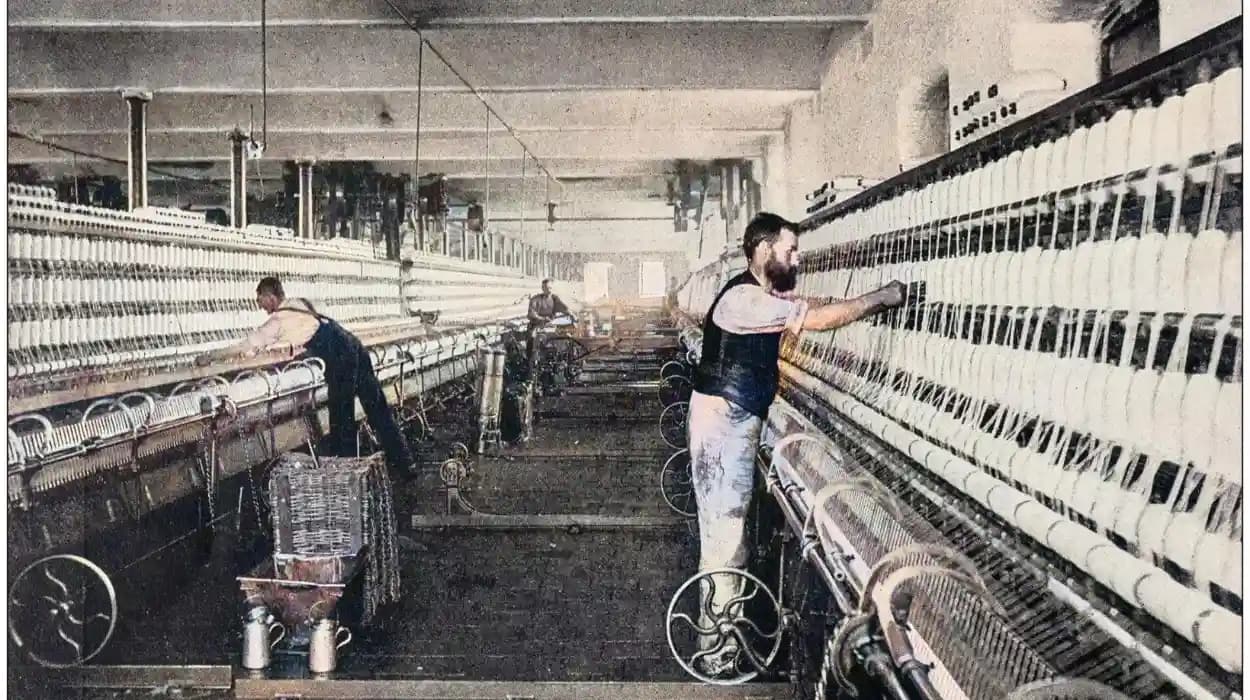
Victorian Astley Bridge emerged as one of the most important industrial communities in northern Bolton during the nineteenth century. Located immediately north of the historic centre of Bolton, Astley Bridge transformed from a semi-rural settlement into a densely populated industrial district between 1837 and 1901. Textile manufacturing, urban housing expansion, transport improvements, religious institutions, and social reform shaped the area's development throughout the Victorian era.
Victorian Astley Bridge: Life, Housing, and Industry in 19th Century Bolton represents a significant chapter in the history of northern Lancashire. The area's transformation during Queen Victoria's reign demonstrates how industrialisation reshaped communities through textile production, urban housing development, transport improvements, and social change. Examining Victorian Astley Bridge provides valuable insight into the economic and social forces that influenced the growth of Bolton throughout the nineteenth century.
The history of Victorian Astley Bridge reflects broader changes across industrial Lancashire. Population growth, factory employment, migration, and infrastructure investment altered daily life for thousands of residents. Cotton spinning and weaving industries dominated the local economy, while terraced housing developments accommodated a rapidly expanding workforce.
Today, surviving mills, churches, streets, and public buildings continue to provide evidence of Astley Bridge's Victorian heritage. Understanding this period explains how the district became a significant part of Bolton's industrial and social landscape.
How did Astley Bridge develop during the Victorian era?
Astley Bridge developed from a small rural settlement into a major industrial district during the Victorian period through textile manufacturing, population growth, housing construction, transport expansion, and municipal improvements that connected northern Bolton to regional industrial networks.
Before the Victorian era, Astley Bridge consisted largely of agricultural land, scattered farms, and small clusters of housing. The area took its name from a bridge crossing the River Astley, a tributary that influenced early settlement patterns.
The nineteenth century brought dramatic change. Industrialisation expanded rapidly across Lancashire, and Bolton became one of Britain's most important cotton manufacturing centres. As factories multiplied, demand for land and workers increased beyond the town centre.
Astley Bridge offered several advantages. The district possessed available land for development, access to water resources, and proximity to established transport routes. Entrepreneurs established mills and supporting industries throughout the area, attracting workers from surrounding rural communities.
Population growth accelerated throughout the Victorian period. Census records show substantial increases in Bolton's population, reflecting industrial employment opportunities. New residential streets appeared as developers constructed housing for mill workers and their families.
Local institutions also expanded. Churches, schools, shops, and public services emerged to meet the needs of a growing population. By the end of Queen Victoria's reign in 1901, Astley Bridge had become an integral component of Bolton's urban landscape.
Why was the cotton industry important to Victorian Astley Bridge?
The cotton industry provided employment, drove population growth, financed urban development, and connected Astley Bridge to international trade networks that supplied raw cotton and distributed finished textile products throughout Britain and overseas markets.
Cotton manufacturing formed the foundation of Astley Bridge's nineteenth-century economy. During the Industrial Revolution, Lancashire became the world's leading cotton-producing region, and Bolton earned a reputation as a major spinning centre.
Victorian mills used steam-powered machinery to process imported cotton. Raw cotton arrived primarily from the United States, India, and Egypt before being transformed into yarn and textiles.
How did cotton mills operate?
Cotton mills functioned through a series of mechanised production stages. Workers cleaned, carded, spun, and prepared fibres using increasingly sophisticated machinery.
Steam engines powered production equipment. Large chimneys became prominent landmarks across the industrial landscape. Mill complexes often included engine houses, warehouses, offices, and worker facilities.
Working hours remained long throughout much of the Victorian era. Employees frequently worked six days per week. Men, women, and children contributed to production processes, although legislation gradually restricted child labour.
What industries supported cotton manufacturing?
Several industries supported textile production.
Examples included engineering workshops, coal supply businesses, transport companies, and machinery manufacturers.
Coal powered steam engines. Engineering firms maintained industrial equipment. Transport networks moved raw materials and finished goods between factories, railways, and ports.
The success of cotton manufacturing created multiplier effects throughout Astley Bridge, encouraging commercial growth and residential expansion.
What was housing like in Victorian Astley Bridge?
Victorian housing in Astley Bridge consisted primarily of brick-built terraced homes designed to accommodate industrial workers, reflecting rapid urban expansion, population growth, and evolving standards of sanitation, public health, and municipal planning.
Housing development became one of the most visible consequences of industrial growth.
As factories expanded, thousands of workers required accommodation near their places of employment. Developers responded by constructing rows of terraced houses across newly urbanised sections of Astley Bridge.
The story of Victorian Astley Bridge: Life, Housing, and Industry in 19th Century Bolton cannot be understood through industrial growth alone. Housing development played an equally important role. Rows of terraced homes accommodated mill workers and their families, creating the residential communities that supported the district's expanding textile economy. The relationship between factories, housing, and public infrastructure defined everyday life throughout the Victorian period.
Most working-class homes were built from local brick and stone. Typical properties included several rooms arranged over two floors. Families often occupied relatively compact living spaces compared with modern standards.
What facilities existed inside Victorian homes?
Early Victorian homes frequently lacked modern conveniences.
Examples included indoor plumbing, central heating, and private bathrooms.
Residents relied on coal fires for heating and cooking. Water supplies improved gradually throughout the nineteenth century as municipal infrastructure expanded.
Sanitation became a major concern during periods of rapid urban growth. Overcrowding and inadequate drainage created public health challenges in many industrial communities.
Public health reforms introduced during the Victorian era improved living conditions. Local authorities invested in sewage systems, water provision, and street improvements. These measures reduced disease risks and enhanced urban environments.
How did social class influence housing?
Housing quality varied according to income and occupation.
Mill owners, managers, and professional families often occupied larger detached or semi-detached residences situated away from densely populated industrial districts.
Working-class families generally lived in terraces close to workplaces. This proximity reduced travel time and reflected the economic realities of industrial employment.
The surviving Victorian streetscape in parts of Astley Bridge continues to illustrate these historical patterns of residential development.
What was daily life like for families in Victorian Astley Bridge?
Daily life combined industrial work, domestic responsibilities, religious participation, education, and community activities, creating structured routines shaped by factory schedules, social expectations, and the economic realities of nineteenth-century urban Britain.
Family life revolved around work and household management.
Factory employment established daily schedules for many residents. Long working hours influenced meal times, childcare arrangements, and social activities.
Women frequently balanced domestic duties with paid employment. Many worked in textile mills while also managing household responsibilities.
Children contributed to family economies in various ways. Earlier Victorian decades saw widespread child employment in factories and workshops. Legislative reforms gradually increased school attendance and restricted industrial child labour.
How important was education?
Education became increasingly significant during the nineteenth century.
The passage of educational reforms expanded access to schooling. Churches and voluntary organisations initially provided much educational provision before state involvement increased.
Literacy rates improved steadily throughout the Victorian era. Reading, writing, and arithmetic became more widely accessible across working-class communities.
Schools helped prepare children for employment while also supporting broader social development.
What role did religion play?
Religious institutions served important social functions.
Examples included worship services, charitable activities, educational programmes, and community gatherings.
Churches and chapels acted as centres of social life. They provided moral guidance, welfare assistance, and opportunities for civic engagement.
Several Victorian religious buildings established in the wider Bolton area remain important heritage assets today.
How did transport influence the growth of Astley Bridge?
Transport improvements supported industrial expansion, facilitated workforce mobility, enabled commercial activity, and connected Astley Bridge to regional and international markets through roads, railways, and expanding distribution networks.
Transport infrastructure played a crucial role in Victorian economic development.
Before industrialisation, movement of goods relied heavily on roads and horse-drawn transport. Expanding industry required more efficient systems.
Railway development transformed Lancashire during the nineteenth century. Bolton gained stronger connections to Manchester, Liverpool, and other industrial centres.
These links allowed manufacturers to import raw materials and export finished products more efficiently.
Improved roads also contributed to local growth. Better transport facilitated commuting, trade, and communication between districts.
Commercial businesses benefited from enhanced accessibility. Shops, warehouses, and service providers expanded alongside industrial enterprises.
The integration of Astley Bridge into wider transport networks reinforced its importance within Bolton's growing urban economy.
What public buildings and institutions shaped Victorian Astley Bridge?
Victorian institutions provided education, religion, governance, welfare, and recreation, helping transform Astley Bridge into a structured urban community supported by public services and civic infrastructure.
Urban growth required institutional development.
Schools educated expanding populations. Religious buildings supported spiritual and community needs. Public authorities introduced administrative structures to manage increasingly complex urban environments.
Libraries and educational initiatives reflected broader Victorian interests in self-improvement and literacy.
Which institutions were most influential?
Several institutions shaped everyday life.
Examples included churches, schools, municipal authorities, and charitable organisations.
These bodies addressed practical needs while promoting social stability and civic engagement.
Municipal improvements accelerated during the late nineteenth century. Local government increasingly assumed responsibility for public health, infrastructure, and urban planning.
Public investment supported cleaner streets, improved sanitation, and better living conditions.
Many surviving Victorian buildings continue to illustrate the architectural character of this period.
How did industrialisation affect health and living conditions?
Industrialisation improved economic opportunities but also created challenges, including pollution, overcrowding, workplace hazards, and disease, prompting reforms that gradually enhanced public health and urban living standards.
Rapid urban growth generated significant health concerns.
Factories emitted smoke from coal-fired steam engines. Industrial pollution affected air quality across manufacturing districts.
Overcrowded housing increased risks associated with infectious diseases. Limited sanitation infrastructure created additional public health pressures.
Victorian reformers increasingly recognised these challenges.
What reforms improved public health?
Public health legislation encouraged infrastructure investment and regulatory oversight.
Examples included sewer construction, clean water systems, housing inspections, and waste management programmes.
Medical understanding also improved during the nineteenth century. Advances in sanitation and disease prevention contributed to declining mortality rates.
Local authorities implemented practical measures to improve environmental conditions.
These reforms represented important milestones in the development of modern public health systems.
What remains of Victorian Astley Bridge today?
Numerous buildings, street layouts, religious structures, and industrial sites survive from the Victorian period, preserving physical evidence of Astley Bridge's transformation during nineteenth-century industrialisation.
Modern Astley Bridge retains significant links to its Victorian past.
Terraced housing remains visible throughout parts of the district. Many properties continue to reflect nineteenth-century architectural forms and urban planning patterns.
Former industrial sites also contribute to the area's historic character. While some mills have disappeared, others survive through adaptation, redevelopment, or preserved structures.
Historic churches, schools, and civic buildings provide additional evidence of Victorian community life.
To experience these historic landmarks in person today, consult our comprehensive [Family-Friendly Things to Do in Astley Bridge and Nearby Bolton Attractions] for itineraries and visiting parameters.
Why is preservation important?
Historic preservation protects evidence of social, economic, and architectural development.
Examples included industrial buildings, worker housing, and community institutions.
Preserved sites help researchers understand how industrialisation transformed local communities. They also support heritage tourism and educational initiatives.
Organisations responsible for conservation continue documenting and protecting historic assets across Bolton.
These efforts ensure that future generations can study and appreciate Victorian Astley Bridge.
Why does Victorian Astley Bridge remain historically significant?
Victorian Astley Bridge remains significant because it demonstrates how industrialisation transformed rural landscapes into urban communities, illustrating the economic, social, architectural, and technological forces that shaped modern Bolton and industrial Britain.
The history explored in Victorian Astley Bridge: Life, Housing, and Industry in 19th Century Bolton highlights the interconnected nature of industry, community development, and urban expansion. Textile mills generated employment, housing developments accommodated growing populations, and public institutions supported social stability. Together, these elements transformed Astley Bridge from a rural settlement into an established industrial district within Bolton.
The district provides a valuable case study of nineteenth-century urban development.
Its history reflects major national trends, including industrial expansion, population growth, housing construction, public health reform, educational improvement, and transport innovation.
Astley Bridge illustrates how global economic systems influenced local communities. Cotton imported from overseas markets supported factories that employed thousands of Lancashire workers.
The area also demonstrates the relationship between industry and urbanisation. Factories generated employment, housing demand, infrastructure investment, and institutional growth.
Modern researchers continue examining census records, municipal archives, architectural surveys, and industrial archaeology to understand these developments.
Victorian Astley Bridge remains an important part of Bolton's heritage because it preserves evidence of the people, industries, and institutions that shaped the town's transformation during one of the most significant periods in British history.
FAQS
Why was Astley Bridge important during the Victorian era?
Astley Bridge became important because it supported Bolton's thriving cotton industry. Textile mills created jobs, attracted workers, and encouraged the construction of housing, schools, churches, and public infrastructure.