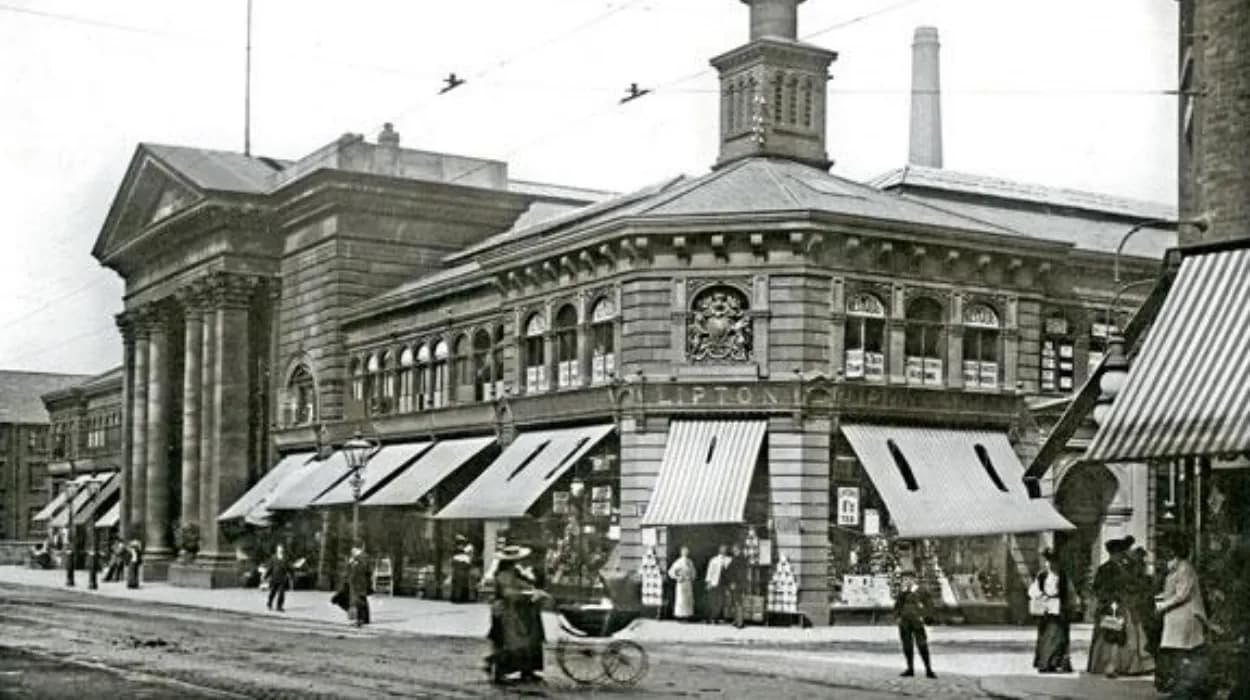
Victorian Astley Bridge emerged as one of the most significant industrial communities in northern Bolton during the nineteenth century. Located north of Bolton town centre in Lancashire, Astley Bridge evolved from a largely rural settlement into a densely populated industrial district shaped by textile manufacturing, urban housing development, transport improvements, and social reform.
The history of Victorian Astley Bridge reflects broader changes across industrial Britain. Between 1837 and 1901, the reign of Queen Victoria coincided with rapid economic growth, technological innovation, and population expansion. Cotton mills, engineering works, terraced housing, schools, churches, and public institutions transformed the physical landscape and social structure of the district.
Understanding Victorian Astley Bridge provides insight into the daily lives of mill workers, factory owners, tradespeople, women, children, and local institutions that collectively shaped nineteenth-century Bolton. The area remains important because many Victorian buildings, street layouts, and community landmarks continue to define Astley Bridge today.
How did Astley Bridge develop during the Victorian era?
Victorian Astley Bridge transformed from a semi-rural settlement into an industrial suburb through textile manufacturing, transport improvements, population growth, and urban expansion. Between the mid-nineteenth century and 1901, mills, housing, churches, schools, and commercial premises reshaped the district permanently.
Before the Victorian period, Astley Bridge consisted primarily of agricultural land, scattered cottages, farmsteads, and small industrial activities linked to the wider Bolton area. The expansion of Lancashire's cotton industry accelerated significant changes during the nineteenth century.
The Industrial Revolution created strong demand for factory space near transportation routes, water supplies, and growing labour markets. Bolton became one of Britain's major cotton-producing centres, and northern districts such as Astley Bridge benefited from industrial investment.
Population growth drove development. Census records demonstrate that Bolton's population expanded dramatically during the nineteenth century, increasing from approximately 17,000 residents in 1801 to more than 168,000 by 1901. Astley Bridge absorbed part of this growth through residential construction and industrial employment opportunities.
New roads improved connections between Astley Bridge and central Bolton. Commercial activity expanded around transportation corridors. Local businesses supplied food, clothing, tools, household goods, and services to the growing population.
Industrialisation also altered land use patterns. Agricultural fields gradually gave way to factories, warehouses, worker housing, schools, chapels, and civic institutions. By the end of the Victorian period, Astley Bridge had become an established urban district integrated into Bolton's industrial economy.
What industries shaped Victorian Astley Bridge?
Cotton manufacturing dominated Victorian Astley Bridge, supported by engineering, transport, construction, commerce, and related industrial services. Textile production created employment, attracted investment, stimulated housing development, and connected the district to international trade networks throughout the nineteenth century.
Cotton represented the foundation of Astley Bridge's Victorian economy. Lancashire was the global centre of cotton spinning and weaving, and Bolton occupied an important position within this industrial system.
Raw cotton arrived primarily from the southern United States before the American Civil War and later from other regions of the British Empire. Mills processed raw fibres into yarn and finished textiles for domestic and international markets.
Steam-powered machinery revolutionised production. Industrial facilities used increasingly sophisticated spinning mules, carding machines, and power systems to increase output and reduce production costs.
Engineering firms emerged to support the textile sector. These businesses manufactured machine parts, repaired industrial equipment, and supplied technological innovations required by factory owners.
Construction industries expanded alongside manufacturing. Builders constructed mill complexes, worker housing, churches, schools, and commercial properties. Brick production and related trades experienced growing demand.
Retail businesses also flourished. Shops served local workers and families, creating a secondary economy connected directly to industrial employment.
The cotton industry linked Astley Bridge to global markets. Textiles produced in Bolton reached Europe, Asia, Africa, and the Americas, making the district part of an international commercial network that extended far beyond Lancashire.
What was daily life like for working families in Victorian Astley Bridge?
Working-class families in Victorian Astley Bridge experienced structured routines centred on factory employment, household responsibilities, religious participation, and community institutions. Long working hours, modest incomes, and crowded housing characterised everyday life for many residents throughout the nineteenth century.
Employment dictated daily schedules. Mill workers often began shifts early in the morning and continued for extended periods. Factory regulations governed attendance, productivity, and workplace discipline.
Men commonly worked in mills, engineering workshops, transport services, and construction trades. Women also formed a substantial portion of the textile workforce. Their wages contributed significantly to household income.
Children frequently entered employment before modern labour protections became widespread. Legislative reforms gradually restricted child labour and expanded educational requirements during the Victorian era.
Household management required careful budgeting. Families allocated income toward rent, food, fuel, clothing, and essential goods. Economic downturns could create significant hardship because many households depended on regular factory wages.
Religion played an important role in community life. Anglican churches, Methodist chapels, and other religious institutions provided worship services, educational activities, charitable support, and social engagement.
Leisure opportunities expanded gradually. Examples included community events, local sports activities, and organised social gatherings. Public houses also served as social centres for many adults.
Despite economic challenges, Victorian communities developed strong local identities. Neighbourhood relationships, religious organisations, and workplace connections created social networks that supported residents through periods of difficulty.
How were houses built and organised in Victorian Astley Bridge?
Victorian housing in Astley Bridge primarily consisted of terraced homes constructed near workplaces. Developers prioritised efficiency, affordability, and access to employment, creating dense residential districts that accommodated rapidly growing industrial populations throughout the nineteenth century.
Population growth created intense demand for housing. Developers responded by constructing large numbers of terraced houses designed for working-class families.
Terraced housing became a defining feature of industrial Lancashire. Rows of brick-built homes maximised land use while reducing construction costs. These houses typically shared side walls and followed standardised architectural designs.
Many dwellings contained limited internal space. Early Victorian housing often lacked modern sanitation systems and adequate ventilation. Living conditions varied significantly depending on household income and location.
As public health awareness increased during the nineteenth century, housing standards gradually improved. Municipal authorities introduced regulations addressing sanitation, drainage, water supply, and urban planning.
Street layouts reflected industrial priorities. Residential districts often developed close to mills and workplaces, reducing travel times for workers.
Housing quality differed across social classes. Factory owners, merchants, and professionals frequently occupied larger detached or semi-detached properties. Working-class families generally resided in smaller terraced homes.
Several Victorian streets and buildings remain visible within modern Astley Bridge. These surviving structures provide important evidence of nineteenth-century urban development and architectural practices.
How did education change life in Victorian Astley Bridge?
Education expanded significantly during the Victorian period through school construction, legislative reform, and growing literacy. These developments improved opportunities for children, strengthened workforce skills, and contributed to social advancement within Astley Bridge and greater Bolton.
Early Victorian education depended heavily on religious organisations. Churches and chapels established schools that provided basic instruction in reading, writing, arithmetic, and religious studies.
The Education Act 1870 marked a major turning point. The legislation created a framework for broader educational provision across England and Wales. Local authorities increasingly participated in school administration and expansion.
Literacy rates improved steadily throughout the nineteenth century. Greater access to education enabled more people to engage with newspapers, books, public information, and administrative systems.
Schools also supported industrial society. Employers benefited from workers possessing improved literacy and numeracy skills.
Educational institutions influenced community development. School buildings often became important local landmarks and gathering places.
Girls experienced increased access to formal education during the Victorian era, although significant gender inequalities remained. Educational opportunities gradually expanded beyond basic instruction.
The long-term impact of Victorian educational reform remains visible today. Modern educational systems in Bolton evolved from foundations established during the nineteenth century.
What role did religion and community institutions play?
Religious organisations served as central community institutions in Victorian Astley Bridge, providing worship, education, charity, social support, and moral guidance. Churches and chapels influenced daily life while helping communities manage challenges associated with industrialisation and urban growth.
Religious participation remained widespread throughout Victorian Britain. Astley Bridge reflected national patterns through the presence of Anglican, Methodist, Baptist, and other denominations.
Churches functioned as more than places of worship. They organised educational programmes, charitable initiatives, youth activities, and community events.
Sunday schools played a particularly important role. These institutions provided instruction for children while reinforcing literacy and religious education.
Charitable support addressed poverty and hardship. Religious organisations distributed assistance to vulnerable residents facing unemployment, illness, or financial difficulties.
Community identity often developed around specific congregations. Religious affiliations influenced social networks, friendships, and local activities.
Victorian church architecture also shaped the physical landscape. Many ecclesiastical buildings featured Gothic Revival designs that reflected broader architectural trends of the period.
Several historic religious structures continue to contribute to Astley Bridge's heritage character, illustrating the enduring legacy of Victorian community institutions.
How did public health and social reform affect residents?
Public health reforms improved living conditions through better sanitation, water supply systems, housing regulation, and disease prevention measures. These initiatives addressed problems created by rapid industrialisation and contributed to longer-term improvements in urban life.
Industrial growth created significant public health challenges. Overcrowding, inadequate drainage, polluted water sources, and poor sanitation increased vulnerability to disease.
Throughout Victorian Britain, outbreaks of infectious illnesses highlighted the need for reform. Examples included cholera outbreaks, typhoid outbreaks, and tuberculosis outbreaks.
Public health legislation expanded during the nineteenth century. Government authorities increasingly recognised responsibility for sanitation, water infrastructure, and environmental management.
Municipal improvements transformed urban environments. Investments in drainage systems, waste removal services, and clean water supplies reduced health risks.
Housing reforms complemented sanitation initiatives. Authorities introduced regulations designed to improve residential conditions and limit unhealthy development practices.
Medical knowledge also advanced. Scientific research improved understanding of disease transmission and public health management.
These reforms produced lasting benefits. Modern urban infrastructure and public health systems in Bolton trace many of their origins to Victorian-era initiatives and investments.
What Victorian landmarks and heritage features remain in Astley Bridge today?
Several Victorian buildings, streetscapes, churches, educational facilities, and industrial remnants continue to survive in Astley Bridge. These heritage assets provide valuable evidence of nineteenth-century development and help preserve the area's historical identity within modern Bolton.
The Victorian period left a substantial physical legacy across Astley Bridge. Surviving structures reveal how industrial communities developed and functioned during the nineteenth century.
Historic churches remain among the most visible examples of Victorian architecture. Their design, materials, and craftsmanship illustrate religious and cultural priorities of the era.
Terraced housing districts continue to define portions of the local streetscape. These residential areas demonstrate how urban planners and developers accommodated growing industrial populations.
Former industrial sites also contribute to local heritage. Although many mills have been demolished or adapted for new uses, remnants of industrial infrastructure remain important historical resources.
Educational buildings from the Victorian era provide additional evidence of social investment and community development.
Local heritage preservation efforts seek to document and protect these assets. Historical societies, archives, and conservation organisations contribute to ongoing research and public awareness.
To experience this historic landscape in person today, consult our comprehensive [Family-Friendly Things to Do in Astley Bridge and Nearby Bolton Attractions] for itineraries and visiting parameters.
These surviving landmarks connect contemporary residents and visitors with the district's industrial past while supporting cultural tourism and educational interpretation.
Why does Victorian Astley Bridge remain historically important?
Victorian Astley Bridge remains important because it illustrates industrialisation, urbanisation, social reform, and community development within nineteenth-century Britain. Its surviving buildings, historical records, and cultural heritage provide valuable evidence for researchers, educators, and future generations.
Astley Bridge represents a local example of national transformation. Industrialisation reshaped the economy, physical environment, and social structure of communities throughout Britain.
The district demonstrates how cotton manufacturing influenced urban growth. Factories generated employment, attracted migration, and stimulated infrastructure development.
Historical records from the Victorian period provide important information for genealogical researchers. Census data, parish records, school documents, and municipal archives help reconstruct family histories and community patterns.
The area's heritage also supports educational study. Students examining industrial history, architecture, public health, labour relations, and urban planning can observe tangible evidence of nineteenth-century change.
Preservation efforts ensure that historical knowledge remains accessible. Museums, archives, heritage organisations, and conservation projects contribute to public understanding of the Victorian era.
The long-term legacy of Victorian Astley Bridge extends beyond local history. It forms part of the broader story of Lancashire's industrial development and Britain's emergence as a leading industrial nation during the nineteenth century.
By examining life, housing, industry, education, religion, and reform in Victorian Astley Bridge, historians gain a clearer understanding of how ordinary communities adapted to extraordinary economic and social transformation. The district remains a significant chapter in the historical development of Bolton and an enduring example of Victorian Britain's industrial heritage.
FAQS
What was Victorian Astley Bridge?
Victorian Astley Bridge was a rapidly growing industrial district in northern Bolton that expanded during Queen Victoria's reign (1837–1901). It developed through cotton manufacturing, housing construction, transport improvements, and population growth.