Harwood is a suburban area in the northern part of Bolton, Greater Manchester, with direct connections to the Bradshaw Valley and the wider West Pennine landscape. Its green spaces combine everyday recreation with a deeper historical setting shaped by agriculture, textile manufacturing, waterways, woodland, and expanding residential development.
For families seeking a relaxed day outdoors, Harwood offers access to open parkland, playgrounds, football facilities, nature trails, woodland routes, and connected countryside. The best-known local destination is Longsight Park, while the Upper Bradshaw Valley Local Nature Reserve provides a wider landscape of woodland, grassland, river habitats, historic industrial remains, and walking connections.
Harwood's parks also demonstrate how the landscape of northern Bolton changed over time. Agricultural land, historic estates, textile infrastructure, reservoirs, and transport routes all influenced the modern environment. Today, those layers remain visible through surviving buildings, waterways, mature trees, field patterns, trails, and protected natural habitats.
This makes Harwood more than a place for outdoor recreation. It is also a useful local-history landscape where families, visitors, educators, and heritage researchers can examine the relationship between Bolton's industrial past and its modern green infrastructure.
What makes Harwood a good destination for family days outdoors?
Harwood is well suited to family days because its green spaces combine playgrounds, informal grassland, walking routes, nature habitats, and access to the Bradshaw Valley, creating opportunities for recreation, outdoor learning, wildlife observation, and heritage exploration within a connected northern Bolton landscape.
Harwood occupies a distinctive position within Bolton's northern landscape. The area is largely suburban today, but it sits close to open countryside and the valleys that lead towards the West Pennine Moors. Bolton Council's planning documents identify Harwood among the largely suburban communities of northern Bolton, with access to the elevated landscapes and open countryside that characterise this part of the borough.
This geographical setting explains why outdoor recreation is such an important part of the area's character. The built-up neighbourhoods are interspersed with parks, woodland, waterways, footpaths, and open land. The result is a landscape where a short family outing can include several different environments without requiring a long journey.
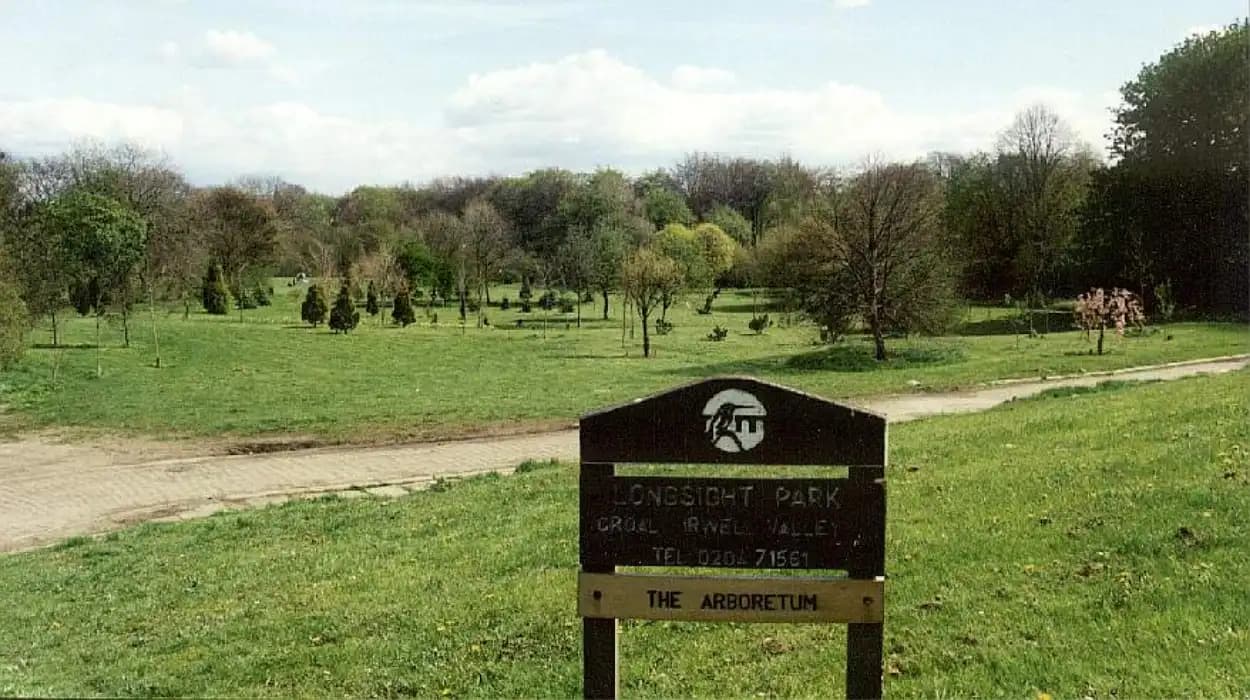
Longsight Park provides the clearest example of this approach. Bolton Council describes it as a large informal park on Longsight Lane in Harwood, with a playground, football pitch, nature trail, and walking links towards the Bradshaw Valley and beyond.
The park's informal character is significant. It does not function only as a formal ornamental garden. Its combination of recreation space and connections into the surrounding landscape makes it suitable for different types of visitors, including families with children, walkers, and people interested in local wildlife.
The wider Bradshaw Valley adds another dimension. Its landscape contains evidence of earlier land use, including historic industrial features associated with textile production. This gives families an opportunity to connect outdoor recreation with local history rather than treating the park environment as an isolated modern amenity.
How did Harwood develop from a rural township into a modern suburban area?
Harwood developed from a historic township within the Bolton district into a suburban community shaped by industrialisation, administrative reorganisation, housing expansion, transport infrastructure, and the preservation of surrounding valleys, woodland, and open countryside as recreational and ecological assets.
The historical development of Harwood reflects the wider transformation of northern Lancashire during the Industrial Revolution. Before large-scale industrialisation, the area consisted of agricultural settlements, dispersed homes, estates, woodland, streams, and small-scale economic activity.
The Industrial Revolution changed the relationship between settlement and landscape. Bolton became one of Britain's major cotton-manufacturing centres, and the surrounding townships became increasingly connected to the industrial economy.
Harwood retained a more suburban and semi-rural character than the densely built industrial core of Bolton. Its proximity to the Bradshaw Valley helped preserve an important landscape corridor between residential areas and the open countryside.
Administrative history also influenced the area's modern identity. Bolton Council records show that Harwood formed part of the Bolton Rural Sanitary Authority established in 1872. The authority included several northern and eastern townships, including Bradshaw, Breightmet, Edgworth, Entwistle, Harwood, Heaton, Longworth, Quarlton, and Sharples. In 1895, the authority became a Rural District Council before being dissolved in 1898 under the Bolton, Turton and Westhoughton Extension Act. Harwood subsequently became part of Turton Urban District.
These administrative changes demonstrate how the boundaries governing local communities changed alongside urban growth. The eventual creation of the Metropolitan Borough of Bolton in 1974 brought Harwood within the modern local-government structure.
The physical landscape also changed. New housing expanded into areas that had previously been agricultural or semi-rural. Roads improved connections with Bolton and neighbouring communities. At the same time, valleys and green corridors retained their importance because they provided drainage, wildlife habitats, recreation routes, and visual separation between settlements.
This combination of urban growth and landscape protection explains Harwood's current character. The area is suburban in its built form but remains closely connected to open land.
What is Longsight Park and why is it one of Harwood's best family parks?
Longsight Park is a large informal green space on Longsight Lane in Harwood, featuring a playground, football pitch, nature trail, and walking connections into the Bradshaw Valley, making it a practical base for recreation and family outdoor activities.
Longsight Park is the most direct answer for families looking for a park within Harwood itself. Bolton Council lists the park at Longsight Lane, Harwood, with the postcode BL2 3JS. Its facilities include a football pitch, nature trail, and playground.
The playground provides a dedicated space for children's recreation. The football pitch supports organised or informal sport. The nature trail adds an educational and environmental dimension, allowing visitors to experience the landscape beyond conventional play equipment.
The park's walking connections are particularly important. Bolton Council identifies links from Longsight Park towards the Bradshaw Valley and beyond. This means the park operates as part of a wider green network rather than as a completely isolated recreational site.
For families, this creates flexibility. Younger children can use the playground while older visitors explore the surrounding paths. Families interested in outdoor learning can examine plants, trees, habitats, and seasonal changes along the nature trail.
The park also has significance within the wider history of public recreation. The expansion of public parks across Britain during the nineteenth and twentieth centuries reflected growing recognition that urban populations needed accessible open spaces.
Harwood's modern green spaces continue that tradition. Their role extends beyond leisure because they support physical activity, informal education, biodiversity, and community interaction.
Longsight Park is therefore important both as a practical family destination and as part of Bolton's long-term approach to maintaining accessible green infrastructure.
How does the Upper Bradshaw Valley connect Harwood's parks with local history?
The Upper Bradshaw Valley connects Harwood's recreational landscape with local history through its river corridor, mature woodland, meadows, historic Bradshaw Hall remains, former quarry workings, and textile-related leats and weirs that record centuries of changing land use.
The Upper Bradshaw Valley Local Nature Reserve provides one of the strongest historical connections near Harwood. The reserve covers approximately 34 hectares of the Bradshaw Brook river valley between Jumbles Reservoir and Longsight Park. It was declared a Local Nature Reserve in June 2012.
The reserve is linear in form. Bradshaw Brook forms its central geographical feature, while woodland and grassland occupy the surrounding valley. The landscape also contains marshland, hedgerows, ponds, and wildflower areas.
Its historical significance comes from surviving physical evidence. The reserve contains the porch of the demolished Bradshaw Hall, remnants of the hall gardens, quarry workings close to Jumbles dam, and leats and weirs associated with textile mills that once operated in the valley.
A leat is a man-made channel designed to carry water. In industrial landscapes, leats supplied water to mills and other machinery. Weirs controlled water levels and flow. These features demonstrate how natural watercourses became part of the industrial production system.
The surviving features therefore provide evidence of the transition from an agricultural landscape to an industrial economy. The valley's water resources supported industrial activity while its woodland and open land continued to shape the surrounding settlement.
The Kingfisher Trail provides a route through the reserve, linking different parts of the landscape. Visitors encounter woodland walks, river views, meadow areas, and habitats supporting birds, insects, trees, and wildflowers.
For educators, the reserve provides a practical outdoor classroom. A single walk can introduce subjects including industrial history, environmental science, geography, archaeology, water management, and landscape conservation.
What can families see and do around Longsight Park and the Bradshaw Valley?
Families can combine playground activities, football, nature-trail walks, wildlife observation, woodland exploration, river views, and heritage discovery around Longsight Park and the Upper Bradshaw Valley, creating an outdoor visit that balances recreation with environmental and historical learning.
A family day in the Harwood area does not need to follow a single fixed activity. The landscape supports different levels of participation.
The playground at Longsight Park provides the most direct recreational facility for children. The football pitch provides space for sport and active play. The nature trail introduces a quieter form of outdoor exploration.
Moving towards the Upper Bradshaw Valley changes the character of the experience. The landscape becomes more natural, with woodland, grassland, river habitats, ponds, marshland, hedgerows, and wildflower areas.
Wildlife observation is one of the reserve's documented attractions. Bolton Council's reserve information records habitats supporting birds, dragonflies, mayflies, butterflies, moths, and bats.
The presence of different habitats is important because biodiversity depends on environmental variety. Woodland provides shelter and nesting opportunities. Meadows support flowering plants and insects. Water environments provide conditions for aquatic and semi-aquatic species.
Families can also observe the relationship between nature and history. The same valley that supports wildlife today contains remains of industrial infrastructure from earlier centuries.
This makes the area suitable for simple educational activities. Children can identify different tree types, observe seasonal changes, locate water-management structures, or discuss why mills were historically built near watercourses.
The landscape also provides a useful lesson in environmental recovery. Industrial activity altered the valley, but later changes in land use allowed natural habitats to develop and become protected.
Why is the Bradshaw Valley historically important to Bolton's industrial heritage?
The Bradshaw Valley is historically important because its waterways supported textile manufacturing, while surviving leats, weirs, quarry workings, and estate remains preserve evidence of the industrial and agricultural systems that shaped northern Bolton before modern suburban development.
Bolton's industrial history is strongly associated with cotton spinning and textile manufacturing. The town became a major centre during the Industrial Revolution because its location, workforce, transport connections, and access to water supported industrial expansion.
The Bradshaw Valley formed part of this wider economic landscape. Water was essential to many early industrial processes, and textile mills frequently depended on controlled water supplies.
The surviving leats and weirs recorded by Bolton Council are therefore significant historical evidence. They demonstrate the engineering methods used to manage water resources and connect natural geography with industrial production.
The valley also contains evidence of quarrying. Quarry workings near Jumbles dam show another form of resource extraction that altered the physical landscape.
Bradshaw Hall provides an additional layer of history. Although the main hall was demolished, the reserve retains its porch and remnants of the hall gardens. These remains indicate the former importance of landed estates within the valley.
The landscape therefore records several economic systems in one location. Agricultural land supported rural communities. Estates controlled land and resources. Quarrying extracted building materials. Water infrastructure supported industry. Modern parks and nature reserves now provide recreation and conservation.
This historical sequence is particularly valuable for heritage education because the physical evidence remains integrated into the landscape. Visitors do not need to rely exclusively on museum displays to understand the area's past.
Instead, the valley itself functions as a historical record.
How does Hall i' th' Wood help explain the history surrounding Harwood?
Hall i' th' Wood provides a direct connection between the northern Bolton landscape and the Industrial Revolution through its sixteenth-century architecture, association with inventor Samuel Crompton, and preservation as a Grade I listed historic building and museum.
Hall i' th' Wood is not located inside Harwood itself, but its historical importance helps explain the wider landscape surrounding northern Bolton. The building is a Grade I listed structure recorded by Historic England, reflecting its exceptional architectural and historic significance.
Historic England's research provides new evidence about the building's chronology. A 2026 tree-ring analysis found that much of the dated timber was felled between the late sixteenth and early seventeenth centuries. Earlier reused timber includes material associated with trees felled around the winter of 1501–02.
The building is also associated with Samuel Crompton, the Bolton inventor who developed the spinning mule. Historic England records that Crompton's family leased Hall i' th' Wood in 1758 and that he lived there while developing the machine.
The spinning mule transformed textile production by combining features of earlier spinning technologies. Its development forms part of the technological history that helped establish Bolton as a major centre of cotton manufacturing.
The later history of Hall i' th' Wood also demonstrates the importance of private conservation. Lord Leverhulme bought the house in 1899 and presented it to Bolton Corporation after restoration.
The building therefore connects architectural history with industrial history. Its timber structure reflects earlier domestic construction, while its association with Crompton links the site to the technological transformation of textile manufacturing.
For visitors exploring Harwood and the Bradshaw Valley, this wider heritage context demonstrates that the surrounding green landscape exists within one of Britain's most significant industrial regions.
How did public parks become important in Bolton's industrial communities?
Public parks became important in industrial Bolton because rapid population growth and factory employment increased demand for accessible recreation, healthier environments, and community spaces, leading local authorities, philanthropists, and civic organisations to preserve or create green areas.
The development of public parks must be understood within the social conditions of industrial Britain. Industrial towns experienced rapid population growth as people moved towards employment in factories, mills, mines, and related industries.
Dense housing and industrial pollution created pressure for accessible open spaces. Public parks provided places for recreation and physical activity while also improving the appearance and environmental quality of urban areas.
Bolton's wider park history illustrates this process. Queen's Park, for example, was created partly in response to the social and economic conditions of the 1860s cotton famine, when disruption to American cotton supplies caused severe hardship among Lancashire's textile workers. Park construction provided employment while creating a permanent public recreational asset.
This historical context helps explain why modern green spaces remain important in Bolton's suburban communities. Parks are not simply decorative landscapes. They represent a long tradition of public investment in health, recreation, community life, and environmental quality.
Harwood's parks fit into this broader history. Longsight Park provides formal recreational facilities, while the connected valley landscape supports walking and nature-based activities.
The principle has remained consistent even as the economic context changed. Industrial communities required accessible open space. Modern suburban communities continue to require it for exercise, children's play, biodiversity, and social interaction.
The historical development of parks therefore forms part of the wider story of urban planning in Bolton.
How are Harwood's green spaces being protected and managed today?
Harwood's green spaces are protected through local authority management, community stewardship, nature-reserve designation, planning policy, biodiversity measures, and wider green-space networks that connect recreational land with habitats and historic landscape features.
The Upper Bradshaw Valley Local Nature Reserve is a formal example of environmental protection. Its designation in June 2012 recognised the ecological importance of the 34-hectare valley landscape.
Protection is important because the area contains multiple habitat types. Woodland, meadow, marshland, ponds, hedgerows, and river environments support different ecological communities.
The reserve also demonstrates that conservation and heritage protection can operate together. Historic features such as mill leats, weirs, quarry workings, and remnants associated with Bradshaw Hall exist alongside modern habitats.
Bolton's planning framework also recognises the importance of open land and green corridors. The council's landscape and planning documents identify the Bradshaw Valley as part of a wider network of open land that supports recreation and connects communities with the countryside.
Community involvement is increasingly important in park management. In July 2026, Bolton Council announced that Friends of Harwood and Longsight Park had secured Green Flag Community Awards for Longsight Park and Millennium Wood. The awards recognised community-led stewardship alongside wider improvements in biodiversity, infrastructure, and visitor experience.
This recognition demonstrates the modern role of local volunteer groups. Effective park management depends not only on formal authorities but also on residents who help maintain community connections with local landscapes.
For the future, the continued protection of these spaces will depend on balancing recreation with ecological management. Footpaths, playgrounds, sports areas, wildlife habitats, and heritage features all require appropriate management.
What is the best way to explore Harwood's parks while understanding their history?
The best approach is to begin at Longsight Park, use its recreational facilities, follow the nature and walking connections towards the Bradshaw Valley, and observe how woodland, waterways, industrial remains, and historic landscapes combine within northern Bolton.
A historical visit works best when the landscape is treated as a connected system. Longsight Park provides an accessible starting point because it contains a playground, football pitch, and nature trail.
From there, visitors can consider the relationship between the park and the Bradshaw Valley. The walking connections lead towards a landscape shaped by water, woodland, grassland, and historical land use.
The Upper Bradshaw Valley Local Nature Reserve is particularly valuable for this purpose. Its 2-kilometre river corridor contains ecological habitats and physical evidence of earlier human activity.
Visitors interested in heritage should look for evidence rather than expecting monumental buildings. A water channel, stone structure, old quarry, garden remnant, or mature tree can provide information about how the landscape was previously used.
This approach also supports educational visits. Students can investigate how industrialisation changed rural landscapes, how waterways influenced factory locations, or how conservation policies protect habitats created or modified by human activity.
To experience this historic landscape in person today, consult our comprehensive [History of Harwood's Green Spaces and Community Development] for itineraries and visiting parameters.
The wider historical context can then be extended towards Hall i' th' Wood and other heritage sites across northern Bolton. Hall i' th' Wood's documented association with Samuel Crompton provides a direct link between historic architecture and the technological development of the cotton industry.
The result is a visit that combines recreation with historical interpretation. Families can enjoy outdoor facilities while educators and heritage enthusiasts examine the landscape's deeper significance.
Why will Harwood's parks remain historically relevant in the future?
Harwood's parks will remain historically relevant because they preserve the relationship between modern communities and earlier agricultural, industrial, ecological, and administrative landscapes, providing accessible places where future generations can study local history while experiencing protected green space.
The historical value of Harwood's parks does not depend solely on the survival of individual buildings. Landscapes themselves preserve evidence.
Longsight Park represents modern public recreation. The Upper Bradshaw Valley represents a combination of natural habitats and historic land use. Bradshaw Brook demonstrates the importance of water. Leats and weirs record industrial engineering. Quarry workings document resource extraction. Bradshaw Hall remains connect the landscape with earlier estate history.
Together, these features create a layered historical environment.
The modern conservation framework adds another chapter. The designation of the Upper Bradshaw Valley as a Local Nature Reserve demonstrates how the priorities of the twenty-first century differ from those of the industrial era. Instead of using the valley primarily for production, modern management emphasises biodiversity, recreation, education, and environmental protection.
Community involvement adds further historical significance. The 2026 Green Flag Community Award for Longsight Park and Millennium Wood demonstrates the continuing role of local residents in caring for green spaces.
This connection between community and landscape is important for future heritage preservation. Local parks often survive because residents recognise their value and support their continued use.
For historians and educators, Harwood provides a compact example of long-term landscape change. The area demonstrates how rural settlements became suburban communities while retaining connections to valleys, waterways, woodland, and open countryside.
For families, the same landscape provides a practical outdoor destination. The playground, football pitch, nature trail, walking routes, river corridor, and wildlife habitats offer different experiences within the same connected environment.
For heritage researchers, the area provides evidence of the relationship between industrial Bolton and its surrounding townships.
The historical importance of Harwood therefore extends beyond any single park. Its green spaces form part of a wider landscape archive. They record the transition from rural land to industrial society, from industrial production to suburban expansion, and from intensive land use towards modern conservation.
That continuity gives Harwood lasting value. Its parks are places for recreation today, but they also preserve physical evidence of the people, industries, institutions, and environmental systems that shaped northern Bolton.
As future generations use Longsight Park and explore the Bradshaw Valley, they will continue to encounter the same landscape features that connect the present with earlier centuries. The preservation of these spaces therefore protects both public recreation and local historical knowledge.
For Bolton Today readers, Harwood offers an important reminder that local parks can function simultaneously as family destinations, ecological assets, educational resources, and historical landscapes. Their value lies not only in what visitors can do there today, but also in what the landscape continues to reveal about Bolton's past.
FAQS
What is the best park for families in Harwood?
Longsight Park is one of the best family-friendly green spaces in Harwood. It features a playground, football pitch, nature trail, and walking connections towards the Bradshaw Valley.