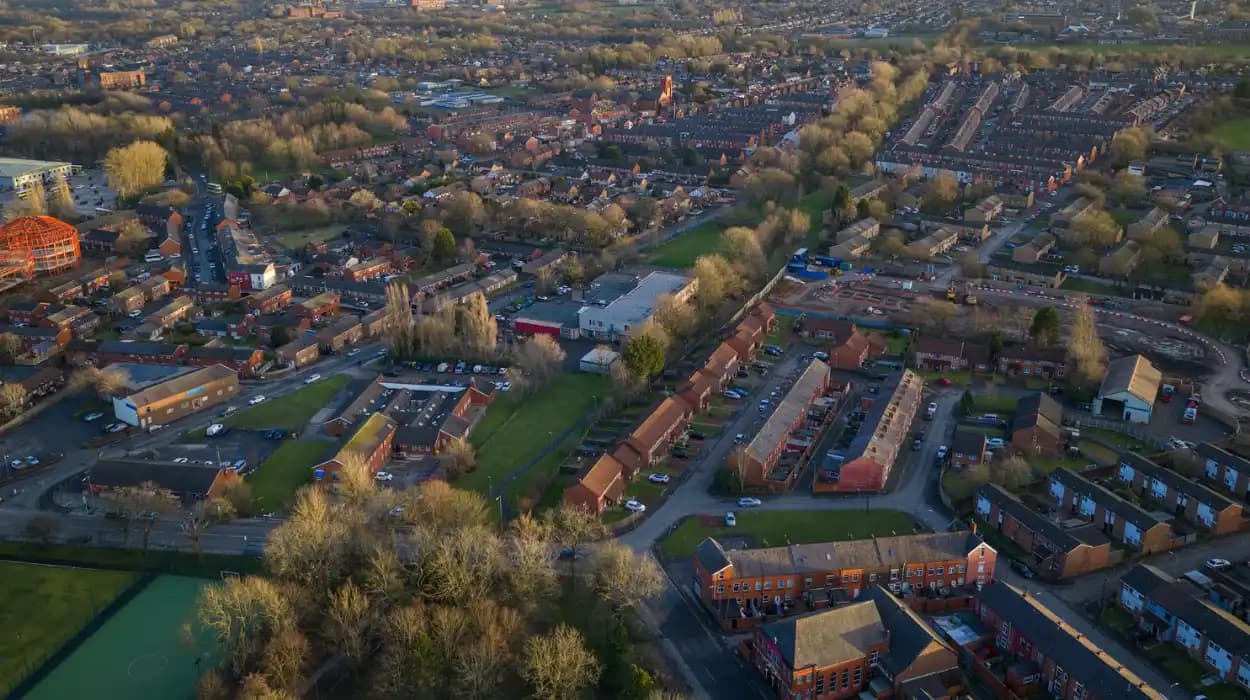
Astley Bridge is one of the most historically significant districts in Bolton, Greater Manchester. Located north of Bolton town centre, the area developed from a rural settlement into a major industrial community during the nineteenth century. Today, visitors encounter a district that combines Victorian heritage, historic churches, industrial landmarks, green spaces, and access to some of Bolton's most important cultural attractions.
For visitors interested in local history, architecture, walking routes, genealogy, and Lancashire's industrial past, Astley Bridge provides a concentrated introduction to the development of Bolton and the wider North West of England. Its surviving landmarks illustrate how industry, religion, education, transport, and community life shaped the area across more than two centuries.
Why is Astley Bridge worth visiting today?
Astley Bridge offers visitors a combination of industrial heritage, Victorian architecture, historic religious buildings, public green spaces, and convenient access to Bolton's major attractions. The district preserves important evidence of Lancashire's nineteenth-century development while remaining closely connected to modern Bolton.
Astley Bridge occupies a strategic position between central Bolton and the western Pennine foothills. This location contributed significantly to its historical development. Before industrialisation, the area consisted primarily of farmland, scattered cottages, and transport routes connecting Bolton with neighbouring settlements.
The district expanded rapidly during the Industrial Revolution. Textile mills, engineering works, housing developments, schools, and churches transformed the landscape. Although many industrial structures disappeared during twentieth-century redevelopment, important elements of the historic townscape remain visible.
Visitors today benefit from the area's accessibility. Major roads, public transport connections, and pedestrian routes link Astley Bridge with several cultural and heritage destinations across Bolton.
The district also serves as a useful starting point for understanding how industrial communities developed throughout Lancashire. The surviving built environment illustrates changing patterns of employment, religion, education, and civic investment.
What historical landmarks can visitors see in Astley Bridge?
Visitors can explore Victorian churches, former mill sites, historic educational buildings, nineteenth-century housing developments, and surviving commercial structures. These landmarks collectively illustrate Astley Bridge's transformation from agricultural land into a major industrial district during the Victorian period.
The most visible historical assets in Astley Bridge are its religious buildings. During the nineteenth century, population growth created demand for new places of worship. Churches became centres of education, welfare, social activity, and community organisation.
St Paul's Church
St Paul's Church remains one of the area's most significant Victorian landmarks. Constructed during the period of rapid industrial expansion, the church reflects Gothic Revival architectural principles that dominated religious construction across Britain during the nineteenth century.
The Gothic Revival movement sought inspiration from medieval ecclesiastical architecture. Features commonly included pointed arches, stained glass windows, stone construction, and prominent towers.
The church demonstrates how local industrial prosperity financed substantial public buildings. Wealth generated by textile manufacturing often funded religious and civic projects throughout Lancashire.
Historic Mill Locations
Although many original textile mills no longer survive, several former mill sites remain identifiable within the urban landscape.
Cotton manufacturing dominated Bolton's economy during the nineteenth century. The borough became one of the world's leading textile production centres. Steam-powered mills employed thousands of workers and attracted migration from surrounding rural districts.
Former mill locations help visitors understand the scale of industrial activity that once characterised Astley Bridge. Street layouts, worker housing, and commercial buildings frequently reflect these historical industrial patterns.
Victorian Residential Areas
Rows of nineteenth-century terraced housing remain important elements of Astley Bridge's historic character.
These developments accommodated workers employed in local industries. Victorian housing schemes often followed standardised designs intended to provide relatively efficient accommodation near places of employment.
The survival of these residential districts allows visitors to observe how industrial communities were organised geographically.
How did Astley Bridge develop during the Industrial Revolution?
Astley Bridge expanded dramatically during the nineteenth century as cotton manufacturing, engineering, transport improvements, and population growth transformed a rural landscape into a densely developed industrial community connected to Bolton's wider economy.
Before industrialisation, Astley Bridge consisted primarily of agricultural land. Small farms and scattered settlements characterised much of the landscape.
The Industrial Revolution altered these conditions fundamentally.
Textile Industry Expansion
Bolton became a globally important centre of cotton spinning and textile production during the late eighteenth and nineteenth centuries.
Several factors supported industrial growth:
- Access to coal resources
- Regional transport connections
- Expanding international markets
- Technological innovation
- Growing labour availability
Steam power transformed manufacturing capacity. Mills operated on a scale impossible under earlier production methods.
As industrial employment expanded, population growth accelerated. New housing, schools, churches, and commercial facilities appeared throughout Astley Bridge.
Transport Improvements
Road improvements and railway development strengthened connections between Bolton and wider regional markets.
The nineteenth-century transport revolution reduced costs and increased the speed of movement for raw materials and finished goods.
Improved connectivity encouraged further industrial investment and residential development.
Civic Expansion
Industrial prosperity encouraged significant civic investment.
Examples included schools, churches, libraries, public institutions, and infrastructure improvements.
These developments reflected broader Victorian ideas regarding social improvement, education, and public responsibility.
Which parks and green spaces are located near Astley Bridge?
Several parks and open spaces near Astley Bridge provide opportunities for walking, recreation, wildlife observation, and landscape appreciation. These areas offer a contrast to the district's industrial heritage while illustrating changing approaches to public health and urban planning.
Industrial towns increasingly recognised the importance of public green spaces during the nineteenth century.
Urban reformers argued that access to parks improved public health and social wellbeing.
Moss Bank Park
Moss Bank Park ranks among Bolton's most important public green spaces.
The park occupies extensive landscaped grounds north of the town centre and attracts visitors throughout the year.
Facilities support walking, family recreation, sporting activities, and community events.
The park also contains mature woodland and varied habitats that support local biodiversity.
Smithills Estate
Nearby Smithills provides one of the region's most significant heritage landscapes.
The estate combines historic buildings, agricultural land, woodland, moorland, and walking routes.
Visitors can examine evidence of centuries of land management while exploring extensive countryside settings.
The relationship between estates such as Smithills and surrounding industrial communities forms an important aspect of Bolton's historical development.
Local Walking Routes
A network of footpaths links Astley Bridge with surrounding districts and countryside areas.
These routes allow visitors to observe historical settlement patterns, landscape features, and architectural landmarks.
To experience this historic landscape in person today, consult our comprehensive From Farmland to Factory Town: The Historical Development of Astley Bridge for itineraries and visiting parameters.
What cultural attractions are located close to Astley Bridge?
Visitors staying in Astley Bridge can easily access museums, historic houses, libraries, heritage centres, and cultural venues throughout Bolton. These attractions provide additional context for understanding the district's development and regional significance.
Astley Bridge benefits from its proximity to Bolton's principal heritage attractions.
Bolton Library and Museum
Bolton's museum collections preserve extensive material relating to archaeology, natural history, industrial heritage, and local history.
Artefacts document thousands of years of regional development.
Collections help explain how communities evolved before, during, and after industrialisation.
Smithills Hall
Smithills Hall represents one of Bolton's most important historic buildings.
Parts of the structure date to the medieval period.
The hall preserves architectural evidence spanning several centuries.
Visitors can explore changing domestic architecture, social history, and local governance traditions through the surviving building fabric.
Heritage Collections
Genealogists and local historians frequently consult archival collections held by local institutions.
Records include:
- Census documents
- Electoral registers
- Parish records
- Business archives
- Historic maps
These sources assist researchers investigating family histories and community development.
How does Astley Bridge reflect Bolton's industrial heritage?
Astley Bridge reflects Bolton's industrial heritage through its urban layout, surviving architecture, former mill locations, worker housing, transport routes, and community institutions established during the nineteenth-century textile manufacturing boom.
Industrial heritage extends beyond surviving factories.
Modern historians increasingly examine entire industrial landscapes rather than isolated structures.
Astley Bridge provides a useful example of this approach.
Industrial Urban Planning
The district's street patterns often reveal historical relationships between workplaces, housing, transport routes, and public institutions.
Industrial communities required efficient movement of workers and goods.
Consequently, urban development frequently followed practical economic requirements.
Social Infrastructure
Victorian communities invested heavily in social infrastructure.
Examples included schools, churches, reading rooms, libraries, and charitable institutions.
These facilities addressed challenges associated with rapid urbanisation and population growth.
Community Identity
Industrial employment fostered strong local identities.
Neighbourhoods frequently developed around workplaces, religious institutions, and recreational organisations.
Many of these traditions continued long after industrial decline.
What can visitors learn about local architecture in Astley Bridge?
Astley Bridge showcases Victorian Gothic, industrial, residential, and civic architecture. The area's buildings demonstrate how economic prosperity influenced construction quality, urban planning, and architectural ambition during the nineteenth and early twentieth centuries.
Architecture provides valuable evidence regarding historical priorities and resources.
The built environment of Astley Bridge reflects several important architectural traditions.
Gothic Revival Architecture
Religious buildings frequently adopted Gothic Revival designs.
This movement became dominant across Britain during the nineteenth century.
Architects considered medieval forms appropriate for ecclesiastical structures because of their historical associations with Christian worship.
Industrial Architecture
Industrial buildings prioritised efficiency, durability, and production capacity.
Typical features included:
- Large window openings
- Brick construction
- Multi-storey layouts
- Engine houses
- Chimneys
These characteristics reflected manufacturing requirements.
Residential Architecture
Housing developments reveal changing attitudes toward urban living.
Different residential types often indicate occupational status and economic circumstances.
Terraced housing became particularly common because it balanced affordability with efficient land use.
Why does Astley Bridge remain important in Bolton's heritage today?
Astley Bridge remains important because it preserves evidence of Bolton's industrial expansion, community development, architectural heritage, and social history. The district helps explain how local, national, and global economic forces shaped modern Greater Manchester.
Heritage significance depends on more than age alone.
Astley Bridge remains valuable because it illustrates broader historical processes that transformed Britain during the eighteenth, nineteenth, and twentieth centuries.
Industrialisation changed patterns of employment, settlement, transport, education, religion, and governance.
The district preserves physical evidence of these developments.
Researchers continue examining how industrial communities evolved and adapted over time. Surviving buildings, archival records, archaeological evidence, and landscape features contribute to this ongoing work.
For visitors, Astley Bridge provides an accessible introduction to Bolton's wider history. Its churches, residential districts, former industrial sites, parks, and cultural attractions collectively demonstrate the forces that shaped one of Lancashire's most important urban areas.
Understanding Astley Bridge helps explain the broader story of Bolton, the Industrial Revolution, and the transformation of north-west England into one of the world's leading manufacturing regions. The district therefore remains both a heritage destination and an important educational resource for future generations.
FAQS
Is Astley Bridge worth visiting?
Yes. It is worth visiting for its local history, walking routes, architecture, and its connection to Bolton’s Industrial Revolution heritage. It also provides easy access to museums and cultural sites in Bolton.