Key Points
- Bolton Wanderers' head physiotherapist, Matt Barrass, has expressed immense pride regarding the football club’s positive injury record over the preceding 12 months.
- The medical and management departments are actively planning for a highly demanding campaign following their promotion to the EFL Championship.
- Effective horizontal and vertical communication within the club’s hierarchy is identified as the foundational pillar behind the recent improvement in squad availability.
- Astute recruitment strategies executed across the last two transfer windows significantly bolstered squad depth, alleviating the impact of injuries to prominent players.
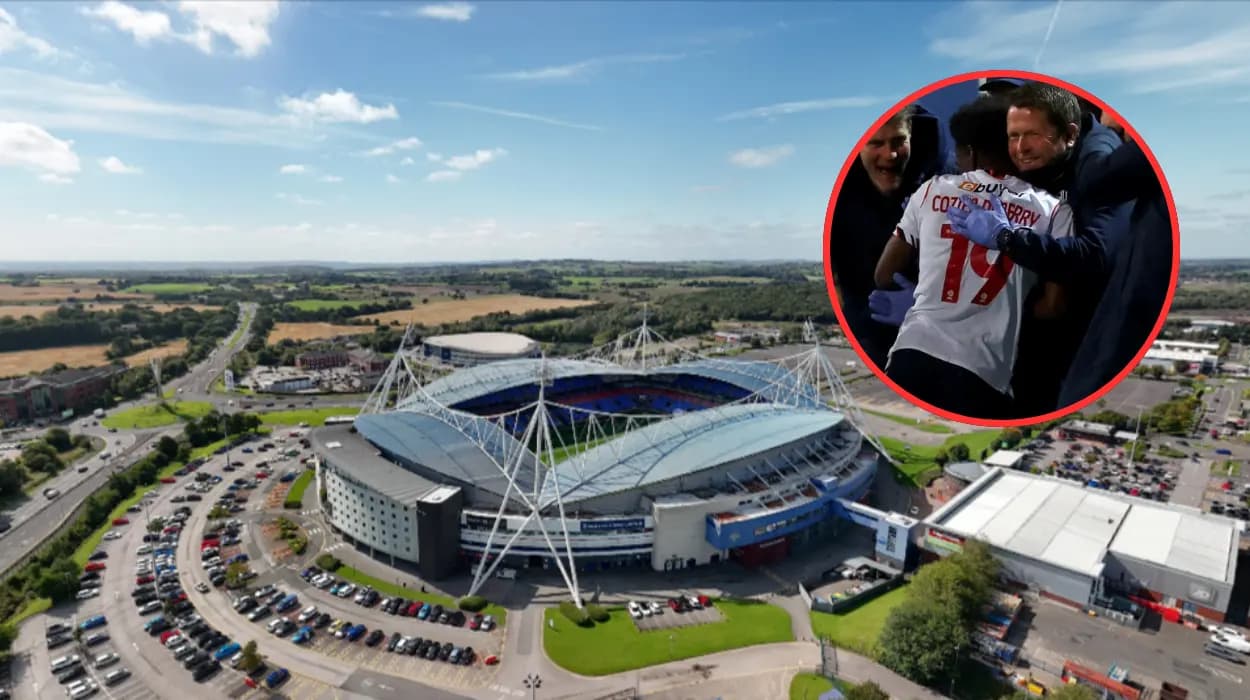
- Despite achieving promotion, the squad had to overcome notable injury setbacks to key personnel, including Marcus Forss, Amario Cozier-Duberry, Eoin Toal, and Johnny Kenny.
- Manager Steven Schumacher has been highly praised for his level-headed, pragmatic approach, ensuring that unexpected player absences did not disrupt team focus or momentum.
- The Trotters have actively restructured and expanded their medical infrastructure, confirming the appointments of Jonny Griffiths as lead physiotherapist and Jack Winnard as strength and conditioning coach.
- Matt Barrass has transitioned into a slightly modified role that integrates a more comprehensive overview of the Bolton Wanderers academy system, reducing his travel log.
- Club data extracted from internal medical tracking systems demonstrates a clear positive trend across player fitness, recovery rates, and overall squad durability.
Bolton (Bolton Today) June 19, 2026 - Bolton Wanderers head physiotherapist Matt Barrass has revealed that a culture of open, transparent communication and a pragmatic "squad-first" philosophy were the primary drivers behind the club's exceptional injury management record over the past year. As the club transitions into intensive preparations for its upcoming campaign in the EFL Championship following a successful promotion-winning season, the medical department has undergone strategic expansion to sustain player durability against a significantly elevated competitive standard. The Trotters successfully navigated the physical rigours of the previous football league schedule despite losing several high-profile first-team players to temporary setbacks, demonstrating a robust structural resilience across both the coaching and medical departments.
The internal evolution at the Toughsheet Community Stadium emphasizes a meticulous balance between high-performance training and preventative clinical medicine. By establishing clear channels of accountability between the medical staff, the management team led by Steven Schumacher, and the sporting director Fergal Harkin, Bolton Wanderers have managed to optimise player availability rates. This structural synergy has allowed the newly promoted side to transition from a reliance on individual stars to a holistic system where incoming squad members are instantly primed to perform, ensuring that competitive momentum remains unaffected by unavoidable physical casualties.
Why Is Bolton Wanderers' Injury Record Deemed a Major Success?
Navigating the grueling landscape of English football league campaigns requires a profound level of physical endurance, making a clean bill of health an invaluable asset for any aspiring club. For Bolton Wanderers, the last 12 months have represented a benchmark period in athletic sustainability. The club’s medical division has managed to mitigate the high-frequency muscular soft-tissue strains that traditionally plague squads playing under high-intensity tactical regimes. This stability has provided the coaching staff with tactical continuity, allowing for consistent selection patterns and more cohesive team chemistry on the pitch.
The achievement is magnified when contextualised within a grueling promotion race that demanded peak physical output from every member of the first-team roster. Rather than succumbing to the late-season fatigue or structural breakdowns that frequently derail promotion-seeking clubs, the Bolton squad maintained high baseline performance indicators. Internal data analytics indicate that the preventative maintenance protocols established by the medical staff successfully restricted long-term absences, allowing the team to conclude the campaign with one of the highest squad availability percentages in the division.
How Did Steven Schumacher Manage Player Availability During the Promotion Campaign?
The tactical blueprint implemented by manager Steven Schumacher requires an intense physical workload, relying on aggressive pressing and rapid transitions that test the limits of player conditioning. To balance this demand, Schumacher has fostered a psychological climate that refuses to dwell on individual physical setbacks. Whenever an indispensable first-team asset was sidelined, the management team prioritised immediate tactical adaptation over public lamentation, a trait that the medical staff believes trickled down positively to the rest of the playing group.
As reported by Marc Iles of The Bolton News, Matt Barrass stated that:
"I think he (Schumacher) is very good at that, not making a song and dance over things, keeping people focused. It's just a case of 'he's injured, OK,' and you know there is someone to come in, bring the next one in."
This pragmatic outlook prevented the psychological defeatism that often grips a squad when key figures are led to the treatment room, keeping collective focus firmly fixed on upcoming fixture objectives.
The depth of the squad was thoroughly tested through various stages of the season when several prominent figures were forced to undergo periods of rehabilitation. As reported by Marc Iles of The Bolton News, Matt Barrass stated that:
"We had a good squad last season and that's the point of one, isn't it? Bring the next man in, give them a chance. We didn't get many serious injuries but when they came along they were to big players, so credit to everyone for dealing with that and keeping things moving forward."
Which Key Players Suffered Injury Setbacks Last Season?
Despite the overwhelmingly positive trends highlighted by the medical department, the promotion campaign was far from a frictionless journey. The club had to successfully navigate distinct periods where critical talent was rendered unavailable for selection. The offensive and defensive compartments of Schumacher's tactical framework required adjustments following injuries to influential figures such as Marcus Forss, whose explosive attacking threats were temporarily sidelined, and Amario Cozier-Duberry, whose dynamic wide play had to be carefully managed through rehabilitation protocols.
Furthermore, defensive stability faced challenges with injuries to Eoin Toal, a central defensive figure whose physical presence is vital to the team's rearguard actions, alongside attacking prospect Johnny Kenny. The management of these specific cases required a highly coordinated effort to accelerate recovery timelines without risking secondary re-injury. The successful reintegration of these athletes back into high-intensity match play without subsequent relapses serves as a testament to the clinical precision of the club's medical interventions.
What Role Did Strategic Recruitment Play in Bolton’s Injury Management?
The structural resilience of the playing squad cannot be attributed solely to clinical oversight; it is fundamentally linked to the club's recruitment strategies over the past two transfer windows. Working in close alignment with the recruitment department, the club prioritised the acquisition of athletes who possessed robust historical availability records and the physiological capacity to withstand Schumacher's demanding training methodologies. This analytical approach to recruitment effectively insulated the first team against sudden luxury vacuums when injuries materialised.
By building a balanced squad where multiple players possess interchangeable profiles, the club eliminated the necessity of rushing semi-recovered athletes back into competitive fixtures. This depth allowed the medical team to enforce strict criteria for return-to-play protocols, ensuring that an individual was entirely cleared from a physiological standpoint before exposing them to match-day stresses. The subsequent reduction in overuse injuries validated the financial and analytical investments made during the transfer windows.
How Has the Bolton Wanderers Medical Department Been Restructured Ahead of the Championship?
Recognising that the EFL Championship presents a vastly superior physical challenge characterised by faster transitions, stronger athletic profiles, and a punishing schedule, Bolton Wanderers have proactively modernised their medical hierarchy. The club has secured the services of Jonny Griffiths, who steps into the role of lead physiotherapist, bringing fresh clinical perspectives to the daily management of the first team. Additionally, Jack Winnard has been integrated as a strength and conditioning coach to focus strictly on physical durability, load management, and power development.
This newly expanded framework operates alongside existing medical personnel, including Paul Walsh and the established backroom team, creating a multi-layered support network for the players. As explained by Matt Barrass to Marc Iles of The Bolton News:
"We don't stop there, obviously we start all over again now with the Championship and all that, but it's exciting and we can't wait!"
The administrative adjustments have successfully delineated daily operational responsibilities, allowing for a more focused approach to both immediate injury rehabilitation and long-term athletic development.
Explore More Bolton Wanderers News
Bolton Physio Matt Barrass on Football Injury Risk Management | Bolton 2026
Bolton Wanderers Season Ticket Boost After Wembley Win: Bolton 2026
Why Is Matt Barrass Spending Less Time on the Motorway?
The restructuring of the medical division has also allowed for a strategic realignment of Matt Barrass’s professional responsibilities within the club. With the arrival of highly capable personnel to oversee the daily demands and travel logistics of the first team, Barrass has shifted his focus toward integrating the club's youth structures with senior medical protocols. This administrative shift addresses a historical gap, ensuring that academy prospects transitioning into the senior setup are subjected to identical physical screen regimes and conditioning benchmarks.
As reported by Marc Iles of The Bolton News, Matt Barrass stated that:
"My role has changed slightly, meaning I'm more involved with the academy as well, and people have probably noticed that Jonny has been doing the majority of the away games."
This distribution of labor has significantly optimized the department's overall productivity while preserving the physical well-being of its senior staff.
The operational adjustment emerged from constructive internal discussions aimed at elevating the performance standards of the developmental squad. As reported by Marc Iles of The Bolton News, Matt Barrass stated that:
"I had a conversation with Fergal (Harkin) and Alice (Pier) has been brilliant on the academy team but they haven't had that more experienced head of the department and we felt that might be somewhere we could improve."
The transition was executed with full administrative backing, resulting in an efficient hierarchy that benefits both the senior squad and emerging academy talents. As reported by Marc Iles of The Bolton News, Matt Barrass stated that:
"Fergal and the manager were great, they just wanted to make sure we got another good physio in, which Jonny most certainly is, so the department has taken shape quite nicely now. And I don't have to do quite as many miles up and down the motorway!"
Why Is Communication Deemed Critical to Bolton's Medical Success?
In modern football management, friction frequently arises between managers eager to select their best players and medical staffs advocating for caution. At Bolton Wanderers, however, this potential flashpoint has been neutralized by a culture of mutual respect and data-led discussions. The coaching staff’s willingness to process medical risk assessments objectively has prevented the premature deployment of vulnerable athletes, protecting long-term squad health.
As reported by Marc Iles of The Bolton News, Matt Barrass stated that:
"The big one this season has been the manager and the coaching staff, they are very level-headed, and sometimes, don't get me wrong, they don't like hearing that a player can't train. But the important thing is that he will listen, take all the information on board, and use that to inform his decision making."
This collaborative environment allows for structured debate regarding player conditioning without undermining professional relationships. As reported by Marc Iles of The Bolton News, Matt Barrass stated that:
"As I have said before, we can disagree, but the important thing is that we discuss the various options and I think the relationship works really well. And then, obviously, Fergal sits over everything in the football side of things, and we feed that information into him as well, so he's got an input and opinion. I think overall, that approach has been really positive."
What Do the Club's Internal Data Trends Reveal?
The ultimate validation of Bolton’s integrated methodology is found within the objective metrics recorded by the club's internal medical tracking software. By monitoring daily heart-rate variability, GPS workload metrics, soft-tissue compliance, and subjective recovery scores, the medical team compiles a comprehensive picture of squad health. These empirical datasets allow the staff to identify early indicators of fatigue, enabling preventative interventions before a structural injury occurs.
As reported by Marc Iles of The Bolton News, Matt Barrass stated that:
"I was looking through the data through our medical system just the other day, and everything's kind of trending in the right way. Being able to communicate between the various parts of the club is really important and I think that has been a big part in coming away feeling that we have all done a good job."
What Challenges Do Bolton Wanderers Face in the EFL Championship?
As Bolton Wanderers step up to the EFL Championship, the physical demands placed upon the playing squad will intensify dramatically. The division is globally renowned for its unrelenting pace, robust physical confrontations, and a demanding calendar that tests even the most well-resourced squads. Maintaining a competitive edge will depend heavily on the medical department's capacity to replicate last season's high availability rates under significantly increased physical strain.
The strategic changes made to the medical staff, combined with an established culture of transparent communication and data-driven load management, suggest that the club is well-positioned to face these impending challenges. While the medical team remains proud of their recent accomplishments, their focus has shifted to adapting their proven protocols for the higher tier. The upcoming season will provide the ultimate test of Bolton Wanderers' modernized sports science and medicine framework.