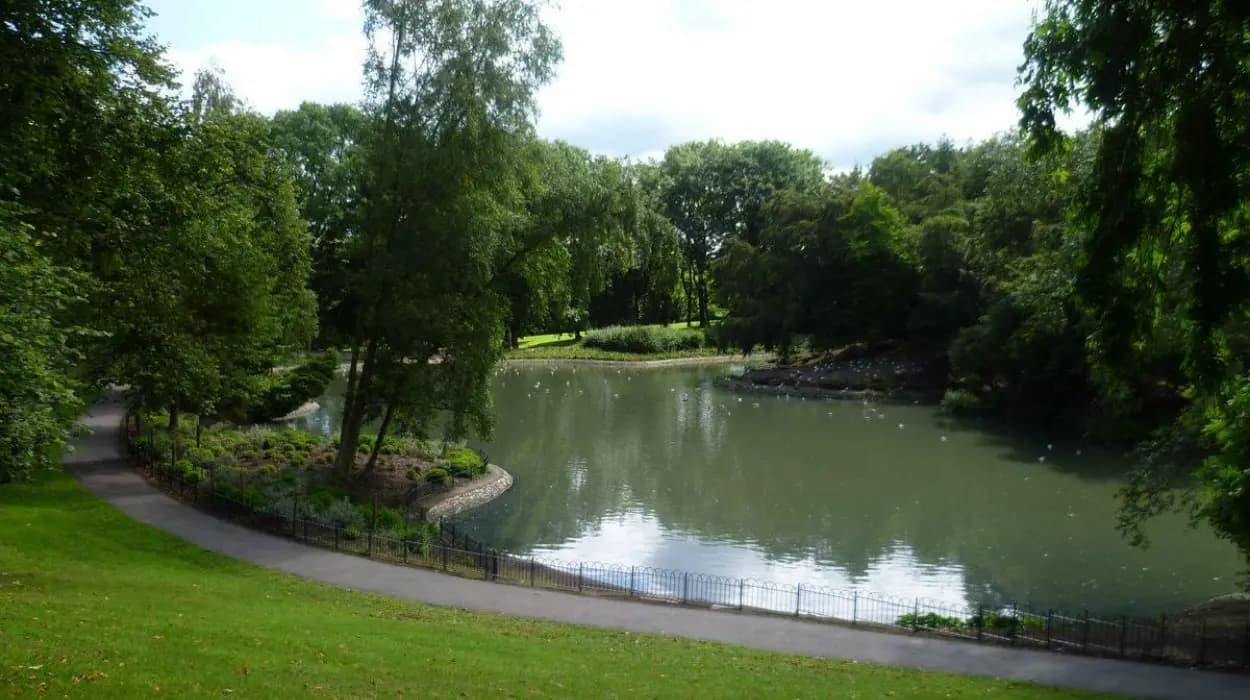
Public gardens are landscaped green spaces created for public enjoyment, health, recreation, and civic pride. In Bolton, they became an essential part of the town's heritage by improving living conditions, preserving local landscapes, supporting public health, and reflecting the social and industrial development of the borough from the nineteenth century onward.
Public gardens are carefully designed outdoor spaces that combine horticulture, architecture, recreation, and conservation. Unlike private estates, these gardens are owned or managed for public benefit. Their development in Bolton closely followed the town's transformation during the Industrial Revolution, when rapid urban expansion created an urgent need for accessible green spaces.
Bolton, located in Greater Manchester, developed into one of Britain's leading cotton manufacturing centres during the late eighteenth century and nineteenth century. Industrial growth brought prosperity but also overcrowding, pollution, and poor sanitation. Municipal leaders increasingly recognised that parks and public gardens formed an essential part of urban planning.
The Public Health Act 1848 established the first national framework for improving sanitation and urban living conditions in England. Later legislation, including the Public Health Act 1875, strengthened the powers of local authorities to acquire land for recreation and public health improvements.
Bolton's public gardens therefore became more than attractive landscapes. They represented investment in public wellbeing, environmental improvement, education, and civic identity. Many of these spaces remain protected today and continue serving residents while preserving the town's historical landscape.
How did the Industrial Revolution influence the creation of public gardens in Bolton?
The Industrial Revolution transformed Bolton into a major textile town, creating crowded neighbourhoods, polluted air, and limited recreational land. Public gardens emerged as a direct response, providing healthier environments, cleaner landscapes, organised leisure, and improved quality of life for industrial workers and their families.
Between the late eighteenth century and the early twentieth century, Bolton experienced remarkable industrial expansion. Cotton spinning mills, weaving factories, engineering works, and coal mining attracted thousands of workers from surrounding rural communities.
Population growth dramatically altered the urban landscape. Dense housing developments appeared close to mills because workers needed to live within walking distance of employment. Limited open space increased concerns about physical and mental health.
Victorian reformers believed carefully planned parks and gardens improved moral behaviour and public discipline. Their ideas reflected broader movements in urban planning across Britain.
Municipal authorities increasingly purchased former estates and agricultural land to establish permanent public gardens. These landscapes included formal flower beds, ornamental trees, lakes, bandstands, walking paths, and sports facilities.
Examples of early recreational developments included landscaped promenades, ornamental gardens, and botanical planting designed to educate visitors while encouraging outdoor exercise.
This philosophy aligned with wider national trends promoted by organisations such as the Royal Horticultural Society and local improvement commissions throughout Victorian Britain.
Why did Victorian Bolton invest heavily in parks and public gardens?
Victorian Bolton invested in public gardens because civic leaders believed green spaces improved public health, reduced overcrowding, encouraged respectable recreation, enhanced urban beauty, and demonstrated municipal progress during Britain's period of rapid industrialisation and local government reform.
The Victorian era between 1837 and 1901 witnessed significant investment in public infrastructure across Britain. Bolton's elected authorities increasingly viewed parks as essential public services rather than luxury amenities.
Local governments acquired land through public funding, charitable donations, and estate purchases. Wealthy industrialists often supported these projects because attractive public spaces enhanced civic reputation and encouraged social stability.
Victorian landscape architecture combined aesthetics with functionality. Gardens typically featured:
- Formal bedding displays, for example seasonal floral carpets.
- Tree-lined avenues, for example lime and horse chestnut plantings.
- Ornamental lakes, for example boating ponds.
- Bandstands, for example spaces for brass band performances.
- Children's recreation areas, for example early playgrounds.
These design principles reflected the influence of celebrated landscape designers including Joseph Paxton and Edward Milner, whose work shaped many municipal parks throughout Britain.
Bolton's expanding public gardens also reflected increasing democratic access to leisure. Previously, landscaped estates had primarily belonged to aristocratic landowners. Municipal parks opened similar experiences to all social classes.
Which historic public gardens shaped Bolton's landscape?
Several historic public gardens established Bolton's green heritage, including Queen's Park, Leverhulme Park, Moss Bank Park, and the historic landscapes surrounding Smithills Estate. Each contributed differently to recreation, conservation, education, and civic identity across successive generations.
Queen's Park, officially opened in 1866, represented one of Bolton's earliest municipal parks. The park celebrated public philanthropy and Victorian landscape design through ornamental lakes, mature trees, and formal planting.
Leverhulme Park originated from generous donations associated with William Hesketh Lever, later the first Viscount Leverhulme. His philanthropy significantly expanded recreational opportunities across Bolton.
Moss Bank Park developed from former estate land and preserved mature woodland alongside landscaped gardens. Its combination of ornamental features and natural habitats continues supporting biodiversity.
Smithills Estate contains extensive historic parkland reflecting centuries of landscape evolution. Medieval agricultural land gradually transformed into designed landscapes surrounding Smithills Hall before later becoming publicly accessible.
These gardens collectively illustrate changing priorities across different historical periods, including Victorian recreation, Edwardian philanthropy, twentieth-century conservation, and modern environmental management.
To experience these historic landscapes in person today, consult our comprehensive [Explore Beautiful Gardens Around Bolton Town Centre for Peaceful Afternoon Walks] for itineraries and visiting parameters.
How did philanthropy contribute to Bolton's public gardens?
Philanthropy played a central role by funding land purchases, park improvements, recreational facilities, and landscape preservation. Wealthy industrialists and benefactors viewed public gardens as lasting investments in education, health, and community wellbeing throughout Bolton's industrial history.
Industrial success created significant private wealth in nineteenth-century Bolton. Many successful manufacturers supported civic improvements through charitable giving.
William Hesketh Lever became one of Britain's most influential philanthropists. Although internationally recognised for founding Lever Brothers, his contributions extended into public recreation, education, and cultural development.
Philanthropic investment frequently financed:
Public parks.
Botanical collections.
Libraries.
Museums.
Sports facilities.
Educational institutions.
These donations complemented municipal funding rather than replacing government responsibility.
Many benefactors believed public gardens promoted healthier lifestyles while reducing social inequality by offering free access to attractive outdoor environments.
Their legacy remains visible through commemorative monuments, historic planting schemes, preserved avenues, and surviving park infrastructure.
How did landscape design evolve within Bolton's public gardens?
Landscape design evolved from formal Victorian ornamental layouts toward more naturalistic planting, ecological management, accessible recreation, and biodiversity conservation. Each design period reflected changing attitudes toward urban planning, environmental science, and public recreation across Britain.
Early Victorian gardens prioritised geometric flower beds, symmetrical pathways, decorative fountains, and carefully maintained lawns.
Edwardian developments introduced broader recreational facilities alongside ornamental landscapes. Tennis courts, bowling greens, boating lakes, and expanded children's play areas reflected changing leisure preferences.
Following the Second World War, municipal authorities increasingly focused on practical maintenance, ecological planting, and accessible recreation.
Modern restoration projects balance historical authenticity with environmental sustainability.
Current landscape management includes:
Native woodland restoration, for example oak and birch planting.
Wildflower meadow creation, for example pollinator habitats.
Wetland conservation, for example natural drainage systems.
Accessible pathways, for example inclusive mobility routes.
These developments demonstrate how heritage conservation and environmental resilience increasingly complement one another.
What role did public gardens play in Bolton's social life?
Public gardens became important social spaces where residents gathered for recreation, celebrations, concerts, education, sporting activities, and community events. They strengthened civic identity while providing shared spaces that crossed economic, occupational, and generational boundaries.
Victorian employers often encouraged outdoor recreation because healthier workers generally experienced improved wellbeing.
Municipal parks hosted brass band concerts, flower shows, charity events, and civic ceremonies throughout the summer months.
Children used playgrounds and open fields for recreation. Families enjoyed picnics during weekends and public holidays.
Examples of community events included horticultural exhibitions, for example seasonal flower competitions, educational lectures, and organised sports tournaments.
Public gardens also became locations for remembrance ceremonies following both World Wars.
Their role gradually expanded beyond recreation into education, heritage interpretation, wildlife conservation, and environmental awareness.
Today, many of these traditions continue through volunteer organisations, local history societies, and community gardening initiatives.
How have Bolton's public gardens been preserved for future generations?
Bolton's historic gardens are preserved through conservation planning, local authority management, heritage funding, ecological restoration, volunteer organisations, and legal protection that safeguards important landscapes, historic structures, mature trees, and biodiversity for future generations.
Conservation involves protecting both physical landscapes and historical significance.
Bolton Council manages numerous parks through long-term maintenance programmes that balance public access with environmental sustainability.
Historic landscape assessments identify significant features including original pathways, lakes, monuments, and specimen trees.
National organisations including Historic England, the National Lottery Heritage Fund, and Natural England have supported restoration initiatives across Britain.
Volunteer groups frequently assist through habitat management, litter collection, educational programmes, and heritage interpretation.
Conservation increasingly incorporates climate resilience through improved drainage, native planting, and biodiversity enhancement.
These efforts ensure public gardens continue functioning as both historical landscapes and living community assets.
Why do Bolton's public gardens remain historically significant today?
Bolton's public gardens remain historically significant because they preserve Victorian planning principles, industrial heritage, community identity, environmental conservation, and centuries of landscape evolution while continuing to provide accessible public spaces for education, recreation, and cultural heritage.
Historic gardens provide tangible evidence of changing attitudes toward urban planning and public health.
Their mature trees represent living historical records spanning more than one hundred years in several locations.
Preserved monuments commemorate civic leaders, benefactors, military service, and local achievements.
Modern educational programmes introduce students to topics including landscape history, ecology, architecture, and industrial heritage.
Researchers studying genealogy also benefit because historical park records frequently document land ownership, estate development, municipal improvements, and local government planning decisions.
Public gardens additionally contribute to environmental resilience by supporting biodiversity, reducing urban heat, improving air quality, and managing surface water.
Their continued preservation demonstrates how historical landscapes remain relevant within modern urban environments.
How does Bolton's public garden heritage contribute to the town's future?
Bolton's historic public gardens continue supporting sustainable development by protecting cultural heritage, encouraging tourism, improving environmental resilience, strengthening community wellbeing, and connecting modern residents with more than 150 years of local landscape history and civic achievement.
Heritage landscapes increasingly contribute to local economic development through cultural tourism.
Visitors seeking authentic historical experiences frequently include parks and gardens within broader heritage itineraries.
Educational institutions use these landscapes as outdoor classrooms covering environmental science, local history, geography, architecture, and conservation.
Climate adaptation strategies increasingly recognise urban green spaces as essential infrastructure.
Examples of environmental benefits include carbon storage through mature woodland, improved biodiversity through habitat restoration, and flood mitigation through sustainable drainage landscapes.
Public gardens therefore continue serving the same fundamental purpose established during the Victorian era: improving the quality of urban life.
Their historical significance extends beyond ornamental planting. They illustrate the evolution of public health policy, democratic access to recreation, municipal planning, philanthropy, and environmental stewardship.
As Bolton continues evolving, these landscapes remain enduring reminders that heritage exists not only within historic buildings but also within carefully preserved public spaces that generations of residents have shared, protected, and enjoyed.
FAQS
Why were public gardens created in Bolton?
Public gardens were created to improve public health, provide recreational spaces for residents, and reduce the effects of overcrowding and industrial pollution during the Victorian era.