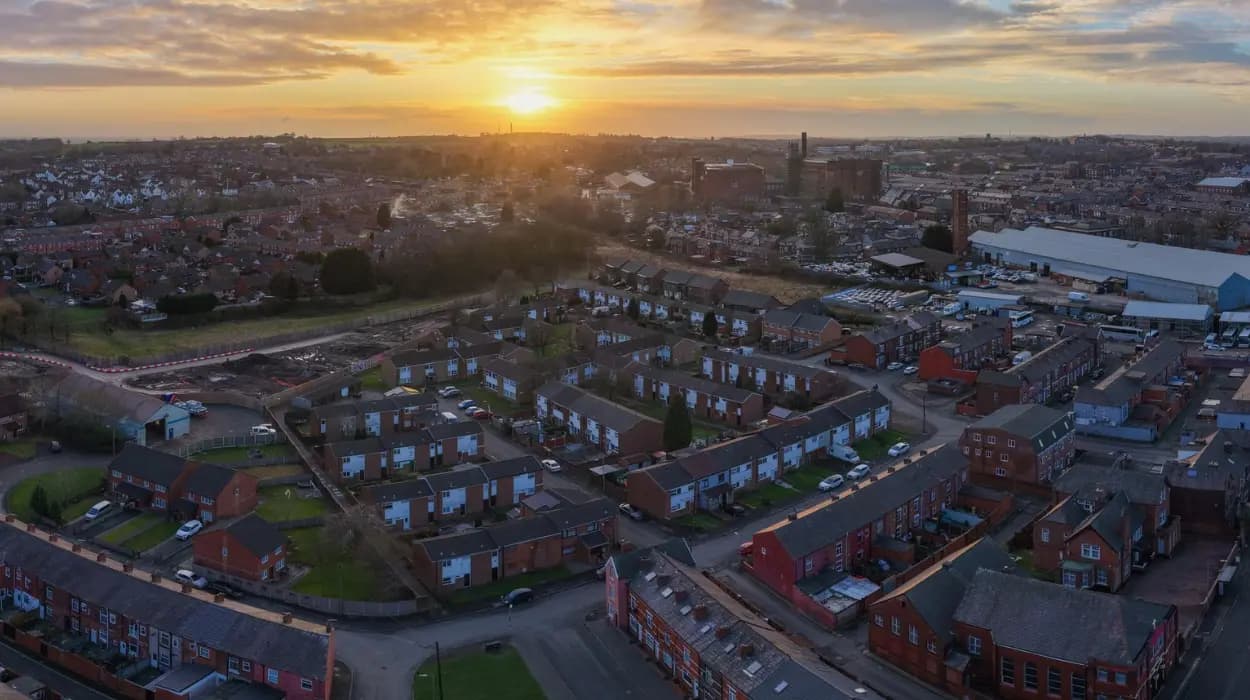
Astley Bridge is one of the most historically significant districts in northern Bolton. Today it functions as an established suburban area within the Metropolitan Borough of Bolton, yet its integration into the wider urban landscape resulted from centuries of administrative evolution, industrial expansion, population growth, and local government reform. Understanding how Astley Bridge became part of Bolton requires examining medieval territorial arrangements, nineteenth-century industrialisation, municipal governance, and twentieth-century boundary restructuring.
The history of Astley Bridge illustrates how rural settlements became incorporated into expanding industrial towns across Lancashire. It also demonstrates the relationship between governance, infrastructure, housing development, and economic change in shaping modern urban communities.
What was Astley Bridge before it became part of Bolton?
Astley Bridge originated as a rural settlement within the historic township of Sharples. Before urban expansion transformed the area during the nineteenth century, it consisted primarily of agricultural land, scattered farms, local roads, and communities connected to surrounding Lancashire townships.
The area now known as Astley Bridge developed within the ancient township of Sharples, one of several historic administrative divisions situated north of Bolton. During the medieval period, Lancashire governance operated through a system of manors, townships, and parishes. These units served administrative, legal, and taxation functions long before modern local government emerged.
Sharples was historically associated with agricultural activity. Farms dominated the landscape, while small settlements developed around transport routes connecting Bolton with northern Lancashire communities. Population density remained relatively low compared with urban centres.
The name "Astley Bridge" derives from a bridge crossing the Astley Brook. The watercourse became an important local landmark and eventually provided the geographical identity that distinguished the growing settlement from surrounding rural districts.
By the eighteenth century, Bolton had already emerged as an important market town. However, Astley Bridge remained largely outside the urban core. Its relationship with Bolton was primarily economic rather than administrative. Farmers, traders, and craftsmen travelled between the districts, but governance remained rooted in historic township structures.
This rural foundation shaped later urban development. When industrialisation accelerated during the nineteenth century, available land in Sharples allowed significant residential and industrial expansion beyond Bolton's traditional boundaries.
Why did Bolton expand towards Astley Bridge during the Industrial Revolution?
Bolton expanded towards Astley Bridge because industrialisation increased demand for housing, transport infrastructure, factory sites, and worker accommodation. Population growth transformed surrounding rural areas into urban districts closely integrated with Bolton’s expanding economic and social systems.
The Industrial Revolution fundamentally altered the geography of Lancashire. Between the late eighteenth century and early twentieth century, Bolton developed into one of Britain's most important textile manufacturing centres.
Cotton spinning and weaving industries generated unprecedented economic growth. Mills required workers, and workers required housing. As the urban population increased, development spread beyond Bolton's historic centre into neighbouring districts.
The population of Bolton rose dramatically during the nineteenth century. Census records show sustained growth throughout the industrial era as employment opportunities attracted migrants from rural Lancashire, Ireland, and other parts of Britain.
Several factors encouraged development in Astley Bridge.
Industrial employment opportunities
Textile mills expanded across northern Bolton. Entrepreneurs sought locations with access to transport routes, water supplies, and available land. Areas surrounding Astley Brook offered favourable conditions for industrial investment.
Industrial employment generated demand for nearby housing. New residential streets emerged as workers settled close to factories and workshops.
Improved transport connections
Road improvements strengthened links between Bolton and northern settlements. Better transport enabled movement of goods, raw materials, and workers.
Infrastructure projects reduced the practical separation between Astley Bridge and Bolton. Commercial activity increasingly crossed historic township boundaries.
Urban housing development
Victorian housing construction transformed the landscape. Terraced housing developments appeared across expanding industrial districts.
These housing developments included examples such as workers' terraces, artisan housing, and larger suburban villas. Together they created a continuous urban environment connecting Astley Bridge to Bolton.
As urban growth intensified, historical administrative divisions became less reflective of everyday social and economic realities.
How was Astley Bridge governed before modern local government reforms?
Before modern reforms, Astley Bridge was governed through a combination of township administration, parish structures, poor law institutions, and county-level oversight. These overlapping systems reflected traditional English local governance before nineteenth-century municipal restructuring.
Prior to the establishment of modern councils, local administration operated through several interconnected institutions.
Townships performed practical local functions. They collected taxes, maintained highways, and contributed to poor relief responsibilities.
Parishes exercised important ecclesiastical and community roles. The Church of England parish system influenced local administration across much of England for centuries.
Following the Poor Law Amendment Act of 1834, governance increasingly involved Poor Law Unions. These organisations administered welfare responsibilities across wider geographical areas.
Lancashire County authorities also exercised powers over infrastructure and public administration.
This fragmented arrangement worked reasonably well in rural societies. However, industrialisation exposed significant limitations.
Rapid population growth created demands for:
Examples included sanitation systems, public health oversight, and urban planning controls.
The existing framework struggled to coordinate these expanding responsibilities effectively.
Across industrial Britain, policymakers recognised the need for more structured municipal government.
When did Astley Bridge become administratively linked with Bolton?
Astley Bridge became increasingly connected to Bolton through nineteenth-century local government reforms and urban expansion. Administrative integration developed gradually rather than through a single event, reflecting broader changes in municipal governance across industrial Lancashire.
The relationship between Astley Bridge and Bolton evolved through multiple stages.
The Municipal Corporations Act 1835 reformed urban governance throughout England and Wales. Although the legislation primarily targeted municipal administration, it contributed to broader changes in local government structures.
During the second half of the nineteenth century, urban districts surrounding Bolton became more closely tied to municipal services and infrastructure networks.
The Local Government Act 1888 established elected county councils, including Lancashire County Council. This legislation modernised regional administration and clarified many governance responsibilities.
The Local Government Act 1894 introduced urban and rural district councils. These reforms further reshaped local governance and reflected changing settlement patterns.
As Bolton's built environment expanded northward, distinctions between the town and neighbouring communities became increasingly administrative rather than physical.
Residents often worked, shopped, worshipped, and participated in civic life within Bolton while residing in areas historically considered separate townships.
The result was a growing alignment between urban reality and administrative governance.
What role did Sharples play in Astley Bridge’s integration into Bolton?
Sharples served as the historical administrative framework within which Astley Bridge developed. The gradual incorporation of Sharples into Bolton’s urban sphere created the foundation for Astley Bridge’s modern identity as a Bolton district.
Understanding Astley Bridge requires understanding Sharples.
Historically, Astley Bridge was not an independent township. Instead, it formed part of the wider township of Sharples.
Throughout the nineteenth century, Sharples experienced many of the same pressures affecting industrial Lancashire communities.
These pressures included examples such as population expansion, housing demand, and infrastructure requirements.
Urban development increasingly connected Sharples to Bolton.
Residential construction expanded along major routes. Commercial premises appeared alongside growing neighbourhoods. Educational and religious institutions served expanding populations.
By the early twentieth century, the practical distinction between parts of Sharples and Bolton had diminished considerably.
Government reforms increasingly recognised these realities.
Eventually, administrative structures evolved to reflect the integrated urban landscape that had emerged through decades of development.
How did local government reforms change Astley Bridge’s relationship with Bolton?
Twentieth-century local government reforms consolidated administrative responsibilities and strengthened Astley Bridge’s position within Bolton. Governance became more centralised, enabling coordinated planning, service delivery, infrastructure management, and urban development across the wider borough.
The twentieth century witnessed major transformations in local government throughout England.
National policymakers sought greater efficiency in administration and public service provision.
Local councils assumed responsibility for a growing range of functions.
Examples included housing management, education administration, public health services, and transportation planning.
For communities such as Astley Bridge, these reforms reinforced connections with Bolton's municipal institutions.
The most significant change occurred through broader local government restructuring during the twentieth century.
Boundary reviews examined whether administrative borders accurately reflected patterns of settlement and economic activity.
In many cases, historical divisions no longer matched urban realities.
Bolton's continued growth strengthened arguments for integrated governance across neighbouring districts.
The process reflected national trends affecting industrial towns throughout northern England.
How did urban development transform Astley Bridge into a Bolton suburb?
Urban development transformed Astley Bridge through residential construction, commercial growth, public infrastructure investment, and transport improvements. These changes created a continuous urban environment that connected the district physically, economically, and socially to Bolton.
Physical development played a decisive role in integration.
As housing expanded, open countryside between settlements gradually disappeared.
Victorian and Edwardian development established many of the residential streets that continue to define Astley Bridge today.
Several building types appeared during this period.
Examples included terraced housing, semi-detached homes, and civic buildings.
Schools, churches, and community facilities supported growing populations.
Commercial activity also expanded. Shops, markets, and service businesses emerged to meet local demand.
Infrastructure improvements reinforced integration.
Road networks linked residential districts with employment centres. Utility services improved living standards. Public transport increased mobility across the wider urban area.
Urban planners increasingly viewed Astley Bridge as part of Bolton's broader development framework.
These changes produced lasting effects on community identity and settlement patterns.
To experience this historic landscape in person today, consult our comprehensive for itineraries and visiting parameters.
Local Life in Astley Bridge: Shops, Food Spots, and Community Experiences in Bolton
What evidence of Astley Bridge’s historical integration remains today?
Modern Astley Bridge retains substantial evidence of its historical integration with Bolton through surviving architecture, street layouts, public institutions, transport corridors, and administrative structures that reflect more than a century of urban development.
Historical evidence remains visible throughout the district.
Victorian and Edwardian buildings continue to define significant parts of the local streetscape.
Historic churches, schools, and civic structures demonstrate the scale of nineteenth-century population growth.
Street patterns reveal phases of urban expansion. Residential districts often correspond with specific periods of development.
Local archives preserve valuable documentation.
Examples include census records, rate books, and municipal planning records.
These sources provide detailed evidence of demographic and administrative change.
Genealogical researchers frequently use such records to trace family histories connected to Bolton and surrounding Lancashire communities.
Municipal archives also illustrate how governance evolved in response to industrialisation and urbanisation.
The continuity of these records makes Astley Bridge an important case study in local urban history.
Why is the administrative history of Astley Bridge important today?
The administrative history of Astley Bridge explains how governance, urban planning, and economic development shaped modern Bolton. Understanding this history provides valuable context for heritage preservation, community identity, academic research, and future urban planning decisions.
Historical administrative boundaries influenced patterns of development that remain visible today.
Understanding these processes helps explain why neighbourhoods developed differently across Bolton.
For heritage organisations, administrative history supports preservation efforts by identifying historically significant sites and development patterns.
For educators, Astley Bridge provides a practical example of broader transformations that affected industrial Britain.
These transformations included examples such as municipal reform, industrial urbanisation, and suburban expansion.
For genealogists, administrative history assists in locating historical records accurately. Changes in governance often affected how births, deaths, marriages, taxation records, and census data were recorded and preserved.
For urban historians, Astley Bridge demonstrates the interaction between local government and economic growth.
The district illustrates how industrialisation altered settlement patterns and encouraged administrative adaptation.
Most importantly, the story of Astley Bridge highlights how modern communities emerge through long-term historical processes rather than sudden change.
Astley Bridge became part of Bolton through centuries of economic integration, urban expansion, and administrative reform. From its origins within the rural township of Sharples to its position as a well-established Bolton suburb, the district reflects broader patterns of industrialisation and municipal development in Lancashire.
The transformation did not occur through a single legislative act or boundary change. Instead, it resulted from interconnected developments spanning agriculture, industry, housing, transportation, governance, and public administration.
Industrial growth brought population expansion. Population expansion required infrastructure. Infrastructure encouraged urban integration. Administrative reforms followed changing social and economic realities.
Today, Astley Bridge remains an important part of Bolton's urban landscape. Its streets, institutions, and historical records provide enduring evidence of how rural Lancashire communities became incorporated into one of northern England's most significant industrial towns.
The administrative and urban history of Astley Bridge therefore offers valuable insight into the evolution of modern Bolton and the wider historical development of industrial Britain.
FAQS
Was Astley Bridge always part of Bolton?
No. Astley Bridge originated within the historic township of Sharples and became increasingly connected to Bolton through industrial growth, urban expansion, and local government reforms during the nineteenth and twentieth centuries.