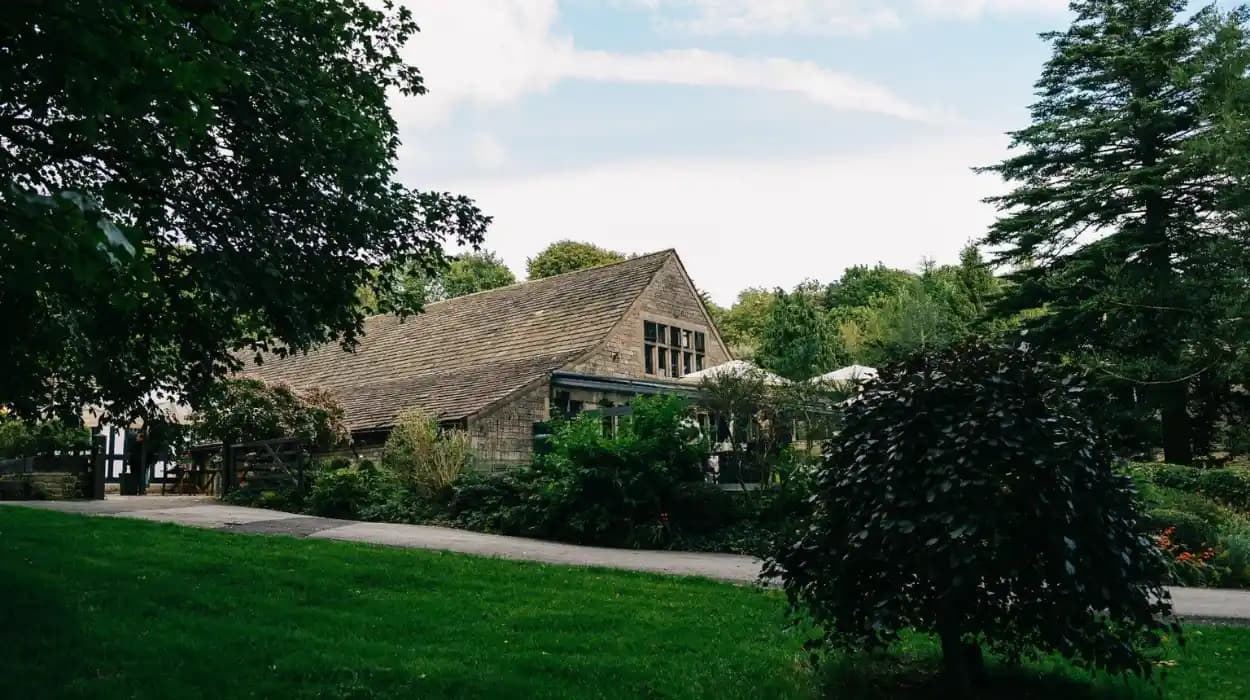
Rivington stands among the most historically significant landscapes in Lancashire. Located on the western edge of the West Pennine Moors, the village and its surrounding estate preserve centuries of architectural, religious, industrial, and landscape history. The area combines medieval settlement patterns, Tudor manor houses, Georgian estate improvements, Victorian engineering, and Edwardian ornamental gardens within a remarkably compact landscape.
The historic estate is closely associated with the influential Pilkington family, the industrialist Lord Leverhulme, and the development of Liverpool's public water supply. Today, Rivington's landmarks remain protected through conservation efforts and continue to attract historians, walkers, photographers, educators, and heritage visitors throughout the year.
Understanding the history of Rivington's landmarks reveals how landownership, architecture, religion, engineering, and landscape design shaped one of Lancashire's best-preserved historic environments.
What is the historical significance of Rivington's landmarks and estate?
Rivington's historic estate represents over 800 years of continuous development, preserving medieval, Tudor, Georgian, Victorian, and Edwardian heritage. Its buildings, reservoirs, gardens, and monuments illustrate changing patterns of landownership, religion, engineering, and landscape architecture across north-west England.
Rivington lies approximately six miles west of Bolton in Lancashire. The village developed around agriculture, upland farming, woodland management, and local trade before becoming one of England's most distinctive historic estates.
The area's significance extends beyond individual buildings. Instead, the estate demonstrates how successive generations adapted the same landscape to changing economic, religious, and social conditions.
Unlike many historic estates that evolved around a single mansion, Rivington contains multiple historically important structures spread across woodland, farmland, reservoirs, gardens, and moorland.
The estate includes medieval church remains, manor houses, barns, bridges, ornamental gardens, reservoirs, gate lodges, terraces, towers, and historic pathways that collectively illustrate more than eight centuries of continuous occupation.
Its survival owes much to careful preservation following the twentieth century and modern management by public authorities and conservation organisations.
How did the history of Rivington begin?
Rivington's recorded history dates to the medieval period, although archaeological evidence indicates much earlier human activity across the surrounding moorlands. The settlement gradually developed under feudal landownership before becoming the seat of the influential Pilkington family during the late Middle Ages.
Evidence from the West Pennine Moors demonstrates prehistoric occupation stretching back several thousand years. Archaeologists have identified Bronze Age features, including burial sites and field systems, across the wider upland landscape.
The village itself appears in medieval documentation during the thirteenth century.
The name "Rivington" derives from Old English elements referring to a rough or rugged settlement situated near elevated land.
During the Norman period, Lancashire formed part of England's expanding feudal system. Local manors controlled agricultural production, woodland management, grazing rights, and tenant farming.
Rivington's economy depended primarily upon:
- Sheep farming
- Small-scale agriculture
- Woodland resources
- Local watercourses
- Stone quarrying
Its elevated position provided both defensive advantages and extensive grazing land suitable for upland farming.
The village remained relatively small throughout the medieval era while gradually acquiring churches, manor buildings, and agricultural infrastructure.
Who were the Pilkington family and why were they important?
The Pilkington family dominated Rivington for several centuries, transforming the estate into an influential Lancashire manor. Their political influence, architectural investment, and religious activities shaped much of the historic landscape that survives today.
The Pilkingtons became Lords of the Manor during the medieval period.
Among the family's most notable members was Sir Robert Pilkington, who strengthened the family's regional influence during the fifteenth century.
The family maintained strong political connections throughout Lancashire while participating in national affairs during the Wars of the Roses.
Their fortunes changed dramatically following support for Richard III.
After the Battle of Bosworth in 1485, many Pilkington estates were confiscated by Henry VII, significantly reducing the family's power.
Despite political setbacks, several important buildings associated with the family survived.
Their legacy includes:
- Manor buildings
- Estate farms
- Religious foundations
- Woodland management
- Historic field boundaries
The Pilkingtons helped establish the long-term layout of the estate that later generations adapted rather than completely replacing.
Many surviving landscape features still reflect medieval estate planning introduced during their ownership.
Which historic landmarks define the Rivington estate?
Rivington contains an exceptional collection of historic landmarks, including Rivington Hall, Rivington Church, the Pigeon Tower, Japanese Gardens, Liverpool Castle replica, reservoirs, and ornamental terraces that collectively represent several distinct periods of English architectural history.
The estate evolved gradually instead of through one large redevelopment.
Each generation introduced new buildings while preserving many earlier structures.
Rivington Hall
Rivington Hall remains the estate's architectural centrepiece.
The current timber-framed manor largely dates from the sixteenth century, although earlier structures occupied the site.
Its Great Hall displays classic Tudor craftsmanship through exposed timber framing and traditional construction methods.
Later alterations introduced Georgian and Victorian elements while preserving the building's historic character.
Rivington Church
The parish church traces its origins to medieval religious life.
Although restored and altered over time, the church preserves important memorials connected with local families and illustrates the continuity of Christian worship within the village.
The Great Barn
The Great Barn reflects the estate's agricultural economy.
Constructed using local stone, it provided storage for grain, livestock equipment, and harvested produce.
Its scale demonstrates the importance of farming within the manor economy.
Historic Bridges
Stone bridges across streams and estate roads connected farms, woodland, and settlements.
Several retain traditional masonry techniques characteristic of Lancashire craftsmanship.
These bridges remain integral parts of historic walking routes.
How did Lord Leverhulme transform the historic estate?
Industrialist William Hesketh Lever, later Lord Leverhulme, purchased the estate in 1900 and initiated one of England's most ambitious Edwardian landscape restoration projects, combining architecture, horticulture, engineering, and public recreation into a unified vision.
Lord Leverhulme founded the global soap manufacturing company Lever Brothers.
Following commercial success, he invested heavily in country estates, architecture, education, and public welfare.
His vision for Rivington differed from conventional country house estates.
Instead of constructing a vast mansion, he created ornamental gardens integrated with the natural landscape.
Major developments included:
- Terraced gardens
- Stone staircases
- Decorative bridges
- Artificial lakes
- Woodland pathways
- Viewing terraces
- Classical-inspired architecture
These additions blended with the surrounding moorland rather than dominating it.
Leverhulme employed skilled architects, engineers, craftsmen, and gardeners throughout the project.
Although some plans remained unfinished following his death in 1925, much of the landscape survives.
Why are the Pigeon Tower and Liverpool Castle important?
The Pigeon Tower and Liverpool Castle replica represent Lord Leverhulme's most recognisable architectural commissions. Built during the early twentieth century, they combined romantic landscape design with historical inspiration rather than serving defensive or residential purposes.
The Pigeon Tower occupies an elevated position overlooking Rivington.
Designed primarily as an ornamental landmark, it also incorporated practical pigeon housing.
Its elevated location provides extensive views across Lancashire.
Today it serves as one of the area's best-known photographic landmarks.
Nearby stands the Liverpool Castle replica.
Rather than reproducing the medieval castle exactly, Leverhulme commissioned a romantic interpretation inspired by Liverpool's historic castle, demolished during the eighteenth century.
The structure functioned primarily as a garden feature within the wider estate.
Although partially ruined today, the remains continue illustrating Edwardian interpretations of medieval architecture.
Together, these structures symbolise Leverhulme's broader vision of integrating art, history, architecture, and landscape.
How did Rivington Reservoirs change the landscape?
Construction of Rivington Reservoirs during the Victorian era fundamentally reshaped the landscape while providing Liverpool with a reliable public water supply. The engineering project transformed valleys into reservoirs without entirely removing the area's historic identity.
Rapid industrial growth during the nineteenth century created enormous demand for clean drinking water.
Liverpool required new water sources capable of serving an expanding urban population.
Engineer Thomas Hawksley designed an extensive water supply scheme.
Construction began during the 1850s.
The completed system included:
- Upper reservoirs
- Lower reservoirs
- Dams
- Aqueducts
- Valve towers
- Filter systems
The project flooded former farmland and altered historic routes.
Some buildings disappeared beneath reservoir waters.
However, engineers preserved numerous historic structures situated above flood levels.
The reservoir network remains operational today and continues supplying water across north-west England.
Its combination of Victorian engineering and historic landscape represents one of Britain's most successful integrations of infrastructure with heritage.
What architectural styles appear across the estate?
Rivington's landmarks display multiple architectural traditions spanning medieval vernacular construction, Tudor timber framing, Georgian refinement, Victorian engineering, and Edwardian Arts and Crafts-inspired landscape architecture, making the estate unusually diverse within a single historic landscape.
Medieval buildings emphasised practicality.
Local sandstone provided durable construction materials.
Thick masonry walls resisted harsh upland weather.
Tudor architecture introduced timber framing, decorative gables, and larger internal halls.
These features remain especially visible at Rivington Hall.
Victorian engineering prioritised functionality.
Reservoir dams, spillways, and valve houses reflected industrial precision while using locally sourced stone.
Edwardian additions embraced artistic landscape composition.
Leverhulme's terraces, staircases, pergolas, and ornamental structures reflected wider Arts and Crafts principles encouraging harmony between architecture and nature.
The resulting landscape demonstrates successive architectural philosophies without erasing earlier historical layers.
How has Rivington's historic estate been preserved?
Modern conservation programmes protect Rivington through heritage legislation, public ownership, restoration projects, environmental management, and community engagement. Preservation balances historic authenticity with increasing visitor numbers and environmental sustainability.
Conservation began gradually during the twentieth century.
Historic buildings received statutory protection through listing systems recognising architectural and historical importance.
Landscape conservation expanded alongside architectural preservation.
Restoration projects have included:
- Masonry repairs
- Roof conservation
- Woodland management
- Footpath improvements
- Garden restoration
- Structural stabilisation
Historic England, local authorities, heritage organisations, and volunteer groups contribute expertise and funding.
Environmental management also protects biodiversity across woodland, reservoirs, and moorland.
Public access encourages appreciation while carefully managed visitor infrastructure reduces long-term damage.
Educational interpretation helps visitors understand the estate's complex history beyond its scenic qualities.
To experience this historic landscape in person today, consult our comprehensive [Best Photography Locations in Rivington Every Travel Enthusiast Should Visit Today] for itineraries and visiting parameters.
Why does Rivington's historic estate remain important today?
Rivington's landmarks continue providing exceptional educational, architectural, environmental, and cultural value. The estate preserves centuries of Lancashire history while demonstrating how historic landscapes adapt successfully to modern conservation, recreation, and public heritage management.
The estate functions as an outdoor historical archive.
Students examine changing architectural styles through surviving buildings.
Landscape historians study estate planning across multiple centuries.
Archaeologists investigate earlier settlement patterns beneath woodland and surrounding moorland.
The reservoirs continue illustrating Victorian civil engineering achievements.
Historic gardens preserve Edwardian design principles.
Religious buildings document local community continuity across hundreds of years.
Researchers studying genealogy frequently encounter Rivington records through parish registers, estate documents, and local archives.
The estate also supports sustainable heritage tourism.
Thousands of annual visitors contribute to the local economy while engaging with Lancashire's cultural history.
Its educational value extends across schools, universities, conservation organisations, and public heritage programmes.
Rivington demonstrates that historic estates remain relevant when preservation, education, recreation, and environmental stewardship operate together.
Its surviving landmarks provide direct evidence of medieval landownership, Tudor domestic architecture, Victorian engineering innovation, and Edwardian landscape design within one coherent historic environment. Few landscapes in north-west England present such a continuous record of architectural and social development across more than eight centuries.
As conservation work continues and research expands, Rivington's historic estate will remain one of Lancashire's most significant heritage destinations. Its carefully preserved buildings, gardens, reservoirs, monuments, and landscapes continue connecting modern visitors with the people, industries, and historical events that shaped the region, ensuring that this remarkable estate remains an enduring part of Britain's cultural heritage for generations to come.
FAQS
What is Rivington best known for?
Rivington is best known for its historic estate, Rivington Hall, Lever Park, the Terraced Gardens, the Pigeon Tower, and the Victorian reservoirs that supply water to parts of north-west England.