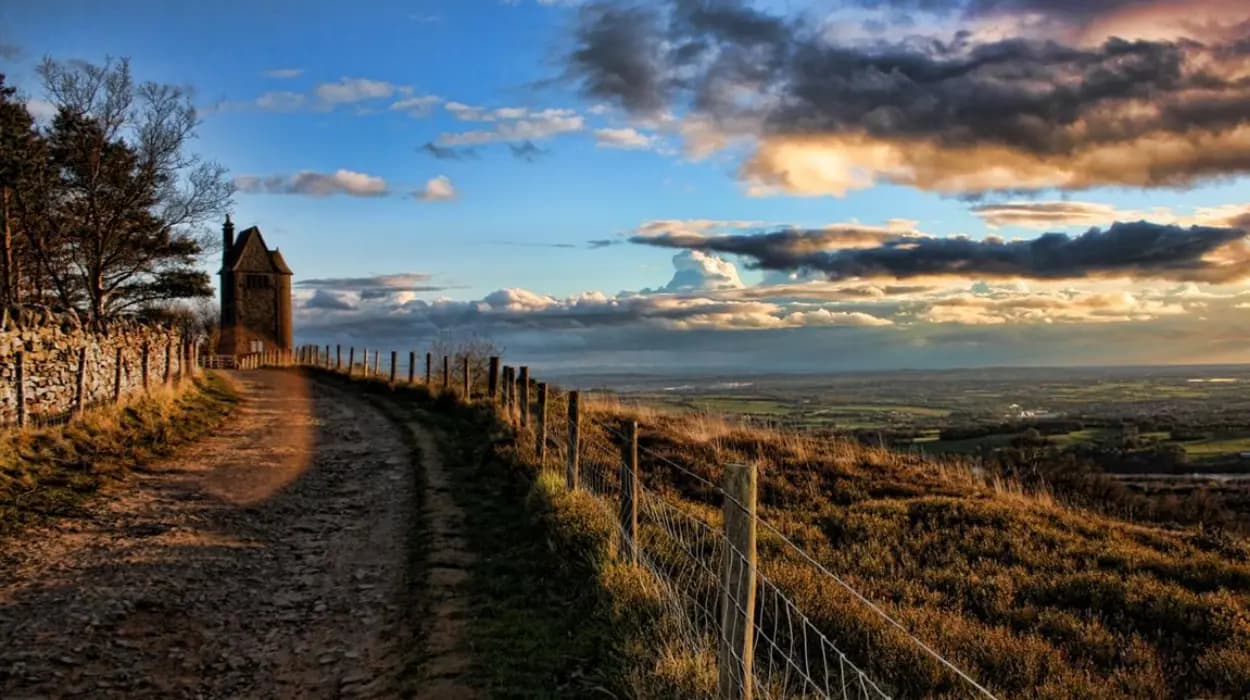
Rivington is one of the most photogenic destinations in the Borough of Bolton, Greater Manchester. Set on the edge of the West Pennine Moors, the village combines historic landmarks, Victorian architecture, reservoirs, woodland, moorland, gardens, and panoramic viewpoints within a relatively compact landscape. The area attracts landscape photographers, wildlife enthusiasts, hikers, history lovers, and social media creators throughout every season.
From the historic Rivington Pike and the ornamental terraces of Lever Park to peaceful woodland paths and expansive reservoir views, Rivington offers photographic opportunities that reflect both natural beauty and centuries of local history. The area's combination of cultural heritage and changing seasonal landscapes makes it one of North West England's most photographed outdoor destinations.
Why is Rivington one of the best photography destinations in Greater Manchester?
Rivington combines nationally significant heritage, Victorian landscape design, reservoirs, moorland, forests, and elevated viewpoints within one accessible location. This diverse landscape creates photography opportunities throughout every season while preserving important historical features dating from the medieval period to the early twentieth century.
Rivington lies approximately five miles west of Bolton and occupies the eastern edge of the West Pennine Moors. The village sits between cultivated countryside and upland moorland, creating dramatic transitions in terrain within short walking distances.
Photography in Rivington benefits from exceptional geographical diversity. Visitors can capture:
- Historic buildings
- Stone bridges
- Reservoir reflections
- Woodland landscapes
- Waterfalls
- Moorland panoramas
- Sunrise viewpoints
- Sunset silhouettes
- Wildlife habitats
Unlike purpose-built visitor attractions, Rivington developed gradually over centuries. Medieval farming settlements, nineteenth-century reservoirs, and the ambitious landscaping projects commissioned by William Hesketh Lever collectively shaped today's scenery.
This layered history gives photographers a rare opportunity to document both natural environments and historically important landscapes in a single visit.
What makes Rivington Pike one of the area's most photographed landmarks?
Rivington Pike stands approximately 363 metres above sea level and offers uninterrupted panoramic views across Lancashire, Greater Manchester, Merseyside, Cheshire, and North Wales. Its historic summit tower and elevated position create iconic photographic compositions throughout every season.
Rivington Pike dominates the surrounding landscape.
The summit has served as a navigational landmark for centuries. The present Pike Tower was constructed in 1733 by John Andrews of Rivington Hall.
The square stone structure remains one of the most recognisable landmarks in the West Pennine Moors.
Photographers reach the summit using several established walking routes through woodland and open hillside. The changing elevation allows numerous compositions before reaching the tower itself.
Why does sunrise photography attract visitors?
Early morning light produces long shadows across the moorland.
Mist frequently settles within surrounding valleys while higher ground remains illuminated by the rising sun.
These atmospheric conditions create layered landscapes rarely visible later in the day.
Why is sunset equally popular?
Evening light transforms the surrounding countryside into warm golden tones.
On clear days, photographers capture distant skylines including:
- Bolton
- Manchester
- Liverpool
- Blackpool Tower
- The Welsh Mountains
The summit also serves as a strong foreground subject against dramatic skies.
Why are the Rivington Terraced Gardens considered a photographer's paradise?
The Rivington Terraced Gardens combine Italian-inspired architecture, woodland planting, ornamental lakes, stone staircases, and restored heritage structures. Their blend of formal landscaping and natural woodland provides varied photographic subjects throughout every month of the year.
The Terraced Gardens represent one of the most ambitious landscape projects in North West England.
Industrialist William Hesketh Lever, later Lord Leverhulme, acquired the estate during the early twentieth century.
Between 1905 and 1925, extensive terraces, pathways, bridges, lodges, and ornamental gardens transformed the hillside.
Today many features have undergone careful restoration.
Photographers encounter:
Historic stone staircases
The broad staircases create leading lines directing attention towards woodland and elevated viewpoints.
Morning side-light enhances the texture of locally quarried sandstone.
Japanese Lake
The ornamental water reflects surrounding trees during calm weather.
Autumn colours create particularly vibrant compositions.
The Pigeon Tower
Originally built as an ornamental dovecote, the tower overlooks the gardens.
Its elevated position offers architectural framing opportunities while the building itself remains one of Rivington's most photographed structures.
The Summer Houses
Several restored shelters provide historic focal points within woodland settings.
These structures demonstrate Edwardian garden design inspired by European landscape traditions.
Which reservoir viewpoints offer the most impressive landscape photography?
Rivington's interconnected reservoirs create expansive reflective landscapes surrounded by woodland and hills. Their engineered shorelines, historic dams, and changing water levels provide year-round photographic interest while illustrating nineteenth-century public water supply engineering.
The reservoirs formed part of Liverpool's expanding water supply network during the nineteenth century.
Construction began during the 1850s under engineer Thomas Hawksley.
Today the water system includes several interconnected reservoirs.
Lower Rivington Reservoir
This reservoir offers accessible shoreline photography.
Morning reflections often remain undisturbed before stronger daytime winds develop.
Upper Rivington Reservoir
Higher surrounding hills create dramatic framing.
The reservoir works particularly well for wide-angle landscape photography.
Anglezarke Reservoir
Located immediately north of Rivington, Anglezarke provides expansive views toward Winter Hill and the surrounding moorland.
Stone walls and traditional field boundaries introduce strong foreground elements.
Yarrow Reservoir
Yarrow Reservoir combines woodland edges with open water.
Migratory birds frequently appear during autumn and winter.
Which woodland locations produce the best seasonal photographs?
Rivington's ancient woodland creates distinctive photographic opportunities throughout spring, summer, autumn, and winter. Mature oak, beech, birch, and pine forests provide changing colours, wildlife habitats, and textured natural compositions across protected landscapes.
Large areas surrounding Lever Park remain heavily wooded.
Several woodland sections contain mature native species that have developed over many decades.
Spring introduces carpets of bluebells beneath broadleaf woodland.
These colourful displays attract landscape photographers and macro specialists.
Summer creates dense green canopies with filtered sunlight producing soft natural lighting.
Autumn transforms woodland into vibrant displays of orange, red, gold, and bronze foliage.
Winter removes leaf cover, exposing intricate branch structures and revealing historic stone walls previously hidden beneath vegetation.
Woodland trails also contain:
- Moss-covered rocks
- Small streams
- Stone bridges
- Fern-covered banks
- Historic pathways
Each feature contributes additional photographic variety.
What historic buildings create outstanding architectural photographs?
Rivington preserves medieval, Georgian, Victorian, and Edwardian buildings that demonstrate centuries of architectural development. Stone construction, historic craftsmanship, and landscaped settings create visually distinctive subjects that complement surrounding natural scenery.
Historic architecture forms an important element of Rivington's photographic appeal.
Rivington Hall Barn
Dating largely from the sixteenth century, the Great Barn represents one of Lancashire's finest surviving timber-framed agricultural buildings.
Its black-and-white timber construction contrasts with surrounding stone architecture.
Rivington Church
The Church of St Lawrence has medieval origins.
Although rebuilt and restored over several centuries, it preserves important historical connections with the village's longstanding community.
The churchyard contains historic gravestones documenting local family histories.
The Pigeon Tower
The Pigeon Tower combines decorative architecture with commanding views over the terraces.
Its elevated position provides multiple photographic angles from surrounding woodland.
Historic Gateways and Bridges
Stone gateposts, decorative balustrades, and arched bridges constructed during Lord Leverhulme's landscaping programme remain significant photographic features.
These structures reflect Edwardian craftsmanship and landscape architecture.
Where can photographers capture the best panoramic landscapes?
Several elevated viewpoints surrounding Rivington provide extensive panoramic views across North West England. These locations combine geological prominence with unobstructed sightlines, allowing photographers to capture wide landscapes during changing weather and seasonal conditions.
Beyond Rivington Pike, several additional viewpoints deserve attention.
Winter Hill overlooks much of Greater Manchester and Lancashire.
The surrounding moorland provides foreground textures before expansive distant landscapes.
Great Hill offers quieter panoramic photography away from the busiest visitor routes.
Moorland paths crossing the West Pennine Moors reveal sweeping landscapes shaped by thousands of years of geological processes.
Heather blooms during late summer introduce purple foreground colours contrasting with blue skies and distant hills.
Changing weather frequently creates dramatic cloud formations moving rapidly across elevated terrain.
What wildlife photography opportunities exist around Rivington?
Rivington supports diverse wildlife across woodland, reservoirs, grassland, and moorland habitats. Native birds, mammals, insects, and seasonal migratory species provide photographers with year-round opportunities while reflecting successful habitat conservation across protected landscapes.
The area's varied habitats support significant biodiversity.
Reservoirs attract numerous water birds including:
- Great crested grebes
- Mallards
- Tufted ducks
- Canada geese
- Grey herons
Woodland areas support species including:
- Great spotted woodpeckers
- Nuthatches
- Treecreepers
- Long-tailed tits
Mammals include red foxes, grey squirrels, rabbits, and several bat species.
Butterflies become particularly abundant during summer.
Examples include peacocks, small tortoiseshells, commas, and meadow browns.
Wildflower meadows provide additional opportunities for macro photography.
Native plant species contribute colour and ecological diversity throughout spring and summer.
How does each season transform photography in Rivington?
Every season creates distinct photographic conditions across Rivington. Spring flowers, summer greenery, autumn foliage, and winter frost continuously reshape landscapes, ensuring the area's scenery never appears identical across different times of the year.
Spring introduces fresh vegetation across reservoirs and woodland.
Bluebells flower beneath deciduous woodland while newborn lambs appear in surrounding farmland.
Summer extends daylight hours significantly.
Golden-hour photography becomes possible during early morning and late evening.
Autumn remains the busiest season for landscape photographers.
Mixed woodland displays exceptional colour variation across hillsides.
Reservoir reflections often mirror autumn foliage during calm conditions.
Winter produces frost-covered landscapes.
Occasional snowfall transforms Rivington Pike and surrounding moorland into striking monochrome scenes.
Low winter sunlight creates long shadows that enhance landscape depth.
How has conservation protected Rivington's photographic landscapes?
Long-term conservation initiatives have restored historic structures, protected woodland habitats, maintained public access, and preserved nationally important landscapes. These projects ensure Rivington continues offering authentic historical scenery while safeguarding biodiversity and cultural heritage for future generations.
Much of modern Rivington owes its preservation to coordinated conservation work.
The Rivington Heritage Trust has supported restoration projects throughout the Terraced Gardens.
Volunteers have restored pathways, staircases, bridges, and ornamental features originally constructed during Lord Leverhulme's ownership.
United Utilities manages reservoir infrastructure while balancing environmental protection with water resource management.
Large sections surrounding Rivington form part of designated countryside managed for recreation, biodiversity, and heritage preservation.
These conservation programmes protect historic landscapes without diminishing public accessibility.
As a result, photographers continue documenting authentic historical environments rather than reconstructed attractions.
How can visitors plan a rewarding photography trip to Rivington?
Careful planning allows photographers to experience Rivington's diverse landscapes under favourable lighting conditions while respecting conservation objectives. Early starts, seasonal awareness, and flexible walking routes maximise photographic opportunities across historic and natural locations.
Successful photography begins before arriving.
Weather forecasts influence visibility across elevated viewpoints.
Cloud movement often produces dramatic skies over reservoirs and moorland.
Early morning generally provides calmer water surfaces for reflections.
Golden hour remains ideal for architectural photography because low-angle sunlight enhances stone textures.
Comfortable walking footwear is essential because many viewpoints require moderate uphill walks.
Photographers should remain on established footpaths to protect sensitive habitats and historic features.
Respecting wildlife and preserving historic structures ensures future generations experience the same landscapes.
To experience these historic landscapes in person today, consult our comprehensive [History of Rivington's Landmarks and Historic Estate] for itineraries and visiting parameters.
Why does Rivington remain one of Bolton's greatest photography destinations?
Rivington combines outstanding landscapes, nationally important heritage, Victorian landscape architecture, protected woodland, reservoirs, and panoramic viewpoints within one accessible location. This exceptional diversity ensures photographers continually discover fresh compositions while documenting an evolving landscape shaped by centuries of history.
Few locations in Greater Manchester combine cultural heritage and natural scenery as effectively as Rivington.
The village preserves evidence of medieval settlement, nineteenth-century engineering, Edwardian landscape architecture, and modern conservation within a single destination. Every footpath, reservoir, woodland, and historic structure contributes to a landscape that reflects centuries of human activity alongside enduring natural beauty.
For photographers, this diversity creates endless creative possibilities. Wide panoramic vistas from Rivington Pike contrast with intimate woodland scenes. Restored terraces complement reflective reservoirs, while historic buildings provide architectural interest against the backdrop of the West Pennine Moors. Seasonal changes ensure no two visits produce identical images.
Beyond its visual appeal, Rivington represents an important part of Bolton's heritage. Ongoing conservation work by heritage organisations, volunteers, and land managers continues to protect its historic landscapes for education, recreation, and future generations.
Whether documenting historic architecture, capturing dramatic sunsets over the moors, photographing wildlife along reservoir shores, or exploring the carefully restored gardens of Lord Leverhulme's estate, Rivington remains one of the finest destinations for landscape and heritage photography in North West England. Its enduring combination of history, conservation, and spectacular scenery ensures it will continue inspiring photographers and visitors for generations to come.
FAQS
What are the best photography locations in Rivington?
The best photography locations in Rivington include Rivington Pike, Rivington Terraced Gardens, Lever Park, Upper and Lower Rivington Reservoirs, Anglezarke Reservoir, Pigeon Tower, Japanese Lake, and the surrounding West Pennine Moors.