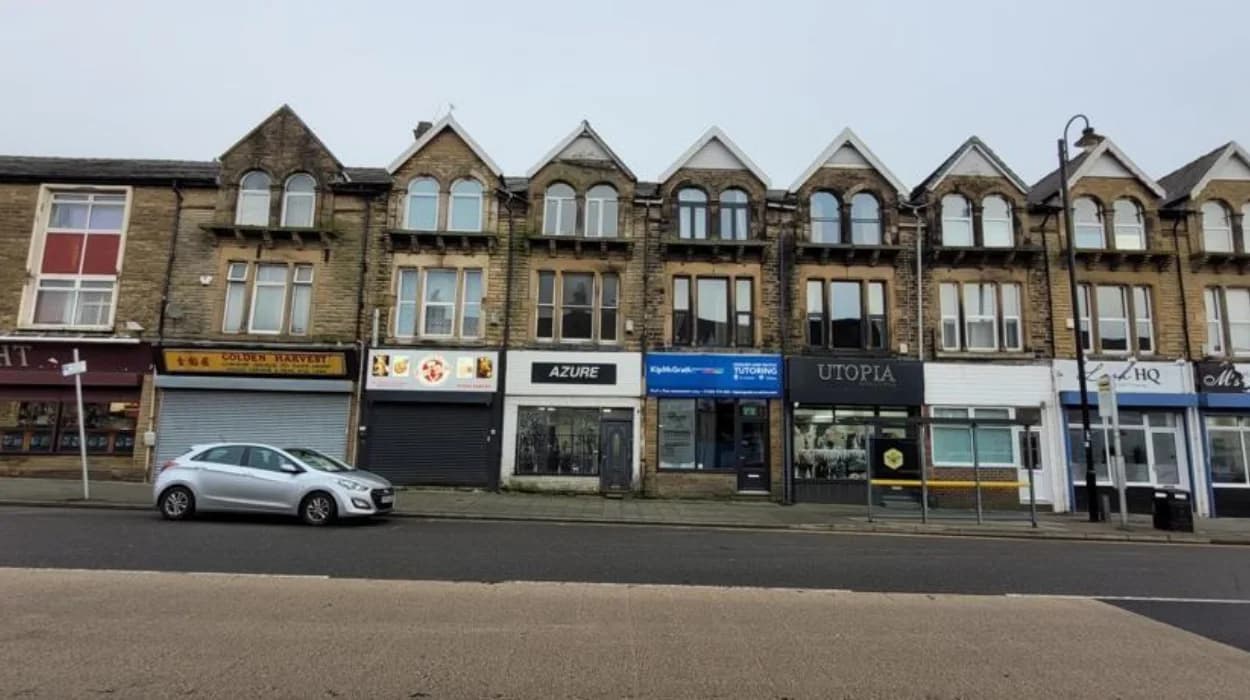
Horwich High Street has served as the historic commercial and social centre of Horwich, a town in the Metropolitan Borough of Bolton, Greater Manchester. Over several centuries, the street evolved from a modest medieval trading route into a thriving Victorian shopping district before adapting to modern retail patterns. Its historic buildings, independent businesses, public institutions, and surrounding industrial development reflect the wider economic and social history of Lancashire and north-west England.
What is the historical significance of Horwich High Street?
Horwich High Street is the historic commercial heart of Horwich. It developed from a medieval route into a Victorian market centre, supported local industries, connected surrounding communities, and continues to preserve important architectural, commercial, and cultural heritage that reflects more than 700 years of continuous local history.
Horwich High Street represents the oldest continuously occupied commercial area in the town. Long before modern roads connected Bolton with surrounding settlements, the route functioned as the principal street where local residents traded agricultural goods, livestock, household products, and handcrafted items.
The earliest development of Horwich centred around agriculture. Small farms surrounded the settlement, while cottages and workshops gradually appeared along the main road. The street became the natural location for commerce because it connected nearby communities including Blackrod, Rivington, Adlington, and Bolton.
Unlike purpose-built Victorian shopping centres, medieval high streets developed organically. Buildings were constructed as population increased, creating irregular property boundaries that remain visible in parts of Horwich today.
The High Street also served religious, administrative, and social functions. Residents travelled there to attend markets, visit churches, conduct business, and access essential services. These combined roles established the street as the centre of everyday life.
Its significance increased dramatically during Britain's Industrial Revolution, when population growth transformed Horwich from a rural township into an expanding industrial community.
How did Horwich High Street begin during the medieval period?
Horwich High Street originated during the medieval period as a local route connecting farming communities. Agricultural trade, parish administration, and regional travel encouraged gradual settlement, creating the foundations for the commercial street that expanded significantly during the following centuries.
The name "Horwich" derives from Old English, combining words associated with a muddy or enclosed settlement. Historical records show habitation in the area by the medieval period, although archaeological evidence indicates even earlier human activity across the West Pennine landscape.
Following the Norman Conquest in 1066, Horwich formed part of the historic Manor of Manchester within Lancashire. Agriculture dominated the local economy for centuries. Farmers produced oats, barley, livestock, wool, and dairy products for regional markets.
The High Street developed naturally rather than through planned urban design. Houses, barns, workshops, and inns appeared where trade was strongest.
Weekly trading activity encouraged permanent businesses to establish themselves. Blacksmiths produced farming tools, wheelwrights repaired carts, carpenters built agricultural equipment, while bakers and butchers supplied the growing population.
Religion also influenced development. The parish church acted as an anchor for settlement, attracting visitors on religious festivals and market days.
By the late medieval era, Horwich possessed the characteristics of a traditional Lancashire village centred around one principal commercial street.
Why did Horwich High Street expand rapidly during the Industrial Revolution?
Horwich High Street expanded rapidly because industrialisation increased population, employment, transport connections, and consumer demand. Local businesses multiplied as engineering, textile manufacturing, and railway employment transformed Horwich into an important industrial settlement during the nineteenth century.
The Industrial Revolution fundamentally reshaped Horwich.
During the eighteenth century, Lancashire became one of Britain's leading textile-producing regions. Although Horwich remained smaller than neighbouring industrial centres, nearby mills created employment and stimulated commercial growth.
The greatest transformation occurred after the arrival of the railway.
The opening of the Lancashire and Yorkshire Railway works at Horwich in 1886 marked one of the defining moments in the town's history. The locomotive works employed thousands of skilled workers including engineers, machinists, pattern makers, fitters, boilermakers, and clerks.
Population increased rapidly.
New housing estates appeared around the town to accommodate railway workers and their families. These new residents required food shops, clothing retailers, pharmacies, public houses, banks, schools, and professional services.
As consumer demand increased, Horwich High Street developed into the town's principal shopping destination.
Victorian prosperity encouraged the construction of attractive commercial premises featuring brick façades, decorative stonework, large display windows, and upper residential accommodation.
Many buildings from this period continue to define the architectural character of the street.
Which local businesses shaped Horwich High Street through history?
Independent family businesses formed the economic foundation of Horwich High Street. Grocers, butchers, bakers, pharmacists, tailors, public houses, banks, and professional services supported daily life while contributing to long-term economic stability and community identity.
Independent retailers historically dominated Horwich's commercial landscape.
Grocers supplied flour, tea, sugar, preserved foods, fresh vegetables, and imported goods arriving through expanding national distribution networks.
Butchers processed locally raised livestock, while bakers produced bread using traditional ovens serving neighbourhood customers.
Tailors and dressmakers manufactured clothing before ready-made garments became widely available.
Bootmakers repaired footwear rather than replacing it, reflecting Victorian attitudes towards durability and craftsmanship.
Blacksmiths remained essential businesses, producing horseshoes, agricultural implements, gates, and repair work for transport vehicles.
Pharmacies provided medicines before the establishment of the National Health Service in 1948.
Banks established branches to support industrial wages, savings, mortgages, and commercial investment.
Public houses played an equally important commercial role.
They provided accommodation for travellers, meeting places for local societies, and venues where business transactions frequently occurred.
Professional services gradually appeared alongside retail.
Solicitors, insurance agents, doctors, dentists, accountants, and estate agents diversified the local economy during the late nineteenth and early twentieth centuries.
Many businesses operated as family enterprises for several generations, strengthening customer loyalty and preserving commercial continuity.
How did Horwich's railway industry influence High Street businesses?
The railway industry transformed Horwich High Street by increasing population, household incomes, commercial investment, and consumer spending. Thousands of employees from Horwich Locomotive Works supported local shops, services, entertainment venues, and financial institutions throughout the twentieth century.
The opening of Horwich Locomotive Works represented one of the largest industrial investments in Lancashire.
At its peak, the works employed thousands of workers producing steam locomotives and railway equipment.
Stable employment generated predictable spending patterns.
Workers collected wages and visited High Street shops to purchase food, clothing, household goods, furniture, and recreational products.
Specialist retailers emerged to satisfy growing consumer demand.
Jewellers, cycle shops, stationers, hardware merchants, photographers, confectioners, and booksellers expanded retail choice.
Banks benefited from industrial payrolls.
Building societies encouraged home ownership among skilled railway workers.
Commercial confidence also encouraged investment in improved shopfronts and larger premises.
Many Victorian and Edwardian buildings surviving today illustrate this period of economic optimism.
The railway industry also improved transport links, allowing wholesalers to supply retailers more efficiently than during the coaching era.
What architectural features define Horwich High Street today?
Horwich High Street preserves Victorian, Edwardian, Georgian, and later commercial architecture. Historic brick buildings, traditional shopfront proportions, decorative stone detailing, and surviving civic structures collectively demonstrate the town's commercial development across several centuries.
Architecture provides one of the strongest physical links to Horwich's past.
Although some medieval buildings disappeared through redevelopment, the street retains numerous nineteenth- and early twentieth-century structures.
Red brick became the dominant construction material following industrial expansion.
Local sandstone frequently appears around windows, doorways, and decorative cornices.
Many buildings feature traditional vertical shopfront proportions with living accommodation above commercial premises.
This mixed-use arrangement reflected Victorian urban planning, allowing business owners to live close to their shops.
Architectural details include decorative lintels, sash windows, slate roofs, chimneys, and ornamental brickwork.
Several historic public buildings also contribute to the streetscape.
Churches, former schools, banks, and civic buildings demonstrate changing architectural styles while illustrating the expanding responsibilities of local government and public institutions.
Conservation efforts increasingly recognise the importance of preserving these surviving historic structures.
How did markets and community life develop around the High Street?
Horwich High Street functioned as both a commercial centre and community gathering place. Markets, religious events, civic celebrations, public meetings, and seasonal festivals created social networks that strengthened local identity across successive generations.
Markets represented one of the earliest organised forms of commerce.
Farmers travelled from surrounding rural districts to sell produce including vegetables, livestock, dairy products, eggs, and grain.
Local craftsmen displayed handmade goods including furniture, leather products, textiles, and metalwork.
Market activity encouraged visitors from neighbouring communities, increasing trade throughout the High Street.
Religious processions and church events attracted large gatherings.
National celebrations, royal commemorations, and wartime fundraising campaigns frequently centred on the High Street.
Public notices, political speeches, recruitment campaigns, and charity collections also took place there.
Schools, voluntary organisations, sporting clubs, and charitable societies organised events that reinforced the High Street's role beyond retail.
Its function as a civic space proved as important as its commercial purpose.
How did Horwich High Street change during the twentieth century?
Horwich High Street adapted continuously throughout the twentieth century. Motor transport, national retail chains, changing shopping habits, post-war redevelopment, and suburban expansion altered commercial activity while many independent businesses continued serving the local community.
The twentieth century introduced major economic and technological changes.
Motor vehicles gradually replaced horse-drawn transport.
Road improvements altered customer access and delivery systems.
Electric lighting modernised shop interiors.
Telephone communication improved commercial efficiency.
Following the Second World War, consumer expectations changed significantly.
Supermarkets introduced new retail models based upon self-service shopping and wider product selection.
National chain stores expanded across Britain, increasing competition for independent retailers.
Some traditional family businesses closed after decades of operation.
Others diversified by specialising in personal customer service and niche products unavailable from larger retailers.
Financial services, cafés, restaurants, takeaway businesses, and professional offices increasingly occupied former retail premises.
Despite changing commercial conditions, Horwich High Street retained its identity as the town's traditional centre.
What historic buildings and surviving businesses remain important today?
Historic buildings, independent retailers, churches, public houses, and civic landmarks continue preserving Horwich High Street's heritage. These surviving features provide valuable evidence of the town's commercial, architectural, and social development across multiple historical periods.
Many surviving buildings demonstrate remarkable continuity.
Historic public houses continue operating from premises that have welcomed customers for generations.
Several independent retailers occupy buildings originally constructed during Victorian expansion.
Churches remain significant landmarks linking present-day residents with earlier generations.
Former banks, schools, and municipal buildings illustrate changing civic responsibilities across different historical periods.
Conservation areas and heritage initiatives increasingly recognise these structures as important components of Horwich's historic environment.
Modern businesses operating within historic buildings contribute to sustainable heritage conservation because continued occupation supports ongoing maintenance and investment.
To experience this historic commercial centre in person today, consult our comprehensive [Best Independent Cafés in Horwich Serving Memorable Coffee Experiences for Every Visitor] for itineraries and visiting parameters.
Why does Horwich High Street remain important for local history and heritage?
Horwich High Street remains historically important because it preserves centuries of commercial development, architectural evolution, industrial expansion, and community identity. Its surviving buildings, businesses, and public spaces provide valuable evidence supporting historical research, education, tourism, and heritage conservation.
Horwich High Street illustrates how small English settlements evolved over many centuries.
Its history reflects broader national developments including medieval agriculture, industrialisation, railway expansion, Victorian commerce, twentieth-century retail transformation, and contemporary heritage preservation.
For genealogists, surviving business directories, census records, trade advertisements, parish registers, electoral registers, and historic maps provide valuable evidence about family occupations and residential patterns.
Academic researchers use Horwich as an example of how railway employment reshaped smaller Lancashire towns.
Architectural historians study surviving commercial buildings to understand changing retail design.
Heritage organisations document traditional shopfronts, historic streetscapes, and conservation priorities to safeguard local character.
Tourism also benefits from preserved heritage.
Visitors interested in industrial history frequently combine exploration of Horwich High Street with nearby landmarks connected to the town's railway heritage, surrounding countryside, and historic civic buildings.
The continued presence of independent businesses reinforces this historic identity.
Unlike purpose-built retail parks, traditional high streets preserve a sense of continuity between past and present.
Their historic buildings remain active parts of everyday community life rather than static museum exhibits.
As regeneration and conservation continue across Greater Manchester, Horwich High Street demonstrates how historic commercial centres can adapt while retaining their distinctive character. Its centuries of continuous development provide an enduring record of local enterprise, community resilience, architectural evolution, and economic change, ensuring that the street remains one of Horwich's most important historical assets for future generations.
FAQS
What is Horwich High Street known for?
Horwich High Street is known as the historic commercial centre of Horwich. It has served as the town's main shopping, trading, and community hub for centuries and contains many historic buildings dating from the Victorian and Edwardian periods.