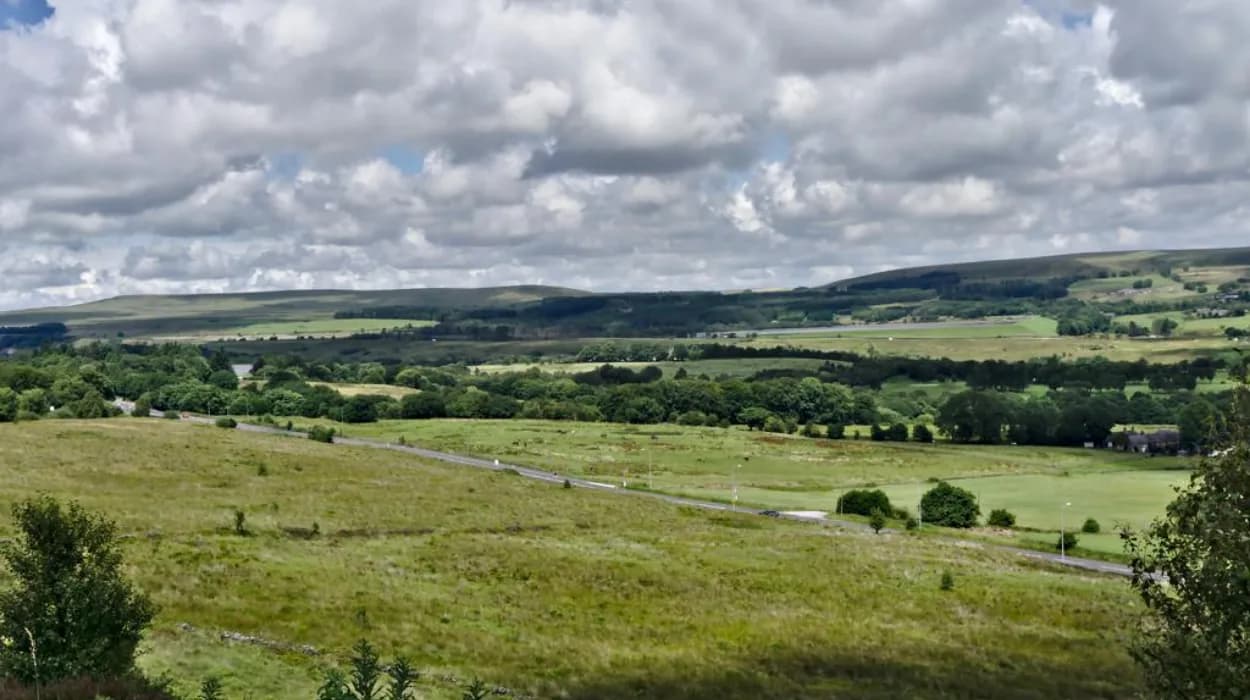
Belmont is a moorland village on the western side of the West Pennine Moors, close to Bolton and within the wider historic landscape of Lancashire. Its natural history is defined by the meeting of upland moor, pasture, reservoir, woodland, streams and settled land. This combination creates habitats for birds associated with open water, wet grassland, upland vegetation and woodland edges.
The village lies along the A675 between Bolton and Preston, in a valley between Anglezarke Moor and Turton Moor. Belmont Reservoir occupies the valley north of the settlement and forms the most important wetland feature in the immediate landscape. The reservoir was constructed in 1826 by Bolton Waterworks during a period of rapid industrial expansion in Bolton.
The natural environment therefore cannot be separated from human history. Agricultural land existed before industrial development, while nineteenth-century reservoir construction altered drainage, woodland management and land use. These changes produced a landscape in which engineered infrastructure and wildlife habitats now exist together.
The wider West Pennine Moors has national conservation importance. Natural England notified the West Pennine Moors as a Site of Special Scientific Interest in 2016 because of its upland habitats and breeding birds. The designation covers approximately 76 square kilometres between Chorley, Blackburn, Bolton and Haslingden.
What makes Belmont important for birdlife?
Belmont’s birdlife reflects its position between village, reservoir, pasture and upland moor. Belmont Reservoir and the surrounding West Pennine Moors support waterbirds, gulls, waders and moorland species within a landscape shaped by nineteenth-century water engineering and older agricultural land use.
Belmont's importance comes from habitat variety rather than from one isolated wildlife site. The reservoir provides open water. Pasture provides feeding and nesting areas. Wet ground supports waders. Moorland provides habitat for upland birds. Woodland and scrub provide cover and nesting opportunities.
The West Pennine Moors SSSI recognises this interconnected habitat system. Natural England identifies blanket bog, heathland, flushes, mire grasslands, species-rich grassland and woodland as important components of the protected landscape. These habitats support a range of upland and woodland breeding birds.
Natural England's 2016 announcement identified merlin, curlew, snipe, lapwing and redshank among birds nesting across the wider protected area. It also recorded large breeding colonies of black-headed gulls and Mediterranean gulls.
The significance of Belmont is therefore geographical as well as ecological. The village sits at a transition between developed land and open moorland. That position creates a natural connection between habitats used by different bird species.
Belmont Reservoir is particularly important because it introduces a large body of open freshwater into the upland landscape. Reservoir margins, nearby fields and surrounding moorland provide different feeding opportunities within a relatively compact area.
The Bolton Local RSPB Group describes the reservoirs around Bolton as a connected chain extending through the West Pennine Moors. Its network includes Belmont, Wayoh, Entwistle, Jumbles, Rivington and Anglezarke reservoirs. This wider network gives birdwatchers access to varied habitats without leaving the moorland landscape.
Birdlife at Belmont is consequently part of a larger ecological system rather than a collection of isolated sightings.
How did Belmont’s natural landscape develop?
Belmont developed from an agricultural moorland settlement into an industrial and water-management landscape. Its natural history is inseparable from this change because reservoirs, woodland planting, pasture management and industrial waterways created habitats now used by birds and wildlife today around Belmont.
Belmont's recorded history extends well beyond the industrial period. Archaeological discoveries around the settlement include Mesolithic material, a flint blade, a flint microlith core and a flint scraper. Neolithic barbed-and-tanged arrowheads and Bronze Age material, including a spearhead and round cairns on Noon Hill and Winter Hill, also demonstrate prehistoric activity in the surrounding landscape.
The settlement was historically known as Hordern before 1804. It formed part of the upper section of the township of Sharples within the parish of Bolton-le-Moors. The surrounding landscape was agricultural and moorland before nineteenth-century industrial infrastructure transformed the valleys.
Industrial development introduced mills, dye works, printing works, quarrying and water infrastructure. The area contained cotton mills and industrial works associated with the streams and reservoirs. Water became a central resource for manufacturing and settlement.
Belmont Reservoir was constructed in 1826 by Bolton Waterworks. Its original purpose was to support the water requirements of a rapidly expanding industrial town. Bolton's population and textile economy were growing, creating demand for more reliable water management.
The reservoir changed the physical landscape. A water body replaced part of the previous valley environment, while its embankment, drainage system and surrounding land management introduced new ecological conditions.
The development of water infrastructure continued through the nineteenth century. The wider reservoir system around Bolton eventually included Belmont, Wayoh, Entwistle and other reservoirs. These water bodies altered valleys while also creating new habitats for wildfowl and other birds.
Woodland management formed another part of this transformation. Reservoir catchments often included planted woodland designed to protect water resources and stabilise surrounding land. Lancashire County Council's landscape assessment identifies nineteenth-century reservoir valleys as landscapes characterised by reservoirs, pasture, woodland and engineered water features.
This history explains why Belmont's natural environment contains both older and newer ecological features. Moorland vegetation and agricultural fields pre-date the industrial period, while the reservoir and associated catchment woodland reflect nineteenth-century engineering.
The present landscape is therefore a historical record of changing relationships between people and natural resources.
When was Belmont Reservoir built and why is it important?
Belmont Reservoir is the central wetland habitat. Built in 1826 by Bolton Waterworks, it occupies a valley on Belmont Brook and now supports nationally important gull populations, wintering wildfowl and other water-associated birds within the protected West Pennine Moors landscape.
The construction of Belmont Reservoir represents an important stage in Bolton's water history. The early nineteenth century saw increasing pressure on water supplies as industrialisation expanded. Textile manufacturing required dependable water resources, while growing urban populations increased domestic demand.
Belmont Reservoir was part of this response. Its construction demonstrates how industrial society reshaped upland valleys to secure water resources for towns and industries.
The reservoir is fed by Belmont Brook. The watercourse later becomes Eagley Brook, which flows south and southeast through the Bolton area before eventually joining the River Tonge system. Eagley Brook also has an industrial history because its water supported early water-powered activity, bleaching and paper production.
The reservoir's ecological importance developed alongside its engineering function. Open water provides habitat for birds that require freshwater feeding and resting areas. Muddy or vegetated margins provide additional opportunities for waders and other species.
The reservoir is particularly significant for gulls. The wider West Pennine Moors supports large breeding populations of black-headed gulls and Mediterranean gulls, while an island at Belmont Reservoir has been identified as supporting one of the United Kingdom's largest black-headed gull colonies.
This colony is an important example of how an engineered landscape can become a major wildlife habitat.
Belmont Reservoir also has importance for wintering wildfowl. Its open water provides a seasonal refuge within the wider upland landscape. Bird populations change through the year because different species use the reservoir for breeding, feeding, migration or wintering.
The reservoir remains part of a functioning water system rather than being purely an ornamental lake. Its continuing hydrological role connects the modern landscape with the original nineteenth-century engineering purpose.
Its recreational use adds another layer. Bolton Sailing Club operates at the reservoir, demonstrating how the same landscape now accommodates water-based recreation alongside wildlife and water management.
This combination requires careful management. Recreational activity must operate alongside conservation interests, particularly during periods when birds are nesting or feeding.
Which birds can be found around Belmont?
The wider Belmont landscape supports birds adapted to upland grassland, heath, wet ground and woodland edges. Records and conservation assessments identify lapwing, curlew, snipe, redshank, oystercatcher, common sandpiper, merlin, short-eared owl and twite among species associated with the wider area.
Birdlife around Belmont varies according to habitat and season. The reservoir favours water-associated birds, while surrounding pasture and moorland support ground-nesting and upland species.
Northern lapwing is one of the characteristic birds of the wider West Pennine Moors. Its black-and-white plumage, rounded wings and distinctive crest make it recognisable across open grassland and wet fields. Lapwing uses suitable pasture and moorland habitats for feeding and breeding.
Curlew is another important upland species. It is associated with open grassland and moorland and is recognised within the West Pennine Moors SSSI's breeding-bird interest.
Snipe is associated with wet ground. Its habitat requirements connect the bird with flushes, wet grassland and other damp environments found within the wider moorland system.
Redshank uses wet grassland and reservoir margins. Oystercatcher and common sandpiper are also recorded in fields and margins around Belmont Reservoir. These species demonstrate that the ecological value of the area extends beyond the reservoir's open water.
Merlin represents the upland raptor community. Natural England identifies it among the breeding birds contributing to the national importance of the West Pennine Moors.
Short-eared owl is associated with open upland habitats. Its presence illustrates the importance of maintaining suitable vegetation structures across the moorland.
Twite is another species associated with upland habitats in the wider West Pennine Moors. Conservation assessments identify vegetation management as an important factor in maintaining suitable conditions for birds such as twite and merlin.
Black-headed gull and Mediterranean gull have a different ecological association. Their importance is particularly linked with the reservoir and other wetland habitats. The West Pennine Moors supports large breeding colonies of both species.
Birdwatching records provide further evidence of the site's value. BirdGuides lists Belmont Reservoir as a recognised birdwatching location and records northern lapwing among its photographed species.
The range of species demonstrates the importance of habitat boundaries. Birds do not depend on the reservoir alone. They use surrounding fields, margins, moorland and woodland as part of the same ecological landscape.
How do moorland, pasture and woodland support Belmont’s wildlife?
Belmont’s bird habitats depend on a connected mosaic of open water, pasture, moorland, wet ground, scrub and woodland. Natural England’s West Pennine Moors designation recognises these habitats, while conservation assessments emphasise maintaining open ground and suitable vegetation for breeding birds.
Moorland is one of Belmont's most important natural environments. The West Pennine Moors contains blanket bog, heathland, flushes, mire grasslands and species-rich grassland. Each habitat provides different vegetation structures and food resources.
Blanket bog develops where wet conditions allow peat to accumulate across broad upland surfaces. Heathland contains plants such as heather and cross-leaved heath. Flushes occur where water moves through the ground and creates persistently wet conditions.
These habitats are important because upland birds require open landscapes. Dense woodland across all available moorland would reduce the amount of suitable open habitat for species such as lapwing, curlew and golden plover.
Natural England's supporting information specifically stresses the importance of retaining open land around Belmont Reservoir and other in-bye areas. It also identifies different vegetation heights as important for different breeding birds. Taller heather provides nesting opportunities for species including merlin, hen harrier, short-eared owl and twite, while shorter vegetation supports birds such as golden plover, lapwing and curlew.
Pasture provides another essential habitat. Traditional fields around reservoirs can contain wet ground, grassland margins and feeding areas. Dry-stone walls divide some fields and form part of the historic agricultural landscape.
The ecological value of pasture depends on management. Intensively managed grassland generally supports fewer specialist plants and insects than species-rich grassland. The West Pennine Moors retains areas of more valuable grassland, particularly in valleys and around wet flushes.
Woodland provides sheltered habitat for birds that do not depend on exposed moorland. Native broad-leaved woodland occurs particularly in valleys and cloughs. Alder and willow can dominate wetter woodland, while oak and ash occur in other valley environments.
Reservoir catchment woodland has an additional historical significance. Much of the woodland associated with nineteenth-century reservoir development reflects deliberate land management connected with water infrastructure.
The relationship between woodland and moorland is therefore important. Woodland provides shelter and nesting habitat, while open moorland supports specialist upland birds. A balanced landscape retains both.
Watercourses add another ecological corridor. Belmont Brook and the wider Eagley Brook system connect upland habitats with lower valleys. These streams carry water through pasture, woodland and industrial landscapes before reaching the wider river network.
The natural history of Belmont is consequently based on habitat connectivity. Water, grassland, moorland, woodland and settlement interact across a relatively small geographical area.
How has conservation changed the way Belmont’s natural history is protected?
Belmont’s natural history has long-term value because its habitats preserve evidence of changing land use while supporting nationally important bird populations. Conservation requires protection of water quality, moorland vegetation, breeding sites, woodland structure and responsible public access around sensitive areas.
The most important modern conservation milestone is the West Pennine Moors SSSI designation. Natural England notified the site in November 2016, recognising the national significance of its habitats and breeding birds. The protected area covers 76 square kilometres.
The designation provides a statutory framework for protecting important habitats. It also reflects a change in how upland landscapes are valued. The moors are not simply open countryside. They contain nationally significant ecological resources.
The SSSI includes large areas of blanket bog, heathland, flushes, grassland and woodland. These habitats support breeding birds including merlin, curlew, snipe, lapwing and redshank. Large gull colonies also contribute to the site's importance.
Belmont Reservoir forms part of this wider protected landscape. Conservation management must therefore consider both the water body and the surrounding land.
Water quality is fundamental. Reservoirs and streams function as connected systems. Pollution or excessive nutrient input can alter aquatic vegetation and affect the wider food chain.
Vegetation management is equally important. Ground-nesting birds depend on suitable vegetation height and structure. Conservation assessments for the West Pennine Moors stress the need to maintain different vegetation conditions across appropriate parts of the landscape.
Predator management also appears in conservation planning for sensitive breeding areas. Natural England's supporting information identifies predator control as one potential management measure for protecting ground-nesting birds.
Public access presents another management issue. Belmont is a recreational landscape used by walkers, birdwatchers and water-sports participants. Responsible access reduces disturbance to birds and prevents damage to vegetation.
Visitors can contribute directly to conservation by keeping dogs under control, avoiding nesting areas, respecting signs and remaining on established routes where requested.
The historic landscape also requires protection. Reservoir embankments, watercourses, field boundaries and woodland structures record the evolution of nineteenth-century land and water management. Damage to these features removes evidence of local history.
Belmont therefore has two connected conservation values. Its habitats support living wildlife, while its physical landscape preserves evidence of industrial and agricultural history.
To experience this historic landscape in person today, consult our comprehensive [Best Birdwatching Experiences in Belmont for Nature Enthusiasts Visiting Bolton Throughout Year] for itineraries and visiting parameters.
What does Belmont’s birdlife reveal about local history?
Belmont’s birdlife reveals how industrial infrastructure, agricultural land and upland habitats developed together. The reservoir created new wetland conditions, while surrounding pasture and moorland retained older ecological functions, producing a landscape where historical change remains visible through wildlife and habitat.
The strongest historical lesson is that today's wildlife landscape is not entirely untouched nature. Belmont's habitats have been shaped by centuries of land use.
Agriculture created fields, grazing areas and boundaries. Industrialisation introduced mills, quarrying and water infrastructure. Reservoir construction altered drainage and created open water. Catchment management changed woodland patterns. Modern conservation then added statutory protection and habitat management.
Each phase contributed to the present environment.
Belmont's reservoir is particularly useful for understanding this process because its ecological importance developed from an engineered structure. The reservoir was constructed to support Bolton's expanding water requirements, yet it now supports significant bird populations.
This demonstrates that historical infrastructure can acquire new environmental significance over time.
The surrounding moorland provides the opposite example. Much of its ecological value comes from maintaining open upland habitats rather than replacing them with intensive development or extensive woodland.
The contrast between reservoir, pasture and moorland gives Belmont a clear ecological structure. Water-associated birds occupy the wetland. Waders use suitable fields and margins. Upland species use open moorland. Woodland birds use sheltered valleys and wooded edges.
The landscape therefore provides an educational resource. History students can examine industrial water management. Geography students can study catchment systems. Environmental studies students can investigate habitat connectivity. Heritage students can examine the relationship between infrastructure and landscape change.
The archaeological record adds another chronological layer. Prehistoric artefacts around Belmont demonstrate that people used the surrounding uplands thousands of years before the reservoir was built.
The later industrial landscape then introduced a new relationship between people and water.
The continuing presence of wildlife demonstrates that environmental history is not separate from human history. The two developed together.
For local heritage preservation, Belmont provides an example of why conservation should address both natural and historic assets. Protecting the reservoir without understanding its surrounding moorland would leave part of the story incomplete. Protecting the moorland without recognising its industrial water infrastructure would produce the same problem.
The future significance of Belmont lies in maintaining these connections. Its reservoir, streams, pasture, moorland and woodland form a landscape that records more than two centuries of environmental and economic change while supporting nationally important birdlife.
Belmont's natural history is therefore a continuing historical record. The birds are part of the evidence, the habitats provide the environmental framework, and the reservoir provides a visible monument to the industrial transformation of the Bolton area.
The result is a landscape with value for conservation, education, local history, birdwatching and responsible recreation. Its importance rests on the relationship between these functions rather than on any single feature.
Belmont demonstrates how a nineteenth-century industrial water landscape can become an important modern wildlife habitat while retaining its historical identity. The reservoir remains a visible reminder of industrial-era water engineering, while the surrounding moorland continues to support the bird communities that make the West Pennine Moors nationally significant.
For Bolton and the wider West Pennine Moors, this combination makes Belmont an important example of living natural history. Its ecological value is rooted in the landscape's past, maintained through present conservation and dependent on careful management for the future.
FAQS
What is Belmont known for?
Belmont is known for its moorland landscape, Belmont Reservoir, historic water infrastructure and diverse birdlife. Its location within the West Pennine Moors connects the village with important upland habitats, wetlands, pasture, streams and woodland.