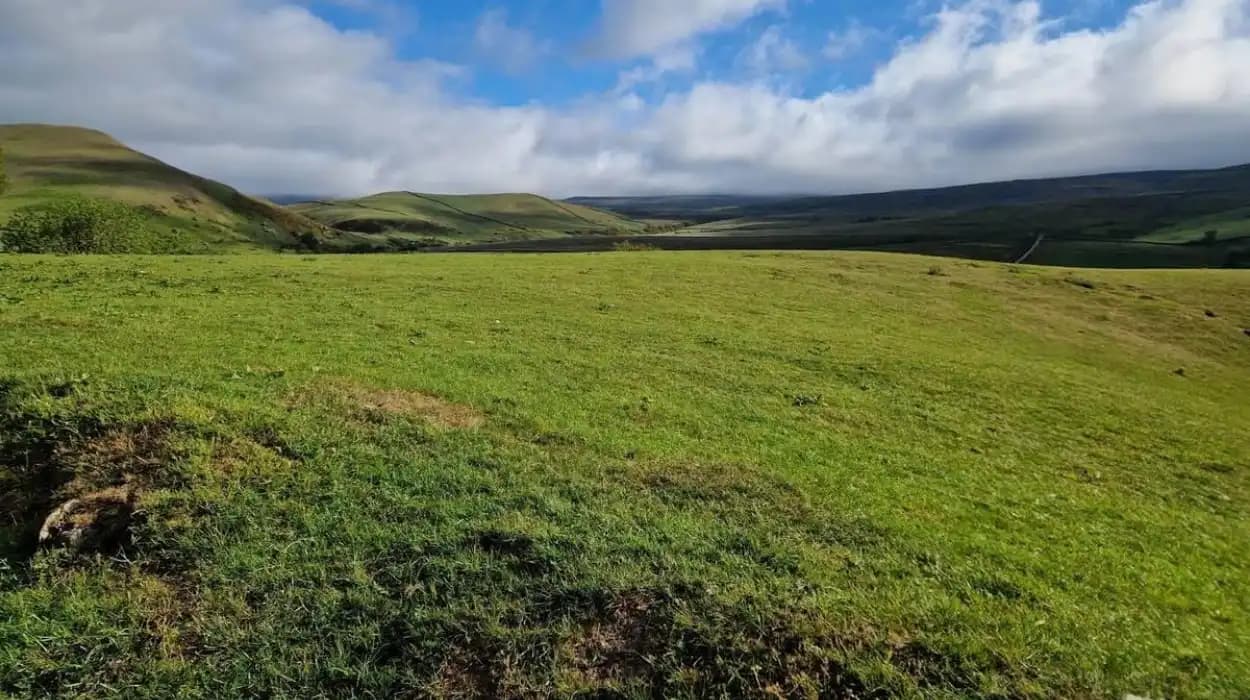
Belmont is one of the most productive birdwatching areas around Bolton because its reservoir, moorland, pasture, woodland and river valleys create several habitats within a compact landscape. The area also has a strong industrial and water-management history that explains how its modern wildlife habitats developed.
What makes Belmont an important birdwatching destination near Bolton?
Belmont combines reservoir water, upland pasture, woodland, streams and moorland habitats, creating year-round opportunities to observe waterfowl, woodland birds, waders and upland species. Its location beside the West Pennine Moors also connects local habitats with a wider regional wildlife network.
Belmont lies in the historic Turton area north of Bolton. Its landscape sits within the southern edge of the West Pennine Moors, where upland terrain meets settled valleys and reservoir systems. Bolton Council records that the former township of Belmont became part of Turton Urban District in 1898, while administrative boundaries changed again during local government reorganisation in 1974.
Modern Belmont is therefore best understood as a historic settlement within a wider ecological landscape rather than as an isolated birdwatching site. The surrounding countryside contains Belmont Reservoir, Longworth Clough, Eagley Brook, upland fields and nearby reservoir valleys.
Bolton Council's biodiversity reporting identifies the borough's wider natural environment as unusually varied. It contains upland oak woodland, blanket bog, grassland and moorland habitats, while the borough supports specialist moorland birds including curlew. The council also records 17 Local Nature Reserves and more than 70 Sites of Biological Importance across Bolton.
For birdwatchers, this habitat diversity is important because different bird species require different ecological conditions. Open water attracts ducks, gulls and other waterbirds. Wet margins support waders. Woodland provides nesting and feeding habitat for songbirds and woodland specialists. Open upland fields support meadow and moorland birds.
How did Belmont's historic landscape develop?
Belmont's present birdwatching landscape developed from nineteenth-century water infrastructure, rural land management and older settlement patterns. Belmont Reservoir was constructed in 1826 to supply expanding Bolton, creating a permanent waterbody that later became part of a much wider wildlife-rich reservoir landscape.
The history of Belmont is closely connected with Bolton's industrial expansion. During the nineteenth century, Bolton became a major centre of cotton manufacturing, engineering and associated industries. Population growth increased demand for reliable water supplies.
Belmont Reservoir was built in 1826 by the Bolton Waterworks to supply the expanding town. The reservoir therefore began as infrastructure rather than a conservation site. Its later importance for wildlife demonstrates how engineered landscapes can acquire ecological value over time.
Water management continued to shape the surrounding landscape. Reservoir construction expanded across the West Pennine valleys, producing a linked series of artificial waterbodies. The Bolton Local RSPB Group describes a reservoir chain extending through Belmont, Wayoh, Entwistle and Jumbles, alongside larger reservoirs farther across the moors.
The historical connection between water infrastructure and urban development remains visible today. Reservoir embankments, surrounding access routes and nearby settlements provide evidence of the period when water supply became a major municipal concern.
The landscape also retains evidence of earlier rural and industrial activity. Longworth Clough, close to Belmont, formed part of the Longworth Hall estate and contains remnants of nineteenth-century industrial activity along Eagley Brook. The Wildlife Trust records the reserve as a 56-hectare landscape containing ancient and semi-natural woodland, wet woodland and grassland.
This combination of industrial heritage and natural regeneration gives birdwatchers an opportunity to study both environmental history and living ecosystems.
Which habitats should birdwatchers explore around Belmont?
Birdwatchers should focus on five connected habitats around Belmont: reservoir margins, woodland, wet woodland, grassland and upland moorland. Each habitat attracts different birds, allowing visitors to change their observation strategy as they move through the landscape.
Belmont Reservoir provides the most obvious open-water habitat. Reservoir edges are particularly useful for observing waterbirds because birds can feed, rest and move between sheltered sections of shoreline.
Longworth Clough provides a contrasting woodland environment. The Wildlife Trust describes a mosaic of ancient and semi-natural woodland, wet woodland and grassland. Eagley Brook passes through the valley and creates additional waterside habitat.
Woodland structure affects which birds can be detected. Dense vegetation favours species that remain within cover, while woodland edges provide feeding opportunities for birds moving between trees and open ground.
Grassland provides another distinct habitat. Open fields and rougher grassland around the Belmont landscape support species associated with agricultural and upland environments.
The wider West Pennine Moors add open moorland habitat. Bolton Council identifies moorland birds such as curlew as part of the borough's specialist wildlife.
These habitats should not be treated as separate ecological islands. Birds move between woodland, water, grassland and moorland according to food availability, breeding requirements and seasonal conditions.
Which birds can you see at Belmont Reservoir?
Belmont Reservoir is particularly valuable for observing waterbirds and seasonal visitors. Records from the surrounding area include wildfowl, gulls, waders and other water-associated species, while the wider Belmont landscape supports an even broader range of birds.
Belmont Reservoir is recognised as an important location for wintering wildfowl. Historical and ecological sources also identify the reservoir margins as habitat for species associated with the wider West Pennine landscape.
The surrounding Belmont area has recorded species such as northern lapwing, oystercatcher, redshank and common sandpiper. These birds represent different ecological groups and demonstrate why shoreline observation should not focus exclusively on ducks.
Northern lapwing is a distinctive wader associated with open grassland and farmland. Oystercatchers use suitable wetland and shoreline environments. Redshanks favour wet ground and water margins, while common sandpipers use the edges of freshwater habitats.
The Belmont area has also produced notable historical bird records. A Lancashire and Cheshire Fauna Society report records ten pheasants on Belmont Reservoir's island on 30 November during one survey year and documents additional breeding records around Belmont.
Birdwatchers should treat individual sightings as records rather than guarantees. Bird distribution changes with weather, season, water levels, food availability and disturbance.
The dedicated Belmont Reservoir birdwatching site maintained by BirdGuides also documents the site's continuing interest to birders and provides access to bird-record information.
When is the best time to go birdwatching in Belmont?
Belmont offers useful birdwatching throughout the year, but each season produces a different emphasis. Spring favours breeding and migrant activity, summer supports woodland songbirds, autumn brings movement through the landscape, and winter strengthens opportunities for wildfowl and upland species.
Spring is particularly important for listening as well as watching. Migratory birds return to woodland and grassland, while resident species establish territories and begin breeding.
Longworth Clough provides a strong spring habitat because its woodland supports species including wood warbler, tree pipit, tawny owl and long-tailed tit. The Wildlife Trust specifically identifies woodland birdlife as one of the reserve's principal attractions.
Summer brings longer daylight hours and active breeding territories. Woodland birds become easier to detect through song, while open grassland produces opportunities for observing aerial feeding and foraging behaviour.
Autumn changes the character of birdwatching. Migratory movement increases, resident birds change feeding patterns and woodland vegetation begins to thin. The transition between seasons also makes habitat edges useful observation points.
Winter is especially significant around reservoirs. Waterbodies provide important resting and feeding areas for wildfowl, while bare woodland makes some birds easier to detect visually.
The RSPB Bolton Local Group specifically identifies the reservoir chain around Belmont, Wayoh, Entwistle and Jumbles as an area where waterfowl use reservoirs as stopover habitat.
Why is Longworth Clough one of the best birdwatching experiences near Belmont?
Longworth Clough provides one of the strongest woodland birdwatching experiences near Belmont because its 56 hectares contain ancient and semi-natural woodland, wet woodland, grassland and Eagley Brook, supporting specialist woodland and waterside species.
Longworth Clough lies about one kilometre northwest of Egerton and roughly one kilometre southeast of Belmont. The reserve follows the Eagley Brook valley and contains a network of public footpaths. The Wildlife Trust advises visitors to remain on designated paths to protect wildlife and personal safety.
The reserve's bird interest is unusually varied for a single valley landscape. The Wildlife Trust specifically lists woodcock, tawny owl, tree pipit, wood warbler and long-tailed tit among the birds found in the woodland. A dipper has also been recorded feeding in Eagley Brook.
Each species represents a different habitat relationship.
The dipper is associated with fast-flowing freshwater. Its presence reflects the ecological importance of Eagley Brook.
Woodcock uses woodland habitats and ground cover. Tree pipit is associated with open and semi-open upland environments. Wood warbler is a woodland specialist. Tawny owl uses mature woodland for roosting and hunting.
The Wildlife Trust describes Longworth Clough as part of the nationally important West Pennine Moors Site of Special Scientific Interest. Its habitat mosaic includes alder and willow wet woodland, sessile oak woodland and species-rich grassland.
The site therefore works particularly well for birdwatchers who want to compare woodland, stream and grassland habitats during a single visit.
What can birdwatchers learn from Belmont's reservoir history?
Belmont's reservoirs demonstrate how nineteenth-century industrial infrastructure transformed the local landscape and eventually created habitats used by wildlife. Birdwatching here therefore provides direct evidence of the long-term ecological consequences of historic water engineering.
The construction of Belmont Reservoir in 1826 formed part of a wider response to the water demands of a rapidly expanding industrial town. Bolton's water infrastructure developed alongside population growth and manufacturing.
Later reservoirs expanded this engineered network. The RSPB Bolton Local Group identifies Belmont, Wayoh, Entwistle and Jumbles within the same broad reservoir landscape.
The ecological result is a landscape containing open water beside woodland, grassland and moorland. This diversity creates opportunities for different bird communities to occupy relatively close habitats.
The process is significant in environmental history. Reservoirs are human-made structures, but their shorelines and surrounding vegetation become functioning ecological systems. Their value depends on water quality, vegetation management, surrounding land use and protection from excessive disturbance.
Bolton Council's greenspace strategy recognises the importance of both green and blue spaces and identifies the protection, enhancement and expansion of parks, woodlands, nature reserves and water environments as conservation priorities.
For educators and history enthusiasts, Belmont therefore provides a practical case study in industrial environmental change.
How can visitors connect Belmont birdwatching with Bolton's wider heritage?
Belmont birdwatching fits naturally into Bolton's wider heritage because the landscape connects industrial water supply, rural settlement, historic administration, woodland management and modern conservation within one geographical area.
Belmont was historically associated with the township of Turton. Bolton Council records that Turton Urban District boundaries were expanded in 1898 to include Belmont and neighbouring communities. The later 1974 reorganisation divided the former Turton area between different local authorities.
This administrative history explains an important point for visitors: Belmont is geographically close to Bolton but is not entirely within the present Bolton Council administrative boundary. Bolton Council explicitly states that Belmont, Turton and Edgworth, along with Entwistle and Wayoh reservoirs, are outside the council's current area.
The distinction matters when checking access, parking, land management and local regulations.
The heritage landscape also extends beyond the reservoir itself. Longworth Clough preserves evidence of nineteenth-century industry, while surrounding valleys retain historic routes, stone boundaries and water infrastructure.
To experience this historic landscape in person today, consult our comprehensive [Birdlife and Natural History of Belmont] for itineraries and visiting parameters.
This connection between history and nature strengthens the educational value of birdwatching. Visitors can examine how industrial infrastructure changed land use while observing how ecological communities developed around that infrastructure.
Which nearby reservoir routes complement a Belmont birdwatching visit?
Nearby reservoir routes provide additional habitats for visitors who want to extend a Belmont birdwatching day. Wayoh, Entwistle and Jumbles each add woodland, shoreline and open-water environments, creating a connected birdwatching landscape across the West Pennine reservoir valleys.
The RSPB Bolton Local Group describes a reservoir circuit involving Jumbles, Wayoh and Turton and Entwistle. It identifies woodland birds including goldcrest, siskin, great spotted woodpecker, wagtails and finches, alongside waterfowl using the reservoirs as stopover habitat.
Entwistle Reservoir offers an especially accessible route. United Utilities describes its circular trail as approximately 2.8 miles and generally flat, following the reservoir shoreline. The site is open throughout the year and is specifically promoted as a year-round birdwatching location.
The reservoir also contains a permanent steel heron sculpture known as The Wader. It has stood at Entwistle since 2008.
Jumbles adds another woodland and water environment. The woodland around Ousel Nest Meadows supports birds including jay, sparrowhawk, grey heron and kestrel. The reservoir's circular walking route is approximately two miles.
These sites should be regarded as complementary rather than substitutes for Belmont. Each provides a different combination of water, woodland and open land.
How should birdwatchers observe wildlife responsibly in Belmont?
Responsible birdwatching requires visitors to remain on public paths, avoid disturbing nesting birds, keep dogs controlled where required, respect private land and follow current site restrictions. These practices protect habitats while allowing continued public access to the landscape.
Longworth Clough provides a clear example of responsible access. The Wildlife Trust states that visitors should remain on footpaths and keep dogs on leads because livestock graze some fields. Cycling is not permitted throughout the reserve.
Birdwatchers should avoid approaching nests, roosting birds or feeding sites. Long periods of observation should take place from established paths or suitable public viewpoints.
Binoculars reduce the need to approach birds. A telescope is useful at reservoirs because it allows observation from a greater distance.
Visitors should also avoid entering water or restricted areas. Reservoirs remain operational infrastructure even when they function as wildlife habitats.
Good birdwatching practice also involves recording observations accurately. Date, location, habitat and identification details make sightings more useful for local natural-history records.
This approach connects recreational birdwatching with citizen science. Repeated observations help demonstrate changes in species distribution, migration timing and habitat use.
What conservation issues affect birdwatching around Belmont?
Birdwatching around Belmont depends on maintaining habitat quality, water quality and ecological connectivity. Conservation priorities include protecting woodland, grassland, wetlands and moorland while reducing habitat fragmentation and ensuring responsible public access.
Bolton Council's biodiversity reporting identifies habitat fragmentation, declining species and pressure on natural environments as significant regional conservation challenges. The borough's landscapes include restored peatlands, upland oak woods and post-industrial habitats.
The council's greenspace strategy also identifies declining species, fragmented habitats and poor water quality as wider Greater Manchester challenges.
Belmont's ecological value depends on connections between habitats. A reservoir without suitable surrounding vegetation supports a narrower range of wildlife than a reservoir linked to woodland, grassland and wetland.
Longworth Clough demonstrates the importance of habitat diversity. Its woodland, wet woodland and grassland support different bird communities, while Eagley Brook adds freshwater habitat.
Conservation therefore requires more than protecting individual trees or individual ponds. It requires maintaining the ecological relationships between habitats.
The historical reservoir landscape provides an additional conservation lesson. Infrastructure originally designed for human water supply now forms part of a regional ecological network. Maintaining that network preserves both natural and cultural heritage.
How can educators use Belmont birdwatching as a historical field study?
Educators can use Belmont as an interdisciplinary field study linking industrial history, geography, ecology, water management and conservation. The reservoir and surrounding habitats provide observable evidence for studying how human infrastructure influences landscapes and wildlife over time.
A history lesson can begin with Belmont Reservoir's construction in 1826 and the growth of Bolton's industrial water demand. Students can then examine why reservoirs were built and how they altered local land use.
A geography lesson can examine the relationship between upland catchments, streams, reservoirs and settlements.
An ecology lesson can compare reservoir margins, woodland, grassland and stream habitats.
A conservation lesson can examine why protected landscapes and responsible public access matter.
Longworth Clough is particularly useful because its industrial archaeology remains visible alongside its natural habitats. The Wildlife Trust identifies remnants of the old mill along the brook and describes the reserve's nineteenth-century industrial history.
Students can therefore investigate physical evidence rather than relying exclusively on written records.
Bolton Museum's historical engagement with local birdlife also demonstrates the area's cultural connection with ornithology. Its 2024 "Birds of Bolton" exhibition used the natural-history sketchbooks of artist and naturalist Eric Gorton, whose surviving work documented birds and wildlife from 1947 to 1998.
That record demonstrates how local bird observation contributes to the historical understanding of wildlife.
What makes Belmont suitable for year-round birdwatching?
Belmont remains useful throughout the year because its habitats perform different ecological functions across the seasons. Winter emphasises wildfowl, spring brings breeding activity, summer supports woodland songbirds, and autumn increases opportunities for migration and seasonal movement.
The key advantage is habitat variety rather than a single guaranteed species.
Winter visitors benefit from open water and sheltered reservoir margins. Bare woodland also improves visibility into tree canopies and branches.
Spring increases territorial activity. Birds establish breeding areas, woodland species become vocal and migrant birds return.
Summer produces the strongest combination of active vegetation and breeding bird behaviour. Longworth Clough's woodland and grassland become particularly productive during this period.
Autumn introduces seasonal movement and changes in vegetation. Birdwatchers can observe resident birds preparing for winter while migrants pass through suitable habitats.
The wider reservoir system remains valuable throughout these changes. The RSPB identifies waterfowl stopover use and a variety of woodland birds across the connected reservoir landscape.
The result is a birdwatching destination where returning visitors can experience substantially different ecological conditions without needing to visit a different region.
Why does Belmont matter to Bolton's long-term natural heritage?
Belmont matters because its reservoirs, woodland, grassland, streams and moorland preserve a landscape shaped by centuries of settlement and industrial development. Its continuing birdlife demonstrates the long-term ecological value of protecting connected natural and historic environments.
The history of Belmont shows that conservation landscapes do not always begin as conservation projects. Belmont Reservoir was constructed for water supply. The surrounding valleys were influenced by agriculture, industry, transport and settlement.
Over time, these altered landscapes developed ecological functions. Reservoirs became feeding and resting places. Woodland matured. River corridors provided freshwater habitat. Grassland retained value for upland and farmland birds.
The present landscape therefore represents several historical layers at once.
The first layer is the pre-industrial rural landscape. The second is nineteenth-century industrialisation and municipal water engineering. The third is modern conservation and public access.
Bolton's current biodiversity strategy recognises the importance of this wider environmental inheritance. The borough's 17 Local Nature Reserves and more than 70 Sites of Biological Importance form part of a broader conservation framework.
For visitors, Belmont offers a direct way to understand that history through observation. A reservoir shoreline, wooded valley or upland field is not simply scenery. Each reflects a combination of geological conditions, human intervention, historical land use and ecological succession.
That makes Belmont particularly valuable for nature enthusiasts visiting Bolton throughout the year. Its birdwatching opportunities are rooted in the history of the landscape itself, while its conservation value depends on protecting the habitats that continue to support bird populations.
Belmont's long-term significance therefore extends beyond individual sightings. The area provides a living record of how water infrastructure, industrial development, rural land management and conservation have interacted across generations. Its continued value as a birdwatching destination depends on maintaining those ecological connections while respecting the historic landscape and the people who use it.
FAQS
Where is the best place for birdwatching in Belmont, Bolton?
Belmont Reservoir is one of the best-known birdwatching locations in the area, with open water and surrounding habitats supporting waterbirds, waders and seasonal visitors.