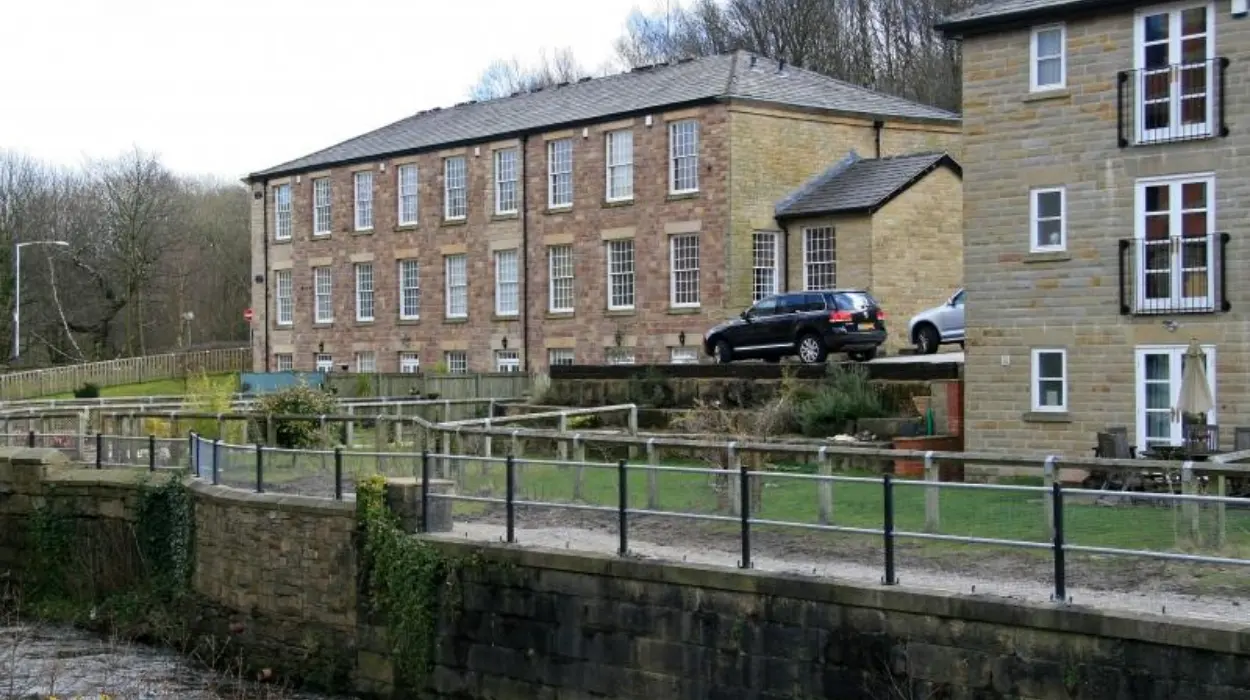
Astley Bridge occupies a significant place in the industrial history of Bolton and the wider region of Lancashire. Situated north of Bolton town centre, the district evolved from a rural settlement into a densely populated industrial suburb during the nineteenth century. Its development reflected the wider transformation of northern England during the Industrial Revolution, when textile manufacturing, urban growth, and new transport networks reshaped communities.
The industrial heritage of Astley Bridge remains visible in surviving mill buildings, worker housing, transport infrastructure, and local institutions established during the period of rapid expansion. Understanding this history provides insight into how industrialisation altered landscapes, employment patterns, social structures, and urban development across Lancashire.
Why did Astley Bridge become an important industrial district in Bolton?
Astley Bridge became an important industrial district because of Lancashire’s expanding cotton industry, access to water resources, proximity to Bolton’s manufacturing economy, and growing transport connections. These advantages attracted mill construction, worker settlement, commercial investment, and sustained urban expansion throughout the nineteenth century.
Before industrialisation, Astley Bridge consisted largely of agricultural land and scattered rural properties. The area lay within the historic boundaries of Lancashire, one of Britain's most important textile-producing regions.
The Industrial Revolution accelerated economic change across northern England from the late eighteenth century onward. Entrepreneurs sought locations suitable for spinning and weaving operations. Areas near Bolton offered access to labour, water supplies, coal resources, and commercial markets.
Bolton itself emerged as a major cotton manufacturing centre. As industrial activity expanded beyond the town core, surrounding districts including Astley Bridge became attractive locations for mills and associated industries.
The district's name derives from a historic crossing over the River Astley, a tributary that contributed to local industrial development. Watercourses played a critical role during the early stages of industrialisation because factories required reliable power before widespread steam adoption.
Population growth followed industrial investment. Families relocated from rural areas seeking employment opportunities in mills, workshops, and supporting trades. This demographic expansion transformed Astley Bridge from countryside into a significant urban settlement connected closely with Bolton's industrial economy.
How did the cotton industry shape the development of Astley Bridge?
The cotton industry fundamentally shaped Astley Bridge by driving factory construction, attracting workers, stimulating housing development, expanding transport infrastructure, and integrating the district into Lancashire’s globally significant textile economy throughout the nineteenth and early twentieth centuries.
Cotton manufacturing represented the dominant economic force behind Astley Bridge's growth. Lancashire became the world's leading cotton-producing region during the nineteenth century, supplying domestic and international markets.
The industrial process involved several stages. Raw cotton arrived from overseas producers, particularly the United States, India, and Egypt. The fibre underwent cleaning, carding, spinning, weaving, finishing, and distribution. Different factories specialised in different production stages.
Bolton became especially known for spinning. Numerous mills operated throughout the borough, including facilities in Astley Bridge. These mills employed large workforces and required substantial capital investment.
The expansion of cotton manufacturing generated demand for supporting industries. Engineering firms produced machinery. Construction companies built factories and housing. Transport providers moved raw materials and finished goods. Retail businesses supplied growing populations.
Industrial production linked Astley Bridge to global trade networks. Cotton imported through ports such as Liverpool moved inland to Lancashire mills. Finished textiles reached markets throughout Europe, Asia, Africa, and the Americas.
The district's economic fortunes became closely tied to fluctuations within international cotton markets. Events such as the American Civil War between 1861 and 1865 disrupted cotton supplies and affected production across Lancashire, including Bolton's manufacturing communities.
What types of mills operated in Astley Bridge?
Astley Bridge contained spinning mills, weaving facilities, and associated textile manufacturing premises that reflected Bolton’s role within Lancashire’s cotton industry. These industrial complexes employed large workforces and served as major economic anchors for local urban development.
Textile mills formed the most visible symbols of industrial growth in Astley Bridge. Large brick-built factories dominated the landscape, often featuring tall chimneys, engine houses, warehouses, and production floors.
Cotton spinning mills represented a particularly important industrial category. These facilities housed extensive machinery powered initially by water and later by steam engines. Technological innovation allowed manufacturers to increase productivity dramatically.
Industrial buildings were designed for efficiency. Multi-storey mill structures maximised floor space while accommodating large numbers of machines. Windows provided natural light essential for textile production before electric lighting became widespread.
Many mills incorporated advanced engineering features. Fireproof construction methods, iron frames, and improved ventilation systems reflected changing industrial standards throughout the nineteenth century.
Associated facilities expanded around major mills. Warehouses stored raw materials and finished goods. Workshops maintained machinery. Offices managed commercial operations. Rail and road connections facilitated transportation.
Although numerous mills have disappeared through demolition or redevelopment, surviving structures continue to demonstrate the scale of industrial investment that once characterised Astley Bridge.
What was daily life like for mill workers in Astley Bridge?
Daily life for mill workers involved long working hours, regimented factory schedules, physically demanding labour, and strong community connections. Employment in textile mills shaped family life, housing patterns, education, social institutions, and local identity across generations.
Industrial employment transformed everyday life. Factory work differed substantially from traditional agricultural labour because it operated according to fixed schedules and production targets.
Many workers began shifts early in the morning and remained at work for extended periods. During the early nineteenth century, working days often exceeded ten hours. Legislative reforms gradually reduced excessive labour practices.
Women played a major role within the textile workforce. Lancashire's cotton industry employed significant numbers of female workers in spinning, weaving, and related occupations. Children also worked in mills until regulatory reforms expanded protections and educational requirements.
Income from factory employment provided opportunities unavailable in many rural communities. However, working conditions frequently remained challenging. Noise, heat, dust, and machinery hazards affected worker health and safety.
Industrial communities developed strong social networks. Families often lived near workplaces, creating neighbourhoods connected by employment, education, religion, and recreation.
Workers participated in local institutions including churches, chapels, mutual aid societies, trade unions, and sporting organisations. These institutions contributed to social cohesion and collective identity within Astley Bridge.
How did housing expand alongside industrial growth?
Housing expanded rapidly to accommodate increasing populations employed by local industries. Terraced housing developments, worker neighbourhoods, and supporting urban infrastructure transformed Astley Bridge from a rural landscape into a densely settled suburban industrial district.
Population growth created substantial demand for residential accommodation. Industrial employers required access to reliable labour forces living within reasonable commuting distance of factories.
Terraced housing became the dominant residential form. Rows of brick-built houses provided relatively affordable accommodation for working families. Many of these developments remain characteristic features of northern English industrial towns.
Housing construction followed practical considerations. Proximity to workplaces reduced travel time. Dense development maximised available land. Standardised building methods lowered costs.
Urban expansion required additional infrastructure. Roads improved to accommodate increasing traffic. Water supplies expanded. Sewerage systems developed gradually. Public services grew alongside population increases.
Neighbourhoods acquired distinctive identities linked to employment patterns and local institutions. Schools, churches, shops, and public houses served expanding communities.
The physical layout established during industrialisation continues to influence Astley Bridge's urban character. Street patterns, residential districts, and surviving historic buildings reveal the legacy of nineteenth-century growth.
How did transport infrastructure contribute to Astley Bridge’s expansion?
Transport infrastructure contributed to Astley Bridge’s expansion by connecting factories to suppliers and markets, enabling worker mobility, reducing transportation costs, and supporting sustained industrial and residential growth throughout the nineteenth and early twentieth centuries.
Industrial economies depended upon efficient transportation systems. Raw materials, machinery, coal, and finished products required reliable movement between production centres and commercial markets.
Road improvements enhanced regional connectivity. Better transport routes facilitated trade between Bolton and surrounding industrial districts.
Railway development transformed economic geography across Lancashire. Rail networks enabled manufacturers to move larger volumes of goods more quickly and at lower cost than traditional methods.
Industrial districts benefited significantly from improved freight capacity. Cotton imports arriving at ports could reach inland factories efficiently. Finished textiles could access national and international distribution networks.
Transport infrastructure also influenced residential development. Improved mobility allowed communities to expand beyond historic settlement boundaries.
The relationship between transport and industry created a cycle of growth. Economic expansion justified infrastructure investment, while improved infrastructure encouraged further development.
Today, traces of historic transport corridors continue to shape movement patterns throughout Bolton and surrounding areas.
What social institutions supported industrial communities in Astley Bridge?
Industrial communities relied upon churches, schools, trade unions, charitable organisations, recreational clubs, and cooperative societies. These institutions provided education, welfare, representation, social interaction, and community stability during periods of rapid economic and demographic change.
Industrialisation generated new social challenges. Growing populations required educational facilities, religious institutions, healthcare provision, and community support networks.
Churches and chapels occupied central positions within many working-class communities. Religious institutions often sponsored schools, charitable activities, and social events.
Educational reform expanded access to schooling during the nineteenth century. Increased literacy supported economic development while creating opportunities for social mobility.
Trade unions emerged as important organisations representing worker interests. Labour movements campaigned for improved wages, safer conditions, and legislative protections.
Friendly societies provided mutual assistance before the development of comprehensive state welfare systems. Members contributed funds that supported individuals during illness, unemployment, or family hardship.
Recreational activities also became significant. Sporting clubs, musical societies, and community events strengthened social bonds and provided leisure opportunities outside working hours.
These institutions helped industrial communities navigate economic fluctuations, workplace challenges, and urban transformation.
How did industrialisation affect the environment and landscape of Astley Bridge?
Industrialisation altered Astley Bridge’s environment through factory construction, housing expansion, infrastructure development, resource consumption, and increased pollution. These changes transformed agricultural landscapes into urban-industrial environments while permanently reshaping local geography and land use patterns.
Prior to industrialisation, much of Astley Bridge consisted of fields, farms, and open countryside. Industrial growth introduced entirely different land-use priorities.
Factories occupied substantial areas. Residential development replaced agricultural land. Roads and transport infrastructure expanded to accommodate economic activity.
Coal-powered steam engines generated smoke emissions that became common features of industrial districts throughout Lancashire. Rivers and streams often experienced pollution associated with manufacturing processes.
Resource extraction supported industrial growth. Coal mining across Lancashire supplied energy for factories and transportation systems.
Urbanisation altered ecological conditions. Increased building density reduced natural habitats while changing drainage patterns and landscape characteristics.
Environmental conditions improved significantly during the twentieth century as industrial activity declined and environmental regulations strengthened. Redevelopment projects converted former industrial sites into residential, commercial, and recreational spaces.
Modern visitors encounter a landscape shaped by both industrial development and post-industrial regeneration.
What remains of Astley Bridge’s industrial heritage today?
Astley Bridge’s industrial heritage survives through historic buildings, former mill sites, street layouts, worker housing, local archives, and community memory. These remnants provide valuable evidence of the district’s role within Lancashire’s industrial and social history.
Many original industrial structures no longer survive. Economic restructuring, redevelopment, and changing land use priorities led to widespread demolition during the twentieth century.
Nevertheless, important heritage assets remain visible. Historic mill buildings continue to illustrate industrial architecture and engineering practices. Worker housing demonstrates residential patterns associated with manufacturing communities.
Street layouts preserve historical development patterns established during periods of rapid urban growth. Local landmarks frequently retain connections to industrial origins.
Archival records provide additional evidence. Census data, municipal documents, business records, maps, photographs, and newspapers document changing economic and social conditions.
Local heritage organisations contribute to preservation efforts by recording oral histories, protecting historic resources, and promoting public awareness.
To experience this historic landscape in person today, consult our comprehensive for itineraries and visiting parameters.
Walking Routes Around Astley Bridge: Parks, Canals, and Scenic Bolton Trails
These preservation activities help ensure that industrial heritage remains accessible to future generations of researchers, educators, residents, and visitors.
Why does the industrial history of Astley Bridge remain important today?
The industrial history of Astley Bridge remains important because it explains modern urban development, community formation, economic transformation, and regional identity. Its heritage provides valuable evidence for historical research, education, preservation initiatives, and cultural tourism.
Astley Bridge illustrates broader historical processes that transformed Britain during the Industrial Revolution. The district demonstrates how technological innovation, manufacturing expansion, and population growth reshaped local communities.
Its history contributes to understanding Lancashire's role within global industrialisation. Cotton production connected local workers and businesses to international trade networks spanning multiple continents.
For genealogical researchers, industrial records provide important information about family histories. Census returns, employment records, school registers, and municipal documents offer detailed insights into past generations.
For educators and students, Astley Bridge serves as a case study of industrial urbanisation. Local examples help explain national and international historical developments through tangible evidence.
For heritage preservationists, surviving industrial resources represent important cultural assets. Historic buildings and archival collections support conservation efforts while strengthening community identity.
The long-term significance of Astley Bridge lies in its ability to connect present-day communities with the economic, social, and technological transformations that shaped modern Britain. Its mills, worker neighbourhoods, transport networks, and surviving heritage sites continue to reveal how industrialisation influenced everyday life and urban development across generations.
The industrial heritage of Astley Bridge remains an essential chapter in the history of Bolton, Lancashire, and the wider Industrial Revolution. Through preservation, research, and public engagement, that legacy continues to inform understanding of the past while contributing to the cultural identity of the present.
FAQS
What is Astley Bridge known for?
Astley Bridge is known for its industrial heritage, particularly its role in Lancashire's cotton industry during the nineteenth and early twentieth centuries. The district developed into an important manufacturing and residential area within Bolton.