Key Points
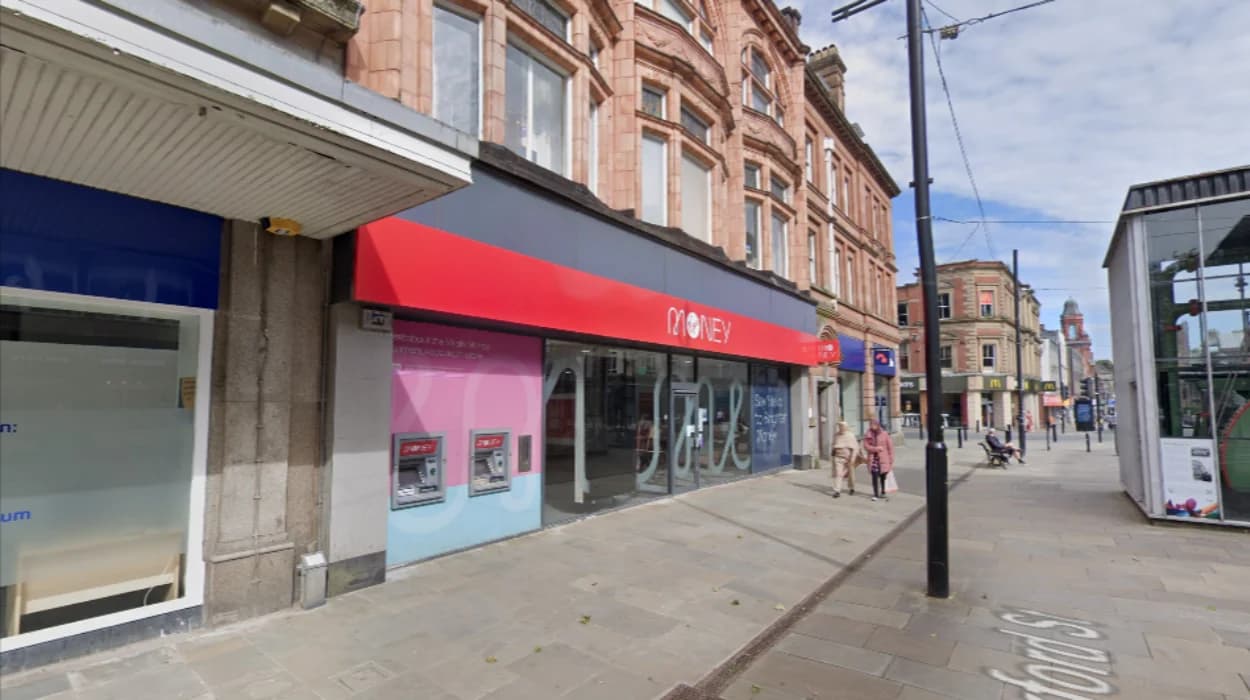
- Virgin Money Branch Integration: A designated "Safe Space" is being established at the Virgin Money branch located in Bolton town centre to support individuals suffering from physical and financial domestic abuse.
- Nationwide Retail Expansion: Nationwide Building Society is spearheading the rollout by introducing domestic abuse Safe Spaces across 42 select Virgin Money branches across the United Kingdom.
- Network Milestone: This initiative expands Nationwide's total footprint of safe spaces to 475 across its extensive branch network, which stands as the largest banking network in the UK.
- Confidential Safeguarding Infrastructure: The Safe Spaces consist of private, secure rooms within high street branches where victim-survivors can access discrete telephone links to specialist charities, evaluate options, and secure immediate protection away from abusers.
- Specialised Staff Training: Employees across more than 600 branches have undergone rigorous domestic abuse awareness training to identify warning signs and assist individuals safely.
- Strategic Match-Day Campaigning: The initiative aligns with domestic abuse charity Hestia's "Support Is A Team Sport" campaign during major football tournaments, countering the documented spikes in domestic violence linked to high-profile sporting events.
Bolton (Bolton Today) June 17, 2026 — A critical lifesaver for victims of domestic violence has arrived on the local high street as a new domestic abuse "Safe Space" is officially launched at the Virgin Money branch in Bolton town centre. The facility will serve as a private sanctuary for individuals suffering from physical, emotional, and economic abuse. It represents a significant escalation in corporate retail efforts to intervene in domestic crises, transforming standard commercial banking rooms into secure hubs for community safeguarding.
This local development is part of a broader national deployment executed by Nationwide Building Society, which is rapidly implementing dedicated Safe Spaces across 42 selected Virgin Money branches throughout the United Kingdom. By embedding these confidential zones within everyday high street banking locations, the financial institution is systematically expanding its protective network. This latest rollout scales the overall volume of interactive Safe Spaces across Nationwide’s combined network to a total of 475, reinforcing its status as the UK’s largest physical branch network actively participating in the national safeguarding scheme.
What Is the Core Purpose of the Branch Safe Spaces?
The fundamental design of the in-branch Safe Space addresses the profound isolation experienced by victims of domestic control. When an individual enters the designated area at the Bolton town centre branch, they are escorted into a highly private, confidential room completely shielded from public view and detached from the standard transaction counters. Inside these rooms, individuals are granted unrestricted, unmonitored access to a telephone and digital devices. This infrastructure is deliberately maintained so that victim-survivors can securely contact national helplines, reach out to specialist charities, contact trusted family members, or interface with emergency services without leaving a digital footprint on their personal mobile devices, which are frequently monitored by perpetrators.
The physical retail bank space offers an inconspicuous excuse for a victim to leave the home. Because checking account details, discussing mortgages, or executing basic financial deposits are viewed as routine tasks, visiting a bank allows a person under intense surveillance to escape their abuser's immediate proximity without raising suspicion. The initiative recognizes that high street businesses can serve as an unexpected but vital frontline entry point for crisis intervention.
How Are Industry Leaders Justifying This High Street Intervention?
As reported by an uncredited staff writer for The Independent, the expansion into commercial banking branches reflects a structural evolution in how corporations leverage their physical real estate for public safety. High street presence, long defended by consumers for cash access, is being repurposed to address acute societal vulnerabilities.
The operational strategy is directly guided by executive leadership at the building society. As reported by The Independent, Mandy Beech, Director of Retail Services at Nationwide, explicitly advocated for public utilization of these rooms, stating:
“We urge anyone experiencing abuse to reach out – our in-branch safe spaces are here to support you.”
Beech acknowledged that while financial institutions are non-traditional settings for emergency social work, their physical accessibility gives them a unique geographical advantage. As reported by The Independent, Mandy Beech further explained:
“We know that a bank or building society might not be the most obvious or conventional place to turn in a moment of crisis, but through our charity partners and the tools we have built, there are real, practical things we can do to help people get the support they need. Colleagues across more than 600 branches have participated in our domestic abuse awareness training because no one should face this alone.”
Why Do Domestic Abuse Rates Escalate During Football Tournaments?
The timing of the rollout coincides with heightened public awareness campaigns designed to mitigate the domestic volatility observed during major international football matches. Nationwide has actively aligned its resources with the domestic abuse charity Hestia to promote the "Support Is A Team Sport" campaign during the World Cup.
As reported by The Independent, Sue Harper, Deputy Director of Domestic Abuse and Sexual Violence Prevention at Hestia, detailed the direct correlation between sporting events and localized violence. Harper explained:
“While football does not cause abuse, we know that existing abusive behaviour often intensifies on match days. Heightened emotions and increased alcohol consumption can escalate harm, leaving victim-survivors dreading match days and feeling unsafe in their own homes.”
Harper emphasised that community-wide vigilance is required to offset this predictable surge in seasonal abuse. As reported by The Independent, Sue Harper asserted:
“This summer, we all have a role to play. We can help people feel less alone and ensure they get the support they need.”
To make this support actionable, the campaign heavily promotes the utilisation of the Bright Sky app. Developed by Hestia, this mobile application functions as a discreet support directory. It contains localized toolkits to help users identify the subtle signs of domestic or economic abuse, provides clear parameters on how to safely assist an endangered friend or neighbour, and utilizes geolocation tracking to direct users to their nearest physical Safe Space located within a participating Virgin Money or Nationwide branch.
Explore More Bolton Town Centre News
Coffee House Bolton Confirms Reopening Timeline After Fire: Bolton 2026
Young Athletes Shine as IRONKIDS Returns to Bolton 2026
What Is Economic Abuse and How Do Banks Combat It?
According to official analytical disclosures published by The Independent, economic and financial abuse frequently operates alongside physical violence as part of a wider, highly calculated pattern of coercive control. Perpetrators systematically use money as a mechanism to restrict a partner’s autonomy, effectively trapping them within an unsafe domestic environment due to a total lack of financial independence.
The clinical indicators of economic abuse monitored by banking personnel include:
- Total Fiscal Control: A perpetrator completely dictating the distribution of money, denying the victim independent access to joint or personal accounts.
- Scrutinised Spending: Demanding itemised receipts for basic groceries and hiding shared financial assets.
- Employment Sabotage: Directly preventing a person from entering the workforce or accessing their own salary.
- Coerced Debt: Forcing victims to co-sign high-interest loans or unlawfully opening credit accounts in the victim’s name without their explicit consent, destroying their credit rating.
To counteract these sophisticated digital tactics, Nationwide has integrated automated defensive tools into its retail banking software. For instance, the organization introduced an in-app payment reference blocking feature. This mechanism blocks abusers from using the text fields accompanying small bank transfers to send threatening, abusive, or highly coercive messages to victim-survivors who have otherwise blocked their phone numbers. Furthermore, through an active corporate partnership with the prominent charity Refuge, Nationwide offers specialized legal and financial advice alongside emergency material assistance to help victims cleanly sever joint accounts and establish independent banking profiles.
What Are Other Major Banking Institutions Doing to Help?
The implementation of high-street safe spaces is expanding across the wider UK financial services sector. Several major providers have engineered highly advanced intervention programs to ensure victims are not left financially destitute when fleeing an abusive household.
As reported by The Independent, alternative providers like TSB Bank have pioneered substantial emergency measures alongside standard consulting rooms. TSB currently runs a specialized "Flee Fund" program. Under this framework, individuals escaping severe domestic or economic abuse are granted immediate access to emergency cash payments of up to £500. This money is designed to pay for essential transit, temporary accommodation, or immediate clothing and food, and it does not require repayment.
According to official corporate policy documentation sourced from TSB Bank's consumer support guidelines, their branch personnel are trained to execute the following security measures immediately upon a victim's request:
- Safe Communication Channels: Routing all subsequent paper statements and replacement debit cards to a verified, alternative safe address.
- Untraceable Accounts: Opening brand-new, solo banking accounts containing non-location-specific sort codes, preventing perpetrators from tracking the branch location where cash withdrawals are made.
- Coercive Language Monitoring: Reviewing historic payment descriptions on incoming transfers and issuing official written warnings or account closures to abusers who use banking communication channels to harass customers.
How Did the Safe Spaces Movement Originate Nationally?
The overarching Safe Spaces framework is operated as a core initiative under the "UK SAYS NO MORE" campaign, developed in tandem with the charity Hestia. According to historical records published via the official Hestia Newsroom, the program was initially engineered in 2020 as a direct, emergency response to the severe logistical challenges exposed by the COVID-19 pandemic. During the localized lockdowns, victims were confined indoors with their abusers, rendering traditional telephone hotlines and community drop-in centers completely inaccessible.
To bypass this isolation, the campaign established partnerships with everyday essential businesses that remained legally open to the public, such as local pharmacies and grocery chains. Following its initial rollout, the framework has successfully integrated over 6,000 pharmacies, high-street banks, and building societies across the country. According to current operational data published by the UK SAYS NO MORE Safe Space Directory, an estimated one person seeks emergency refuge inside a bank or pharmacy consultation room every single day, demonstrating the critical importance of keeping physical high-street branches open to support public safety.