Key Points
- Common Occurrence: One in every 200 cars checked in Bolton carries an "invisible plate" that will not show on cameras for identification purposes.
- Invisible Camera Technology: Such special license plates are created in such a way as to prevent detection by certain camera registration systems, making it possible to avoid speed cameras, bus lane cameras, and even police ANPR systems.
- Knowledge Gap: Authorities stress that although many motorists purposefully fit their vehicles with invisible plates to avoid detection, there are those who are unaware that their plates cannot be seen by cameras.
- Discrepancy in Enforcement and Intelligence: In the span of six months, GMP has interacted with about 50 motorists every month. Despite the chance to remedy the problem immediately without facing any consequences, only one in four motorists takes advantage of the offer.
- Connections to Criminal Activity: Details of non-complying motorists – which accounts for three-quarters of all motorists – are handed to intelligence units of the police force to investigate any connection to criminal activity.
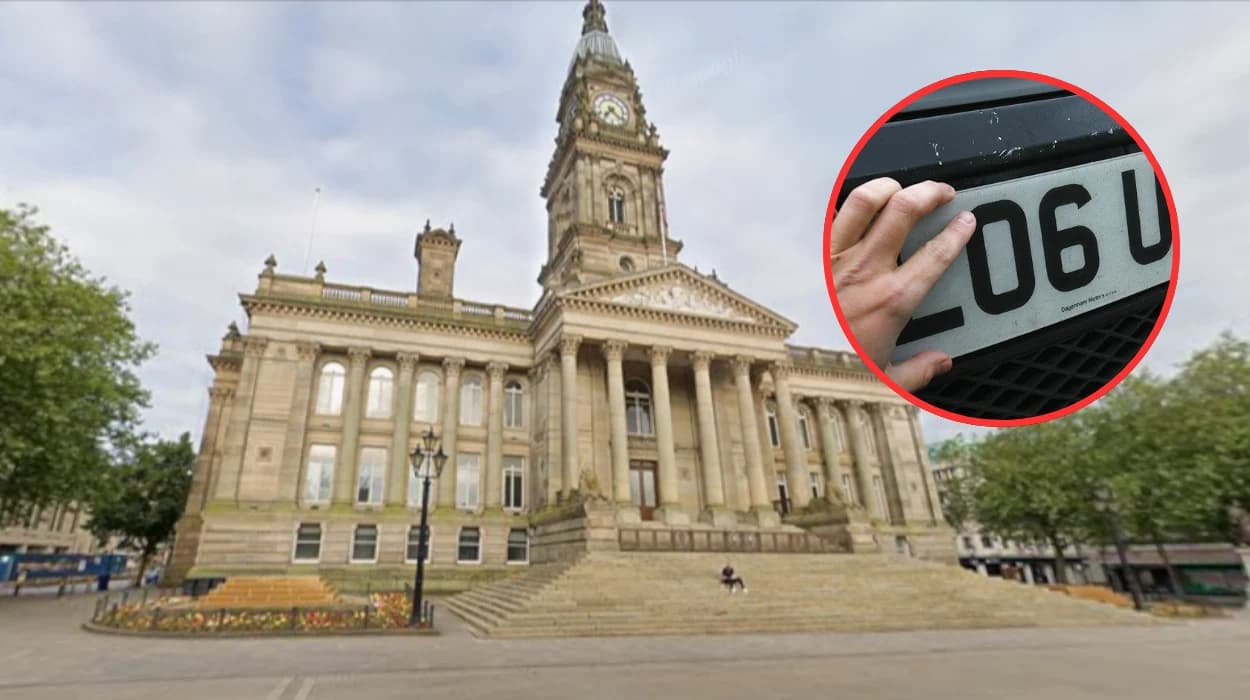
Bolton (Bolton Today) September 2, 2026 – Approximately one in every 200 vehicles checked across the borough of Bolton has been found to be fitted with a illegal "ghost plate," a specialized cover or modification designed to prevent traffic and law enforcement cameras from reading full vehicle registration marks.
The alarming statistical discovery came to light during a comprehensive road safety progress update presented at a Bolton Council meeting. Transport officials revealed that cutting-edge detection technology is now actively being deployed across the regional network to pinpoint these illegal plates. The sophisticated technology specifically targets vehicle registration plates that use retroreflective, infra-red blocking, or distortive coatings designed to blind cameras while appearing entirely standard to the naked human eye.
The widespread proliferation of these plates severely compromises public safety measures across the borough. By effectively masking the identity of vehicles, motorists using these stealth plates are able to evade speed detection cameras, dedicated bus lane enforcement systems, and police Automatic Number Plate Recognition (ANPR) cameras. The system failure created by ghost plates undermines crucial tools relied upon by emergency services, local transport authorities, and law enforcement agencies to maintain order and combat vehicular crime.
What Are Ghost Plates and How Do They Function?
As reported by Isobel Forbes of The Bolton News, Dwayne Lowe, the deputy director of highways and planning at Bolton Council, explained the operational nature of these illegal modifications during his address to the local authority. Describing the mechanics behind the practice, Lowe stated:
"Ghost plates are plates you can put on your car which will take out some of your registration so cameras cannot identify it."
The physical construction of ghost plates often involves the application of special infrared-reflective films, 3D/4D gel character variations, or specific chemical sprays over standard acrylic vehicle plates. Under normal daytime lighting conditions or visible light, the licence plate characters remain completely legible to human bystanders and police officers on foot patrol. However, when captured by automated security equipment, speed cameras, or ANPR units that rely on infrared flash illumination to read licence plates, the targeted numbers or letters reflect the light beam back, causing severe overexposure. This creates a washed-out "ghosted" or blank area on the resulting image, rendering automated recognition algorithms incapable of parsing the full registration.
How Prevalent Is the Issue on Bolton Roads?
The scale of the problem in Bolton has caught local authority officials and traffic enforcement teams off guard. Addressing the sheer volume of non-compliant vehicles identified in recent assessments, Forbes reported that Dwayne Lowe highlighted the worrying frequency of the violation among local motorists, warning that the current figures represent an unacceptably high risk to public safety.
Lowe informed council members that
"One in 200 in Bolton has a ghost plate fitted, which is too many on the road."
While the statistic demonstrates a notable concentration of non-compliant vehicles on regional thoroughfares, council leadership noted that driver motivation varies significantly. As reported by Forbes, Lowe clarified that
"Some motorists are actively using ghost plates, but not everyone is aware that they have one."
Town hall chiefs reiterated that while a substantial proportion of road users intentionally buy and install these illegal modifications to avoid speeding fines, parking tickets, and toll charges, other vehicle owners may have bought pre-owned cars without realizing the fitted plates violated road transport regulations, or bought aftermarket plates online from uncertified vendors without understanding their legal status.
Explore More Bolton Council News
Dozens of Trees Felled Over Safety Risks in Bolton Woodland 2026
Bolton Council Disputes Sickness Data as UNISON Warns on Workers' Rights, Bolton 2026
What Strategy Is Being Used to Tackle the Problem?
In response to the growing prevalence of non-compliant registration marks, a combined multi-agency initiative involving local government officials and police officers was launched across Greater Manchester. According to reporting by Isobel Forbes in The Bolton News, the specialized monitoring project has been operational for approximately six months.
Rather than deploying immediate punitive measures or issuing automatic prosecution notices upon initial detection, the local authority and police partners established an educational framework. Dwayne Lowe outlined the core philosophy of the pilot initiative, noting:
"This project is mainly around education rather than enforcement."
Under the current trial scheme, Greater Manchester Police (GMP) officers have been actively engaging with around 50 motorists every month who were flagged by the new detection technology. When a vehicle is identified carrying an illegal ghost plate, the registered keeper is contacted directly by authorities and formally notified of the defect. Drivers are provided with an initial amnesty period, allowing them time to replace the non-compliant items with legal, British Standard-compliant registration plates before formal prosecution pathways are initiated.
How Have Drivers Responded to Warnings?
Despite the educational focus of the initiative and the lenient grace period offered to affected motorists, compliance rates following police intervention have proven surprisingly low. As reported by Isobel Forbes of The Bolton News, local authority figures reveal that a stark majority of contacted vehicle owners have chosen to ignore official warnings.
Detailing the poor uptake in plate replacements following direct police engagement, Dwayne Lowe informed the council panel:
"One in four have actively changed their registration to a legal plate, but we've got three out of four not changing that plate."
The fact that 75 percent of identified motorists fail to replace their plates after being explicitly warned by law enforcement strongly suggests that for many drivers, the installation of ghost plates is a deliberate, persistent effort to evade traffic enforcement rather than an honest mistake or administrative oversight.
What Role Does Greater Manchester Police Play in Enforcement?
With three-quarters of warned drivers refusing to rectify their registration plates voluntarily, the project is rapidly shifting from an educational exercise into an active police intelligence and enforcement operation. Local authorities confirmed that the data collected during the six-month pilot is being systematically collated and shared directly with specialized units within Greater Manchester Police.
As reported by Forbes, Lowe explained the next steps for those who refuse to adhere to the regulations:
"GMP have that intelligence and can use that as they see fit, and see if other criminality is involved with that individual."
Police forces across the UK frequently highlight that deliberate registration masking is rarely an isolated offense. Vehicles fitted with untraceable or obscured plates are routinely linked to broader criminal activity, including organised vehicle theft rings, dangerous driving, drug trafficking, fuel drive-offs, and driving without valid insurance or road tax. By cross-referencing ghost plate detection data with regional police databases, officers can target high-risk vehicles and monitor suspicious movement patterns across Greater Manchester.
Furthermore, council representatives expressed optimism that the rigorous evidentiary paper trail established through the pilot scheme—combining modern detection technology, official advisory notices, and documented non-compliance—will provide legal teams with robust evidence to pursue court prosecutions against repeat offenders.
How Does This Initiative Fit Into Broader Road Safety Goals?
The trial scheme operating across Bolton represents one component of a much wider, coordinated strategy aimed at reducing road casualties and improving transport security across the entire Greater Manchester region. Local authorities have increasingly identified unregistered and unidentifiable vehicles as a major threat to public safety, as drivers who believe their cars cannot be tracked are far more likely to engage in excessive speeding, run red lights, and commit hit-and-run offenses.
Bolton Council officials emphasized that while the ghost plate detection initiative remains in its early operational stages, its ongoing integration into regional transport networks will continue to expand. By combining advanced camera detection technology with targeted police enforcement, transport managers hope to drastically reduce the number of illegal plates on local roads, ensuring that all motorists remain fully accountable under UK road traffic law.