Key Points
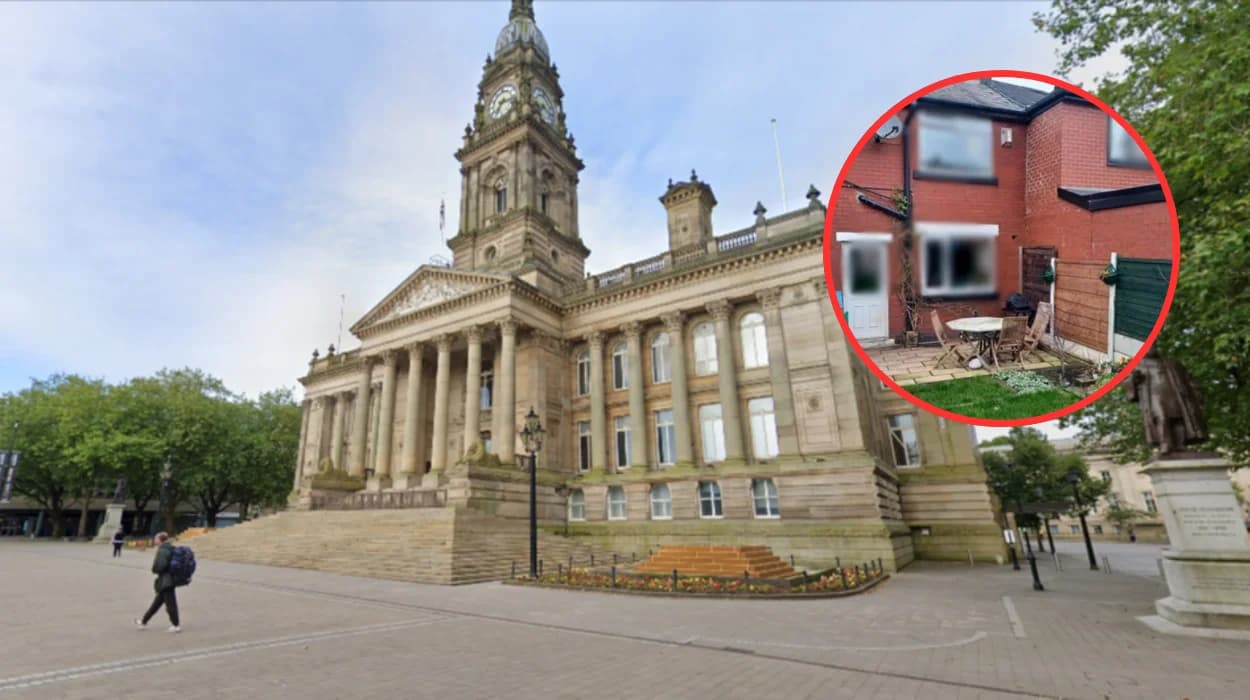
- Enforcement Order Issued: A homeowner in Farnworth has been ordered to demolish or substantially alter a residential rear extension after constructing it significantly larger than the officially approved plans.
- Significant Dimensional Deviation: The single-storey retrospective flat-roof structure projects a total of five metres from the original building, exceeding the legally permitted guidelines by 2.1 metres.
- Local Planning Refusal Upheld: The Planning Inspectorate formally dismissed an appeal by the property owner, affirming the original decision made by the Bolton Council planning committee to reject retrospective planning permission.
- Severe Amenity Impact: Official investigations concluded that the unauthorized brick wall creates an overbearing presence, severely overshadowing a neighbouring property’s kitchen, dining room, and garden while obstructing essential natural light.
- Violation of Planning Directives: The built structure was found to directly infringe upon the established 45-degree rule, a standard measure used by local authorities to safeguard the light and outlook of adjacent residential properties.
- Disregard for Subjective Aspirations: The planning inspector explicitly ruled that personal circumstances and homeowner aspirations do not constitute material planning considerations capable of overriding statutory local development policies.
Farnworth (Bolton Today) June 20, 2026 - A residential property owner faces the imminent prospect of completely demolishing or substantially reconstructing a newly built home extension following a definitive ruling by the Planning Inspectorate. The independent government authority has officially upheld local enforcement actions against the unauthorised development, which was erected significantly larger than the dimensions initially permitted under statutory local authority regulations. The structural dispute has drawn sharp criticism from local planning officials and neighbouring residents alike, highlighting the strict legal boundaries governing domestic property developments within urban residential zones.
The structural controversy centres on a single-storey flat-roof rear extension that extends five metres outward from the property's original rear elevation. This dimension exceeds the approved architectural blueprints by a substantial 2.1 metres. Following a comprehensive review of the physical infrastructure and its spatial impact on the immediate vicinity, federal planning inspectors verified that the expanded brick boundary inflicts severe, unlawful harm on the living conditions of the adjacent household. The decision marks the conclusion of a lengthy bureaucratic battle, shifting the legal burden back to the homeowner to rectify the property line or face formal enforcement interventions.
Why Was the Farnworth Retrospective Planning Application Rejected?
As comprehensively documented by local democracy reporter Chris Gee of The Bolton News, the legal dispute intensified when the applicant, identified as Mr M Azeen, submitted a retrospective planning application to Bolton Council. The application sought secondary legal approval to retain the existing flat-roof structure at the rear of his residential property located on Pansy Road in Farnworth. Retrospective applications are typically submitted when construction works have inadvertently or intentionally deviated from agreed parameters, allowing local authorities an opportunity to assess whether the modified structure complies with broader regional development guidelines.
However, during a formal assembly held earlier in the year, the Bolton Council planning committee firmly rejected Mr M Azeen’s structural proposal. Chris Gee reported that the committee received detailed testimonies and surveying reports indicating that the single-storey rear extension projected five metres from the original residential building. Because the structure was built entirely contrary to the approved municipal drawings, the resulting layout severely compromised the surrounding residential landscape, forcing council planners to determine that the development was fundamentally unsustainable in its current form.
How Does the Unauthorised Extension Affect the Neighbouring Property?
The primary catalyst behind the municipal rejection and subsequent legal action is the severe physical impact the unauthorized brick structure imposes on the immediate next-door neighbours. According to data and records published by Chris Gee in The Bolton News, council planning officers concluded that allowing the five-metre extension to remain unaltered would result in significant, irreversible harm to the day-to-day amenity of the occupants residing in the adjacent property.
The physical dimensions of the brick wall actively block natural light from entering the principal communal areas of the next-door residence, specifically targeting the family dining room and kitchen. Furthermore, the sheer height and length of the unauthorized structure cast a massive shadow over the neighbour's private garden area. In urban planning law, the preservation of adequate daylight and a reasonable, unobstructed outlook are protected rights for residential occupiers, making the substantial reduction of light a critical factor in the local authority's protective ruling.
Explore More Bolton Council News
Funding Boost for Landmark The Foundry Residential Scheme in Bolton 2026
Fresh Grizedale Close Housing Scheme Faces Crucial Vote: Smithills 2026
What Is the 45-Degree Line Rule in British Planning Law?
To provide an objective, technical basis for their decision, municipal surveyors applied standardized spatial calculations to the Pansy Road properties. As reported by Chris Gee of The Bolton News, council planners confirmed that the newly erected extension directly impinged upon an imaginary 45-degree line drawn from the exact centre of the closest ground-floor window located on the rear elevation of the next-door property.
The 45-degree rule is an essential assessment tool utilized by structural planning departments across the United Kingdom to measure the impact of domestic extensions on daylight and visual outlook. By crossing this regulatory threshold, Mr M Azeen’s building effectively proved a measurable reduction in the quality of life for the adjacent household, establishing clear legal grounds for municipal intervention and rendering the expansion unpermissible under standard residential codes.
What Did the Planning Inspector Conclude in the Appeal Decision?
Following the local council's refusal to grant retrospective validation, the applicant sought to overturn the decision by launching a formal appeal with the national Planning Inspectorate. This independent government body reviews disputed municipal decisions to ensure local laws are applied fairly and accurately. However, the appeal yielded a matching result for the homeowner, concluding with a total dismissal of the case.
In the official published decision notice, planning inspector J D Westbrook stated unequivocally that the unauthorized extension was "harmful to the living conditions" of the neighbouring residents, noting specifically that the damage was caused directly "by way of overshadowing and outlook." Inspector J D Westbrook further clarified that the structure as it stands fundamentally conflicts with established local and national policies governing domestic house extensions, affirming that municipal codes cannot be bypassed to accommodate excessive private builds.
Why Were the Appellant's Personal Circumstances Dismissed?
During the appeal process, the property owner attempted to justify the major structural adjustments by citing unexpected developments that occurred after the initial building permissions were secured. As recorded in the official Planning Inspectorate decision notice and relayed by The Bolton News, the appellant stated that following the receipt of original permissions, "construction works started on site relating to the rear extension."
The appellant further argued that during the active construction phase, a number of physical modifications were deemed necessary due to changing personal circumstances and the long-term lifestyle aspirations of the household. Consequently, the appellant acknowledged that "as such, the proposed built form does not match the approved plans in whole."
This line of defense was ultimately rejected by the reviewing authority. In a decisive assessment within the final judgment notice, planning inspector J D Westbrook wrote:
"I have no details of any changes to personal circumstances, and the aspirations of the appellant are not material planning considerations."
Under British constitutional and planning law, "material considerations" are strictly confined to objective factors such as environmental impact, highway safety, structural massing, and infrastructural capacity. Subjective desires, personal financial investment, or stylistic preferences of a developer are legally distinct and cannot be used to override statutory protections designed to safeguard the wider community.
What Are the Structural Characteristics of the Overbearing Wall?
The architectural reality of the disputed structure presents a highly irregular layout that contributed significantly to its legal downfall. According to the structural descriptions penned by inspector J D Westbrook in the official determination files, the physical layout exhibits an imposing massing profile along the shared property boundary.
Inspector J D Westbrook noted in the final decision notice:
“In my opinion, the five metre length of blank brick wall that results from the rear extension as built, and which is part full two-storey height and part three metre single-storey height, is an overbearing structure.”
This specific combination of a prolonged, five-metre blank brick wall—coupled with an unapproved split height that reaches full two-storey proportions in certain sections alongside a three-metre single-storey profile—created an unavoidable visual barrier. The sheer scale of the unembellished masonry masonry line exacerbated the sense of enclosure experienced by the neighbours, providing the inspectorate with definitive sensory and spatial evidence of an overbearing architectural footprint.
What Legal Alternatives Face the Homeowner Now?
With the national Planning Inspectorate formally dismissing the appeal, the administrative avenues for retroactively validating the current structure have been completely exhausted. The legal responsibility now shifts entirely back to the applicant, Mr M Azeen, who must bring the physical property into absolute compliance with municipal law or face severe judicial penalties.
The homeowner is currently confronted with two distinct legal pathways:
- Complete Demolition: The outright demolition of the unauthorized rear structure, returning the land at the back of the Pansy Road home to its original layout.
- Structural Conversion: Undertaking substantial, costly engineering works to structurally alter, downsize, and convert the existing extension so that it perfectly matches the smaller, authorized dimensions initially approved by the Bolton Council planning committee.
Should the homeowner refuse or fail to execute these modifications within the legally mandated timeframe specified in the council's enforcement notices, Bolton Council retains the statutory power to initiate criminal prosecution for non-compliance with an enforcement notice. Additionally, local authorities can deploy council-contracted demolition crews to forcibly clear or modify the structure, subsequently billing the property owner directly for all operational and administrative costs incurred during the forced remediation.