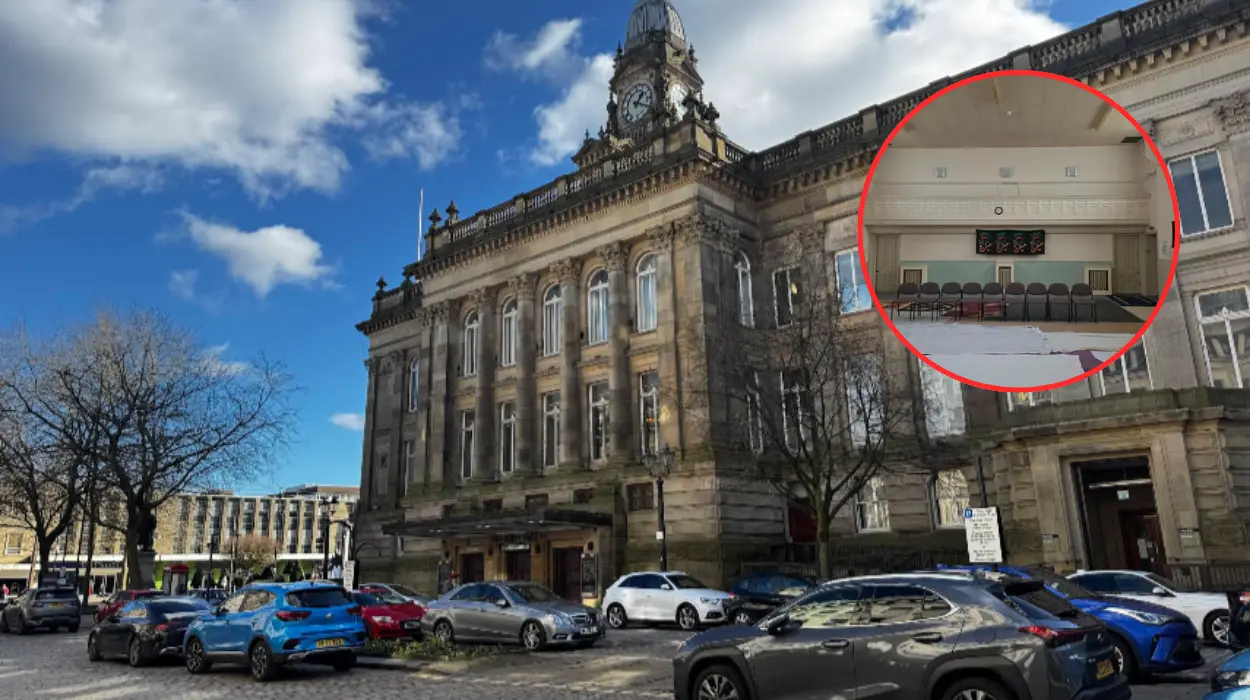
Key points
- A retrospective planning application has been submitted to Bolton Council to convert the Grade II listed Chorley Old Road Methodist Hall and Sunday School into a Shia Muslim community centre and prayer room.
- The building, located on Chorley Old Road and dating to 1892, currently forms part of a wider Methodist complex protected as a listed structure.
- The application was submitted on April 9, 2026, by the charity Qasr‑e‑Sajjad AS, which already uses the site as a community centre and madrassah.
- The charity has operated at the site as a community centre and madrassah since November 4, 2024, meaning the change of use predates the formal planning submission.
- Bolton Council’s planning documents classify the proposal as a retrospective “change of use” from previous uses (including nursery‑type functions) to a community centre and madrassah with an internal prayer room within the Grade II building.
What is changing at this historic Bolton building?
Bolton (Bolton Today) April 16, 2026 – Chorley Old Road Methodist Hall and Sunday School / Qasr‑e‑Sajjad AS – April 9, 2026 – A retrospective planning application has been lodged with Bolton Council to convert the Grade II listed Chorley Old Road Methodist Hall and Sunday School into a Shia Muslim community centre and prayer room, with the building already operating in that role since November 2024.
As reported by planning‑updates outlets covering Bolton, the submission on April 9, 2026, seeks formal approval for a change of use from earlier arrangements (including nursery‑style use) to “community centre and madrassah with an internal prayer room” inside the Grade II listed structure at Chorley Old Road. The application references the site as a Grade II building, a designation recorded in Bolton Council’s listed‑buildings list and confirmed on the Historic England database for the Chorley Old Road Methodist Church and Hall complex.
The proposal is described purely as a change of use, with no major structural demolition or rebuild indicated in the headings of the current application, though internal fit‑outs to accommodate prayer and teaching spaces are implied. Bolton’s planning portal entry notes that the case is being treated as a retrospective consent, meaning the use as a community centre and madrassah was already underway when the formal application was filed.
Who is behind the application, and what do they say?
The application is being advanced by the charity Qasr‑e‑Sajjad AS, which is registered with the Charity Commission for England and Wales. The charity’s public filing states its purpose as advancing the Islamic faith in Bolton and the surrounding area “for the public benefit” and promoting knowledge, mutual understanding, and respect of different religious beliefs within the Shia community of Bolton and Manchester.
According to the same filing, the charity aims to provide “a platform for the Shia community to mainly but not exclusively provide a place of worship, religious education and cultural activities,” which aligns with the proposed community‑centre and madrassah‑plus‑prayer‑room function described in the retrospective application.
Details on the charity’s publicly accessible social‑media pages indicate that it operates under the name “Imam Bargah Qasr‑e‑Sajjad AS” in Bolton, and posts information about religious programmes, Quranic and Ahl al‑Bayt‑related teachings, and community events. Local coverage carried by Bolton‑area news outlets notes that the organisation has been running the site as a community centre and madrassah since November 4, 2024, meaning the practical use predates the April 2026 planning submission by well over a year.
How does the listed‑building status affect the plans?
The Chorley Old Road Methodist Church and Hall complex, including the 1892 Sunday School (now the hall), is recorded on the national heritage list as a Grade II listed building, which means it is recognised as of special architectural or historic interest and any significant alterations must comply with conservation‑policy requirements.
In its local list of Bolton’s listed buildings, Bolton Council itself identifies “Chorley Old Road Methodist Church and Hall” as Grade II, confirming that the hall and church sit within a protected historic environment. Historic England’s entry notes that the Sunday School element dates from 1892 and the church from 1902, both designed by JC Topping and built in brick with stone dressings, underscoring the building’s late‑Victorian and Edwardian character.
The current retrospective application, however, is framed as a change of use rather than a large‑scale refurbishment or structural alteration, which typically triggers a lower level of scrutiny compared with proposals involving major external works or demolition. Bolton‑area planning‑update coverage describes the proposal as seeking retrospective permission for shifting from a former nursery‑type use to a community centre and madrassah with an internal prayer room, stressing that the protection of the Grade II fabric remains a background consideration for the council’s officers when assessing the application.
What do the planning documents and local reports say?
A planning‑update piece summarising the latest applications validated by Bolton Council indicates that a retrospective application has been lodged for the Chorley Old Road site at reference number 00660/26, seeking to change the use from a nursery to a community centre and madrassah with an internal prayer room within a Grade II listed structure.
The same report notes that the proposal is being treated as retrospective consent, acknowledging that the new use has already commenced, and it is being assessed alongside other planning applications in the area. The Grade II notation in the planning‑update text appears to be a typographical or copy‑paste error, since both Historic England and Bolton Council’s own listed‑buildings list consistently classify the Chorley Old Road Methodist Church and Hall as Grade II, not Grade II.
In parallel, another short‑listed retrospective entry for a nearby property on the same road (to change use from nursery to community centre and madrassah) is also flagged in the same bulletin, suggesting that Bolton planners are processing several faith‑related community‑centre conversions in the Chorley‑Old‑Road corridor.
Background of the particular development
The Chorley Old Road Methodist Church and Hall complex evolved from a late‑19th century Wesleyan congregation in Bolton, with the Sunday School building dated 1892 and the main church added in 1902. Methodist‑movement histories for the area note that the site was part of a wider network of Wesleyan chapels serving expanding industrial‑era communities in Lancashire.
Over time, parts of the complex have shifted from active chapel use to other community‑oriented functions, including educational and youth‑work uses, before the current move toward a Shia‑Muslim community‑centre and madrassah model. The charity Qasr‑e‑Sajjad AS has built its local presence by providing religious education, prayer facilities, and community events, which it now seeks to regularise through the April 9, 2026 retrospective application.
Bolton’s listed‑buildings list and the national heritage register together frame the Chorley Old Road Methodist Hall and Sunday School as a protected historic asset, even as its internal use is being adapted to meet contemporary community needs.
How this development may affect the particular audience
For Bolton residents, the retrospective application raises questions about the future use of a prominent historic building in the Chorley Old Road area, particularly how its shift from a nursery‑style or general‑hall use to a faith‑based community centre and madrassah will affect noise, traffic, parking, and community access patterns. Planning‑update outlets note that such retrospective approvals are common where communities wish to formalise existing uses without immediate disruption, but local opinions may differ depending on how the facility’s events and services are operated.
For members of the Shia Muslim community in Bolton, the prospect of secured planning consent could provide greater long‑term stability for their religious education, prayer gatherings, and cultural activities, especially as the charity’s stated objectives already emphasise community‑benefit and interfaith understanding. Confirmation of the application outcome would allow Qasr‑e‑Sajjad AS to plan capital or internal‑fitting projects with more certainty, within the constraints of the Grade II listing.
For planning‑policy and heritage‑management professionals, the case illustrates how historic nonconformist churches and halls are being repurposed for minority‑faith and community‑centre uses, balancing conservation requirements with evolving local‑need arguments. Bolton Council’s decision to entertain and assess a retrospective change‑of‑use application for a Grade II building, without first requiring a new full‑scale development scheme, may influence how similar adaptations are handled elsewhere in the borough.