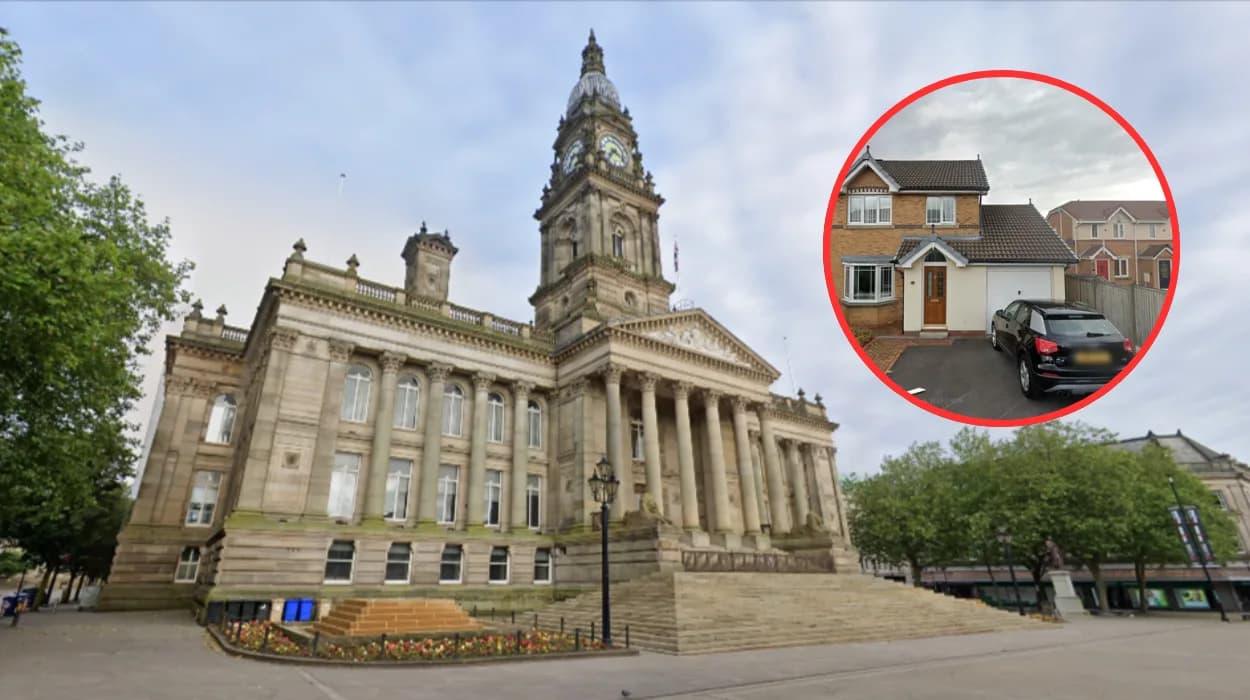
Key Points
- Planning Approval Granted: Bolton Council has officially approved a domestic extension plan for a residential property on Newstead Drive, Over Hulton, despite a clear departure from the local authority’s standard statutory framework.
- Failure to Meet Standards: The approved residential development explicitly fails to comply with the council's strict maximum parking policy guidelines, prompting localized municipal scrutiny.
- Under-Provision of Spaces: Under the borough’s regulatory maximum parking allocation framework, the extended residential property is mandated to provide three off-street parking bays; however, the final design accommodates only two.
- The Principle of Maximisation: Highways and planning authorities ultimately sanctioned the short-fall, clarifying that "maximum parking standards" function legally as a restrictive ceiling to prevent over-provision rather than an unyielding statutory minimum requirement.
- Lack of Neighbour Objections: The local planning authority confirmed that the dynamic consultation period elapsed without drawing formal complaints, objections, or structural representations from neighbouring residents on Newstead Drive.
- Policy Compliance Maintained: Planning case officers fundamentally determined that the architectural expansion remains entirely compliant with the core tenets of the overarching Bolton Core Strategy and the localized House Extensions Supplementary Planning Document (SPD).
Bolton (Bolton Today) June 12, 2026 - Bolton Council’s planning department has formally sanctioned a comprehensive home extension project on Newstead Drive in Over Hulton, resolving a municipal dilemma by granting approval despite the application directly contradicting the local authority's established maximum parking guidelines. The decision, which permits a residential layout that falls short of standard domestic vehicle allocations, emphasizes a crucial legal distinction within Greater Manchester's planning frameworks regarding how regulatory parking metrics are applied to residential extensions. Local planning officers concluded that while the development fails to fulfill the exact numerical quotas outlined in the borough’s developmental policies, it does not pose a severe threat to local highway safety or ambient street capacity.
The administrative determination follows a rigorous technical appraisal by municipal planning authorities who assessed the physical limitations of the site against the growing demand for residential expansions within the suburban enclave. According to official town hall documentation, the property’s post-extension layout results in a net deficit of one mandated off-street parking bay, a reality that typically triggers pushback from localized highways departments. However, by interpreting the council's parking rules as protective maximum barriers rather than rigid minimum prerequisites, decision-makers have established a clear administrative precedent for ongoing domestic developments across the Bolton borough.
What Are the Spatial Details of the Approved Newstead Drive Extension?
As documented by regional reporter Isobel Forbes of The Bolton News, the development centered around a detached residential dwelling situated on Newstead Drive, a predominantly suburban sector within the Over Hulton ward. The homeowner’s proposal sought formal permission to significantly alter the structural footprint of the property to accommodate expanding domestic requirements. The technical parameters scrutinized by the local planning authority examined how the resulting multi-bedroom layout would alter the structural footprint and demographic load of the immediate street.
In the structural reports compiled by municipal case officers, the overarching design was deemed to be architecturally harmonious with the existing street scene. However, the true focal point of the council’s evaluation shifted from structural massing and visual amenity to the spatial logistics of the property's curtilage. Specifically, the expansion altered the internal configuration of the house to a degree that legally triggered an escalated tier within the council’s transportation and highway assessment matrices.
Why Did the Domestic Proposal Fail to Match Bolton's Parking Framework?
As reported by Isobel Forbes of The Bolton News, the core issue within the planning application stemmed from a mathematically verifiable deficit in the property's off-street vehicle provisions relative to its updated size. Under the strict terms outlined in the Bolton Council maximum parking standards annex, a residential property that scales up to its newly proposed size and bedroom count is systematically expected to provide a maximum of three functional, independent off-street parking spaces within its boundaries.
When highways surveyors and planning case officers cross-referenced the architectural blue-prints with the physical constraints of the Newstead Drive plot, they verified that the final layout could physically and legally accommodate only two dedicated vehicular spaces. This deficit meant the application formally moved forward with a structural shortfall of exactly one parking bay, directly violating the numerical baseline figures typically expected for domestic densification projects within the urban zone.
Explore More Bolton Council News
£17m Wingates Plan Approved Creating 6,900 Jobs: Westhoughton 2026
Suspicious Package Left at Bolton Mosque Triggers Police Alert (Bolton, 2026)
How Did Planning Officers Justify Approving the Parking Deficit?
In explaining the legal rationale behind the surprising approval, Isobel Forbes of The Bolton News highlighted that planning officers chose to strictly apply the literal, legal definition of the council's transport policies. In the final evaluation report submitted to the planning committee, municipal officers explicitly noted that the council’s guidelines are worded specifically as maximum parking standards rather than mandatory minimum parking standards.
The report text clarifies that these metrics were originally designed as an environmental ceiling to prevent the excessive over-provision of concrete driveways and to control urban vehicle density, rather than an unyielding floor that applicants must reach. Case officers stated that because the policy functions as a maximum restrictive limit, a development that provides fewer spaces than the ceiling number cannot automatically be rejected on policy grounds alone, provided the under-provision does not severely harm the immediate neighbourhood.
What Impact Will the Parking Shortfall Have on Local Highway Safety?
Addressing the critical issue of highway safety and potential vehicular congestion along the suburban corridor, Isobel Forbes of The Bolton News detailed that the local authority conducted a comprehensive assessment of the surrounding road infrastructure before issuing its verdict. The council’s highways department reviewed whether the loss of one potential off-street parking bay would force vehicles onto the public tarmac, thereby causing visibility hazards or blocking transit routes.
The administrative findings concluded that the shortfall of a single parking space on Newstead Drive would not result in a detrimental impact on the safety or operational efficiency of the local highway network. Planning experts noted that the street possessed sufficient ambient capacity and that a two-space driveway remains entirely adequate for a standard modern household, meaning the project did not violate Section 109 of the National Planning Policy Framework (NPPF), which requires highway impacts to be "severe" before a development can be blocked.
Did the Newstead Drive Community Object to the Development Plans?
According to the public consultation data published by The Bolton News via reporter Isobel Forbes, the application progressed through its statutory notice period with a total absence of localized friction. In many suburban planning instances, proposals that carry a risk of increasing on-street parking face immediate and sustained resistance from nearby residents concerned about property values and road access.
However, the official record confirms that during the designated public consultation window, zero formal objections, letters of protest, or adversarial representations were submitted to Bolton Council by any residents living on Newstead Drive or the surrounding Over Hulton streets. This lack of community opposition provided planning officers with a smooth administrative path to assess the application purely on its technical and structural merits, free from local political complications or community disputes.
How Does the Extension Align with the Broader Bolton Core Strategy?
In the final planning balance executed by the local authority, Isobel Forbes of The Bolton News reported that the home extension was found to be fully compliant with the core spatial policies governing the borough. Planning officers measured the application against the wide-ranging requirements of the Bolton Core Strategy—specifically policies P5 and CG3—which mandate that all new developments must respect local distinctiveness, protect residential amenities, and preserve high standards of design.
Furthermore, the architectural details were checked against the House Extensions Supplementary Planning Document (SPD). The evaluation concluded that the physical scale, height, and materials of the extension remained thoroughly subordinate to the main house and did not cause unacceptable overshadowing, loss of privacy, or overlooking for immediate neighbours. By meeting all these critical aesthetic and environmental criteria, the project proved that its overall architectural value far outweighed the minor technical infraction of its parking shortfall.