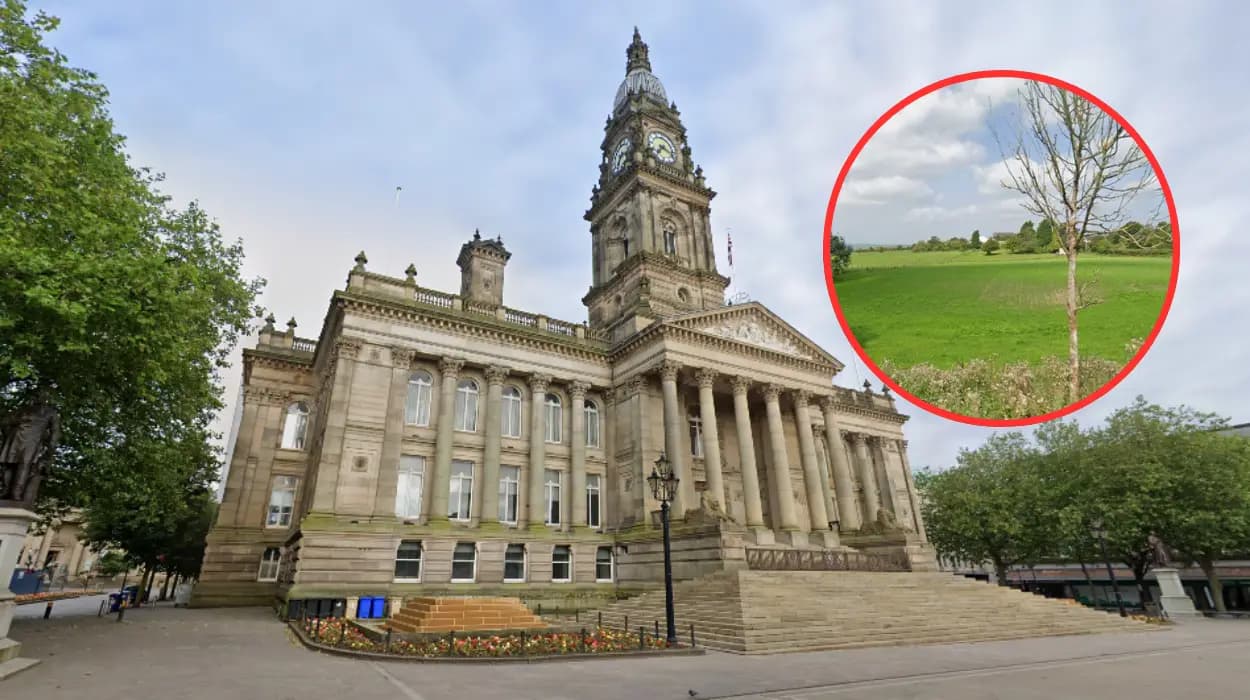
Key Points:
- Green Belt Development Bid: A contentious proposal seeking 'permission in principle' to erect two new residential dwellings on protected land off Little Scotland in Blackrod is heading to a critical vote by local authorities.
- Council Assessment Points to 'Grey Belt': An official planning report compiled by Bolton Council indicates that while the plot sits within the green belt, it satisfies the criteria for 'grey belt' classification as previously developed land.
- Significant Public Backing Against Plans: Local opposition is mounting, with 35 formal letters of objection submitted from 30 separate households raising alarms over environmental, structural, and aesthetic degradation.
- Political and Local Governance Intervention: Councillor Peter Wright of Horwich South and Blackrod requested the application be escalated to the planning committee, citing narrow roadways and green belt erosion, backed by a formal objection from Blackrod Town Council.
- Officers Recommend Approval: Despite severe community pushback, the official planning report recommends the committee grant permission, arguing 'very special circumstances' justify the green belt development.
Blackrod (Bolton Today) June 18, 2026 — A controversial planning application seeking permission in principle to construct two new residential houses on protected green belt land off Little Scotland in Blackrod is set to be decided today during a pivotal vote by Bolton Council’s planning committee. The application has triggered significant local friction, balancing the modern architectural definitions of "grey belt" land against fierce community resistance aimed at protecting the visual boundaries between rural settlements. Despite a wave of formal public complaints and explicit objections from localized town councils, the borough's overarching planning authority has officially recommended that the project be granted conditional approval, escalating tensions ahead of the late-afternoon town hall meeting.
What Is the Core of the Blackrod Green Belt Housing Proposal?
The legal mechanism being utilized by the applicant is a bid for "permission in principle," a planning pathway in the United Kingdom designed to separate the fundamental suitability of a site for housing development from the granular architectural details. The specific geography of the application concerns a plot of land situated directly off Little Scotland, a residential and semi-rural artery within the settlement of Blackrod.
As reported by Chief Reporter Joe Harrigan of The Bolton News, the proposal strictly requests the initial approval to construct two houses on the site. Under this tier of planning permission, factors such as the exact design of the buildings, internal layouts, and specific landscaping arrangements are deferred to a secondary stage known as "technical details consent." The current vote focuses exclusively on whether the location itself is appropriate for a low-density residential insertion, given its placement within a historically protected buffer zone.
Why Is the Land Classified as Both Green Belt and Grey Belt?
The primary point of administrative contention stems from a dual interpretation of the site's environmental status. According to a formal planning assessment prepared by municipal officers and reviewed by The Bolton News journalist Joe Harrigan, the land sits within the official green belt boundaries assigned to check the unrestricted sprawl of large built-up areas. However, the exact parcel has been identified as meeting the criteria for "grey belt" classification—a planning designation that encompasses previously developed sections, brownfield locations, or underutilized infill spaces within the broader green belt.
The official documentation balanced these two definitions by analyzing the geographical role the site plays within the regional ecosystem. As detailed by Joe Harrigan of The Bolton News, the borough's official report noted:
"The Green Belt assessment states that the Green Belt parcel in which the application site is located makes a strong contribution to this purpose, as the parcel plays an essential role in preventing the merging or erosion of the visual and physical gap between settlements of Blackrod and Horwich in particular as well as Aspull and Westhoughton."
Furthermore, the municipal evaluation emphasized that the broader green belt parcel serves a macro-regional purpose by preventing the physical amalgamation of Blackrod with Adlington to the absolute north. However, the independent planning officers distinguished the specific application site from the wider protected area, explaining in the report that the individual plot represents only a minute, localized gap between the distinct communities of Blackrod and Aspull, rather than a catastrophic erosion of the structural buffer zone.
How Have Local Residents and Households Responded to the Project?
The publication of the planning application has generated widespread public anxiety, resulting in a coordinated campaign of resistance from those living within the immediate vicinity of Little Scotland. Local resistance has been formally codified into 35 independent letters of objection, originating from 30 distinct households across the immediate neighborhood.
As compiled in the summary reports published by Joe Harrigan of The Bolton News, the objections raised by the community are multi-faceted, focusing heavily on environmental degradation, structural strain on localized public services, and architectural incongruity. The principal concerns documented by the planning department from the residents include:
1. Biodiversity and Ecological Destruction
Objectors argued that the unbuilt plot provides an active habitat for local flora and fauna. The introduction of concrete foundations, domestic boundaries, and vehicles would permanently disrupt localized wildlife corridors.
2. Infrastructure and Traffic Strain
The physical constraints of the existing highway network on Little Scotland were highlighted as a major hazard. Residents argued that the local utilities, road networks, and drainage systems are ill-equipped to absorb additional residential infrastructure.
3. Loss of Protected Green Spaces
A broader philosophical objection was maintained regarding the incremental erosion of the green belt. Households expressed concern that allowing two homes would establish a dangerous legal precedent, making it easier for larger commercial developers to secure future permissions nearby.
4. Character Alteration
The letters of opposition explicitly stated that the design framework associated with modern detached housing units would be completely out of keeping with the historic, rural, and architectural character of the existing Blackrod settlement pattern.
Explore More Blackrod News
Historic Ridgway Arms Pub Thrives After Major Renovation, Blackrod 2026
Person Found Dead at Blackrod Railway Station: Bolton 2026
What Arguments Have Elected Officials and Town Councils Put Forward?
The public outcry has found direct political support from local representatives who have formally intervened to halt the administrative fast-tracking of the application. Councillor Peter Wright, representing the Horwich South and Blackrod ward, acted on behalf of his constituents by issuing a formal directive to ensure the application was stripped of delegated officer approval and brought before an open, democratic forum.
As recorded by Joe Harrigan of The Bolton News, Councillor Peter Wright requested that the bid be heard directly by Bolton Council's full planning committee, specifically raising serious concerns regarding the inappropriate use of protected green belt land. In addition to the environmental concerns, Councillor Peter Wright warned authorities that the introduction of residential entry and exit points would cause significant traffic issues on what is already an exceptionally narrow and structurally constrained road layout.
Simultaneously, localized grassroots governance has aligned against the development. Blackrod Town Council issued an explicit, institutional objection to the borough authorities. In their formal statement, the town council clarified that the land cannot be considered discarded or vacant space, highlighting that the plot has historically functioned as a practical agricultural asset, having been actively used for the grazing of horses.
How Does the Council Justify Recommending Approval of the Scheme?
Despite the combined opposition of the neighborhood, the ward councillor, and the local town council, professional planning officers at Bolton Council have maintained a contrarian stance, advising elected members of the committee to approve the permission in principle.
The legal threshold for building within these zones is exceptionally high under national planning frameworks. As reported by Joe Harrigan of The Bolton News, the official council documentation explicitly outlined the statutory boundaries governing the decision:
"Inappropriate development is, by definition, harmful to the green belt and should not be approved except in very special circumstances."
To legalise the recommendation for approval, the planning report asserted that the application satisfies this stringent threshold. The document concluded:
"'Very special circumstances' will not exist unless the potential harm to the green belt by reason of inappropriateness, and any other harm resulting from the proposal, is clearly outweighed by other considerations."
The technical officers have posited that the specific context of this plot—namely its status as a small, previously developed "grey belt" infill space that does not significantly compromise the structural gap between Blackrod and Aspull—constitutes the required "very special circumstances." By prioritizing the borough's broader housing delivery targets and the classification of the plot as previously developed land, the professional planning staff concluded that the benefits of the minor housing contribution outweigh the localized harm identified by objectors.
What Are the Next Legal and Administrative Steps for the Development?
The final determination of the application rests entirely with the elected members of Bolton Council’s planning committee, who are scheduled to convene at the town hall on the evening of Thursday, June 18. The committee possesses the statutory authority to either endorse their officers’ recommendations and grant the permission in principle, or reject the findings and refuse the application based on the objections raised by Councillor Peter Wright and the public.
If the committee votes to grant permission in principle, the applicant will successfully secure the legal right to build residential dwellings on the site. However, construction cannot commence immediately. The developer would still be legally required to submit a subsequent, highly detailed planning application for "technical details consent." This secondary stage would subject the project to further public scrutiny regarding the exact scale, height, architectural materials, access points, and ecological mitigation strategies of the proposed two houses. Conversely, a refusal by the committee would leave the applicant with the option to either abandon the project or lodge a formal appeal with the national Planning Inspectorate.