Key Points
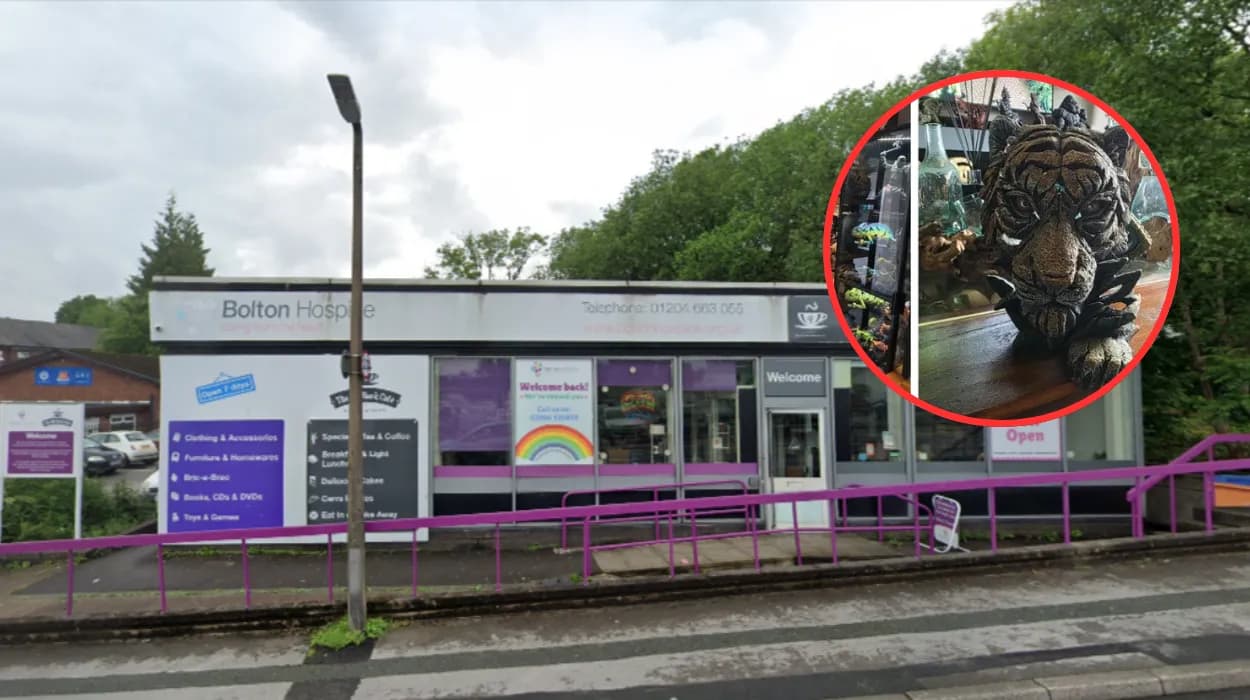
- Record-Breaking Sale: A rare tiger sculpture has been sold for a record-breaking £2,500 via Bolton Hospice’s digital retail operations, marking the highest-value transaction ever achieved through the charity's eBay account.
- Astley Bridge Discovery: The limited-edition piece was discovered entirely by chance within a bag of miscellaneous donations by a volunteer named Catherine at the Bolton Hospice charity shop located in Astley Bridge.
- Sumatran Tiger Masterpiece: The item was identified as a highly coveted, retired Matt Buckley "Edge Sculptures" Sumatran Tiger, which is one of only 250 ever manufactured.
- Avid Collector's Triumph: The winning bid was secured by Ben Wood, an intensive collector residing in Kent, who revealed that this specific model had occupied a prominent position on his personal "wanted list" for several years.
- Rapidly Expanding Collection: Mr Wood, whose interest in Matt Buckley’s artistry began a mere 18 months prior following a housewarming purchase, has amassed a vast collection encompassing nearly 200 distinct Edge Sculptures.
- Crucial Funding for Hospice Care: The £2,500 proceeds from the auction will directly fund the specialist care provided by Bolton Hospice, a cause deeply personal to Mr Wood, who recently lost a friend in Bolton to cancer.
- Advocacy for Digital Research: The historic transaction has prompted calls from collectors and charity officials for independent thrift stores to systematically research unusual donations online to maximise fundraising revenue.
Astley Bridge (Bolton Today) June 17, 2026 — A rare and highly sought-after tiger sculpture discovered inside a standard bag of charity donations has sold for a record-breaking £2,500 on eBay, marking the single highest-value digital sale in the history of Bolton Hospice. The limited-edition artwork, which had sat on an avid collector's personal wishlist for several years, was pulled from obscurity at the hospice’s Astley Bridge retail outlet before igniting an intense online bidding war among nationwide art enthusiasts.
As reported by Isobel Forbes, a reporter for The Bolton News, the item was formally identified as a rare Sumatran Tiger piece designed by renowned artist Matt Buckley for Edge Sculptures. The sculpture is one of only 250 units ever produced globally, making it an exceptionally scarce commodity within the contemporary art and collecting communities. The successful online auction concluded with a winning bid from Ben Wood, an art collector residing in Kent, who immediately recognised the immense structural significance and market rarity of the object when it triggered an automated keyword notification on his online auction alerts.
The surprising discovery occurred during routine processing inside the backroom of the charity shop, where a volunteer named Catherine was sorting through bags of items left by anonymous local donors. Recognising that the heavy, intricately designed animal bust possessed physical characteristics and markings that set it apart from ordinary household bric-a-brac, Catherine immediately flag-routed the sculpture to the charity's central digital commerce division. The specialised e-commerce team initiated formal identification protocols, catalogued its origin as a retired Matt Buckley masterwork, and uploaded the item to the global eBay platform, establishing the framework for the historic charitable transaction.
Who Is the Collector Behind the £2,500 Winning Bid?
The successful acquisition of the Sumatran Tiger sculpture was executed by Ben Wood, a dedicated art collector based in Kent, located hundreds of miles away from the Greater Manchester shop where the item was unearthed. As detailed in the comprehensive reporting by Isobel Forbes of The Bolton News, Mr Wood’s engagement with this particular style of art is a relatively recent phenomenon, having commenced roughly 18 months ago. His introductory exposure to the brand occurred when he purchased a standard Edge Sculpture to serve as a practical housewarming gift for a acquaintance.
However, what began as an isolated purchase quickly evolved into a profound aesthetic fascination during a subsequent domestic journey. A geographical visit to the historic city of York served as a major catalyst, sparking a deep-seated curiosity regarding the unique production methods, structural forms, and creative design philosophies underpinning the work of primary sculptor Matt Buckley.
As recorded by The Bolton News reporter Isobel Forbes, Mr Wood stated that:
"As I researched further, I became increasingly impressed by the unique style and artistry of Matt Buckley."
This initial artistic captivation swiftly translated into a dedicated acquisition strategy. In the statement provided to the publication, Mr Wood further clarified the trajectory of his hobby, explaining:
"Over the following months, I began acquiring pieces from various retailers, and before long my collection had grown to almost 200 pieces."
Why Was the Matt Buckley Sumatran Tiger on a Wanted List for Years?
The acquisition represented far more than a simple numerical addition to an expansive domestic gallery; it marked the culmination of a multi-year hunt for a rare piece of contemporary design. According to the direct journalistic account published by Isobel Forbes of The Bolton News, the specific Sumatran Tiger variant had occupied a high-priority slot on Mr Wood's target list long before he even reached his current collection size.
The extreme scarcity of the object is dictated entirely by its original manufacturing parameters. Because the manufacturer strictly capped the global production run at exactly 250 individual pieces before officially retiring the mould, opportunities to buy the tiger on the secondary market are incredibly rare.
In an account of his multi-year search detailed by reporter Isobel Forbes, Mr Wood noted that the scarcity of intact models had thwarted his prior attempts to purchase one. As published in The Bolton News, Mr Wood remarked:
"Over the years, I had only ever seen one example of the Sumatran Tiger come up for sale, and unfortunately that piece was badly damaged."
Faced with structural degradation on the only available secondary market specimen, the collector made a tactical decision to wait for a pristine version. In his explicit statement to the media title, Mr Wood stated:
"As a result, I chose not to pursue it, and it remained firmly on my wanted list."
Explore More Astley Bridge News
Imam House Firebomb: Suspect Arrested for Arson in Bolton 2026
Overgrown Astley Bridge Cemetery Sparks Fury at Bolton Council: Astley Bridge 2026
How Did the Online Auction Unfold Once the Sculpture Was Listed?
When the automated digital alerts established by Mr Wood picked up the keyword match for the Matt Buckley Sumatran Tiger via the Bolton Hospice eBay storefront, the collector immediately anticipated an incredibly aggressive digital marketplace reception from rival collectors. The inherent rarity of a retired, limited-run piece meant that the auction was bound to attract national attention from the specialised collecting community.
In the analytical commentary provided to reporter Isobel Forbes of The Bolton News, Mr Wood detailed his real-time expectations regarding the valuation of the asset, highlighting the widespread awareness of its scarcity. As stated by Mr Wood:
"Being a limited edition of just 250 pieces makes it relatively rare. From conversations within the collecting community, I suspected bidding could easily reach £2,000."
The digital auction verified these internal marketplace assessments, drawing extensive digital traffic and competitive bids that drove the final valuation up to the record-breaking figure of £2,500. This final valuation surpassed previous digital sales benchmarks recorded by the hospice’s specialized e-commerce branch. A key factor in the transaction's success was the exceptional logistical execution of the hospice's dispatch team, who managed to safely transport the heavy, fragile sculpture across the country. In comments published by The Bolton News, Mr Wood praised the hospice’s attention to detail, stating:
"Through the careful packaging of the item it did make it all the way to Kent in one piece, which was my biggest worry. But now it takes centre place in my home."
What Personal Connection Driven the Bidding Beyond Financial Value?
While the acquisition satisfied an intense artistic interest, the narrative published by Isobel Forbes reveals that the transaction carried a profound personal weight for Mr Wood, transcending the objective market value of the sculpture. The ultimate destination of the financial funds injected an element of emotional significance into the high-stakes online auction.
Mr Wood shared that he possessed a direct, painful link to the geographical area served by the charity, having recently witnessed the devastating impact of terminal illness within his immediate social circle. This personal grief directly influenced his perspective on the final financial cost of the auction.
As detailed by The Bolton News, Mr Wood expressed immense satisfaction that his financial expenditure would directly fund end-of-life care, stating:
"It was such a relief that this money is going to a worthy cause that always needs injections of cash for the work they do."
He explicitly connected his record bid to the memory of a late friend, stating to reporter Isobel Forbes:
"I recently lost a friend in Bolton to cancer and hope that through the amazing work hospices do, little things like this helped their final days."
How Was the Rare Sculpture Initially Discovered in Astley Bridge?
The chain of events that culminated in the record-breaking £2,500 transaction did not begin in a high-end auction house, but rather in the humble sorting room of a local charity shop in Astley Bridge. The entire financial windfall was made possible by the sharp eye and instincts of a single volunteer worker.
As reported in the original text by Isobel Forbes of The Bolton News, a retail volunteer named Catherine was systematically processing a batch of standard donations that had been dropped off by local residents. Amid the routine sorting of clothes and typical household items, Catherine discovered the substantial animal sculpture.
Rather than processing the item for the local shop floor—where it likely would have been priced for a nominal fee—Catherine identified the structural traits of the object as indicative of potential specialty value. Acting on her intuition, she diverted the item away from the standard retail racks and forwarded it directly to the hospice's dedicated e-commerce division. The specialized online team conducted extensive digital research, confirmed its status as a retired Matt Buckley Edge piece, and strategically listed it on eBay to ensure maximum national visibility.
Why Should Independent Charity Shops Research Unusual Donations?
The extraordinary financial outcome of the Bolton Hospice auction serves as a compelling case study for modern charitable retail operations. In an era where charity shops face rising operational costs and shifting donor habits, the utilization of digital marketplaces and research protocols can unlock hidden streams of vital funding.
The success of the sale highlights a broader trend: the transformation of traditional thrift stores into sophisticated, research-driven operations capable of identifying and capitalizing on high-value collector's items. Capturing the full financial potential of these unique donations requires a systematic approach to processing incoming goods.
As reported by Isobel Forbes of The Bolton News, Mr Wood strongly emphasized that his experience should serve as an encouraging blueprint for other charitable organizations across the United Kingdom. In his statement to the media title, Mr Wood explained:
"I am very pleased to see that charity shops are becoming increasingly aware of the value of some of the items donated to them and are taking the time to research them properly."
The collector concluded his statement by issuing a direct appeal to the wider non-profit retail sector, advocating for a widespread shift toward digital research to maximize fundraising efficiency. As published by The Bolton News, Mr Wood asserted:
"I would encourage independent charity shops to do the same wherever possible. A little extra research can make a significant difference, helping to maximise sale values and ultimately ensuring that charities receive the greatest possible benefit from the donations they receive."