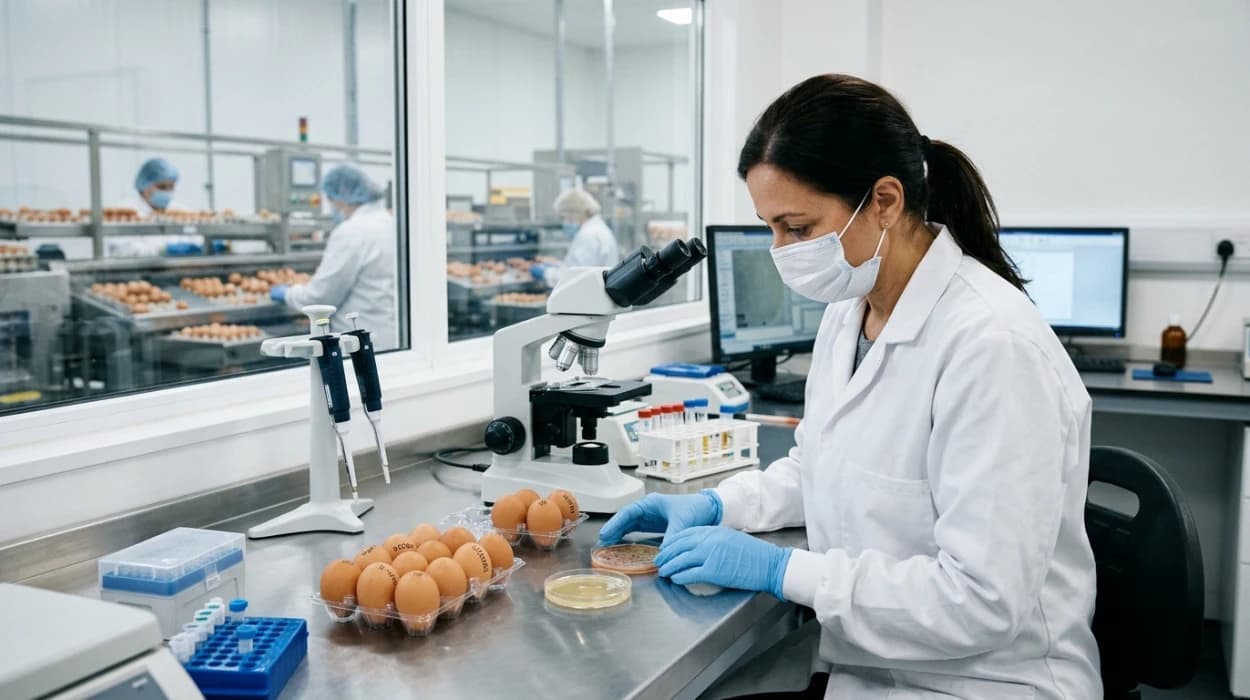
Salmonella contamination in hen eggs represents a critical public health challenge that requires stringent agricultural controls, regulatory oversight, and safe domestic food handling to prevent severe gastrointestinal illness.
The transmission of Salmonella bacteria through poultry products remains one of the primary vectors for foodborne disease across the United Kingdom. When an outbreak occurs, local communities—including residents, food catering establishments, and care facilities throughout Bolton—face immediate health risks and operational disruptions. Ensuring food security requires a comprehensive understanding of how the pathogen operates, how agricultural standards mitigate spread, and how consumers can protect their households. Bolton Today presents an authoritative examination of the biological mechanisms, regulatory framework, historical context, and domestic safety protocols governing egg-related Salmonella outbreaks.
What Is Salmonella and How Does It Contaminate Hen Eggs?
Salmonella is a genus of rod-shaped, Gram-negative enterobacteria that infects the gastrointestinal tracts of animals and humans, contaminating hen eggs through either direct transovarian transmission before shell formation or external fecal contamination during egg laying.
Salmonella species belong to the family Enterobacteriaceae. The organisms are facultative anaerobes measuring between 0.7 and 1.5 micrometers in diameter, utilizing flagella for motility. While there are over 2,500 distinct serovars of Salmonella, two specific strains account for the vast majority of egg-associated human infections: Salmonella enterica serovar Enteritidis (Salmonella Enteritidis) and Salmonella enterica serovar Typhimurium (Salmonella Typhimurium).
The contamination of a hen egg occurs through two distinct biological pathways:
Vertical Transmission (Transovarian)
Vertical contamination represents internal infection. Salmonella Enteritidis colonizes the reproductive tissues of the laying hen, including the ovary and oviduct. As the egg develops, the bacterium incorporates directly into the vitelline membrane surrounding the yolk or into the surrounding albumen (egg white) prior to the deposition of the calcium carbonate shell. Consequently, the egg is laid with pathogens trapped inside an intact shell structure.
Horizontal Transmission (Trans-shell)
Horizontal contamination represents external infection. The exterior shell of a hen egg contains between 7,000 and 17,000 microscopic pores designed for respiratory gas exchange. When an egg passes through the cloaca during laying or comes into contact with contaminated feces, soil, or nesting materials, bacteria adhere to the shell exterior. Moisture, temperature differentials, and damage to the protective outer cuticle enable the bacteria to migrate inward through the shell pores, colonizing the inner membranes and albumen.
How Does Salmonella Infection Affect the Human Body?
Salmonella infection causes salmonellosis, an acute gastroenteritis characterized by mucosal inflammation, bacterial toxin release, and gastrointestinal distress that can escalate to severe systemic infection in vulnerable patient populations.
Upon ingestion of contaminated, raw, or undercooked eggs, Salmonella bacteria survive the acidic environment of the human stomach and pass into the small and large intestines. The bacteria utilize specialized surface proteins to adhere to epithelial cells lining the intestinal wall, specifically targeting microfold cells (M cells) within Peyer's patches.
Once attached, the bacteria deploy a Type III Secretion System (T3SS), acting as a microscopic molecular syringe to inject effector proteins directly into host cells. These proteins force the host cell membrane to ruffle and engulf the bacterium within a membrane-bound vacuole. Inside the cell, Salmonella triggers a powerful immune response, leading to the recruitment of polymorphonuclear leukocytes (neutrophils) and the release of pro-inflammatory cytokines such as Interleukin-8 (IL-8).
This intense inflammatory cascade disrupts normal fluid absorption in the intestines and stimulates active fluid secretion, causing clinical symptoms:
- Incubation Period: Symptoms typically manifest 6 to 72 hours post-ingestion (median 12 to 36 hours).
- Primary Symptoms: Acute watery diarrhea, abdominal cramps, fever ranging from 38°C to 39°C (100.4°F to 102.2°F), nausea, vomiting, and headache.
- Clinical Duration: Uncomplicated gastroenteritis resolves spontaneously within 4 to 7 days in healthy adults.
- Complications: Severe dehydration, reactive arthritis (Reiter's syndrome), and invasive bacteremia. In cases of bacteremia, the bacterium breaches the intestinal mucosa, enters the bloodstream, and establishes secondary infections such as endocarditis, osteomyelitis, or meningitis.
Certain populations experience heightened clinical vulnerability. Young children under 5 years of age, adults aged 65 and older, pregnant women, and individuals taking immunosuppressive medications face significantly elevated rates of hospitalization and mortality from severe dehydration or systemic sepsis.
What Is the Historical Context of Salmonella Outbreaks in the UK?
The UK experienced a major egg-related Salmonella Enteritidis crisis in the late 1980s, which led to widespread industry reform, regulatory overhauls, and the establishment of the British Lion Quality assurance scheme.
Egg-associated Salmonella emerged as a global public health concern during the late 1970s and 1980s due to the silent spread of Salmonella Enteritidis within intensive poultry breeding flocks.
The 1988 Crisis
In December 1988, Edwina Currie, then Junior Health Minister in the UK government, publicly stated that most egg production in the country was infected with Salmonella. The announcement caused consumer confidence to collapse immediately. Egg sales dropped by 60% nationwide, leading to the destruction of millions of hens and thousands of tons of eggs.
The political and economic fallout forced Minister Currie's resignation, but subsequent scientific investigations verified that Salmonella Enteritidis Phage Type 4 (PT4) was indeed widespread throughout the national flock.
The Legislative and Agricultural Response
To restore national flock biosecurity and public trust, the UK government and poultry industry implemented aggressive legislative and agricultural protocols throughout the 1990s:
- Mandatory Flock Testing (1993): Legislative frameworks mandated routine microbiological sampling of commercial laying flocks, ordering the slaughter of infected breeding flocks.
- Vaccination Programs (1997-1998): Poultry producers introduced mass vaccination regimes using inactivated and live attenuated vaccines (Salmonella Enteritidis vaccines) for pullets destined for egg production.
- The British Lion Quality Mark (1998): British Lion Egg Processors launched an updated Code of Practice. The scheme mandated hen vaccination, full farm-to-retail traceability, independent auditing, and strict cold-chain distribution.
- EU National Control Programs (2003): European Union Directive 2003/99/EC and Regulation (EC) No 2160/2003 set standardized target reduction rates for Salmonella across all member states.
As a direct result of these measures, human cases of Salmonella Enteritidis in the UK dropped by over 80% between 1997 and 2010. By 2017, the UK Food Standards Agency (FSA) formally updated its consumer guidance, declaring that UK eggs produced under the British Lion scheme or Laid in Britain assurance scheme were safe for vulnerable populations to consume raw or runny.
How Do Regulatory Agencies Monitor and Contain Outbreaks?
Public health agencies monitor outbreaks through whole-genome sequencing of clinical isolates, epidemiological trace-back investigations, and enforced farm-level biosecurity mandates.
Disease Surveillance and Whole-Genome Sequencing (WGS)
When a patient presents to a healthcare provider in Bolton with acute gastroenteritis, a stool sample is submitted to a National Health Service (NHS) pathology laboratory. If Salmonella is isolated, the sample is forwarded to the Gastrointestinal Bacteria Reference Unit (GBRU) at the UK Health Security Agency (UKHSA).
The GBRU performs Whole-Genome Sequencing (WGS) to map the exact DNA sequence of the bacterial strain. By analyzing Single Nucleotide Polymorphisms (SNPs), epidemiologists determine whether sporadic cases share an identical genetic profile. A cluster of cases sharing a 5-SNP linkage cluster indicates a common-source outbreak from a single contaminated food product or supply chain.
Trace-Back Investigations
Epidemiologists conduct structured interviews using standardized food-frequency questionnaires to identify shared consumption patterns among affected individuals. When eggs are implicated, the FSA's National Food Crime Unit (NFCU) and local Trading Standards officers execute trace-back investigations. Authorities trace lot numbers, packing station stamps, and distributor records to isolate the specific farm or import origin.
Enforcement and Farm Intervention
Upon identifying an infected flock or processing plant, regulatory authorities trigger legal interventions under the Food Safety Act 1990 and the Zoonoses Order 1989:
- Product Recalls: The FSA issues targeted Product Recall Information Notices (PRIN) instructing retailers and consumers to destroy or return affected batches.
- Restriction of Sales: Eggs from positive-testing flocks are banned from direct fresh-grade sale to consumers. They must be diverted to industrial processing plants for pasteurization.
- Sanitation Protocols: Farms must depopulate infected houses, execute deep cleaning with authorized disinfectants, and verify negative environmental swab results before restocking.
How Does the British Lion Code of Practice Protect Consumers?
The British Lion Code of Practice is an independent egg quality assurance scheme that enforces mandatory hen vaccination, complete supply chain traceability, and stringent hygiene controls across 90% of the UK egg industry.
Due to these strict rules, the FSA explicitly states that vulnerable groups—including pregnant women, infants, and elderly residents—can safely eat raw, soft-boiled, or runny eggs, provided they carry the British Lion mark or are certified under the Laid in Britain scheme.
What Are the Risks Associated with Imported Eggs in Commercial Catering?
Imported eggs present elevated food safety risks when sourced from nations with lower biosecurity standards, different vaccination regulations, or less stringent supply-chain temperature controls.
While domestic retail supply chains in Bolton and across the UK rely almost exclusively on British Lion-marked eggs, commercial food service businesses—such as restaurants, bakeries, cafes, and wholesale caterers—sometimes purchase imported eggs or liquid egg products to lower costs.
Divergent Veterinary and Biosecurity Standards
Not all egg-exporting nations mandate vaccination of laying hens against Salmonella Enteritidis. In countries where vaccination is voluntary or absent, flock prevalence rates of Salmonella remain significantly higher. When biosecurity measures fail overseas, contaminated eggs enter international trade networks.
Breakdowns in Cold-Chain Maintenance
Transporting eggs across national borders increases transit times and introduces environmental variables. Fluctuations in ambient temperature during long-distance transit promote condensation on eggshells (sweating). Moisture degrades the protective outer cuticle of the egg, enabling surface bacteria to pass through shell pores into the interior.
Bulk Commercial Pooling Practices
Catering establishments often crack dozens of eggs into single containers to prepare large quantities of batters, sauces, or scramble mixes. If a single imported egg within a bulk pool harbors Salmonella, the entire liquid batch becomes contaminated. If this liquid egg mixture is held at room temperature or left insufficiently cooked, bacterial populations multiply exponentially, creating high-dose infection sources for consumers.
How Can Consumers and Local Businesses Prevent Salmonella Contamination?
Preventing Salmonella requires maintaining safe storage temperatures, practicing cross-contamination controls, adhering to precise cooking thresholds, and verifying product certification marks.
Preventing food poisoning in home kitchens and commercial premises across Bolton relies on five core preventive actions:
1. Purchase and Sourcing Verification
Inspect eggs thoroughly before purchase. Reject cartons containing cracked, broken, or dirty eggs, as shell damage bypasses the egg's primary physical barrier. Consumers and local businesses should verify the presence of the British Lion mark or Laid in Britain stamp on eggshells when preparing dishes with raw or lightly cooked eggs.
2. Temperature Management
Store eggs at a consistent temperature below 20°C. In domestic environments, keeping eggs inside their original carton on a middle refrigerator shelf—maintained between 4°C and 8°C—preserves moisture levels and prevents temperature fluctuations caused by opening the refrigerator door. Cold temperatures stop Salmonella bacteria from multiplying.
3. Cross-Contamination Prevention
- Do Not Wash Eggs: Washing eggs removes the natural protective cuticle coating from the shell surface, pushing surface bacteria into the interior pores.
- Hand Hygiene: Wash hands thoroughly with warm water and soap for at least 20 seconds immediately after handling raw eggs or eggshells.
- Surface Sanitization: Clean and sanitize all utensils, bowls, cutting boards, and countertops that come into contact with raw egg liquid using food-safe antibacterial sprays.
4. Thermal Destruction Controls
Salmonella is sensitive to heat. Achieving internal cooking temperatures destroys the bacterial cellular membrane:
- 70°C for 2 minutes: Reaching an internal core temperature of 70°C (158°F) for at least two minutes achieves a 5-log (99.999%) reduction in Salmonella cells.
- 75°C Instantaneous: Heating egg dishes to an instantaneous temperature of 75°C (167°F) inactivates viable bacterial cells.
When serving vulnerable individuals—such as toddlers, the elderly, or immunocompromised patients—cook eggs until both the white and yolk are firm, unless certified Lion-marked eggs or pasteurized liquid egg products are used.
5. Safe Pooling and Storage in Catering
Commercial kitchens in Bolton should restrict the practice of bulk pooling eggs. Where pooling is necessary for production, use the liquid egg mix within 2 hours if held at ambient temperature, or store it below 5°C for no more than 24 hours. Commercial operators should substitute fresh shell eggs with pasteurized liquid egg products for recipes requiring large volumes of uncooked egg preparations, such as mayonnaise, mousses, or hollandaise sauce.
Key Technical Takeaways for Public Health and Safety
- Pathogen Profile: Salmonella Enteritidis is a Gram-negative bacterium that colonizes poultry reproductive tracts, causing acute gastroenteritis in humans through infected egg products.
- Dual Infection Vectors: Eggs become contaminated internally via transovarian transmission during formation or externally via trans-shell migration through shell pores.
- Assurance Schemes: The British Lion Quality scheme enforces mandatory flock vaccination, complete traceability, and stringent auditing, reducing Salmonella risk in domestic UK eggs.
- Import Vulnerability: Non-assured, imported eggs used in commercial catering pose higher risks due to variable international biosecurity standards and transport temperature changes.
- Critical Control Temperatures: Store eggs consistently below 20°C (refrigerated at 4°C–8°C) and cook to an internal core temperature of 70°C for at least 2 minutes to destroy the pathogen.
Through continuous public education, strict local commercial hygiene inspections, and ongoing support for domestic agricultural quality standards, Bolton Today remains committed to keeping our community informed on public health protection and food safety protocols.
FAQS
Can hen eggs contain Salmonella?
Yes. Salmonella can contaminate eggs internally before the shell forms or externally through contaminated faeces, nesting materials, or handling. Proper sourcing, storage, hygiene, and cooking significantly reduce the risk.