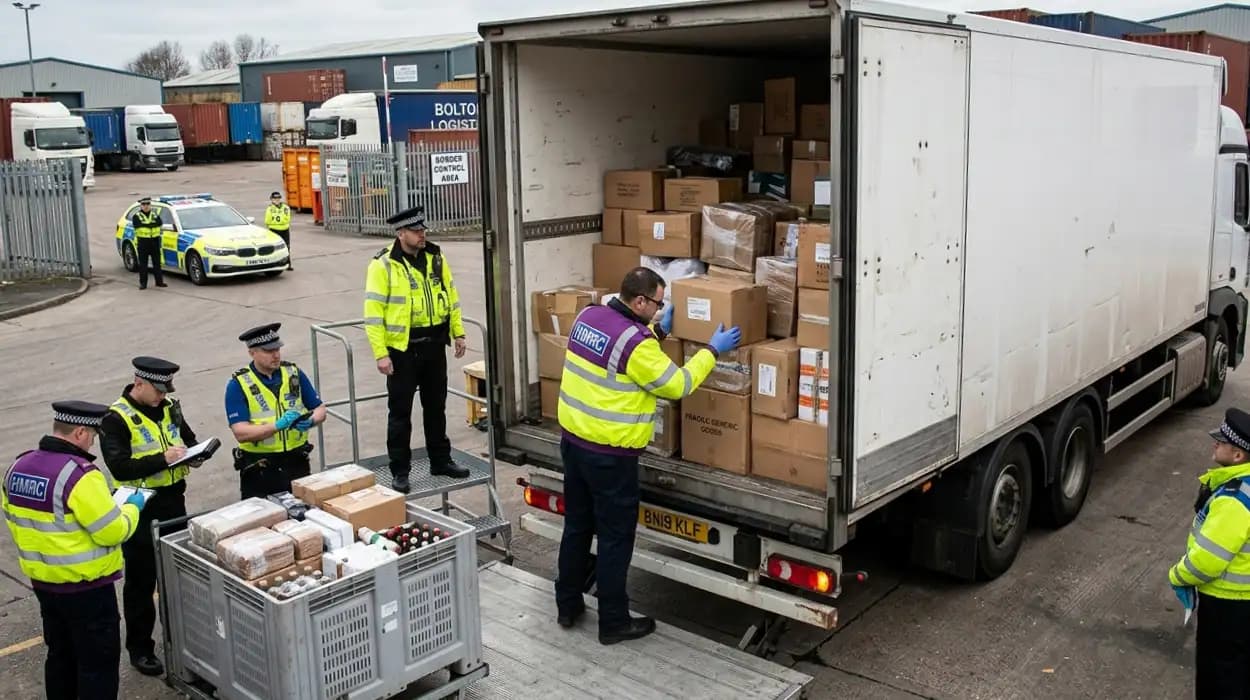
Smuggling represents a primary challenge to international trade security, public health networks, and national border controls. This comprehensive investigation by Bolton Today explores the operational mechanics, historical development, economic consequences, and legislative structures used to counter the illicit transit of goods across borders.
What is smuggling?
Smuggling is the illegal transportation of objects, substances, information, or people across an international border or through a restricted territory in violation of applicable statutory laws or financial regulations. The primary objective involves evading customs duties, circumventing trade prohibitions, or supplying illicit markets.
The legal definition of smuggling requires two distinct elements: physical movement across a regulated boundary and deliberate intent to deceive regulatory authorities. National governments categorize contraband into two primary designations.
The first designation consists of legally produced items that cross borders without the payment of required excise taxes or customs duties. Examples include cigarettes, alcohol, and fuel.
The second designation comprises items that are inherently illegal to possess or distribute within the destination territory. Examples include counterfeit pharmaceutical products, prohibited narcotics, protected wildlife species, and unlicensed firearms.
Smuggling undermines the sovereign authority of state institutions to regulate domestic markets and collect essential revenue. HM Revenue and Customs (HMRC) and Border Force maintain data metrics showing how unauthorized entry routes distort domestic competition, threaten public safety, and reduce the financial resources needed to fund public infrastructure.
What is the historical context of smuggling?
Smuggling originated alongside the earliest state-mandated tariffs and trade monopolies implemented by ancient civilizations to generate revenue and control merchant shipping lanes. The evolution of modern contraband networks directly mirrors historical shifts in government taxation policies and maritime enforcement capabilities.
During the Roman Empire, the central administration imposed specific import and export taxes known as portoria. Merchants routinely used unmonitored coastal landing points along the Mediterranean basin to avoid these payments. In medieval Europe, the expansion of crown monopolies on basic commodities triggered organized networks dedicated to unauthorized distribution.
In the 13th century, King Edward I introduced the "Great Custom" tax on English wool exports. This economic policy triggered an underground supply chain where producers smuggled raw wool across the English Channel to continental textile hubs in Flanders. Smugglers known as "owlers" operated at night across the marshes of Kent and Sussex to bypass royal inspectors.
The 18th century represented the peak period of traditional maritime smuggling in western Europe. The British government increased tariffs on luxury imports to finance international conflicts, including the Napoleonic Wars. High duties on specific luxury items incentivized coastal communities to participate in illicit trade. Examples include tea, brandy, lace, and silk.
Historical records show that during this era, organized syndicates like the Hawkhurst Gang used militarized convoys to move contraband inland, frequently overpowering local customs collectors.
The 20th century transformed smuggling from localized coastal operations into institutionalized transnational enterprises. The implementation of the Eighteenth Amendment to the United States Constitution in 1920 prohibited the manufacture, sale, and transportation of intoxicating liquors. This legal shift created the Prohibition era, which established large-scale industrial rum-running supply lines across the maritime borders of Canada and the Caribbean.
Criminal syndicates led by figures such as Al Capone reinvested these profits into sophisticated transport fleets, automated weaponry, and international banking networks. The end of Prohibition in 1933 caused these organizations to pivot toward other prohibited goods, laying the operational foundation for the modern global narcotics trade.
What are the primary types of smuggled goods?
The modern underground economy is divided into four primary sectors based on financial return, market demand, regulatory restrictions, and international trade laws. Each sector requires distinct logistics networks, transportation methods, and concealment techniques to bypass border inspection systems.
Excise Goods and Fiscal Fraud
Excise goods represent the largest volume of high-margin contraband moving into high-tax jurisdictions. Organized crime groups target commodities subject to high domestic taxation. Examples include tobacco products, alcoholic beverages, and refined fuel.
A 2026 independent report analyzed by KPMG revealed that 45% of all cigarettes consumed within the United Kingdom in 2025 were illicit, consisting of 32.3% counterfeit or contraband supplies and 12.7% legal cross-border purchases. This illicit market resulted in an estimated £4.46 billion in lost tax revenue within a single calendar year.
Controlled Substances and Narcotics
The international trade in illicit narcotics follows structured supply lines connecting rural production zones to affluent urban consumer centers. Global regulatory enforcement frameworks divide these substances into categories based on chemical composition and legal restrictions. Examples include synthetic opioids, cocaine base paste, and amphetamine-type stimulants.
The United Nations Office on Drugs and Crime (UNODC) documents how transnational cartels utilize containerized maritime freight, low-altitude aircraft, and semi-submersible vessels to transport multi-tonne shipments across continental borders.
Counterfeit Commodities and Intellectual Property Crime
Intellectual property crime involves the unauthorized reproduction and distribution of copyrighted or trademarked commercial goods. The Intellectual Property Office (IPO) annual survey of Trading Standards Officers documented the specific sectors most targeted by criminal syndicates. Examples include apparel, footwear, personal care fragrances, electronic vaping components, and consumer electronics.
The data indicates that ordinary retail establishments serve as the primary point of sale for these items, accounting for 83% of observed locations in recent enforcement cycles.
Endangered Wildlife and Environmental Contraband
Environmental smuggling involves the illegal extraction and cross-border transit of protected flora, fauna, and natural resources. This illicit commerce circumvents the Convention on International Trade in Endangered Species of Wild Fauna and Flora (CITES). Criminal syndicates target specific biological materials for luxury markets, traditional medicines, or private collections. Examples include elephant ivory, rhino horn, rosewood timber, and live exotic reptiles.
The United Nations Environment Programme (UNEP) identifies environmental contraband as a major source of funding for non-state armed groups in sub-Saharan Africa and Southeast Asia.
How do modern smuggling processes and mechanisms operate?
Modern smuggling processes rely on highly structured supply chain logistics, specialized concealment technologies, financial engineering, and digital communication platforms. Criminal organizations operate like multinational logistics corporations to systematically exploit vulnerabilities in global transport infrastructure.
The operational mechanism begins at the point of origin, where logistics managers select specific transport pathways based on risk assessment data. Smugglers utilize three primary methodologies to cross regulatory borders.
Physical Concealment and Structural Modification
This method involves hiding contraband within legal commercial cargo or modifying transport vehicles. Engineering teams construct false bulkheads in maritime shipping containers, build hidden floor compartments in heavy goods vehicles, or embed contraband directly into industrial products. Examples include concealing narcotics inside industrial stone blocks, liquid chemicals, or perishable fruit shipments.
At international border gates, individuals known as "mules" bypass security by concealing low-volume, high-value items within consumer electronics, luggage linings, or inside their bodies.
Document Fraud and Tariff Misdescription
This mechanism relies on administrative deception rather than physical concealment. Shipping agents submit fraudulent customs declarations via international electronic clearing networks. The paperwork intentionally misclassifies high-tariff items as low-value, zero-rated commodities. Examples include declaring high-duty tobacco shipments as processed timber, plastic toys, or ceramic tiling.
This process frequently involves "port shopping," where syndicates route freight through multiple transit countries to obscure the original point of manufacture and take advantage of weaker inspection protocols at specific regional ports.
Illicit Domestic Production and Front Establishments
As border detection technologies advance, criminal networks increasingly establish production facilities within the target market to bypass international borders entirely. The National Trading Standards strategic assessment confirms a rise in local factories manufacturing illegal cigarettes inside destination countries.
To distribute these items, organized crime groups set up retail outlets posing as legitimate local businesses. Examples include low-grade grocers, independent vape shops, discount candy stores, barbershops, and mobile phone repair retailers. These front stores allow syndicates to sell contraband directly to consumers while laundering cash profits through legitimate banking systems.
What are the real-world examples of smuggling operations?
Real-world enforcement data illustrates the scale, financial value, and operational complexity of organized smuggling networks operating globally and within local UK communities. Investigations conducted by multi-agency partnerships highlight how global supply chains impact municipal areas like Greater Manchester.
The Manchester Road Industrial Seizure
In June 2023, Bolton Council Trading Standards, acting alongside neighbourhood officers from Greater Manchester Police (GMP), executed a targeted search warrant at a commercial storage facility on Manchester Road in Bolton. The multi-agency raid resulted in the discovery and seizure of 6.1 tonnes of raw unmanufactured tobacco stored across 28 commercial crates.
The financial value of the seized material was calculated at £4.1 million, making it one of the largest individual illicit tobacco disruptions in UK history.
Forensic analysis of the seized material showed that the raw tobacco was intended for unauthorized domestic processing plants. Illegal manufacturers dilute raw tobacco with cheap filler materials to maximize profit margins. Examples include dried tree leaves, dead insects, and rodent feces.
The final consumer products frequently contain elevated concentrations of heavy metals, lead, and industrial chemical toxins that pose severe health risks beyond standard tobacco consumption.
The Lever Street Market Prosecution
An enforcement operation by HM Revenue and Customs investigators targeted an organized gang operating at the Lever Street Market in Bolton. Surveillance teams filmed four local men transporting large quantities of undeclared cigarettes from commercial vehicles to the public pavement. The individuals distributed the contraband directly to consumers out of laundry bags and suitcases.
A subsequent search of the suspects' residences and transport vehicles resulted in the seizure of 47,000 cigarettes and 52 kilograms of hand-rolling tobacco. The judicial prosecution established that the operation had evaded £98,000 in mandatory excise tax duties. The Bolton Magistrates' Court handed down suspended custodial sentences to the four defendants.
Global Maritime Containerized Interdictions
At the international macro-level, Border Force and HMRC operations frequently disrupt large-scale maritime operations at major UK sea ports, including Southampton, Felixstowe, and Tilbury. A notable enforcement action involved the interception of a commercial container ship arriving from the Middle East. Border Force personnel utilized high-energy X-ray scanners to inspect a freight consignment declared as fiberboard insulation panels.
The physical inspection revealed that the insulation panels were hollowed out and packed with 8 million counterfeit cigarettes, representing a tax evasion value of £2.4 million. Data extraction from encrypted mobile communication devices used by the logistics managers revealed a transnational coordination network spanning Poland, Ireland, and the UK. The underlying criminal syndicate had successfully smuggled over 260 million cigarettes prior to the multi-agency intervention.
What do current statistics reveal about the scale of smuggling?
Empirical data from government oversight bodies and national enforcement agencies confirms that smuggling remains a multi-billion pound criminal enterprise with rising volumes in specific consumer sectors. Annual performance metrics show the shifting balance between traditional contraband and emerging illicit markets.
National Trading Standards (NTS) published its impact metrics for the 2024–2025 financial year, detailing the total financial value of consumer detriment prevented and illegal items removed from circulation.
The NTS data highlights the rapid growth of the illicit vape market, which now exceeds traditional tobacco in total street value. Operation Joseph, an enforcement initiative funded by the Department of Health and Social Care, resulted in the seizure of more than one million illegal vapes at regional retail levels.
Simultaneously, co-ordinated border interventions stopped an additional 1.2 million non-compliant devices at ports of entry, preventing dangerous, non-regulated heating elements and excessive nicotine concentrations from entering public consumer markets.
The legal enforcement actions resulting from these 2024–2025 investigations led to significant judicial penalties. Courts handed down total custodial sentences of 104 years and 7 months to convicted logistics managers and syndicate leaders. Financial penalties reached £468,500 in criminal fines alongside £620,388 in direct victim compensation orders.
Furthermore, HMRC utilized administrative enforcement frameworks to issue 76 formal tobacco products duty assessments valued at £14,624,040, alongside 70 Tobacco Track and Trace financial penalties totaling £402,500.
What are the societal, economic, and security implications of smuggling?
The systemic effects of smuggling extend beyond direct tax revenue losses, creating structural damage across local economies, national public health services, and international security frameworks. Underground trade networks divert financial resources away from public institutions while strengthening organized crime syndicates.
Domestic Market Distortion and Inequity
Smuggling causes severe economic damage to legitimate commercial businesses. Retailers who comply with national tax laws, pay licensing fees, and source regulated inventory cannot compete with the artificially depressed pricing structures of black-market distributors.
In municipal areas, the proliferation of illicit front stores lowers commercial property values and drives legitimate family-owned shops out of business. This economic pressure reduces legal employment opportunities and destabilizes the local tax base used to fund municipal services.
Public Health Degradation and Regulatory Evasion
Contraband consumer goods bypass mandatory safety inspections, quality controls, and manufacturing standards. Illicit pharmaceuticals, counterfeit cosmetics, and unauthorized electronic devices pose immediate physical dangers to users.
Substandard electronic components lack proper safety fuses, creating significant fire hazards in residential areas. Furthermore, cheap illicit cigarettes lack fire-self-extinguishing bands, which significantly increases the incidence of accidental domestic fires.
From a public health perspective, ultra-low black-market pricing undercuts government taxation strategies designed to reduce smoking rates, increasing the long-term treatment burden on the National Health Service (NHS).
Convergence with Serious and Organized Crime Network Infrastructure
Modern smuggling supply chains are rarely isolated to a single type of contraband. The Intellectual Property Office enforcement matrix confirms that syndicates running illicit goods networks routinely use those same transport routes, front companies, and distribution networks for other criminal activities.
Trading Standards investigations show a high correlation between counterfeit distribution hubs and other serious offenses. Examples include international money laundering, underground drug distribution, benefits fraud, and modern slavery or human trafficking.
The profits generated from local sales of illicit tobacco and vapes provide the liquid capital needed to finance high-level international crimes, directly threatening national security and community safety.
How do regulatory frameworks and enforcement strategies combat smuggling?
Enforcement agencies use a combination of domestic legislation, international treaties, multi-agency task forces, and advanced technology to disrupt illicit supply chains. Modern border enforcement focuses on proactive intelligence sharing and targeted interventions rather than relying solely on random physical inspections.
Legislative Structures and Legal Powers
The primary legislative framework governing border security and revenue protection within the United Kingdom is the Customs and Excise Management Act 1979 (CEMA). This statute grants HMRC and Border Force officers extensive legal powers to detain vessels, enter commercial premises without a warrant under specific emergency conditions, and seize assets under suspected duty evasion.
Section 170 of CEMA establishes criminal liability for the deliberate evasion of any import or export restriction, providing a maximum penalty of up to 7 years of custodial imprisonment for indictable offenses.
For intellectual property violations, authorities use the Trade Marks Act 1994, which criminalizes the possession or distribution of goods bearing unauthorized registered trademarks. To counter local retail distribution, local authorities leverage the Tobacco Track and Trace regulations. This regulatory framework enables Trading Standards to issue instant financial penalties of up to £10,000 against any retail business caught handling non-compliant stock.
Multi-Agency Tactical Operations
Because smuggling networks cross international, national, and municipal boundaries, enforcement requires coordinated multi-agency responses. Operation CeCe represents a major joint initiative funded by HMRC and executed by local authority Trading Standards teams. This initiative focuses on disrupting the inland distribution of illicit tobacco at the retail level.
By combining HMRC’s financial data with local police intelligence and specialized K9 detection units, Operation CeCe teams successfully raided thousands of retail businesses, removing millions of illicit items from municipal high streets.
International Treaties and Technological Interventions
At the global level, international treaties ensure cross-border cooperation between law enforcement groups. The World Health Organization (WHO) Protocol to Eliminate Illicit Trade in Tobacco Products provides a binding framework for international data sharing, mutual legal assistance, and the standardization of global shipping tracking systems.
This treaty enables investigators to track commercial goods through every step of the international logistics chain, making it significantly harder for syndicates to divert legitimate exports into the black market.
Enforcement teams deploy advanced technology at international border points to inspect high volumes of cargo without disrupting legitimate trade. Border Force uses high-energy cargo X-ray scanners capable of penetrating solid steel hulls to detect hidden cavities within shipping containers.
Automated License Plate Recognition (ALPR) cameras track transport vehicles along major freight corridors, while molecular sniffing equipment and specialized canine units quickly identify the chemical signatures of narcotics, currency, and tobacco hidden within dense commercial shipments.
What is the future outlook for global smuggling trends?
The future of smuggling is defined by the rapid digitalization of illicit marketplaces, the adoption of automated transport logistics, and the development of localized synthetic production methods. As international borders implement advanced electronic screening systems, criminal networks alter their strategies to exploit new vulnerabilities in digital and physical infrastructure.
The rapid growth of encrypted communication platforms, peer-to-peer networks, and dark web marketplaces has fundamentally changed the retail distribution of contraband. The National Trading Standards eCrime Team documented this shift during a targeted digital enforcement initiative. Investigators successfully removed 4,308 illicit product URLs from public social media platforms and online auction sites within a two-month period.
Criminal syndicates increasingly use decentralized digital networks to coordinate drop-shipping logistics, manage anonymous transactions via cryptocurrency, and communicate using end-to-end encrypted messaging systems.
Simultaneously, smuggling logistics are integrating autonomous transport technologies. Border security agencies have documented criminal groups using uncrewed aerial vehicles (UAVs) to transport high-value, low-volume contraband across national borders and into secure correctional facilities. Examples include prescription narcotics, communication devices, and synthetic chemical compounds.
FAQS
Why is smuggling considered a serious crime?
Smuggling undermines government revenue, supports organized crime networks, threatens public safety, and allows unregulated or dangerous products to enter legitimate markets.