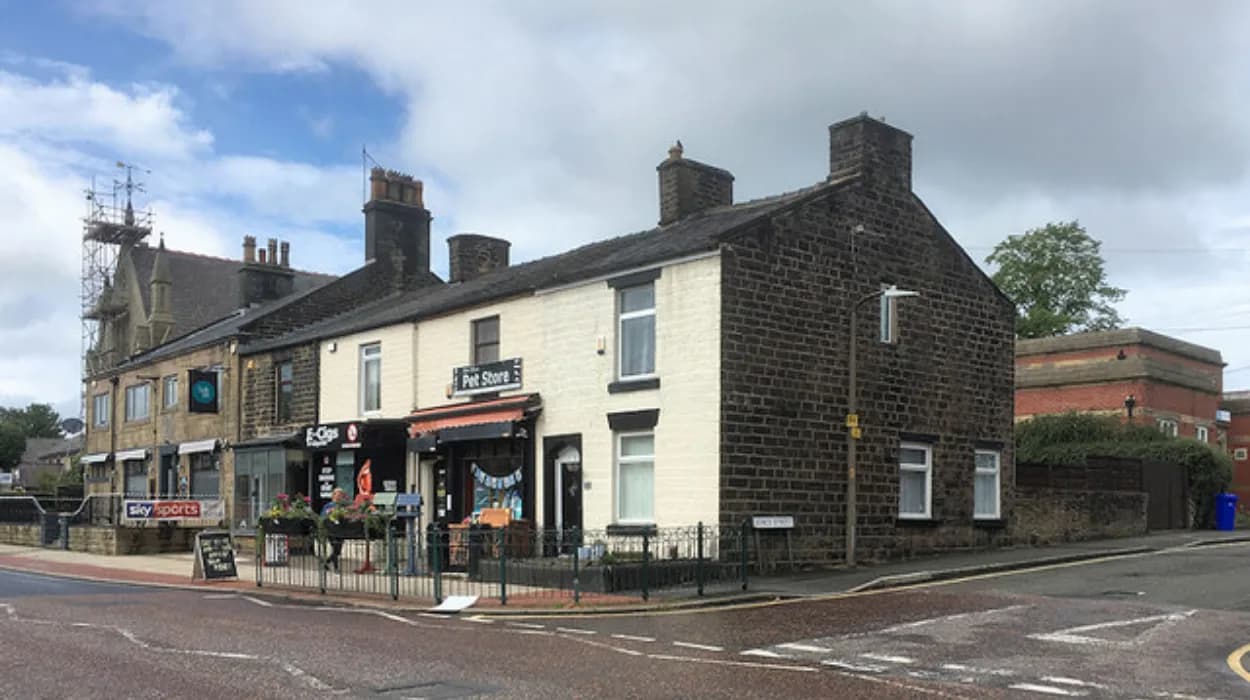
Horwich has a long commercial history shaped by transport, engineering, manufacturing, local markets and small-scale retail. Its independent shopping tradition developed alongside the expansion of Horwich Locomotive Works in the late nineteenth century and remains visible today in specialist shops, delis, florists, charity shops, heritage retail and locally oriented businesses.
For visitors, independent shopping in Horwich provides access to products that reflect the town's contemporary commercial identity while connecting directly with its industrial and community history. Lee Lane, Winter Hey Lane, Church Street and nearby streets form the historic retail core, while Middlebrook represents the later development of large-scale retail outside the traditional centre.
What makes independent shopping in Horwich historically significant?
Independent shopping in Horwich is historically significant because local retail expanded with industrial growth, serving railway workers and families through specialist shops, markets, cooperative stores and family businesses that established the town's enduring commercial identity.
Horwich's retail history is closely connected to industrialisation. The arrival and expansion of the Horwich Locomotive Works transformed the settlement from a smaller Lancashire community into an important railway manufacturing town.
Horwich Heritage records a major building programme beginning in 1885. New houses, shops, offices, schools and churches appeared as workers and their families arrived from different parts of Britain. The locomotive works became the town's principal employer and economic backbone for almost a century.
This industrial population created demand for everyday retail services. Businesses supplied food, clothing, footwear, household goods, confectionery, tools and other necessities.
Horwich Heritage records wheelwrights, clog makers, boot and shoe makers, grocery shops, confectionery businesses, clothing retailers, fancy-goods shops and music shops among the businesses that developed during the town's industrial expansion.
The commercial structure was therefore broader than modern gift retail. Independent businesses performed practical economic functions within walking distance of residential streets and workplaces.
This historical pattern remains important because today's specialist retailers occupy a commercial landscape originally established to serve a densely connected industrial community.
How did Horwich's industrial expansion create its shopping streets?
Horwich's industrial expansion created demand for concentrated retail streets because thousands of railway workers and their families required food, clothing, household goods, professional services and leisure facilities close to rapidly expanding residential neighbourhoods.
The Horwich Locomotive Works opened in 1884 and became the central force behind the town's nineteenth-century transformation. The works generated direct employment and supported secondary employment through trades, transport, construction and retail.
The expansion produced a distinctive urban pattern. Streets such as Lee Lane, Winter Hey Lane and the roads around the parish church became commercial corridors.
Horwich Heritage describes the period after 1884 as a dramatic transformation. New commercial premises appeared alongside houses, offices and public buildings. The resulting town centre retained elements of this nineteenth-century structure long after the railway works closed.
The growth of independent retail was also linked to local purchasing power. Railway employment provided wages for households, while businesses developed around the needs of employees.
The Horwich Industrial Co-operative Society became particularly important. Horwich Heritage records that the organisation operated large multifunctional premises on Lee Lane and more than a dozen branches around the town. Its decline occurred during the 1960s and 1970s as retail patterns changed.
The cooperative model demonstrates that local shopping historically included both independent specialists and large community-oriented organisations.
Today's independent retailers operate within a very different economic environment, but the principle of serving a defined local population remains central.
Which Horwich streets form the historic independent shopping area?
Lee Lane, Winter Hey Lane, Church Street, Chorley Old Road and Chorley New Road form the principal historic commercial landscape, with surviving buildings, businesses and civic sites demonstrating how Horwich developed as an industrial-era town.
Lee Lane
Lee Lane is one of Horwich's most important historic commercial streets. It contains surviving buildings associated with retail, public administration, hospitality and community activity.
Horwich Town Council's heritage trail identifies several significant locations on Lee Lane. Horwich Public Hall has served as a centre of local government since 1895. The building was presented to Horwich by mill owner Peter Martin.
The same heritage trail identifies a former second post office on Lee Lane, opened in 1851, and the former site of Horwich's first cooperative shop at 126 Lee Lane, which opened in 1862.
These sites demonstrate that shopping and civic life developed together.
Winter Hey Lane
Winter Hey Lane forms another important part of the town's commercial structure. The historic market was located here during the twentieth century.
Horwich Heritage records that the Old Horwich Market stood on Winter Hey Lane in the 1920s. The site later became associated with banking and remains part of the town's changing commercial landscape.
Winter Hey Lane continues to connect retail, food and service businesses with the wider town centre.
Church Street and surrounding streets
Church Street provides additional evidence of Horwich's earlier settlement and commercial development. The heritage trail identifies the first post office at 42 Church Street, dating from approximately 1815.
The presence of an early post office demonstrates that commercial activity existed before the great industrial expansion of the 1880s.
The later arrival of railway manufacturing increased the scale and density of this activity.
Where can visitors find distinctive gifts and locally connected products in Horwich?
Visitors can find distinctive gifts and locally connected products through specialist independent retailers, florists, delis, heritage organisations, second-hand shops and fashion businesses concentrated around Lee Lane, Winter Hey Lane and the historic town centre.
One of the clearest contemporary examples is Flowersmiths at 97 Lee Lane. The business describes itself as a boutique florist, plant and gift shop established in 2013. Its retail range includes houseplants, gifts, homeware, ceramics, greetings cards, skincare and candles, including work from local artists and artisans.
This makes the shop particularly relevant to visitors looking for gifts connected with independent makers rather than standardised high-street products.
Flowersmiths also demonstrates how contemporary independent retail combines products with specialist knowledge. Its core business is floristry, but the premises extend into plants, homeware and locally produced gift items.
Another specialist destination is Thyme Deli on Winter Hey Lane. The business describes itself as a deli, cafe and cookshop and states that it opened in June 2003, expanded into an adjacent unit in 2005 and added a cookshop in 2008.
Its retail offer includes ingredients such as cheese, olives, fresh bread, chutneys, preserves, sauces and other specialist food products. The cookshop adds cookware, utensils and aprons.
For food-related gifts, this type of specialist retailer provides a direct connection between shopping and local food culture.
Button Boutique provides another example of independent specialist retail. The business describes itself as an independent women's clothing shop and operates from the Courtyard at 46 Winter Hey Lane. Its current product range includes clothing, jewellery and gift vouchers.
These businesses demonstrate the range of independent retail available in Horwich without relying on large national shopping centres.
How does Horwich Heritage Centre contribute to local shopping and cultural preservation?
Horwich Heritage Centre connects shopping with cultural preservation by maintaining archives, exhibitions, films, publications and a dedicated shop that document local industries, businesses, transport, buildings and community history for residents and visitors.
The Horwich Heritage Centre occupies an important position within the modern town centre. It moved into its current premises in 2006 after earlier phases of development.
Horwich Town Council states that the centre received more than £100,000 from the Big Lottery through a borough-wide Bolton Council bid, alongside approximately £50,000 from Horwich Town Council.
The centre contains exhibition facilities, archive material, an informal research area and a shop. Admission is free, and the facility is staffed by volunteers.
Its shop is particularly relevant to heritage-focused visitors because it provides access to material associated with Horwich's past.
The centre also supports family-history research. Its collections and research facilities provide a useful starting point for people investigating local families, occupations and community connections.
Its exhibitions cover subjects including Horwich Locomotive Works, Victorian domestic life, the Second World War, Winter Hill mines and historic turnpike roads.
This creates an important relationship between independent retail and historical interpretation. A visitor can examine historic buildings, investigate local records and purchase locally focused publications within the same town-centre environment.
The organisation itself has a significant history. Horwich Heritage was formed in 1984 after public meetings sought to restore local pride following the closure of Horwich Locomotive Works in 1983.
Its formation demonstrates the cultural consequences of industrial decline and the importance of heritage preservation in maintaining local identity.
What historic businesses and markets shaped Horwich's retail identity?
Historic markets, cooperative stores, specialist trades and food retailers shaped Horwich's commercial identity by providing essential goods locally, creating employment and establishing the streets and premises that still define the town's independent shopping environment.
Horwich's historical retail economy was highly specialised.
Horwich Heritage records that the town once had 17 butchers' shops. The organisation identifies Greeley's as the remaining example of this historic trade.
The scale of the change is significant. Seventeen specialist butchers represented a much denser food-retail network than exists today.
Other trades included smithies, wheelwrights and makers of clogs, boots and shoes. These businesses reflected the practical requirements of an industrial population.
Retail was therefore closely connected to production. A wheelwright repaired transport equipment. A boot maker supplied workers. A grocer provided household necessities. A confectioner supplied food products. A music shop served cultural and recreational demand.
The Old Horwich Market formed another part of this system. Its location on Winter Hey Lane placed market trading directly within the town's commercial core.
The market building itself no longer performs its historic function, demonstrating how commercial architecture changes as shopping practices evolve.
The indoor market was eventually demolished in 2009 after a fire, according to historical records about the site.
The loss of the market illustrates a wider transformation from traditional markets and small specialist premises towards supermarkets, retail parks, online commerce and service-based businesses.
Yet the historic street network remains significant because many present-day independent businesses operate within the same broader commercial geography.
How do charity and second-hand shops add historical value to Horwich shopping?
Charity and second-hand shops add historical value by extending the life of previously owned clothing, books, household objects, antiques and collectibles while keeping distinctive goods within the local retail economy and reducing dependence on standardised new products.
Sue Ryder operates a charity shop at 77–79 Lee Lane and states that its Horwich shop has been established for more than 20 years. Its stock includes donated antiques, vintage and retro clothing, bric-a-brac and electrical goods.
Second-hand retail has a particular relevance to historical research because objects can retain evidence of earlier domestic life.
A book can contain an inscription. Clothing can reflect earlier fashions. Household objects can reveal manufacturing traditions. Photographs, postcards and ephemera can provide evidence about places and people.
These objects are not substitutes for archival records, but they contribute material evidence to the study of everyday life.
For genealogical researchers, second-hand and heritage-oriented retail also complements formal archival research. Horwich Heritage provides dedicated assistance for family-history research, creating a direct institutional link between local commerce, community memory and historical investigation.
This relationship is especially relevant in a former industrial town where family employment often connected generations to the same workplaces, streets and local businesses.
How has modern retail changed the traditional Horwich town centre?
Modern retail changed Horwich through supermarkets, online shopping, specialist services and out-of-centre retail parks, while the historic centre retained smaller businesses that focus on personal service, specialist products, food, gifts, fashion and community-oriented retail.
The opening and development of Middlebrook introduced a major retail and leisure destination outside the traditional town centre.
Middlebrook Retail and Leisure Park is located on The Linkway in Horwich. Its current facilities include more than 3,000 free parking spaces and a broad collection of retailers, restaurants and leisure businesses.
Its scale differs from the historic shopping streets.
The traditional centre is based on relatively compact streets and individual premises. Middlebrook operates as a planned retail and leisure destination with extensive parking and larger commercial units.
Both forms of retail serve Horwich, but they represent different stages in the town's commercial history.
Independent businesses continue to provide an alternative retail model. Visit Bolton describes independent shopping across the borough as including fashion, design, jewellery, beauty, convenience and specialist businesses.
Horwich's specialist shops fit within this wider regional pattern while retaining their own historical setting.
The distinction is important for visitors. Middlebrook provides large-scale shopping and leisure facilities, while the traditional centre provides closer contact with historic streets, heritage buildings and smaller independent premises.
Why are independent Horwich shops important for local heritage preservation?
Independent Horwich shops support heritage preservation by keeping historic streets economically active, maintaining community services and providing places where local products, knowledge, specialist skills and historical associations remain visible in everyday town-centre life.
Heritage preservation is not limited to protected buildings.
A historic town centre also depends on active streets, occupied premises and continuing community use. Retail provides one mechanism through which historic buildings remain part of daily life.
Horwich Town Council's heritage trail identifies 18 green circular signs marking buildings and sites with historical significance or associations with prominent citizens.
The trail includes public buildings, religious sites, former commercial premises, former educational institutions and industrial-era locations.
This approach places shopping within a wider heritage landscape.
A visitor walking along Lee Lane can therefore encounter present-day retail alongside buildings connected with local government, postal services, cooperative retail and community institutions.
The survival of this layered landscape is significant because Horwich experienced major industrial change. The closure of the locomotive works in 1983 resulted in approximately 1,500 redundancies, according to Horwich Heritage.
The economic shock strengthened the need to preserve local identity.
Horwich Heritage was established in the following year after public meetings focused on restoring local pride.
Independent shopping forms part of this continuing process because businesses keep people using the historic centre.
How can visitors combine independent shopping with Horwich's heritage?
Visitors can combine independent shopping with heritage by following the town's historic streets, visiting specialist retailers, exploring the Heritage Centre, examining civic plaques and connecting commercial sites with the railway, religious and industrial history preserved across Horwich.
A heritage-focused shopping visit should begin around the traditional town centre rather than treating shopping as a separate activity.
Lee Lane provides an effective starting point because it contains historic buildings and contemporary independent businesses within the same commercial corridor.
The Horwich Town Council heritage trail provides documented locations including Horwich Public Hall, former post-office sites, the first cooperative shop location, churches and former community institutions.
The Heritage Centre on Beaumont Road provides additional historical context through exhibitions and archives.
A visitor interested in gifts can then explore specialist retailers such as Flowersmiths, where locally made and artisan products form part of the gift and homeware range.
Food-focused visitors can investigate the specialist products associated with Thyme Deli on Winter Hey Lane.
Second-hand shoppers can examine the changing selection at the Sue Ryder shop on Lee Lane.
These destinations illustrate different dimensions of contemporary independent retail.
To experience this historic commercial landscape in person today, consult our comprehensive [Shopping History of Horwich Through the Decades] for itineraries and visiting parameters.
The combination of retail and heritage provides a structured way to understand Horwich as a living historic town rather than simply as a shopping destination.
What does the future of independent shopping mean for Horwich's heritage?
The future of independent shopping in Horwich is closely connected with maintaining occupied historic streets, supporting specialist businesses, preserving local archives and ensuring that commercial activity continues to reflect the town's industrial and community heritage.
Horwich's commercial history has already experienced several major transitions.
The nineteenth-century railway boom created hundreds of businesses. The twentieth century brought cooperative retail, traditional markets and specialist trades. The closure of the locomotive works in 1983 caused major economic disruption. Later development introduced Middlebrook and new retail patterns.
Online shopping represents another structural change.
Independent retailers now compete within a market that extends beyond the physical town. Digital retail allows customers to purchase products from national and international sellers without visiting Horwich.
Local businesses therefore retain a distinctive role through specialist knowledge, physical products, local provenance and direct community relationships.
Flowersmiths provides a clear example of this model by combining physical retail with online ordering, local artisan products, plants and specialist floristry.
Thyme Deli similarly combines a physical deli and cookshop with an established food-focused identity.
Heritage organisations add another dimension. Horwich Heritage maintains archives, exhibitions and research support while operating a shop within its centre.
The continuing use of these facilities preserves more than commercial activity. It preserves knowledge about the people, occupations, buildings and industries that created modern Horwich.
For historians, cultural tourists, educators and genealogical researchers, this makes independent shopping part of the wider heritage infrastructure.
Horwich's independent shopping landscape therefore represents a continuing chapter in the town's history. Its present-day businesses occupy streets shaped by industrial expansion, while their specialist products reflect contemporary demand.
The result is a commercial environment where historic buildings, local enterprise, heritage research and everyday shopping remain interconnected.
FAQS
What are the best independent shops in Horwich?
Horwich has independent retailers including florists, gift shops, delis, specialist food businesses, clothing boutiques, charity shops and heritage retailers. Lee Lane and Winter Hey Lane are important areas to explore.