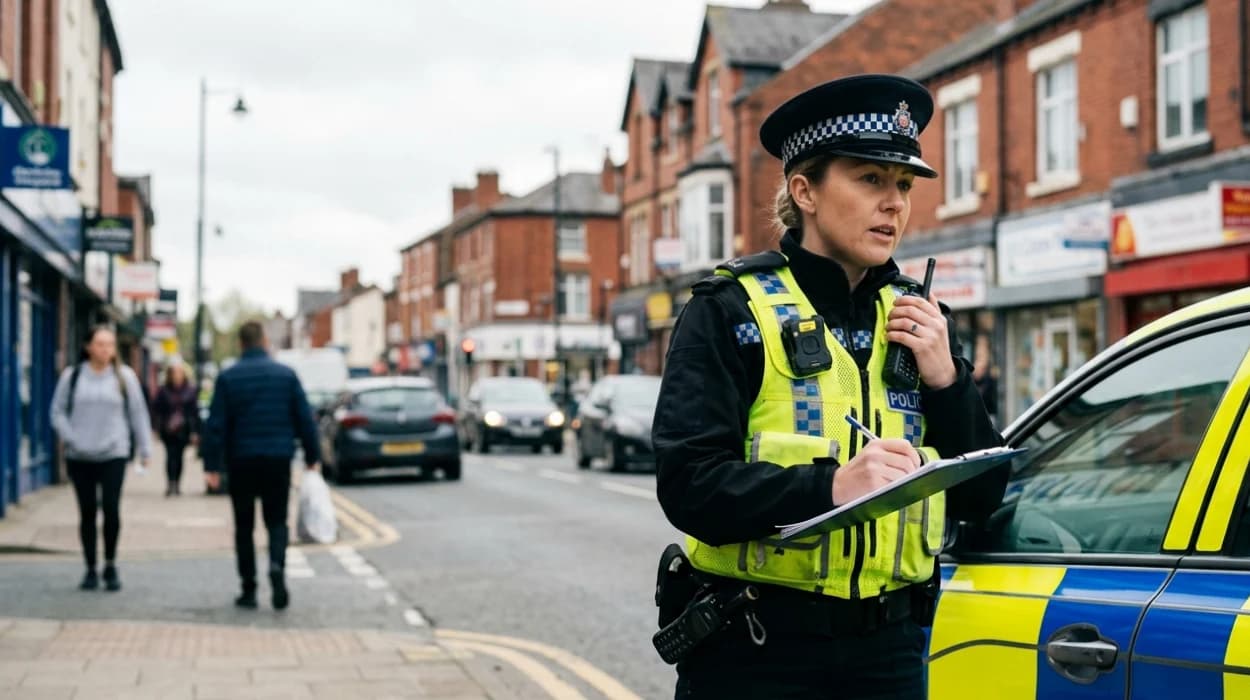
A police officer is a warranted law enforcement official empowered by a state or municipality to maintain public order, protect life and property, enforce criminal legislation, and investigate illicit activities within a defined geographic jurisdiction.
The Legal Definition of a Police Officer
A police officer holds a distinct legal status separate from ordinary citizens or private security personnel. In the United Kingdom, this status is derived from the Police Oath, which grants the officer the specific legal powers of a constable. These powers include the statutory authority to detain individuals, execute search warrants, and strip citizens of their liberty under predefined legal conditions. In Bolton and the wider Greater Manchester area, these authorities are governed by the Police and Criminal Evidence Act 1984 (PACE), which regulates the limits of police intervention to ensure human rights compliance.
The Role of Law Enforcement in Bolton Today
Within the Metropolitan Borough of Bolton, local law enforcement operates under the jurisdiction of the Greater Manchester Police (GMP). The geographic area comprises diverse urban centres and rural fringes, requiring tailored deployment strategies. Police officers in Bolton function as the primary interface between the criminal justice system and the public. They respond to emergency calls via the 999 system, manage non-urgent reports via the 101 system, and execute targeted operations to suppress localized crime patterns.
The Difference Between Police Officers and Support Roles
The police service utilizes a bifurcated staffing structure that differentiates warranted officers from support staff. Warranted police officers hold the power of arrest and are authorized to use reasonable force to execute their duties. Conversely, Police Community Support Officers (PCSOs) lack full powers of arrest and focus strictly on community engagement, visible reassurance, and anti-social behaviour management. Furthermore, civilian police staff fulfill administrative, forensic, data analysis, and dispatch roles to ensure operational efficiency without engaging in active field enforcement.
What is the history of modern policing?
Modern policing originated in nineteenth-century London through the establishment of the Metropolitan Police Force, which introduced a structured, professional, and preventive approach to crime reduction that replaced disjointed parish constable systems and temporary military interventions.
The Peelian Principles of Law Enforcement
Sir Robert Peel established the world's first modern professional police force in London in 1829 via the Metropolitan Police Act. Peel formulated nine foundational ideas, widely known as the Peelian Principles, which define the relationship between civil law enforcement and the civilian population. The core tenant states that the police are the public and the public are the police, meaning that law enforcement requires public consent to function legitimately. This philosophy shifted the focus of state control from retrospective punishment by the military to proactive crime prevention by visible, uniformed citizens.
The Evolution of Policing in Greater Manchester
Prior to the mid-twentieth century, law enforcement in the Manchester region was fragmented across numerous borough forces. The Bolton Borough Police operated as an independent entity from 1839 until it merged into the Lancashire Constabulary in 1969. A major legislative restructuring occurred via the Local Government Act 1972, which created the metropolitan county of Greater Manchester. On 1 April 1974, the Greater Manchester Police formed by combining the Manchester and Salford Police with parts of the Lancashire, Cheshire, and West Yorkshire constabularies to provide centralized regional law enforcement.
Technological Advances in 20th and 21st Century Policing
The structural methodologies of police work changed significantly during the twentieth century due to rapid mechanical and electronic innovations. The introduction of the police car in the 1930s replaced traditional foot patrols, expanding the geographic coverage of single units but altering community relationships. The subsequent deployment of personal two-way radios in the 1960s allowed real-time command dispatching. In the twenty-first century, policing relies on digital infrastructure, including Automatic Number Plate Recognition (ANPR) cameras, body-worn video recorders, biometric databases, and predictive algorithms designed to identify geographical crime hot spots.
How is a police force structured?
A police force is structured as a strict hierarchical bureaucracy utilizing a paramilitary rank framework alongside specialized divisions to ensure operational accountability, command discipline, and targeted deployment of resources across regional sectors.
The Rank Hierarchy of the Greater Manchester Police
The personnel architecture of the Greater Manchester Police follows a uniform linear chain of command. Every individual enters the service at the foundational rank of Police Constable. Progression through the management structure requires completing specific professional examinations and competitive boards.
- Police Constable: The front-line operational rank responsible for initial response, patrols, and standard investigations.
- Sergeant: The first-line supervisor who manages a specific shift or team of constables, overseeing daily field operations.
- Inspector: A middle-management role responsible for overseeing large geographic sectors, resource allocation, and serious incident management.
- Chief Inspector: Manages specific commands or specialized departments, such as local neighbourhood policing teams, within a district.
- Superintendent: Senior managers who oversee entire operational districts, such as the Bolton District Command.
- Chief Superintendent: Executive officers responsible for large-scale divisions, major corporate portfolios, or high-risk operational sectors.
- Chief Officer Team: The top executive tier comprising the Assistant Chief Constable, Deputy Chief Constable, and Chief Constable, who hold ultimate legislative responsibility for force strategy.
Specialized Divisions within Modern Police Forces
While response teams handle spontaneous incidents, a modern police force allocates substantial resources to specialized units that manage distinct categories of criminal activity. The Criminal Investigation Department (CID) investigates serious or complex crimes, such as sexual offences, robberies, and serious assaults. The Serious Crime Division focuses on organized crime groups, narcotics trafficking, and money laundering operations.
Traffic policing is managed by the Roads Policing Unit, which targets driving offences, responds to fatal collisions, and deploys the Tactical Vehicle Intercept Unit to pursue stolen vehicles. Tactical Firearms Units handle high-risk incidents involving weapons, while the Counter-Terrorism Unit addresses threats to national security. Finally, the Tactical Aid Unit provides public order enforcement during riots, public protests, and large-scale football matches.
Local Policing Structure within Bolton
The Bolton District of the Greater Manchester Police is organized geographically to deliver localized public services. The command structure places a Superintendent at the head of the district, operating from the main Bolton Police Station on Scholey Street. The district is divided into distinct operational sectors, including Bolton North, Bolton South, and Bolton West. Each sector features a dedicated Neighbourhood Policing Team (NPT) led by an Inspector, supported by Sergeants, Constables, and PCSOs who focus on long-term community problem-solving and reducing anti-social behaviour.
What are the entry requirements to become a police officer?
The entry requirements to become a police officer mandate that applicants be at least 18 years of age, possess a valid driving licence, satisfy background vetting criteria, pass physical fitness evaluations, and hold specific academic qualifications.
Age, Nationality, and Residency Criteria
Candidates seeking to join the police service must be 18 years old or older at the formal point of application. Applicants must be British citizens, Commonwealth citizens, or foreign nationals who possess unrestricted indefinite leave to remain in the United Kingdom. Due to the stringent security requirements of police databases, forces enforce a strict residency rule requiring candidates to have lived continuously in the United Kingdom for a minimum of three years prior to application.
Academic and Educational Pathways
The College of Policing manages entry pathways via the Policing Education Qualifications Framework (PEQF). Forces utilize distinct educational routes to recruit new constables.
- Police Constable Degree Apprenticeship (PCDA): A three-year program for individuals without a degree, combining frontline policing with academic study to earn a BSc in Professional Policing Practice.
- Degree Holder Entry Programme (DHEP): A two-year work-based training route for individuals who already hold a degree in any discipline, resulting in a graduate diploma.
- Pre-Join Degree: A route for candidates who self-fund a three-year BA in Professional Policing at a university before applying to join a force.
- Police Constable Entry Programme (PCEP): A traditional two-year training pathway introduced to allow entry focused purely on operational competencies without a mandatory university degree requirement.
Vetting, Medical, and Physical Fitness Standards
Maintaining public integrity requires an intense multi-stage background assessment process. Pre-employment vetting reviews an applicant's financial history, criminal records, and familial associations to identify vulnerabilities to corruption or blackmail. Medical examinations ensure candidates have a Body Mass Index (BMI) between 18.5 and 30, alongside satisfactory color vision and hearing thresholds. The job-related fitness test requires candidates to complete a multi-stage shuttle run (the bleep test) to level 5.4, which measures aerobic capacity, alongside dynamic strength tests.
How do police officers conduct criminal investigations?
Police officers conduct criminal investigations by systematically gathering physical evidence, interviewing witnesses and suspects, analyzing digital intelligence, and compiling comprehensive legal case files for evaluation by the Crown Prosecution Service.
Initial Response and Crime Scene Management
The investigative process begins immediately when an officer arrives at an incident scene. The responding officer must secure the area using physical barriers to prevent the contamination of forensic evidence. Officers log all individuals entering the perimeter, identify potential witnesses, and preserve transient evidence such as DNA, fingerprints, footwear impressions, and blood spatter patterns. They capture immediate digital documentation using body-worn video cameras to create an indisputable record of the scene conditions.
Statutory Interrogation and Interviewing Protocols
The interviewing of all suspects is governed strictly by the Police and Criminal Evidence Act 1984 (PACE) codes of practice. Officers must administer the formal caution before asking any questions regarding an offence, ensuring the suspect understands their right to silence and legal representation.
Interviews are recorded digitally and utilize the PEACE framework:
- Planning and Preparation: Formulating the objectives and legal points to prove.
- Engage and Explain: Setting the ground rules and establishing initial communication.
- Account, Clarification, and Challenge: Obtaining the suspect's version of events and addressing inconsistencies.
- Closure: Summarizing the interview and clarifying next steps.
- Evaluation: Assessing the impact of the interview on the wider investigation.
Digital Forensics and Intelligence Gathering
Contemporary investigations rely heavily on technical and electronic data networks. Specialized officers extract data from mobile telephone devices, retrieving deleted communications, location metadata, and internet browsing histories. Investigators review public and private Closed-Circuit Television (CCTV) footage to track suspect movements before and after a crime occurs. Financial investigators analyze bank statements and transaction registries to follow money trails in fraud, narcotics trafficking, and organized crime cases.
What statistics define policing performance?
Policing performance is defined by statistical metrics compiled by the Home Office and His Majesty’s Inspectorate of Constabulary, which track overall officer headcount, local crime detection rates, emergency response times, and public confidence indicators.
National and Regional Officer Retention Data
The Home Office publishes semi-annual data tracking the exact headcount of the 43 territorial forces in England and Wales. As of 30 September 2025, the total paid police officer strength across England and Wales stood at 145,550 full-time equivalent (FTE) officers. The Greater Manchester Police employs over 7,000 warranted officers, making it one of the largest forces in the United Kingdom outside of London's Metropolitan Police Service.
Crime Outcomes and Resolution Rates
Forces track performance through clear statistical outcome codes assigned to every reported crime. These codes record whether an investigation resulted in a charge, a summons, an out-of-court disposal, or was closed due to evidential difficulties. The overall positive outcome rate measures the percentage of reported crimes that result in formal judicial action. Data indicates that volume crimes, such as vehicle theft and criminal damage, exhibit lower national charge rates compared to serious offences like homicide or grievous bodily harm.
Public Trust and HMICFRS Inspection Outcomes
His Majesty’s Inspectorate of Constabulary and Fire & Rescue Services (HMICFRS) conducts independent assessments of police forces under the PEQF or PEEL (Police Effectiveness, Efficiency, and Legitimacy) framework. These inspections grade forces across multiple performance categories, including crime prevention, treatment of the public, and management of offenders. The Crime Survey for England and Wales (CSEW) runs parallel to these inspections, measuring public trust levels by assessing whether local communities believe their local police force is reliable, fair, and effective.
What challenges do modern police officers face?
Modern police officers face challenges involving an increase in complex digital crime, rising operational demands stemming from mental health crises, recruitment retention issues, and intense public scrutiny regarding systemic integrity.
The Shift to Transnational Cybercrime
The rapid digitalization of commerce and daily communication has altered the profile of modern criminality. Traditional volume crimes, such as residential burglary and street robbery, have evolved into digital variations, including phishing scams, ransomware deployment, and online identity theft. These digital offences are frequently organized by international syndicates operating outside UK borders, presenting complex jurisdictional issues for local officers in Bolton who lack the legal authority to seize assets or arrest individuals situated in foreign states.
Managing Non-Policing Social Demands
A significant portion of daily police deployments involves managing societal vulnerabilities rather than fighting active crime. Officers are increasingly dispatched as the first responders of last resort to individuals experiencing acute mental health crises, missing person incidents, and complex domestic disputes. Dealing with these welfare situations consumes immense front-line resources, keeping police units at hospitals or care facilities for extended hours and reducing their capacity to conduct proactive crime prevention patrols.
Public Scrutiny and Media Environment
The operational environment of modern policing is characterized by immediate, continuous public exposure. The widespread availability of smartphones means members of the public routinely record police interactions during arrests or public order incidents. Edited clips shared on social media networks can shape public perception before official investigations can verify the facts. Furthermore, high-profile institutional failures have led to independent inquiries that demand wholesale changes to police culture, vetting standards, and misconduct procedures to restore institutional legitimacy.
What is the future of public law enforcement?
The future of public law enforcement involves integrating artificial intelligence tools, deploying advanced biometric tracking systems, adjusting to shifts in regional governance, and adopting collaborative multi-agency prevention models.
AI and Automation in Modern Policing
The integration of automated software systems is changing how forces handle massive volumes of evidence. Artificial intelligence tools are now deployed to screen thousands of hours of CCTV video footage, automatically identifying specific vehicles or clothing items associated with active investigations. Algorithms are also used to analyze vast quantities of digital text from mobile phone downloads, highlighting key phrases or patterns of communication to accelerate case file preparation for the Crown Prosecution Service.
Biometric Tracking and Facial Recognition Technology
Live Facial Recognition (LFR) technology represents a significant advancement in public surveillance capabilities. Mobile camera vans equipped with LFR software scan crowds at major public events, comparing faces in real time against a database of wanted suspects or missing vulnerable individuals. While this technology improves the speed of locating fugitives, it remains subject to ongoing legal challenges and ethical debates regarding privacy rights, data retention protocols, and the accuracy of algorithmic matching across diverse demographic groups.
Collaborative Frameworks and Governance Models
The long-term trajectory of public safety relies heavily on early intervention strategies that address the root causes of criminal behavior. The Greater Manchester Combined Authority (GMCA) champions a unified public service model, linking the police directly with local authorities, the National Health Service (NHS), social services, and educational institutions. By sharing data across these distinct public sectors, agencies can intervene early to support at-risk youth, break cycles of domestic abuse, and reduce reoffending through coordinated rehabilitation programs.
What career progression opportunities exist within the police service?
Career progression within the police service exists through formal advancement up the rank scale or by transferring into specialized investigative, operational, and technical roles after completing a mandatory probationary period.
Navigating the Internal Promotion Process
To advance through the ranks from Constable to Sergeant and Inspector, officers must pass the National Police Promotion Framework (NPPF) examinations. This process involves a comprehensive legal exam testing knowledge of criminal law, police powers, and operational procedures. After passing the academic stage, officers must demonstrate leadership competencies in their current role, secure a managerial recommendation, and pass a rigorous force interview board before entering a temporary probationary period at the higher rank.
Lateral Transfers and Specialisms
Officers can diversify their careers without changing rank by applying for lateral transfers into specialized departments after completing their initial two-year probationary period.
The service offers distinct professional paths:
- National Detective Programme: Transitioning into the investigative branch to manage serious and complex crimes within the CID.
- Operational Tactical Specialisms: Training as an Authorized Firearms Officer (AFO), a dog handler, or a specialized traffic officer within the Roads Policing Unit.
- Technical and Cyber Roles: Moving into digital forensics, covert surveillance operations, or intelligence analysis teams.
Continuing Professional Development
Modern policing requires continuous learning to adapt to changing laws and new operational technologies. The College of Policing provides authorized training programs covering critical areas such as public protection, counter-terrorism tactics, and advanced witness interviewing techniques. Officers use the Authorised Professional Practice (APP) digital portal as the official source of policing guidance, ensuring that all forces across England and Wales follow standardized, legally compliant operational procedures.
FAQS
What does a police officer do?
A police officer protects life and property, maintains public order, enforces criminal law, responds to emergencies, investigates offences, gathers evidence, and supports victims and witnesses