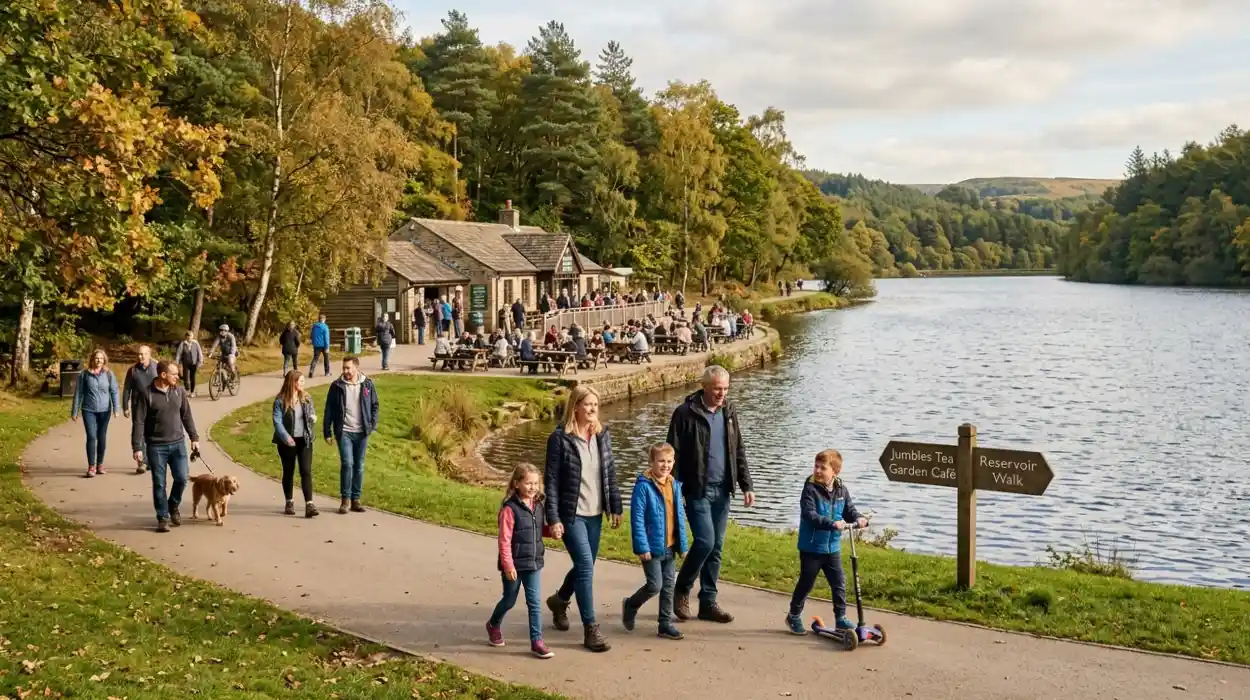
Bolton’s top parks include Moses Gate Country Park, Jumbles Country Park, Hall Lee Bank Park, Moss Bank Park, and Queen’s Park; each offers play areas, walking routes, cafés (where listed), wildlife, and facilities for families and walkers.
Bolton’s park network covers managed country parks, municipal parks, and nature reserves that serve recreation, conservation, and community events. Moses Gate Country Park is a 750-acre site with lakes, riverside paths, and a visitor hub offering facilities and seasonal activities. Jumbles Country Park centers on a reservoir and valley walks with an on-site Tea Garden Café and waymarked paths. Hall Lee Bank Park and Moss Bank Park provide formal play equipment, sports pitches, and local-access green space near Bolton town areas. Queen’s Park includes ornamental flowerbeds, a play area, and sheltered spaces for events.
What is Moses Gate Country Park, and why is it important?
Moses Gate Country Park is a 750-acre mixed habitat park with lakes, river corridors, and restored industrial landscapes that support walking, birdwatching, and family play areas.
Moses Gate sits south of Bolton town centre and combines meadow, wetland, and woodland habitats created from former industrial land. Key components include the River Croal corridor, a series of ponds and lakes, surfaced footpaths, waymarked trails, and an interpretation/visitor hub for orientation. Processes that shaped the park include industrial land reclamation and habitat restoration carried out in the late 20th and early 21st centuries, converting mill and mining remains into public green space. Real-world uses include dog walking, structured birdwatching, joggers using looped trails, and seasonal community events hosted by local conservation groups. The park’s ecological value supports waterfowl and wetland species and contributes to Bolton’s greenspace targets under local planning policies.
What facilities and play areas exist at Jumbles Country Park?
Jumbles Country Park features a large reservoir, a network of footpaths, a designated play area, and the Tea Garden Café serving refreshments to visitors.
Jumbles is located in the Bradshaw Valley about four miles north of Bolton town centre, and offers waterside walks and reservoir views. The park’s structure includes car parking, surfaced loops suitable for families and moderate walkers, informal picnic areas, and a small visitor café (Tea Garden Café) that supplies light meals and hot drinks. Management focuses on maintaining safe play equipment, path surfacing, and shoreline habitats; these processes include regular inspections, seasonal vegetation control, and partnership work between local authorities and volunteer groups. Visitors commonly combine short circular walks (1–3 miles) with refreshments at the café and birdwatching near the water’s edge.
Which parks in Bolton are best for children’s play areas?
Hall Lee Bank Park, Moss Bank Park, Farnworth Park, and Longsight Park each have dedicated children’s play areas, open grass for ball games, and nearby seating for caregivers.
Hall Lee Bank Park includes a formal play area and open lawns for family recreation near central Bolton neighbourhoods. Moss Bank Park offers playground equipment, a bandstand area for small events, and paths linking to surrounding streets. Farnworth Park has playground equipment, sports pitches, and a bowling green as structured components providing active play and organised sport. Longsight Park supplies play equipment plus a football pitch and level paths used by local primary school children and families for daily visits. Park management schedules routine safety inspections and equipment maintenance, with local council funding or community-initiated projects used for upgrades.
Where can visitors find cafés and refreshment points in Bolton parks?
Tea Garden Café at Jumbles, visitor facilities at Moses Gate, and seasonal kiosks or nearby high-street cafés serve park visitors; many country parks have on-site or adjacent cafes within 0.1–1.5 miles.
Parks designed for day visits include provisions for refreshments to support longer stays. The Tea Garden Café at Jumbles provides light meals and hot drinks and sits next to the reservoir access points. Moses Gate has a visitor hub with seasonal services and interpretive information; larger parks also host community-run refreshment stalls during events. For parks without on-site cafés, nearby village or town cafés commonly sit within a short walk—typically less than 20 minutes—enabling combined walk-and-café visits.
How long are the main walking routes in Bolton’s parks?
Common walking loops range from 1 mile to 6 miles: short family loops (1–2 miles), reservoir circuits (2–4 miles), and extended country-park routes up to 6 miles at Rivington and Jumbles.
Specific examples: Jumbles reservoir loop falls in the 2–4 mile range and suits families with prams; Moses Gate contains multiple linked trails providing short 1–2 mile loops and longer 3–5 mile linear options along the Croal corridor. Rivington Terraced Gardens and surrounding network offer longer, steeper walks and planned routes that range from 3 miles to more than 6 miles for hill and terrace circuits. Walk durations depend on pace: a 2-mile family walk typically lasts 40–60 minutes at an easy pace, while 5–6 mile routes take 1 hour 45 minutes to 2 hours 30 minutes for average walkers.
Explore More Bolton Town Centre News
Three Fire Engines at Nationwide Deansgate Branch Bolton 2026
Bolton town centre street shut for repairs in 2026
What wildlife and nature features can visitors expect?
Bolton parks feature wetlands, reservoir ecosystems, woodland, meadows, and scrub supporting waterfowl, resident songbirds, and small mammals, plus designated nature reserves for habitat protection.
Wetland areas at Moses Gate and reservoirs at Jumbles and Rivington attract ducks, geese, herons, and seasonal migratory waterfowl. Meadows and restored industrial land support pollinators and small mammals such as voles, and woodland patches host resident songbirds and bats. Red Moss Nature Reserve and Eatock Lodge Nature Reserve are specific examples of protected sites with targeted conservation management to maintain peatland and wetland habitats and provide structured volunteering and community education. Seasonal birdlists and reserve monitoring provide data on species presence collected by local conservation groups and Bolton’s environmental teams.
What are the historical backgrounds of Bolton’s major parks?
Many parks in Bolton evolved from Victorian-era municipal parks, reclaimed industrial land, or estate gardens transformed into public spaces between the 19th and 21st centuries.
Queen’s Park and Moss Bank Park derive from Victorian municipal park development focused on formal gardens, bandstands, and promenading areas established in the late 19th century. Moses Gate’s landscape results from late-20th-century reclamation of industrial river corridors and mining sites, with restoration projects undertaken to create wetland and meadow habitat. Rivington Terraced Gardens originated as an early 20th-century landscape design and terrace system on a historic estate, later maintained as public gardens. These historical processes reflect broader urban trends: industrial growth, municipal philanthropy for public parks, and post-industrial landscape restoration.
How do Bolton parks support community health and recreation?
Bolton parks provide formal sports pitches, surfaced walking routes, play areas, and volunteering programmes that support physical activity, mental wellbeing, and social connection for all age groups.
Facilities include multi-use sports pitches, benches and sheltered areas, accessible paths for wheelchairs and prams, and organised programmes such as guided walks and conservation volunteering. Local initiatives like “Let’s Keep Bolton Moving” list over 20 parks and green spaces used for structured exercise and community health activities, showing council-level recognition of parks’ role in public health. Volunteer conservation groups deliver habitat management and community events that increase park use and stewardship, improving social cohesion and local ownership of green spaces.
What are access, opening hours, and charges for Bolton parks?
Most Bolton parks are free to enter, open year-round during daylight hours, and provide free parking at selected country parks with variable charges or time limits at council car parks.
Municipal parks (Queen’s Park, Moss Bank Park, Hall Lee Bank Park) have free public access with park gates open from dawn to dusk; no entrance fees apply. Country parks such as Moses Gate and Jumbles normally permit free entry; some car parks enforce parking charges or time limits managed by local council regulations. For event days or special attractions, temporary fees or donations may apply; visitors should check local council or park pages for event-specific information.
Which parks host events and community programmes?
Queen’s Park, Farnworth Park, Moses Gate, and community reserves host seasonal events, guided walks, school programmes, and volunteer conservation days run by Bolton Council and local organisations.
Parks with bandstands or open lawns, such as Queen’s Park and Farnworth Park, host small concerts, fetes, and remembrance events during summer months. Conservation groups coordinate habitat-management volunteer days at sites like Eatock Lodge and Red Moss Nature Reserve and deliver school and family environmental education programmes. Seasonal guided walks and ranger-led activities occur at Moses Gate and country parks, often publicised via Visit Bolton and council channels.
How should visitors plan a family visit to Bolton parks?
Plan by selecting a park with suitable play facilities, check café opening times (if needed), allow 1–3 hours for short visits and 3–5 hours for combined walks and picnic, and confirm parking and accessibility information online.
Select parks by purpose: choose play-focused parks (Hall Lee Bank, Moss Bank) for short family stays, reservoir parks (Jumbles) for waterside walking plus café breaks, and country parks (Moses Gate) for longer wildlife or walking days. Bring essentials: weather-appropriate clothing, water, and a basic first-aid kit; for longer routes, include topographic maps or downloaded GPX routes for navigation. Check council or park pages the day before travel for closures, event notices, or parkworks that affect routes or facilities.
What are safety and conservation rules visitors must follow?
Visitors must follow dogs-on-lead zones near play and wildlife areas, use designated paths to protect habitats, dispose of litter in provided bins, and observe posted safety signs; these rules protect wildlife and visitor safety.
Specific mechanisms include leash requirements near paddling and bird-nesting zones, seasonal restrictions in sensitive reserves, and signage indicating path closures for restoration. Park authorities enforce rules through ranger patrols and community reporting; violations risk fines under local bylaws in some cases. Following these rules preserves habitat quality, reduces disturbance to breeding birds, and maintains safe shared use for cyclists, walkers, and families.
What are future plans and implications for Bolton’s parks?
Bolton Council and community groups continue to prioritise restoration, accessibility improvements, and event programming to expand use, enhance biodiversity, and support climate resilience in local green spaces.
Planned interventions include surfacing improvements for accessibility, tree-planting schemes to increase urban canopy, pond and wetland restoration for flood attenuation, and upgraded play equipment to meet contemporary safety standards. Strengthening volunteer networks and partnership funding aims to sustain maintenance budgets and expand educational programmes, increasing parks’ social and ecological value for future decades.
Where can I find authoritative information and local updates?
Authoritative sources include Visit Bolton, Bolton Council parks pages, local conservation groups (Bolton Conservation Volunteers), and national reserve listings for detailed maps, events, and access details.
Use Visit Bolton and Bolton Council web pages for official event calendars, car park information, and seasonal notices. Local conservation charities and reserve groups publish volunteer dates, species records, and restoration project updates. TripAdvisor and user-review sites provide visitor impressions and practical tips but should be cross-checked with official pages for current access and facilities.