Key Points
- Wembley Ambitions: Unbeaten professional boxer Abdul Khan is targeting a major victory at Wembley Arena to bring further sporting glory to his hometown of Bolton.
- Wanderers Inspiration: Khan’s high-profile appearance comes exactly one week after football club Bolton Wanderers secured promotion to the Sky Bet Championship with a dramatic victory at Wembley Stadium.
- Flawless Professional Record: The 23-year-old featherweight prospect enters the ring aiming to defend and extend his perfect 14-0 professional boxing record.
- Undercard Stage: The bout takes place on the high-profile undercard of the super-lightweight clash between Adam Azim and Steve Claggett, broadcast globally on the DAZN streaming platform.
- Late Opponent Change: Khan faces late replacement Liam Fitzmaurice after his original opponent withdrew from the contest on short notice during fight week.
- Familial Guidance: The young fighter continues to receive critical training mentorship, and career support from his cousin, former unified light-welterweight world champion Amir Khan.
- Mental Resilience: Despite a chaotic preparation period and the historical weight of his family surname, Abdul Khan insists his focus remains entirely on executing his tactical game plan.
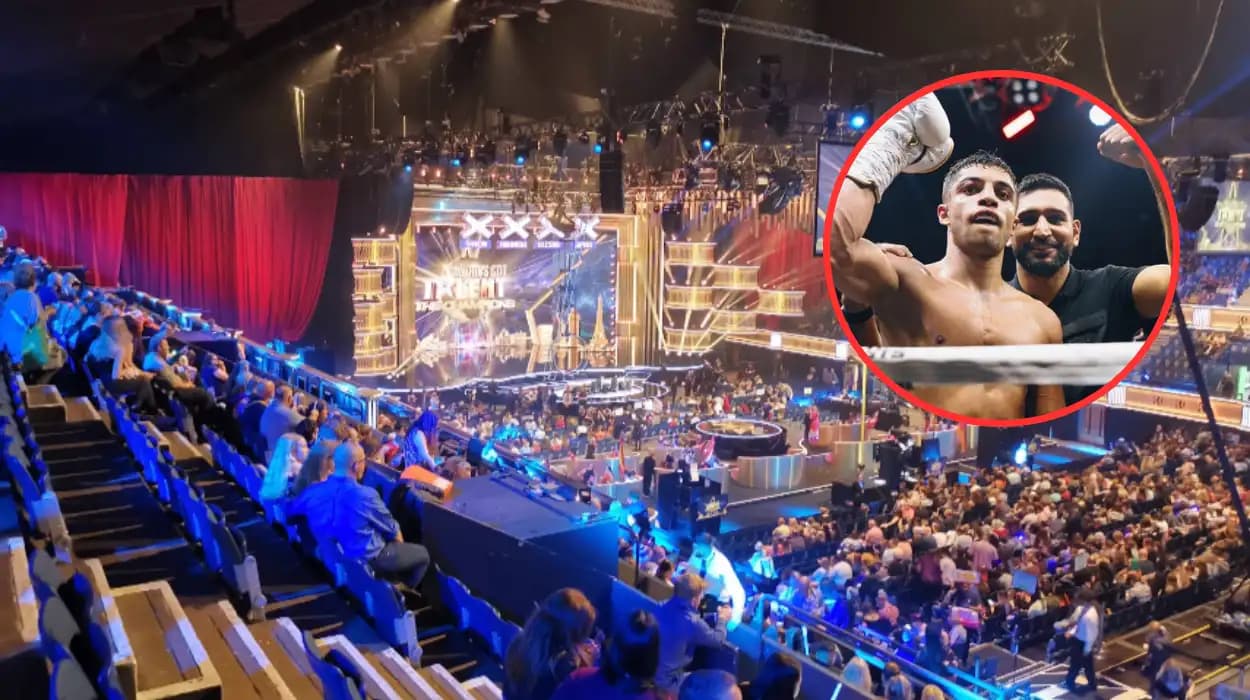
Bolton (Bolton Today) May 30, 2026 - Unbeaten professional prospect Abdul Khan is aiming to deliver another historic sporting triumph to the town of Bolton when he steps into the ring at Wembley Arena on Saturday night. The 23-year-old featherweight fighter is scheduled to clash with Liam Fitzmaurice on the high-profile undercard of the super-lightweight showdown between Adam Azim and Steve Claggett, broadcast live to a global television audience on the DAZN platform. Khan’s pursuit of capital victory comes exactly one week after his hometown football club, Bolton Wanderers FC, ignited widespread community celebrations by defeating Stockport County 4-1 in the play-off final at neighbouring Wembley Stadium to secure their return to the EFL Championship.
Entering the squared circle on the largest stage of his burgeoning career, Khan carries a pristine professional record of 14 victories and zero defeats. The regional sports community has rallied behind the young boxer, drawing direct parallels between his London appearance and the footballing heroics witnessed seven days prior. For Khan, the confluence of these events has served as immense motivation to ensure the town's current sporting golden era continues under the bright lights of the Wembley entertainment complex.
Despite facing a potentially disruptive late-notice opponent change after his original adversary pulled out during fight week, the Bolton native has maintained a completely unwavering focus. Guided by the elite-level mentorship of his cousin, former unified world champion Amir Khan, the emerging star insists that the pressure of his famous fighting surname and the grandeur of the venue will not detract from his core objective: maintaining his flawless record and marching toward a domestic title shot.
Why is Abdul Khan's Wembley fight so significant for the town of Bolton?
The timing of Abdul Khan’s latest professional outing has transformed a standard developmental bout into a symbolic moment of civic pride. Just seven days before Khan’s scheduled ring walk, the streets of Greater Manchester were painted white and navy as thousands of football fans traveled south to watch Bolton Wanderers secure their long-awaited promotion back to the second tier of English football.
The euphoria of that victory has directly fueled Khan’s training camp, creating a unique psychological narrative where the boxer views himself as the second leg of a historic sporting relay for the municipality. As detailed in the comprehensive ringside coverage provided by veteran sports reporter Dan Barnes of The Bolton News, Khan expressed a profound sense of pride regarding the timing of his fight, connecting his personal ambitions directly to the collective joy of his hometown.
The young fighter’s upcoming performance represents a crucial bridge between local grassroots support and mainstream national television exposure. For an area historically rooted in working-class sporting traditions, having both their premier football club and their most promising young pugilist competing at the historic venues of Wembley within the same week offers a significant boost to the town's athletic profile.
How has the success of Bolton Wanderers influenced the boxer's mindset?
Athletes regularly seek external sources of inspiration to sustain them through grueling training regimes, and for Abdul Khan, the catalyst was waiting for him at the national stadium. Watching the tactical display of Ian Evatt’s Bolton Wanderers side provided the perfect motivational blueprint for his own high-stakes assignment.
As reported by Dan Barnes of The Bolton News, Abdul Khan stated that:
"I'm feeling amazing. Training has gone really well. It's elevated each camp, to be honest, and I'm looking forward to being a Boltonian going back to Wembley again! To see our team winning and getting to the Championship, now I am going back there to represent Bolton."
This explicit link between corporate footballing success and individual combat sports showcases the unique communal mindset present within the modern generation of regional British fighters. Rather than viewing his career in a vacuum, Khan actively internalizes the victories of his local community, transforming the pressure of regional representation into a psychological advantage that he intends to carry through the ropes on Saturday night.
Does the scale of Wembley Arena alter Abdul Khan’s tactical approach?
Wembley Arena, historically known as the Empire Pool, is steeped in boxing lore, having hosted legendary nights featuring icons such as Muhammad Ali, Henry Cooper, and Joe Calzaghe. For a 23-year-old prospect accustomed to regional sports halls and smaller arena circuits, stepping into such an iconic auditorium could easily prove overwhelming.
However, experienced sports journalists within the British boxing press have noted that elite fighters must possess the ability to compartmentalize their surroundings. According to the published interview conducted by Dan Barnes of The Bolton News, Abdul Khan dismissed any suggestions that the physical location of the contest would dictate his emotional state or ring generalship. Khan stated that:
"To be honest, I take every fight the same. At the end of the day, it is just a ring, wherever it is. It could be in my back garden, it could be Wembley, it could be anywhere. All I am worried about is the preparation being on point, the performance and making sure that I deliver my gameplan."
This pragmatic philosophy emphasizes a mature understanding of ring mechanics. By reducing the grand, historic venue of Wembley to a standard 20-foot square canvas, Khan aims to neutralize the ambient distractions of thousands of spectators and television cameras, focusing purely on spatial awareness, distance control, and the physical threat posed by his opponent.
How has the late-notice opponent change impacted the fight preparation?
In professional boxing, a late change of opponent represents one of the most perilous hurdles a rising prospect can face. Months of meticulous tactical planning, sparring specifically tailored to an opponent's stance, and psychological visualization can be rendered completely redundant in a matter of hours.
For this event, Abdul Khan was forced to adapt instantly when his scheduled opponent withdrew from the card due to unforeseen circumstances. Journeyman Liam Fitzmaurice stepped forward on short notice to salvage Khan’s position on the DAZN broadcast. The shift from a known, scouted fighter to a late-replacement alternative introduces unpredictable tactical variables that have derailed numerous undefeated prospects throughout boxing history.
What are the dangers of fighting a late replacement?
- Stance Discrepancies: Shifting from an expected orthodox opponent to a southpaw can completely ruin a fighter's defensive angles and jab timing.
- Pacing Uncertainty: Lack of available video footage on late substitutes makes it difficult to judge their stamina thresholds or preferred fighting distance.
- The "Nothing to Lose" Factor: Short-notice opponents frequently fight with complete freedom, carrying zero pressure and maximum dangerous unpredictability.
Despite these clear operational hazards, Khan has refused to allow the logistical disruption to serve as a built-in excuse for a subpar performance. As documented by Dan Barnes of The Bolton News, Abdul Khan explained the fluid situation during fight week, stating that:
"Unfortunately, I have had a pull-out. That was one thing I have had to deal with. I was expecting to fight someone else but this is a late replacement. I have just got to go in there, do what I do and I can't take my eyes off the ball. I have to make sure that I keep marching forward and get to where I want to be."
How does Abdul Khan manage the psychological strain of unexpected ring changes?
The ability to maintain emotional equilibrium during a chaotic fight week separates elite prospects from standard competitors. Khan’s calm acceptance of the logistical instability stems from prior experiences within the notoriously volatile ecosystem of small-hall and regional British boxing.
Reflecting on the unpredictable nature of his chosen profession, Khan noted that structural changes are simply an administrative reality that a modern fighter must accept. As recorded by Dan Barnes of The Bolton News, Abdul Khan stated that:
"I've had it before last minute, the week of the fight, two days before the fight, where the opponent has changed. At the end of the day, it is part of the game. I can't cry about it, I just need to crack on with it and deal with it."
Furthermore, Khan highlighted that maintaining physical activity and building consistency inside the ring far outweighs the inconvenience of an opponent swap. Discussing his recent competitive schedule, Khan told the newspaper:
"I'm grateful to be back in the ring because one thing I've always wanted was activity, and I can't complain now that I'm fighting again. My last fight was about seven weeks ago and I'm grateful to be back out there again."
This quick turnaround from his previous outing just seven weeks prior indicates that Khan is prioritizing the refinement of his skills through active ring time rather than over-analyzing the specific identities of his opposition.
What role does Amir Khan play in the development of Abdul’s boxing career?
It is impossible to discuss the rise of Abdul Khan without acknowledging the profound sporting legacy of his cousin, Amir Khan. As a 2004 Olympic silver medalist and a former unified light-welterweight world champion, Amir remains one of the most transformative figures in modern British boxing history, particularly for athletes of South Asian heritage originating from the North West of England.
Amir Khan's presence in Abdul’s corner and training camps offers the young prospect a level of elite sports science data, tactical insight, and psychological counseling that money simply cannot buy. Having navigated the extreme pressures of headlining major Las Vegas pay-per-views and unifying world divisions, Amir is uniquely qualified to guide his younger cousin through the financial, promotional, and athletic pitfalls of the professional ranks.
The relationship ensures that Abdul’s training methodologies remain aligned with modern international standards. However, carrying one of the most famous names in British sports also invites intense media scrutiny and elevated expectations from boxing analysts, who naturally compare Abdul's hand speed, defensive capabilities, and career trajectory to those of his illustrious relative.
Does the famous Khan surname create too much pressure for the young fighter?
Stepping into a professional boxing ring under the shadow of a world-champion family member is a double-edged sword. While the Khan name guarantees promotional interest from major networks like DAZN and commercial sponsors, it also ensures that every minor technical flaw or defensive lapse is hyper-analysed by critics.
When questioned directly about the psychological burden of living up to the family legacy, Abdul Khan revealed a stoic, performance-driven mentality. As reported by Dan Barnes of The Bolton News, Abdul Khan addressed the topic of familial expectation directly, stating that:
"Pressure creates diamonds so I just take it like that. It only fuels me more, to be honest, and makes me want to become a better fighter. I train really hard at the gym and I'm my own man. I know what I'm capable of and my team know what I am capable of, and that is all I am worried about."
By invoking the classic athletic aphorism regarding pressure and diamonds, Khan positions the public scrutiny not as an emotional burden, but as a vital environmental catalyst for his personal growth. His assertion of being his "own man" highlights a crucial psychological boundary, demonstrating that while he respects the historical blueprint laid down by Amir, his primary motivation remains the authorship of his own distinct legacy within the featherweight division.
What are the future projections for Abdul Khan within the domestic featherweight division?
With an unblemished record of 14-0, Abdul Khan is rapidly approaching the conclusion of the developmental phase of his career. Boxing analysts speculate that a dominant performance at Wembley Arena against Liam Fitzmaurice will act as the necessary springboard to transition him from a prospect into a legitimate contender for domestic honours.
The British featherweight scene is traditionally one of the most competitive landscapes in European boxing, filled with battle-hardened operators and technically proficient counter-punchers. To successfully transition to 10-round and 12-round championship distances, Khan will need to build upon the momentum of his Wembley appearance by targeting the British, Commonwealth, or European titles within the next twelve months.
For Khan, the immediate task remains a clinical execution of his strategy on Saturday night. In the high-stakes world of professional prize fighting, a single lapse in concentration can dismantle years of undefeated momentum. By combining the inspiration of Bolton Wanderers’ recent Wembley triumph, the strategic guidance of Amir Khan, and his own internal resilience, Abdul Khan enters the ring prepared to ensure that the sporting spotlight remains firmly shone on the town of Bolton.