Key Points
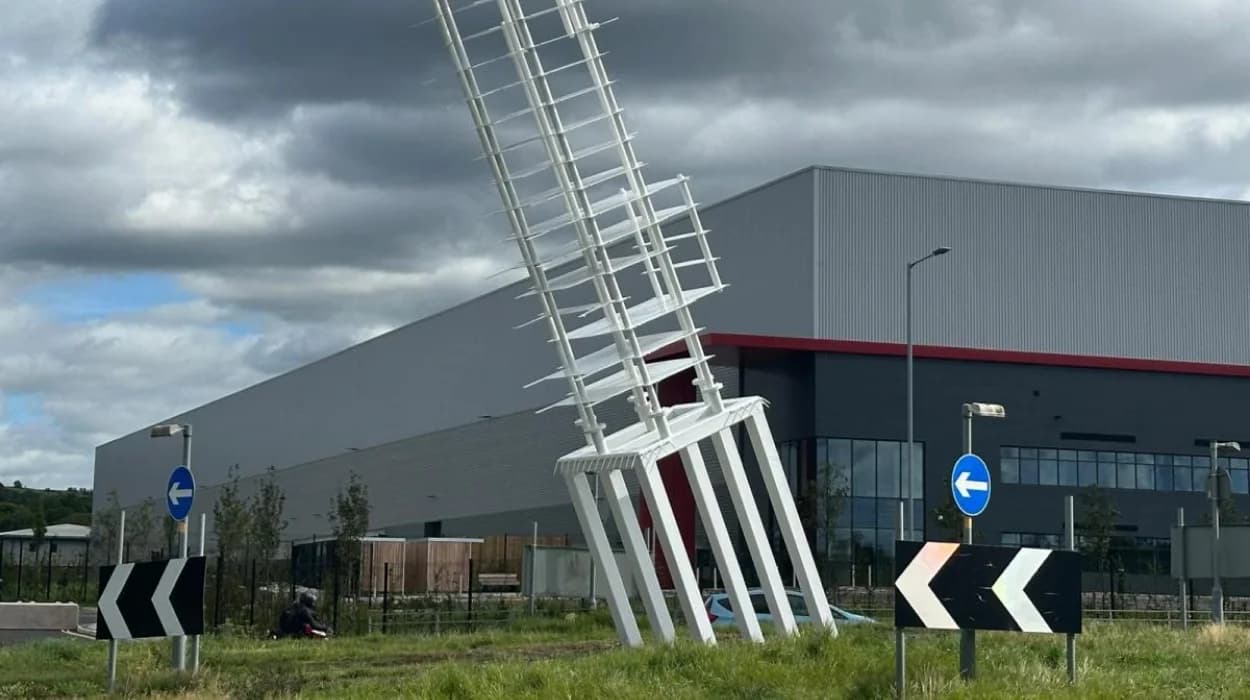
- Project Completion: The much-discussed restoration of the famous "Ghost Train" sculpture situated at the Middlebrook roundabout in Horwich has been completed in a matter of months following an extensive period of engineering works.
- Protection Against Corrosion: Following extensive corrosion, the sculpture has been completely blasted clean and covered with a special 25-year anti-corrosion paint.
- Finance Information: The total cost of the renovation works was £81,490. It was made clear by councillors that the project was funded by a regional Greater Manchester recycling operations rebate scheme, not general council tax revenues of the town.
- Significance for the Town's History: The sculpture was originally conceived as a commemoration of the rich history of locomotive production in Horwich and is protected by law as public art under national planning policies linked to local commercial development.
- Local Political Consensus: The local councillors have justified their budget spend on social media, claiming that the disassembly of the work would have been very costly while not doing justice to the town's legacy.
Middlebrook (Bolton Today) September 3, 2026 – A long-running debate surrounding a heavily corroded industrial monument at the heart of Horwich has finally drawn to a close following the completion of an extensive multi-thousand-pound restoration project.
The famous "Ghost Train" sculpture, situated prominently at the Middlebrook roundabout adjacent to the bustling retail and leisure complex, has been completely restored to its original state. The landmark had suffered years of severe environmental degradation, becoming a lightning rod for community political clashes over public expenditure and urban heritage preservation. Work on the structure officially concluded approximately four weeks ago, unveiling a striking transformation that local leaders hope will settle years of public grievance regarding the site's condition.
Why Was the Middlebrook Ghost Train Monument Refurbished?
As reported by reporter Joe Regent of The Bolton News, the landmark sculpture had fallen into severe disrepair over recent years due to continuous exposure to weather elements and road spray from the surrounding roundabout. The corrosion had stripped the structure of its original aesthetic appeal, triggering widespread complaints from residents and visitors passing through the Horwich area.
The deterioration turned the public artwork into a focal point of debate between community groups, local politicians, and taxpayers. While some residents campaigned heavily for the structure to be repaired and saved as a testament to local industrial heritage, others argued that the neglected steel frame had become an eyesore that warranted complete demolition.
Responding to the mixed public reactions, local representatives determined that leaving the sculpture in its degraded state was no longer viable. Addressing the visual transformation, Councillor David Grant, who represents the Horwich South and Blackrod ward, told Joe Regent of The Bolton News:
"It looks infinitely better."
Councillor Grant highlighted that while opposition had surfaced online regarding the financial scope of the renovation, action was imperative given the sheer volume of complaints regarding the monument's physical decay. As noted by reporter Joe Regent of The Bolton News, Councillor Grant explained:
"Despite people stating on social media that it's a lot of money, we as ward councillors also got a lot of comments about how horrible it looked and that it needed something doing to it."
How Much Did the Ghost Train Restoration Cost and How Was It Funded?
As confirmed by reporter Joe Regent of The Bolton News, the total financial expenditure for the comprehensive overhaul came to £81,490. The significant price tag sparked widespread discussion across local online forums, with critics questioning whether public funds should be allocated toward public art restoration during challenging economic periods.
However, municipal officials have clarified the precise financial mechanics behind the project to dispel misconceptions regarding the source of the capital. As reported by Joe Regent of The Bolton News, Councillor David Grant emphasized that the required £81,490 did not draw upon general tax receipts or household council tax payments. Instead, the entire scope of the refurbishment was financed using a specific financial rebate connected directly to Greater Manchester’s regional recycling operations.
This dedicated funding stream allowed the council to address the infrastructural decay without drawing resources away from core municipal services or adding burdens to the local tax base. Leaders maintained that utilizing these allocated environmental funds provided a sustainable pathway to rescue the heritage structure while fulfilling local authority duties.
Explore More Horwich News
Bolton House Price Rises and Falls Revealed: Bolton 2026
New Talkin’ Tables Launching in Horwich and Harwood 2026
What Technical Engineering Work Was Required on the Sculpture?
The renovation process began in June, when contractors wrapped the entire landmark in heavy scaffolding and a protective white weather sheath to isolate the structure from the elements during treatment.
Addressing online perceptions that the initiative was merely an over-budget cosmetic paint job, Councillor David Grant outlined the deep structural requirements of the project. As reported by Joe Regent of The Bolton News, Councillor Grant stated:
"It was a significant engineering project. I know on social media a lot of people are saying, well, it's just a bit of paint, but it's not."
According to details provided by Joe Regent of The Bolton News, the restoration required high-grade specialized treatments designed to withstand harsh northern weather conditions for decades. Councillor Grant further detailed the precise technical specs, telling The Bolton News:
"It's got to have a 25-year guarantee to be corrosion resistant, and it's kind of like a special coating that they use on bridges."
The complex engineering workflow required workers to undertake high-pressure abrasive blasting across the entire metal surface to strip away decades of embedded rust and degraded original coatings. Only after the structural integrity of the steel base was verified and smoothed were the specialist bridge-grade sealant and topcoats systematically applied. The inclusion of heavy-duty scaffolding and containment wraps contributed significantly to the overall logistical scale and eventual cost of the contract.
Why Couldn't the Damaged Monument Simply Be Removed?
Throughout the public debate surrounding the site, several commentators suggested that removing the sculpture entirely would offer a cheaper, simpler resolution to the aesthetic problem. However, municipal representatives pointed out that dismantling the massive steel structure would have carried its own heavy financial and legal hurdles.
As reported by Joe Regent of The Bolton News, Councillor David Grant noted that removing the monument outright would have incurred substantial contract, clearance, and disposal costs, offering little financial savings compared to a long-term repair project.
Furthermore, legal constraints prevented the local authority from simply scrapping the installation. As Joe Regent of The Bolton News detailed, Councillor Grant explained that the sculpture maintains protected status under planning policy regulations tied to commercial land growth in the area. Councillor Grant stated:
"This was a piece of public art, which is required under national planning policy. Whenever developments happen, there's a requirement for public art, so it can't just be ripped down."
What Is the Historical Significance of the Ghost Train to Horwich?
The "Ghost Train" sculpture serves as a deliberate cultural tribute to the industrial lineage of Horwich, an area historically built around the rail manufacturing sector. The monument stands as a permanent tribute to the former Horwich Locomotive Works, which opened in the late 19th century and served as one of Britain's premier train manufacturing and repair facilities for generations.
During its operating peak, the Horwich works employed thousands of local engineers, craftspeople, and laborers, constructing over 1,800 steam and diesel locomotives and repairing tens of thousands more before its ultimate closure in the late 20th century. The surrounding commercial district, including the current Middlebrook complex, was constructed on land directly tied to this rich railway identity.
By protecting and restoring the "Ghost Train" installation, local authorities aimed to preserve this visual link to Horwich’s industrial heritage. With the high-performance 25-year protective coating now fully applied and the protective scaffolding removed, the council expects the landmark to remain a durable, rust-free fixture at the Middlebrook entryway for decades to come, bringing a definitive end to a protracted community debate.