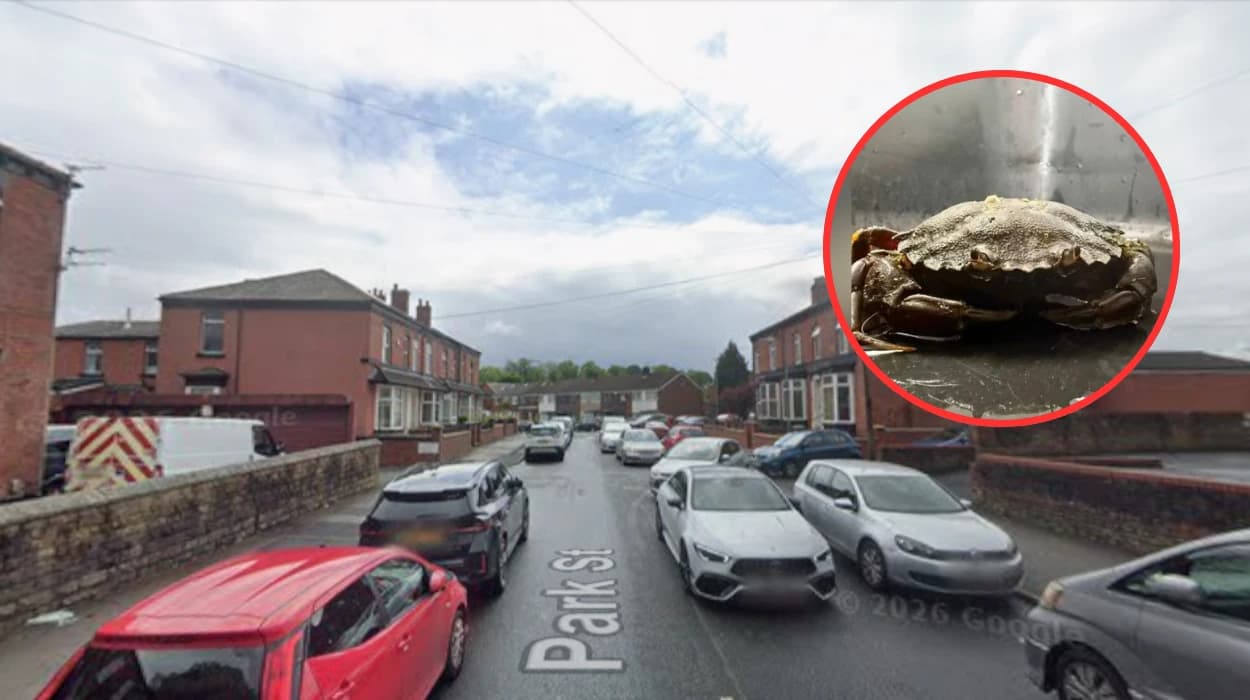
Key Points
- Unusual Discovery: A pair of marine crabs was discovered on a residential driveway in Bolton, miles away from the nearest coastline, after setting off a home Ring doorbell camera.
- Veterinary Surprise: The local member of the public transported the first crustacean to Bolton Vets for Pets, returning less than an hour later with a second crab found at the same property.
- Temporary "Crab Ward": Practice staff named the two shore crabs Sandra and Malcolm and created a temporary, bespoke "Crab Ward" equipped with a handmade sign to care for them.
- Specialised Care Routine: Because shore crabs are territorial and aggressive towards one another, staff kept Sandra and Malcolm housed separately and administered small amounts of saline solution.
- Expert Marine Consultation: Bolton Vets for Pets sought guidance from specialists at Manchester Sea Life Centre, Blackpool Sea Life Centre, and other marine biology professionals.
- Successful Release: Following expert instructions, a registered veterinary nurse from the practice safely released both crabs back into their natural coastal environment at New Ferry Shore later that same day.
- Unsolved Origin: The origin of the crustaceans remains unexplained, although cobwebs found on one crab's shell suggest it had been hiding in a local garage, vehicle, or structure.
- Public Guidance: Practice owner and registered veterinary nurse Karla Maginn advised the public to always seek advice before handling or intervening when encountering displaced or unexpected wildlife.
Bolton (Bolton Today) August 5, 2026 – Residents and veterinary professionals in Greater Manchester have been left astonished after two live marine crabs were discovered on a suburban driveway in Bolton, located scores of miles inland from their natural coastal habitat. The extraordinary series of events began when a local householder was alerted by a Ring doorbell security camera to movement on their property, only to discover a live shore crab traversing the driveway. Upon transporting the unexpected marine creature to Bolton Vets for Pets, veterinary staff expressed utter disbelief at encountering a saltwater crustacean in the heart of urban Lancashire. However, the scenario escalated into an even more surreal spectacle when, less than 60 minutes later, the very same member of the public returned to the clinic holding a second live crab picked up from the exact same residential location.
Staff at the clinic immediately mobilised to provide emergency accommodation, naming the two crustaceans Sandra and Malcolm. Recognising that shore crabs possess highly territorial instincts and require precise environmental conditions to survive away from ocean waters, the team constructed a dedicated "Crab Ward" inside the surgery. The crustaceans were placed into isolated enclosures to prevent aggressive interactions and were carefully hydrated with balanced saline solution. Practice staff subsequently contacted marine life experts across the North West of England, including specialists at Manchester Sea Life Centre and Blackpool Sea Life Centre, to coordinate a safe repatriation protocol. Following expert recommendations, a registered veterinary nurse personally transported Sandra and Malcolm to New Ferry Shore on the Wirral peninsula later that afternoon, successfully releasing both animals back into the Irish Sea.
How Were the Crabs Discovered on a Bolton Driveway?
The initial discovery unfolded in a quiet residential neighbourhood in Bolton, where modern smart-home technology played an unexpected role in wildlife rescue. As reported by reporter James McNeill of The Bolton News, the home's motion-activated Ring doorbell camera was triggered by an intruder moving across the concrete surface of the driveway. Expecting perhaps a delivery driver, a domestic cat, or a stray fox, the homeowner checked the camera feed, only to observe a shore crab making its way across the domestic pavement.
Bolton lies in Greater Manchester, situated approximately 30 miles from the nearest marine estuary and even further from coastal rockpools where shore crabs typically reside. Astonished by the sight of a marine animal crawling past their doorstep, the resident managed to safely contain the creature before transporting it directly to Bolton Vets for Pets for urgent medical evaluation and shelter.
Veterinary staff at the facility were initially stunned when presented with a marine animal inside a suburban clinical setting. However, the situation transformed from an isolated oddity into an unprecedented double rescue when the same resident arrived back at the practice less than an hour later. Upon returning home from their initial trip to the clinic, the householder had spotted a second shore crab crawling in close proximity to where the first had been gathered.
What Did Veterinary Nurse Karla Maginn Say About the Strange Arrival?
The arrival of two distinct saltwater creatures at a suburban veterinary practice created a mixture of professional focus and lighthearted bewilderment among the clinical team. As reported by James McNeill of The Bolton News, Karla Maginn, registered veterinary nurse and practice owner at Bolton Vets for Pets, explained the initial shock experienced by the medical staff when the first box was opened.
"When the first crab came in, there was definitely a moment of, 'are we really looking at a crab in Bolton?'"
stated Karla Maginn during an interview with The Bolton News.
Karla Maginn further detailed how the atmosphere within the surgery shifted when the second crustacean was delivered so shortly afterwards, adding:
"Then the second one arrived and it became even more surreal. There was lots of laughter, but the team responded brilliantly."
Acknowledging that standard domestic pet facilities are rarely equipped for marine biology cases, Karla Maginn emphasised that the veterinary team immediately prioritised the biological needs of the animals. As reported by James McNeill of The Bolton News, Karla Maginn noted:
"Shore crabs have very specific needs, so we kept Sandra and Malcolm separate, monitored them closely and contacted specialists before making any decisions."
How Did the Veterinary Team Set Up the "Crab Ward"?
Once Sandra and Malcolm were safely inside the facility, the team at Bolton Vets for Pets set about adapting their environment to cater to marine invertebrates. Shore crabs (Carcinus maenas) are known for their hardy nature, but prolonged exposure to dry air and fresh water can cause severe physiological stress or fatal desiccation. Furthermore, male and female shore crabs are intensely territorial and can inflict serious injury on one another if forced into close confinement.
To address these risks, the practice established a specialized accommodation area within the clinic, complete with a custom, handmade "Crab Ward" sign. Sandra and Malcolm were housed in separate, secure containers lined with appropriate damp substrates to maintain high humidity levels without submerging them in unoxygenated tap water, which would have proven lethal.
To counteract dehydration and replenish essential electrolytes, the veterinary team administered small, carefully measured amounts of a tailored saline solution. Throughout the morning, nurses continuously monitored the activity levels, gill respiration, and physical responses of both Sandra and Malcolm, ensuring that their temporary stay in Bolton caused as little stress as possible.
Explore More Bolton News
Best Family Days Out and Attractions in Visit Bolton 2026
Two Lanes Closed on M6 Motorway Following Severe Crash: Chorley 2026
Which Marine Experts Provided Guidance for Sandra and Malcolm?
Recognising that long-term care for coastal crustaceans falls outside standard veterinary clinical protocols, the team at Bolton Vets for Pets reached out to professional marine conservation institutions across the region. As reported by James McNeill of The Bolton News, guidance was sought directly from marine biologists and aquarists at the Manchester Sea Life Centre, the Blackpool Sea Life Centre, and independent marine specialists across the North West.
These marine experts conducted rapid assessments over the phone and via visual documentation supplied by the clinic. They confirmed that both Sandra and Malcolm were native European shore crabs, a resilient species commonly found along British rocky shores, estuaries, and tidal flats.
The specialist advisors commended the clinic's decision to keep the crabs separate and hydrated with saline solution. They advised that, provided neither animal exhibited signs of disease or physical trauma, the optimal course of action was an immediate return to a natural tidal environment rather than prolonged captivity or attempt at feeding. Blackpool and Manchester Sea Life Centre experts helped identify an ideal release location that featured appropriate intertidal mudflats, shelter, and tidal movement to give Sandra and Malcolm the highest chance of survival.
Where Were the Crabs Eventually Released Back Into the Wild?
Following the explicit instructions provided by marine specialists, the clinical team acted swiftly to ensure Sandra and Malcolm were returned to the sea on the very same day they were discovered. New Ferry Shore, located along the Wirral coastline overlooking the River Mersey estuary, was chosen as the designated release site due to its rich intertidal environment and favorable salinity levels.
A registered veterinary nurse from Bolton Vets for Pets volunteered to undertake the journey from Greater Manchester down to the Wirral coast, carefully transporting Sandra and Malcolm in climate-controlled containers. Upon arrival at New Ferry Shore, the nurse placed the containers near the water's edge at low tide, allowing both crabs to crawl back into the saltwater environment.
As reported by James McNeill of The Bolton News, practice owner Karla Maginn expressed deep satisfaction at the successful outcome of the unusual case.
"We were delighted to help them return safely to the coast later that day,"
Karla Maginn stated to The Bolton News, celebrating the team's ability to turn a bizarre situation into a successful conservation effort.
How Could Marine Crabs End Up Miles Inland in Greater Manchester?
The primary mystery surrounding the event remains how two living marine crabs managed to travel tens of miles inland to a residential driveway in Bolton. Neither Bolton Vets for Pets nor external experts have been able to establish a definitive explanation, though several plausible theories have been discussed by clinical staff and local residents.
One significant physical clue was discovered during the initial triage examination at the clinic. Veterinary nurses noted that one of the crabs had noticeable cobwebs adhering to its shell. This detail strongly suggests that the crustacean had spent a considerable amount of time hiding in a dark, dry structure—such as a domestic garage, garden shed, outbuilding, or the undercarriage of a motor vehicle—prior to emerging onto the driveway.
Speculation regarding their origin includes:
- Vehicle Stowaways: The crabs may have crawled into a vehicle, boat trailer, or fishing gear parked near a coastal area such as Blackpool, Southport, or Morecambe Bay, subsequently dislodging when the vehicle arrived in Bolton.
- Escaped Seafood: The pair could have escaped from a local seafood transport container, market consignment, or residential kitchen crate.
- Avian Transport: A large seabird, such as a gull or heron, might have picked up the crabs from an estuary or coast and accidentally dropped them over Bolton during flight.
Regardless of how they arrived, veterinary staff noted that the day would remain unforgettable for the entire clinic, characterized by an outpouring of crab-related puns, creative ward signage, and the satisfaction of returning two displaced sea creatures back to their natural home.
What Should Members of the Public Do If They Find Displaced Wildlife?
While discovering sea life on a suburban driveway is an exceptionally rare event, displaced, injured, or out-of-place wildlife presents a recurring challenge for local communities and animal welfare organisations across the United Kingdom.
In light of the incident, practice owner Karla Maginn offered crucial public advice through the media regarding how individuals should handle unexpected wildlife encounters. As reported by James McNeill of The Bolton News, Karla Maginn emphasised caution and professional guidance over immediate unassisted intervention.
"If anyone finds wildlife somewhere unexpected, especially if it appears injured, unwell or out of place, the best thing to do is ask for advice before intervening,"
Karla Maginn advised in The Bolton News.
Wildlife experts and veterinary professionals recommend the following steps when encountering unusual or displaced animals:
- Assess from a Distance: Avoid immediately touching or picking up unfamiliar wild animals, as stress, defensive biting, or improper handling can cause harm to both the human and the animal.
- Contact Professionals: Call a local veterinary surgeon, the RSPCA, or a specialised wildlife rescue centre to describe the animal, its location, and its physical condition.
- Provide Temporary Safety: If instructed by experts to contain the animal, use a well-ventilated, secure container kept in a quiet, dark, and temperature-appropriate room until professional assistance or transport can be arranged.
- Avoid Unsuitable Feeding: Do not offer food or fresh water without expert consultation, as incorrect diets or improper fluid administration—such as giving fresh water to saltwater species—can prove rapidly fatal.
Through prompt public action, careful handling by Bolton Vets for Pets, and collaborative expert advice from marine specialists, the strange tale of Sandra and Malcolm concluded with a happy ending on the Wirral coast.