Key Points
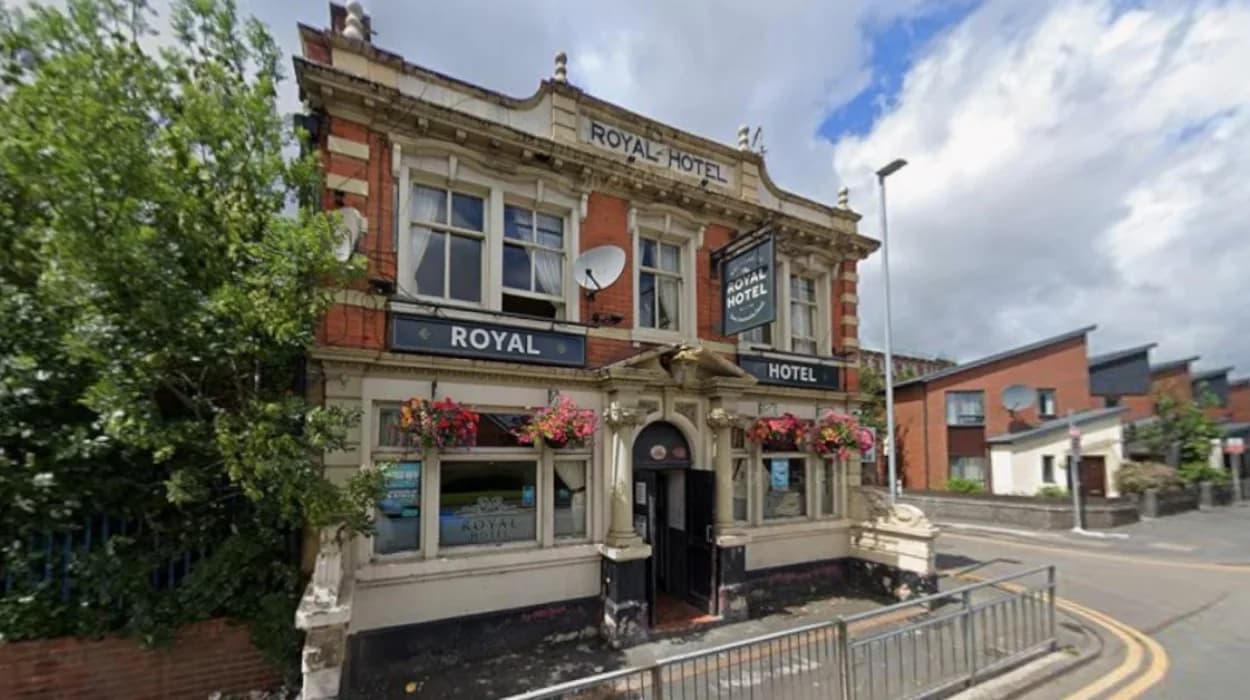
- Proposed Transformation: A formal planning application has been submitted to Bolton Council to convert the former Royal Hotel public house into a 12-bedroom House in Multiple Occupation (HMO).
- Site Location: The two-storey landmark building is located at the busy junction of Vernon Street and Davenport Street in Bolton.
- Internal Layout Proposals: Planning documents submitted on 24 August 2026 propose six en-suite bedrooms on the ground floor and six on the upper floor, along with shared kitchen and living areas.
- Exterior & Architectural Preservation: The plans retain existing doors, windows and other architectural details, along with the historic stone parapet lettering “The Royal Hotel”. Old pub advertisements would be removed.
- Recent Venue Closure: The venue closed on Sunday, 22 March 2026, after operator Proper Pubs, part of Admiral Taverns, confirmed it had no viable long-term future.
- Police & Crime Risk Assessment: Greater Manchester Police’s Design for Security team warned in a Crime Impact Assessment that a vacant building could face fly-tipping, criminal damage and drug misuse. The assessment also recommends improved security hardware.
- Environmental & Acoustic Considerations: An independent noise assessment found that traffic noise on Vernon Street requires closed-window acoustic controls and alternative mechanical or hybrid ventilation. It concluded that noise should not prevent planning permission.
Bolton (Bolton Today) August 24, 2026 – A prominent landmark public house in Bolton that permanently closed its doors earlier this year could soon be transformed into residential accommodation for 12 people under new planning proposals submitted to local authorities.
Plans submitted to Bolton Council seek formal permission to redevelop The Royal Hotel, located at the junction of Vernon Street and Davenport Street, following its closure in March. The two-storey building had served the local community for decades before hosting its final patrons on Sunday, 22nd March, following a commercial decision by its former operator that the venue was no longer financially viable. Under the new scheme, the historic building would be converted into a 12-bedroom House in Multiple Occupation (HMO), offering managed living space in the heart of the area.
What Are the Specific Architectural and Structural Plans for the Transformation?
The conversion plans involve internal alterations designed to maximize living space while preserving the historical streetscape of the surrounding neighbourhood.
As reported by Richard Ault of The Bolton News, official planning documents submitted on 24th August 2026 reveal that the proposal would establish six en-suite bedrooms on the ground floor, alongside a matching layout of six en-suite bedrooms on the upper floor. In addition to private living rooms, the conversion includes a shared communal kitchen and general living facilities for residents.
At the rear of the property, the current public house car park is designated to be repurposed into multi-use outdoor amenity space. This rear area will accommodate resident vehicle parking, secure bicycle storage facilities, and designated waste and recycling storage units.
Despite the substantial internal reconfigurations, the applicants intend to maintain the external character of the site. The planning statement describes the former public house as a prominent feature of the local street scene, noting that it is
"most likely known as a local landmark".
Under the proposed alterations:
- Existing doors, original windows, and distinctive architectural features across the exterior facades will be fully retained.
- All commercial pub signage and modern advertising fixtures will be systematically removed.
- The historic masonry wording "The Royal Hotel" carved into the stone parapet will be permanently preserved as a nod to the building's heritage.
Why Did The Royal Hotel Close and What Is the Justification for an HMO?
The decision to change the building's use comes after prolonged economic headwinds facing the traditional hospitality sector across Greater Manchester and the wider United Kingdom.
Before shutting down, The Royal Hotel was managed under the Proper Pubs operator brand, a community pub division owned by pub group Admiral Taverns. Prior to its final weekend of trading—which featured a farewell event for local regulars—the company confirmed it had taken the decision to sell the freehold after determining that the pub no longer possessed a viable long-term future as a commercial drinking establishment.
Addressing the transition from commercial hospitality to residential usage, the planning statement submitted to Bolton Council argues that securing an alternative purpose is vital to preventing the building from falling into dereliction.
As cited by Richard Ault of The Bolton News, the applicant’s planning statement outlines the commercial reality facing the property:
"Due to a downturn in the general pub trade over the past years it is unlikely that the building will be secured again for long-term use as a public house and as such it is reasonable that an alternative use be found."
The developers maintain that bringing the property back into active use as high-density residential housing will secure its long-term structural maintenance while contributing to local housing supply demands.
Explore More Bolton News
Horwich Town Council opposes Rivington parking charges plan by United Utilities in 2026
Ramsbottom–Rawtenstall–Bolton 236 Bus Route Reinstated: Lancashire Consultation 2026
What Security Concerns Were Identified by Greater Manchester Police?
Due to the scale of the proposed 12-bedroom residential conversion, local law enforcement agencies were formally consulted to evaluate potential safety and community impacts.
A comprehensive Crime Impact Assessment was conducted by Greater Manchester Police's dedicated Design for Security team and submitted alongside the primary planning documents. The assessment verified the parameters of the proposed 12-bedroom HMO change of use and warned that leaving the vacant structure unoccupied for an extended period could attract anti-social behavior. Police experts noted that an unmaintained, empty landmark site could give rise to issues including localized fly-tipping, criminal damage, street loitering, and illicit alcohol or drug misuse.
However, the police evaluation made clear that full support from the Design for Security unit is conditional upon the developer implementing specific safety interventions.
The security measures required for police endorsement include:
- Window Protection: Implementation of physical privacy and security safeguards for ground-floor bedroom windows situated directly adjacent to public pedestrian footpaths along the street.
- Access Security: Installation of burglary-resistant standards for all external doors and ground-level windows.
- Secure Mail Systems: Integrated, tamper-proof internal post arrangements to prevent mail theft among multiple occupants.
- Visitor Access: An integrated audio-video electronic entry system at main access points to restrict unauthorized entry into the living quarters.
How Will Traffic Noise and Environmental Standards Be Managed?
In addition to police security appraisals, an independent acoustic assessment was commissioned by the applicant to evaluate whether the former public house provides an acceptable living environment for residential tenants.
As reported in coverage by The Bolton News, the environmental noise study identified that external road traffic on Vernon Street and the surrounding local road network represented the primary source of ambient noise impacting the property.
The findings concluded that meeting standard internal noise thresholds would require windows facing primary roads to remain closed during peak traffic hours. To ensure adequate living conditions without compromising acoustic insulation, the report recommends that alternative mechanical or hybrid ventilation systems be integrated into the design to mitigate potential overheating during warmer weather.
Despite these technical ventilation requirements, the independent acoustic consultants concluded their findings by confirming that environmental noise "should not be a limiting factor" in Bolton Council determining whether to grant planning permission.
What Happens Next with the Planning Application?
The planning submission for The Royal Hotel has been registered by Bolton Council's planning directorate and is subject to statutory public consultation procedures.
Local residents, civic groups, and nearby business owners have been invited to review the submitted blueprints, floor layouts, crime assessments, and acoustic reports via the council's online planning portal. Planning officers will evaluate the application against local development framework rules, highways safety, housing density standards, and public feedback before the proposal is presented to the planning committee for a decision.