Key Points
- Volunteers at Horwich Repair Café revive broken electronics.
- Community event reduces electrical waste and repair costs.
- Skilled fixers help residents understand common device faults.
- Organisers highlight 2026 push for sustainable living.
- Customers praise friendly atmosphere and hands-on repair advice.
Horwich (Bolton Today) March 5, 2026 – In a bustling church hall in Horwich, volunteers at the Horwich Repair Café spent the weekend bringing dead toasters, silent radios and flickering laptops back to life, as residents queued with broken electronics in a community-led push against waste and rising living costs. In a series of carefully organised repair sessions, local fixers offered free diagnostics and low-cost repairs, encouraging people to mend rather than bin their gadgets and helping them understand why their devices failed in the first place.
How did the Horwich Repair Café electronics event unfold in 2026?
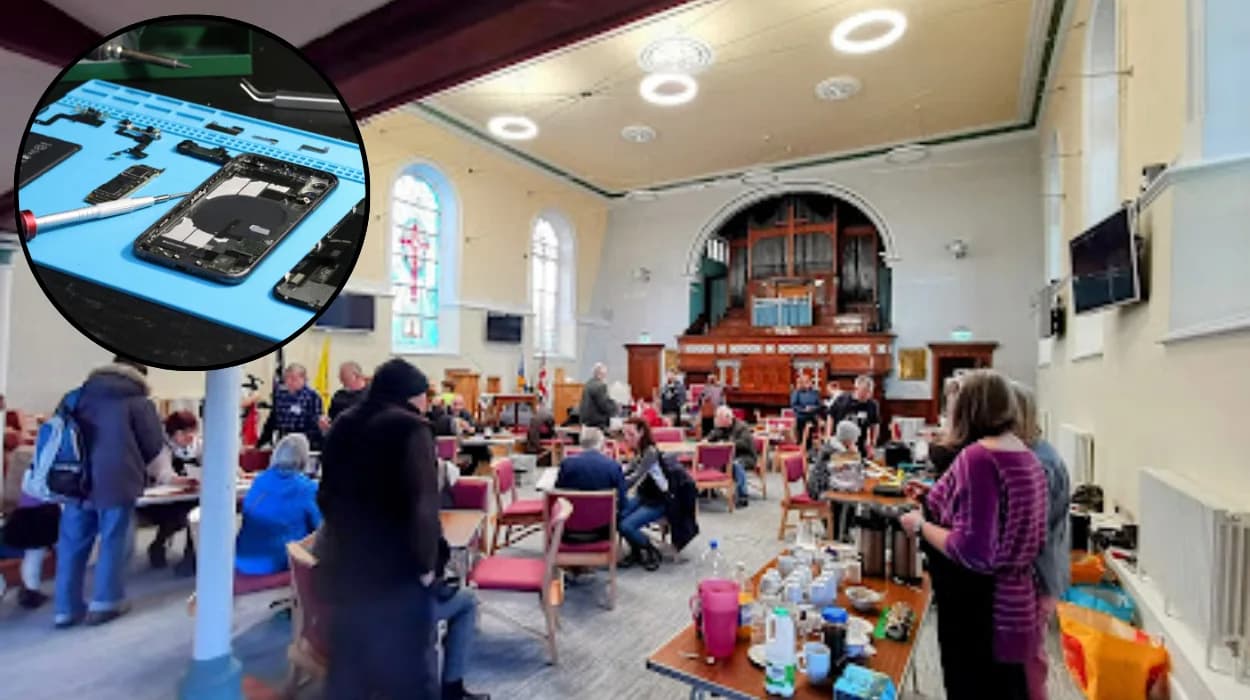
The latest Horwich Repair Café session took place in a familiar community venue, with long trestle tables laid out for electronics, small appliances, textiles and bikes, but it was the electronics corner that drew the longest line. Residents arrived clutching kettles with failed switches, vacuum cleaners that no longer powered up, laptops that refused to charge and radios that had gone stubbornly silent. Volunteers booked items in at a reception desk, tagged them, and directed visitors to the relevant repair station, where they could sit alongside the fixer rather than simply handing the device over and walking away.
From the outset, organisers stressed that this was not a drop‑off repair shop, but a learning space where people could watch and ask questions. Each repair began with a conversation about what had gone wrong, when the fault started and whether anything unusual had happened beforehand, giving volunteers clues before they even picked up a screwdriver. A retired electrical engineer checked plugs and fuses, a former IT technician focused on laptops and tablets, while hobbyist tinkerers handled kitchen gadgets, lamps and battery‑powered toys, turning the event into a practical demonstration of community skills in action.
As the morning progressed, the tables filled with open casings, neatly arranged screws and multimeters, while extension leads snaked between workstations and a PAT‑tested power hub supplied safe mains power for testing. Visitors watched as fixers traced wiring, cleaned contacts and replaced worn‑out parts, often with spares they had brought from home or sourced locally. When a device could not be revived, volunteers explained why, outlining whether the fault lay in an inaccessible sealed unit, an obsolete component or a manufacturer design that made repair uneconomic, reinforcing the message that some obstacles stem from wider industry practices rather than lack of effort.
Why does the Horwich Repair Café focus on fixing electronics?
Electronics are at the heart of modern life, yet they are among the most commonly discarded items when something goes wrong, often because people assume that repair will be expensive or impossible. By dedicating space and specialist volunteers to electronics, the Horwich Repair Café aims to challenge that assumption and show that many faults are simple, low‑cost and safe to tackle when done correctly. Organisers highlight environmental concerns, noting that discarded gadgets contribute to electronic waste, which carries a significant carbon and resource footprint from mining, manufacturing and distribution.
The focus on electronics also reflects rising household costs and the pressure many families face in 2026 as they juggle energy bills, food prices and transport expenses. A repaired kettle, hoover or laptop can save a family the cost of a replacement, freeing up money for essentials while keeping a still‑useful item out of the bin. Volunteers emphasise that teaching people to recognise straightforward faults such as a blown fuse or loose connection empowers them to make informed choices about repair in future, even if they never become experienced fixers themselves.
Alongside cost and waste, there is a social dimension: many consumer electronics are designed as sealed boxes that encourage users to treat them as disposable. By opening up gadgets in front of their owners and explaining each step, the Horwich team hopes to demystify electronics and rebuild a sense of confidence that has been eroded by decades of throwaway design. The event therefore acts not just as a repair hub, but as a quiet challenge to the idea that only manufacturers and authorised service centres can touch modern devices.
How are volunteers at the Horwich Repair Café organised and trained?
The Horwich Repair Café relies on a core group of regular volunteers supported by occasional helpers who bring specific skills or simply an extra pair of hands for busy sessions. Before each event, organisers invite volunteers to confirm their attendance and note which categories they are comfortable handling, including electronics, textiles, bikes, woodwork and general household items. New volunteers are paired with experienced fixers so that they can learn safe techniques and understand the café’s procedures, from booking‑in to documenting outcomes.
Informal training is bolstered by guidance on safety and liability, including reminders that volunteers must not take on repairs that exceed their competence or involve risks they cannot mitigate. Sessions begin with a brief safety talk covering electrical safety, safe use of tools, and the importance of keeping workspaces tidy and accessible. Volunteers are encouraged to explain what they are doing in plain language and to invite visitors to take part in simple tasks, such as holding a torch, passing tools or helping to reassemble a device, as long as it can be done safely.
Organisers also try to distribute work so that no single volunteer is overwhelmed, especially at busy times when a queue forms. A coordinator moves between tables, checking on progress, answering questions from visitors and helping match particularly tricky items with the best‑placed fixer. When a volunteer encounters an unfamiliar fault, they often consult colleagues, turning the event into a collaborative problem‑solving exercise that broadens everyone’s experience and boosts the collective skill base.
What kinds of electronic devices are typically repaired at the Horwich Repair Café?
Electronics brought to the Horwich Repair Café span a wide range of everyday items, reflecting the variety of gadgets that residents rely on at home. Popular categories include kitchen appliances like kettles, toasters and coffee machines, which often develop faults in switches, power cords, elements or thermal cut‑outs. Small entertainment devices such as radios, CD players and Bluetooth speakers also make frequent appearances, particularly when they suffer from broken sockets, worn‑out buttons or intermittent audio.
Information technology is another major category, with laptops, tablets and sometimes desktop computers arriving with problems ranging from failed chargers and damaged power sockets to slow performance and software issues. While hardware faults sit firmly within the café’s remit, volunteers are more cautious with software, helping with basic troubleshooting but avoiding tasks that would require handling personal data in depth. Battery‑powered devices like torches, electric shavers and children’s toys are common too, with many issues traced back to corroded battery contacts, worn switches or simple misunderstandings over battery types.
In addition to these, the café sometimes sees more unusual items such as sewing machines with electronic controllers, hi‑fi amplifiers, turntables and even small garden tools with electric motors. These repairs can take longer and may require specialist parts, but they are tackled when volunteers feel confident and when visitors accept that repairs may extend beyond a single session. When an item is particularly obscure or requires complex diagnostic equipment, the café notes the limitations and, where possible, directs the owner to local specialists who might be able to help.
How does the Horwich Repair Café in 2026 contribute to environmental goals?
In 2026, environmental concerns are increasingly prominent in public debates, from climate policy to local recycling schemes, and the Horwich Repair Café positions itself within this wider push for sustainability. Repairing electronics extends the life of products that would otherwise enter the waste stream, thereby reducing the demand for new devices and the raw materials needed to make them. Each successful repair represents a small but tangible reduction in the volume of e‑waste, which can contain hazardous substances and is notoriously difficult and costly to process.
The café’s organisers often illustrate this by explaining the resource intensity behind common gadgets, describing the metals, plastics and energy that go into manufacturing a basic smartphone, laptop or kitchen appliance. By comparing that invisible footprint with the relatively modest effort of replacing a switch or cable, they help visitors appreciate the broader environmental benefit of repair. The message is not that every item can or should be saved, but that many are discarded prematurely because repair has fallen out of everyday habits and consciousness.
Beyond individual repairs, the event acts as a platform to promote repair culture and advocate for policies that support it, such as right‑to‑repair rules, better access to spare parts and more repair‑friendly product designs. Organisers share information about other local initiatives, including recycling centres, community workshops and skill‑sharing groups, connecting visitors with a wider network of environmental activity.
How does the Horwich Repair Café support cost‑of‑living resilience in 2026?
With household budgets under strain in 2026, the Horwich Repair Café has become more than just an environmental project; it is also a practical response to the cost‑of‑living pressures facing residents. Many visitors arrive because they cannot easily afford to replace broken appliances, particularly when several fail in quick succession. A free diagnosis and a low‑cost fix can make the difference between having a working vacuum cleaner or struggling without, especially for families with children or older residents who rely on certain devices for day‑to‑day comfort.
The café typically operates on a donation basis, asking visitors for voluntary contributions if a repair is successful but making clear that no one will be turned away if they cannot pay. Some visitors donate parts they no longer need, such as spare chargers, cables or components salvaged from irreparable devices, which the volunteers then reuse in future repairs. This circular approach keeps costs down for both the café and visitors, while also reinforcing the principle that value can be found in items that might otherwise be discarded.
By explaining faults and demonstrating repairs, volunteers help visitors avoid unnecessary spending in future, for instance by showing how to check a fuse, clean a blocked filter or safely tighten a loose connection. This knowledge can prevent panic purchases and encourage people to try simple troubleshooting steps before assuming that a device has reached the end of its life. The café thereby functions as an informal financial resilience project, equipping people with skills and information that have real monetary value.