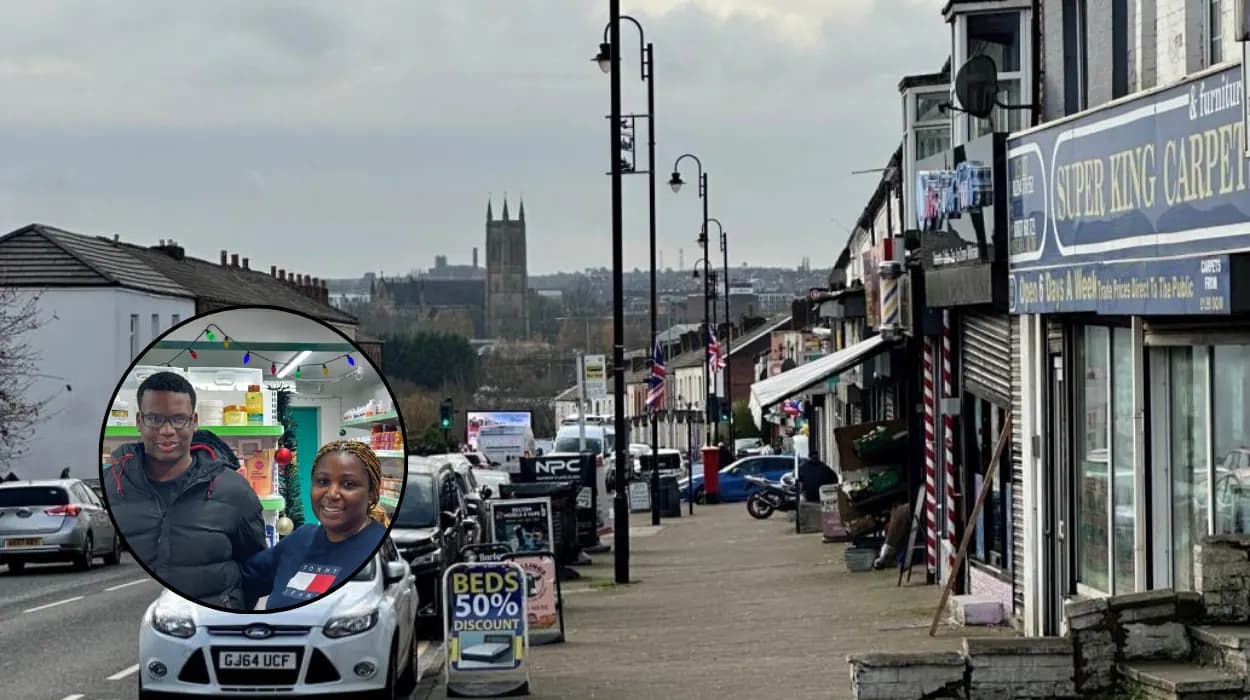
Key Points:
- Tonge Moor Road in Bolton is seeing a renaissance, emerging as a hub of new independent shops, cafés, and community spaces.
- Local business owners report rising footfall and a stronger sense of community spirit in the area.
- The regeneration follows years of decline for many town‑centre streets post‑pandemic.
- Bolton Council supports the changes through local‑business promotion, reduced‑rate rents, and urban‑improvement initiatives.
- New businesses range from artisan bakeries and barbers to global‑flavour eateries and boutique retailers.
- Residents describe Tonge Moor as “Bolton’s newest community hub” and a “local success story”.
- National media outlets highlight the street as an example of post‑pandemic entrepreneurial revival in North‑West England.
What makes Tonge Moor the new hotspot for independent businesses?
As reported by Adam Maidment of the Manchester Evening News in his recent feature, Tonge Moor has become “one of Bolton’s most promising new business districts”. He noted that many locals now prefer to “shop locally rather than head into central Bolton or large shopping centres”.
Entrepreneurial energy drives this revival. From vintage clothing outlets to eco‑friendly homeware stores, the range of new ventures gives the area its distinct personality. According to MEN’s coverage, one local resident, identified as Julie, remarked that
“it’s heart‑warming to see life on the High Street again—Tonge Moor is becoming our own little Northern Quarter”.
The surge began around late 2023, when several young business owners sought more affordable spaces away from Bolton’s core retail zones. Rent prices in Tonge Moor were roughly 30 to 40 per cent cheaper than comparable town‑centre spots, making it an attractive base for start‑ups and small traders.
How is community spirit shaping the revival of Tonge Moor?
In a report by Tom Molloy for The Bolton News, shopkeepers said community cooperation was key to their success.
“We support each other—it’s not competition, it’s collaboration,”
said Leanne Brown, owner of Bloom Café Bolton, one of the area’s popular brunch venues.
Local partnership projects and weekend artisan markets have also strengthened bonds between traders and residents. The Bolton News quoted Mark Williams, a barber and long‑time local, saying that
“customers enjoy the personal touch again—something missing in big retail parks”.
Social‑media groups on Facebook and Instagram, run by local traders, showcase Tonge Moor’s offerings and share customer stories. The digital presence has been crucial in attracting footfall from across Greater Manchester and even nearby Bury.
What role has Bolton Council played in Tonge Moor’s transformation?
As covered by BBC North West earlier this year, Bolton Council launched a targeted “Neighbourhood Retail Growth” strategy in response to declining high‑street figures post‑COVID‑19. The council offered small‑business grants of up to £10,000, assistance in refurbishing shopfronts, and training for digital marketing.
In an interview cited by BBC journalist Phil McCann, Councillor Richard Silvester, cabinet member for economic development, said:
“We recognised that neighbourhood high streets like Tonge Moor could hold the future for Bolton’s retail scene. Smaller, local shopping areas keep money circulating in the community.”
The plan’s success appears tangible—footfall monitoring data from mid‑2025 shows a 28% rise in visitors compared with pre‑pandemic levels.
Why are independent traders thriving where big chains once failed?
As analysed by Rochelle Barrand of Lancashire Telegraph, the success of Tonge Moor reflects a national shift towards localism. Shoppers, she wrote,
“are increasingly valuing authenticity, craftsmanship, and local identity over mass‑market convenience”.
This pattern mirrors broader retail trends following the pandemic, where smaller, flexible businesses adapt more quickly than national chains tied to complex leases. Many traders in Tonge Moor cite lower overheads and the freedom to personalise services as decisive advantages.
Sarah Ashworth, founder of The Copper Kettle, told the Telegraph:
“We can talk to our customers directly, change menus weekly, and create spaces they want to return to. That’s how community thrives—through relationships, not transactions.”
Could Tonge Moor become a model for Bolton’s wider regeneration?
Urban‑development experts believe Tonge Moor’s rise may offer lessons for other struggling high streets in the North‑West. In commentary featured by The Guardian’s North of England Correspondent, Josh Halliday, planning consultant Dr. Emma Newton said such neighbourhood revivals
“demonstrate that regeneration doesn’t always start with major infrastructure projects—it begins with people investing in streets they care about”.
The Guardian report highlighted that Bolton has been experimenting with decentralised retail planning—focusing resources not only on the central precinct but also on local corridors, including Halliwell Road and Great Lever. Tonge Moor’s spontaneous renewal fits well into that framework.
What challenges remain for sustaining growth in Tonge Moor?
Despite optimism, business owners and analysts recognise potential challenges. In commentary by ITV Granada Reports, reporter Mel Barham underscored the ongoing cost‑of‑living pressures impacting customers and small traders alike. Rising energy bills and supplier costs continue to threaten profit margins.
Barham quoted “Khalid Patel”, owner of Taste of Bombay, stating:
“We’re thriving, yes, but overheads are still tough. Without council help and community backing, some newer businesses might not survive another tough winter.”
While parking and accessibility improvements have been proposed, residents also call for better lighting and safer pedestrian crossings. Bolton Council told ITV News that a series of public‑space upgrades is in planning for early 2026.
How do residents feel about the High Street’s transformation?
Locals overwhelmingly view the revival positively. In vox‑pop interviews conducted by The Bolton News, residents described Tonge Moor as “cosy, creative, and community‑driven”. One shopper, identified as Elaine Turner, said,
“We meet our friends here now—it’s become a social place, not just a shopping street.”
However, long‑term residents caution against over‑commercialisation.
“We love the new cafés and boutiques,”
noted Mike Hill, a local pensioner quoted by MEN,
“but we also need essential services like pharmacies and post offices to stay—balance is key.”
What does the future hold for Tonge Moor?
According to projections in Bolton Council’s 2025 Business Outlook report, Tonge Moor is expected to see continuous small‑business growth of around 12% annually through 2027. Plans for a weekend street‑market expansion and seasonal events like Tonge Moor Winter Lights are in discussion.
Councillor Martin Cox, leader of the council, told The Bolton News:
“Tonge Moor represents the best of Bolton’s entrepreneurial spirit. It’s a blueprint for what’s possible when local people, businesses, and public authorities work together.”
Local schools and colleges are also collaborating with businesses for apprenticeships and creative workshops, fostering the next generation of entrepreneurs.
Why does Tonge Moor’s success matter beyond Bolton?
Tonge Moor’s evolution resonates with national conversations about reinvigorating the British High Street. Analysts from the Centre for Local Economic Strategies (CLES) suggest such neighbourhood‑based regeneration could inform regional policy across the UK.
In its report highlighted by The Guardian, CLES noted that “micro‑regeneration”—through targeted local support—often generates higher long‑term employment and civic engagement than large retail complexes. Tonge Moor, in that sense, exemplifies “a 21st‑century model of local economic resilience”.