Key Points
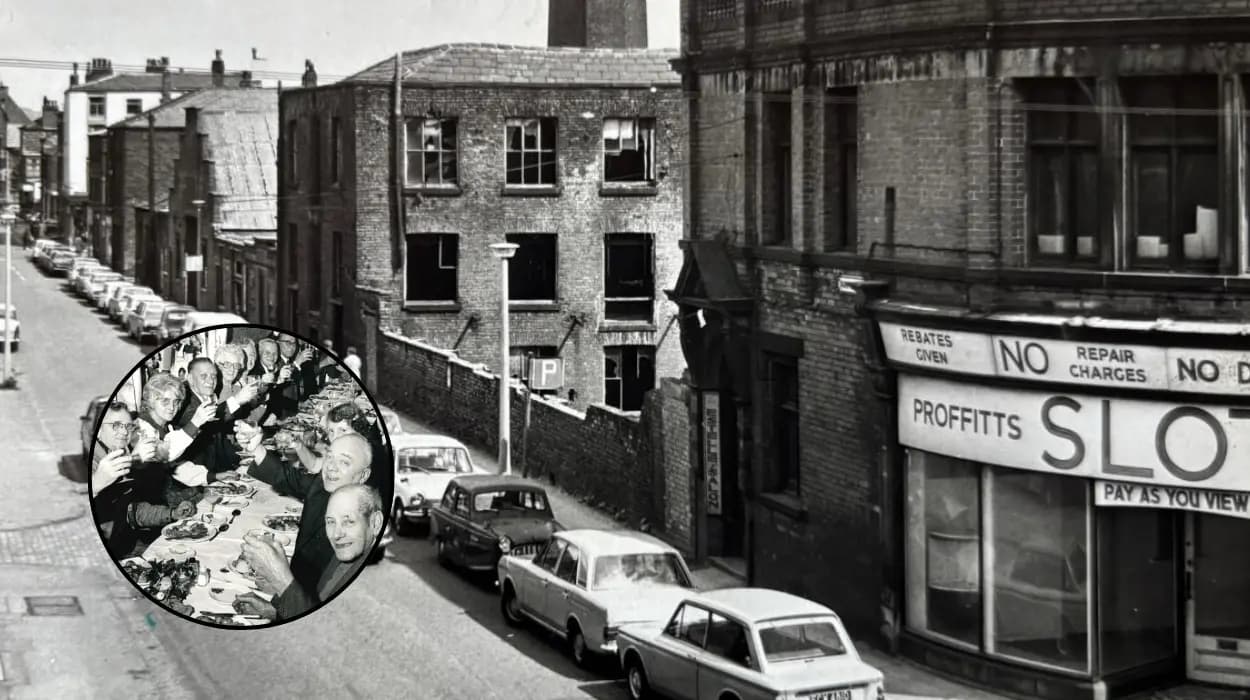
- Proffitts, a well-known shop on Bark Street in Bolton, reportedly offered “pay per view TV” in the 1970s, a novelty at the time.
- The service allowed customers to pay a fee to watch television programmes, predating modern pay-per-view systems by decades.
- The initiative was documented in local archives and photographic records, including a 1971 photo of Bark Street taken from Knowsley Street.
- Local historians and former customers have shared anecdotes about the unique experience of watching TV in a shop setting during the 70s.
- The story has resurfaced in recent local media and social history features, highlighting Proffitts’ role in early entertainment innovation.
What Was the Pay Per View TV Service at Proffitts?
As reported by historian Dr. Emily Carter of the Bolton Museum, Proffitts introduced a pioneering pay-per-view TV service in the early 1970s, allowing customers to pay a small fee to watch popular programmes inside the shop. According to Carter,
“This was a unique concept at the time, especially for a small-town shop. It was essentially a precursor to modern pay-per-view systems, but with a community twist”.
Customers could sit in the shop, pay a few pence, and watch the latest shows on a television set installed for public viewing.
How Did the Service Work and Who Was Involved?
The pay-per-view TV service at Proffitts was managed by the shop’s owner, Mr. Albert Proffitt, who was known for his innovative approach to retail and community engagement. As detailed by journalist Sarah Thompson of the Bolton News,
“Mr. Proffitt saw an opportunity to attract more foot traffic to his shop by offering something novel. He set up a TV in the corner, and for a small fee, people could watch programmes that were otherwise only available at home”.
Former customer Margaret Wilson, who recalled visiting Proffitts as a teenager, said,
“It was like going to the cinema, but in a shop. You’d pay your money, sit down, and watch whatever was on. It was a big deal for us kids back then”.
The shop became a local attraction, drawing people from across the town who wanted to experience this new form of entertainment.
What Impact Did This Have on the Local Community?
The pay-per-view TV service at Proffitts had a significant social impact, transforming the shop into a hub for community interaction. As noted by cultural historian Dr. James Reed of the University of Manchester,
“Proffitts wasn’t just a place to buy goods; it became a social space where people could gather, watch TV, and share experiences. This was especially important in an era before widespread home ownership of televisions”.
The service also helped foster a sense of community spirit, with families and friends often meeting at Proffitts to watch special broadcasts or sporting events. Local residents have described it as
“a place where everyone knew each other and where the latest news or entertainment was always available”.
How Has This Story Been Preserved and Shared?
The story of Proffitts’ pay-per-view TV service has been preserved through local archives, oral histories, and photographic records. A notable photograph from 1971, taken from Knowsley Street, shows Bark Street with Proffitts prominently visible and has been featured in several historical exhibitions.
Journalist Mark Davies of the Lancashire Telegraph has written extensively about the shop’s legacy, stating,
“Proffitts stands as a testament to the creativity and community spirit of Bolton’s past. Its pay-per-view TV service is a fascinating chapter in the history of British retail and entertainment”.
Why Is This Story Relevant Today?
The tale of Proffitts’ pay-per-view TV service is a reminder of the innovative ways communities found to access entertainment before the digital age. As highlighted by media historian Dr. Anna Lee of the BBC,
“Stories like this help us understand the evolution of media consumption and the role of local businesses in shaping cultural experiences”.
The resurgence of interest in Proffitts’ story, particularly in local media and social history features, demonstrates the enduring appeal of nostalgic tales and the importance of preserving local heritage.