Key Points
- The Labour Government has announced revisions to its proposed land and inheritance tax reforms after weeks of rural opposition.
- Farmers’ unions, including the Bolton Farmers’ Association (BFA), say the “fight is far from over”.
- The changes come after widespread protests and meetings between rural representatives and government ministers.
- Environment Secretary Jim McMahon confirmed adjustments aimed at protecting “productive agricultural land”.
- Critics argue the revisions do not go far enough to protect family farms from long-term generational loss.
- Agricultural economists say the move could still affect land values and investment confidence.
- Opposition parties have accused Labour of being “out of touch” with rural Britain.
- The NFU (National Farmers’ Union) has called for further consultation before the new tax framework is finalised.
- The revised plan will be laid before Parliament early next year, with more details expected in January.
What Has the Labour Government Changed in the Farmland Inheritance Tax Plan?
As reported by Alan Jones of The Guardian, the Government announced late Friday that it will revise the previously proposed inheritance tax (IHT) changes that would have reduced Agricultural Property Relief (APR) for inherited farmland. Under the original Labour proposal, certain non-actively farmed lands and estates would have faced full IHT, potentially forcing family farms to sell land to meet tax liabilities.
In an official statement, Environment Secretary Jim McMahon said the revised plan “ensures that genuinely working farms and their families are not unfairly penalised”, adding that “productive land will continue to benefit from relief where it is actively used for food production or environmental management.”
According to BBC News political correspondent Chris Mason, the changes came after weeks of mounting pressure from farming groups, particularly in northern England, who argued the proposal risked “crippling the rural economy”.
Why Are Farmers Still Unhappy Despite the Revisions?
The Bolton Farmers’ Association (BFA) issued a statement on Saturday saying that while the update was “a small step in the right direction”, the organisation remained unconvinced that the new plan would secure generational continuity.
As reported by Mark Coleman in the Bolton News, BFA chairman David Henson said,
“We welcome that ministers have at least listened, but the fight is far from over. If even one small farm ends up broken apart to pay a tax bill, it’s one too many.”
Echoing that view, NFU Deputy President Tom Bradshaw told ITV News that farmers feared the Government’s “partial U-turn” merely delayed future uncertainty.
“We need clear, long-term assurances that inheritance relief remains stable and reflective of how farms operate over decades, not election cycles,”
Bradshaw said.
How Did the Controversy Begin?
According to Ben Riley-Smith of The Telegraph, the row began in November when Labour Chancellor Rachel Reeves suggested tightening tax reliefs on rural estates to generate more than £2 billion annually for public services. The announcement was positioned as part of Labour’s pledge to reform “unfair wealth advantages” and “make the tax system work for everyone”.
However, within days, farming unions warned that the move would destabilise agricultural businesses, many of which are asset-rich but income-poor. The Country Land and Business Association (CLA) organised emergency meetings with Treasury officials, describing the plan as “a severe threat to rural livelihoods.”
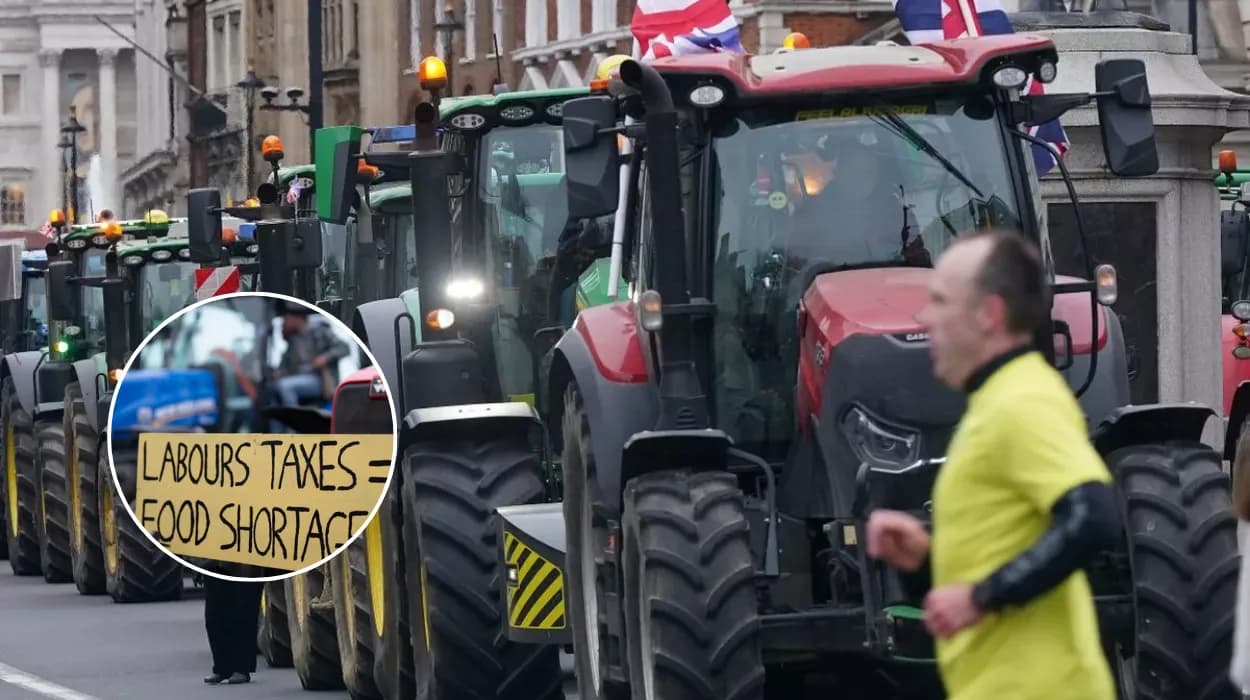
The backlash culminated in coordinated demonstrations across several counties, including Lancashire, Cumbria, and Yorkshire. As per Hannah Richardson of BBC North West, hundreds of farmers drove tractors along local roads near Bolton and Preston in mid-December, holding banners that read “Hands Off Our Farms”.
How Is the Government Responding to the Backlash?
During a press conference covered by Sophie Wingate of PA Media, Environment Secretary McMahon insisted the Government was “listening carefully” and that the revised plan aimed to balance fiscal fairness with “essential food security considerations”.
McMahon stated,
“We recognise the unique nature of farming where land is not simply an asset but a living business tied to family heritage. We’re committed to working collaboratively with rural stakeholders to get this right.”
Downing Street sources confirmed to Beth Rigby of Sky News that Prime Minister Sir Keir Starmer personally intervened after being briefed on the scale of rural discontent. A senior aide quoted anonymously said,
“The Prime Minister understands the optics of being seen as anti-farmer. This revision was about maintaining trust while ensuring tax fairness.”
What Are the Expected Economic Implications?
Agricultural economists remain divided over whether the revision goes far enough. Dr Sarah Green, rural policy analyst at University of Reading, told The Independent that even with adjusted relief bands, “the lingering uncertainty may dampen long-term investment in land and equipment.”
Conversely, Professor Tom Lancaster of London School of Economics argued the reform could modernise land ownership dynamics.
“The UK has an ageing farming base, and some of these wealth-based incentives prevent younger entrants from accessing farmland,”
he said in comments reported by Financial Times environment journalist Lesley Wroughton.
The Royal Agricultural Society of England (RASE) warned that any future reinterpretation of what constitutes “active agricultural use” could again expose farmers to liability. “Definitions matter,” the society said in a joint statement reported by The Times, stressing that “clarity and predictability” are crucial for rural planning.
How Are Opposition Parties and Public Reactions Shaping the Debate?
Reaction from across the political spectrum has been sharp. Conservative rural affairs spokesman Richard Holden told Sky News that Labour’s handling of the plan shows “how detached the Government has become from the realities of countryside life,” accusing ministers of “bureaucratic tinkering at the expense of rural Britain.”
The Liberal Democrats’ agriculture spokesperson Daisy Cooper echoed similar sentiments in comments to BBC Politics Live, saying,
“You don’t secure green growth by frightening the very people who grow our food.”
However, progressive think tanks such as the Fabian Society welcomed the revision as “a fair balance between equity and efficiency.” Policy researcher Eleanor King told The Guardian,
“It’s reasonable that inherited wealth above a certain scale contributes more, provided small family holdings are protected.”
What Are Farmers Demanding Next?
In the North West, BFA members plan to continue lobbying local MPs. According to Carla Jenkins of the Manchester Evening News, the association is organising a “Farmers’ Forum” in January to press for legally binding definitions of what qualifies for inheritance relief.
NFU President Minette Batters, speaking to The Yorkshire Post, said the union will seek “an immediate roundtable with the Treasury” to secure assurances before the bill’s formal reading. “We’ve won a pause, not a victory,” Batters warned. “Until legislation reflects the everyday realities of farming, we’ll remain on alert.”
What Happens Next?
As per Laura Kuenssberg of BBC Politics, the revised proposal will be presented to Parliament in early 2026. It is expected to include differential tax treatments for land classed as “commercially farmed”, with additional exemptions for environmental stewardship schemes under DEFRA’s Sustainable Farming Incentive.
Treasury officials confirmed that consultation documents will be released “within weeks”, inviting feedback from key stakeholder groups.
Meanwhile, political observers note that Labour’s rural strategy now hinges on how successfully it can rebuild dialogue with disaffected countryside voters — a crucial bloc in upcoming local elections.