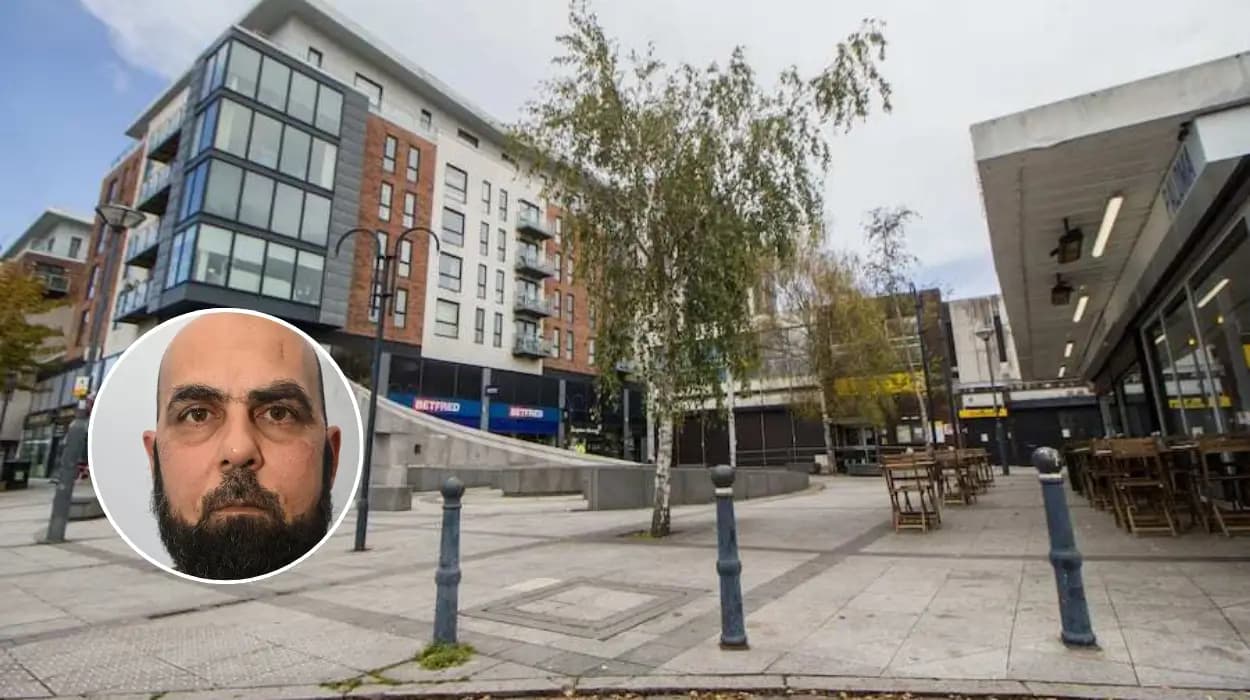
Key Points
- Two men, Walid Saadaoui and Amar Hussein, have been found guilty of planning an Islamic State-inspired terrorist attack.
- The pair plotted a mass shooting targeting Jewish people in Prestwich and North Manchester.
- Their plan was uncovered after they inadvertently revealed it to an undercover operative, codenamed “Farouk”.
- The trial at Preston Crown Court revealed their intent to import AK-47 rifles, handguns and 900 rounds of ammunition.
- Saadaoui idolised Abdelhamid Abaaoud, the mastermind of the 2015 Paris terrorist attacks.
- Counter Terrorism Police North West (CTPNW) coordinated a major raid on May 8 last year, arresting both men.
- The foiled plot was hailed by police as potentially one of Britain’s deadliest terrorist incidents.
- The court found both men guilty of conspiracy to possess firearms with intent to endanger life and preparation of terrorist acts.
Who were the men behind the Bolton terror plot?
Two men, Walid Saadaoui, 38, originally from Tunisia, and Amar Hussein, 52, from Great Lever, were convicted of plotting a mass gun attack inspired by Islamic State (IS) after a meticulous counter-terrorism operation brought their plans to light.
As reported by Chris Slater of the Manchester Evening News (MEN), the pair were found guilty following a lengthy trial at Preston Crown Court, where jurors described the evidence against them as “overwhelming”. The men had nurtured what the prosecution called a “visceral hatred” towards Jewish people, which formed the ideological backbone of their plan.
According to BBC News, Saadaoui, a father of two, was considered the leader and instigator of the conspiracy, operating under the belief that he was coordinating the importation of weapons through extremist networks in Eastern Europe.
How did the plot unravel?
As detailed by John Scheerhout of the Manchester Evening News, the case began when counter-terrorism officers in the North West intercepted communication between Saadaoui and an individual he believed to be a fellow jihadist. That individual, however, was an undercover officer, known in court only by the codename “Farouk”.
According to the Crown Prosecution Service (CPS), Saadaoui approached “Farouk” to assist in smuggling four AK-47 assault rifles, two handguns, and 900 rounds of ammunition into the United Kingdom. He had already paid a deposit for the weapons and was due to collect them on 8 May last year at the Last Drop Hotel car park in Bromley Cross, Bolton.
Unbeknownst to him, the weapons he came to collect had already been seized and replaced by police with deactivated firearms. More than 200 armed officers took part in the operation, which saw Saadaoui arrested as he attempted to access the unloaded weapons.
As reported by Sky News correspondent David Mercer, Amar Hussein was arrested the same day on Grecian Crescent, Great Lever, following surveillance that linked him directly to discussions about potential targets and ideological justifications for the mass shooting.
What did the trial at Preston Crown Court reveal?
At Preston Crown Court, prosecutors laid out extensive evidence demonstrating the depth of the conspiracy. As reported by BBC North West, Saadaoui’s communications with the undercover officer revealed his admiration for Abdelhamid Abaaoud, the Islamic State terrorist responsible for the 2015 Paris attacks, which killed 130 people.
According to ITV News reporter Mel Barham, Saadaoui told “Farouk” he wanted to “do something spectacular” on UK soil and expressed a desire to die as a martyr. During one exchange, he suggested that an antisemitism march could be a suitable starting point before targeting Jewish neighbourhoods in North Manchester and Prestwich.
The prosecution, led by Joanne Jakymec for the CPS, said the plan had the “potential to cause untold harm”, describing it as one of the most significant terrorist threats the North West had faced in years.
“Had their plan succeeded, lives would undoubtedly have been lost on a horrific scale,”
she told the court.
What role did counter-terrorism police play?
As detailed by Counter Terrorism Policing North West (CTPNW) and reported by The Telegraph’s Martin Evans, the investigation was a complex, months-long surveillance operation. Officers tracked Saadaoui’s movements, intercepted his online communications, and monitored purchases such as an air weapon and shooting range visits, which prosecutors later argued were part of his preparation.
Detective Chief Superintendent Mark Kameen, head of CTPNW, stated after the verdict:
“This was a plot of chilling ambition. The work of our officers, alongside intelligence partners, ensured that what could have been a catastrophic attack never left the planning stages.”
He added that the case underscored the importance of intelligence-led policing, crediting undercover efforts as “instrumental in safeguarding countless lives.”
How did the undercover operation expose the conspiracy?
The undercover operative “Farouk,” whose true identity was protected, played a central role in uncovering the extent of Saadaoui’s plan. As reported by The Guardian’s Vikram Dodd, the operation was designed to confirm whether Saadaoui had access to genuine firearms supply routes or was acting on bravado.
Recorded conversations presented to the jury revealed that Saadaoui spoke at length about weaponry, logistics, and the ideological justification for his intended attack. At one point, he discussed “smuggling routes from Sweden” and possibilities of acquiring guns from Eastern Europe, according to BBC court correspondent Judith Moritz.
The operation culminated when Saadaoui agreed to meet “Farouk” to collect the supposed cache of weapons. The arrest team moved in moments after Saadaoui opened the boot of what he believed was a consignment of assault rifles.
What was said by the prosecution and defence?
In court, prosecutor Paul Greaney KC described the men’s beliefs as “twisted and deeply rooted in radical hatred”, asserting that both were motivated by extremist ideology and antisemitic rhetoric rather than any political grievance.
According to coverage by The Guardian, defence counsel argued that Saadaoui had been “all talk” and that the plan was “fantastical,” suggesting he lacked the means or competency to execute such an operation. However, jurors dismissed this claim after hearing weeks of evidence, including voice messages, encrypted texts, and surveillance footage that demonstrated his detailed preparations.
Hussein’s defence team maintained that he was “merely a listener who did not share the same level of intent.” Yet prosecutors pointed to his active communication with Saadaoui about target areas, ammunition, and timing, arguing he was a “willing co-conspirator.”
What have officials said following the verdict?
Following the convictions, Assistant Commissioner Matt Jukes of the Metropolitan Police’s Counter Terrorism Command praised the operation as an example of “tireless cooperation across agencies.”
“Today’s guilty verdicts are a testament to the dedication and skill of our officers who acted before any harm could come to the public,”
Jukes said in a statement reported by Reuters journalist Andrew MacAskill.
Home Secretary James Cleverly, speaking to The Telegraph, commended CT Policing North West for preventing what he called “an act of pure hatred.” “This case reminds us that vigilance and intelligence sharing save lives,” he added.
What will happen to the convicted terrorists?
Both men will be sentenced at a later hearing, expected in early 2026, at Preston Crown Court. According to BBC News, they face life imprisonment given the gravity of the charges.
Prosecutors characterised their actions as a “blueprint for a mass murder,” and sentencing judge Mr Justice Goose said the court would consider “whether their ongoing risk to the public warrants a whole-life term.”
In a statement following the verdicts, Greater Manchester Police confirmed that while no direct link to active IS cells had been established, intelligence analysis suggested both men had consumed and shared large volumes of IS propaganda material, reinforcing their radicalisation online.
How did the public and community leaders react?
Leaders of the Jewish Representative Council of Greater Manchester and Region issued a statement, cited by The Times reporter David Brown, thanking law enforcement for “their swift action and professionalism.” They reiterated the importance of community vigilance in the face of extremist threats.
“The verdicts today bring relief, but also a reminder that hatred can manifest close to home,”
said council chair Marc Levy.
Civil society groups, including Tell MAMA, which monitors anti-Muslim hate, also condemned the plot, emphasising that “extremism of any kind seeks to divide communities that must remain united in the face of hate,” according to a statement published in The Independent.
What lessons can be drawn from the case?
The case underscores both the ongoing threat posed by lone or small-group extremists and the vital role of undercover operations in preventing attacks before they materialise.
As noted by BBC security correspondent Frank Gardner, the plot highlights the shift towards self-initiated terrorism, where individuals radicalised online seek inspiration from past atrocities rather than direct organisational control.
Experts from King’s College London’s International Centre for the Study of Radicalisation (ICSR) suggested that the case demonstrated the enduring psychological reach of IS propaganda, even after years of territorial defeat.
“The admiration expressed for figures like Abaaoud signals that the ideological pull of IS remains potent among certain disaffected individuals,”
said Dr Elizabeth Pearson, senior lecturer in criminology at ICSR.
What’s next in the investigation?
Police investigations are continuing into potential associates of the convicted men, though as of now, no additional arrests have been made. A Prevent review is expected to examine how early interventions could better identify individuals exhibiting radicalisation signs.
Authorities have reiterated that the public remains the “eyes and ears” of counter-terrorism efforts. A spokesperson for CTPNW urged members of the public to report suspicious activity immediately, underscoring that “early intelligence can save lives.”