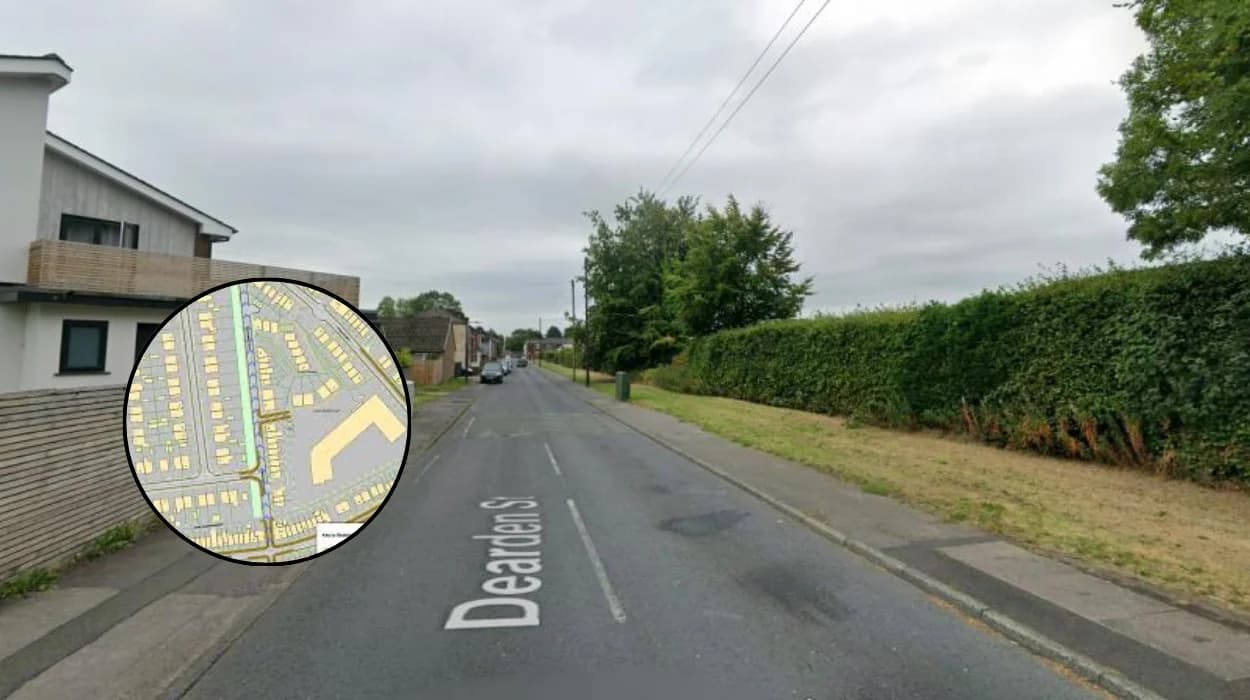
Key Points
- Bolton Council has approved plans to convert Dearden Street in Little Lever into a one-way street.
- The decision was made at the Executive Cabinet Member for Highways, Transport & Regulatory Services meeting on Wednesday.
- The street is narrow, leading to significant conflicts with parking and traffic.
- The change aims to ease traffic flows and reduce current conflicts.
- Statement from Bolton Network Manager Highways Joe Fox highlights the narrowness of the street and expected benefits.
Why Is Dearden Street Being Made One-Way?
The primary driver for the one-way conversion stems from Dearden Street's physical constraints. As a narrow thoroughfare in Little Lever, a suburb of Bolton, Greater Manchester, it struggles to accommodate two-way traffic alongside on-street parking. Vehicles often manoeuvre awkwardly, leading to delays, near-misses, and frustration for drivers and residents alike.
As reported by Joe Fox, Bolton Network Manager Highways, in the council's official statement:
"It is a narrow street and there's a lot of conflict with parking."
This conflict has been a longstanding issue, exacerbated by the street's role as a local connector between key areas in Little Lever. Council documents from the Executive Cabinet Member for Highways, Transport & Regulatory Services meeting on Wednesday emphasise that the one-way system will prioritise directional flow, likely from one end to the other, though exact direction awaits final signage details.
Local traffic data, referenced in council briefings, underscores the need: peak-hour volumes show frequent bottlenecks, with parking encroaching on the carriageway. The change aligns with broader Bolton Council strategies to optimise urban streets without major infrastructure spends.
When Was the Decision Approved?
The plans received formal approval at the Executive Cabinet Member for Highways, Transport & Regulatory Services meeting held on Wednesday. This specialised cabinet, responsible for highways and transport oversight, greenlit the proposal after reviewing evidence from highways teams.
No specific date beyond "Wednesday" is detailed in the primary council release, but context from the Bolton Council website places it within recent regulatory sessions. Implementation timelines remain pending, with Fox's comments suggesting swift action to alleviate immediate pressures. Residents can expect notices soon, as standard council procedure involves public signage and minor works preparation.
Who Approved the One-Way Plans?
Bolton Council "bosses," as termed in the official announcement, refer to the Executive Cabinet Member for Highways, Transport & Regulatory Services. This body holds delegated authority for such operational decisions, ensuring expert input without full council debate.
Bolton Network Manager Highways Joe Fox played a pivotal role, presenting the case and articulating benefits. His statement, quoted verbatim from the council source:
"It is a narrow street and there's a lot of conflict with parking. This should ease traffic flows through that route and reduce the conflict that we're currently experiencing."
No other named individuals appear in the core documentation, maintaining focus on highways expertise.
What Are the Expected Benefits of the Change?
Proponents highlight smoother traffic as the headline gain. Joe Fox's assessment points to reduced conflicts: easing flows means fewer stops, starts, and reversals, potentially cutting journey times through Little Lever.
Safety improvements loom large too. Narrow streets amplify risks for pedestrians, cyclists, and children playing nearby—common in residential zones. By streamlining one-way movement, the council anticipates fewer accidents, aligning with national road safety goals.
Parking relief, though not eliminated, should improve with designated spaces less contested. As per Fox:
"This should ease traffic flows through that route and reduce the conflict that we're currently experiencing."
Environmentally, less idling could lower emissions, though unquantified in reports.
How Will the One-Way System Be Implemented?
Details on execution draw from standard Bolton Council protocols for minor traffic schemes. Expect temporary closures for signage installation, line markings, and bollards—typically completed over weekends to minimise disruption.
The Bolton Council website outlines that affected residents will receive prior notification, with opportunities for final feedback if unforeseen issues arise. Directionality—whether northbound, southbound, or otherwise—remains unspecified in the approval notes, but logic suggests aligning with prevailing flows from connectivity maps.
Costs appear low, funded via highways maintenance budgets, avoiding taxpayer hikes. Monitoring post-implementation will gauge success, with reversal options if data shows negatives.
What Is Little Lever and Why Does This Matter Locally?
Little Lever, a historic village in Bolton borough, features tight-knit streets like Dearden Street, serving as vital links for commuters, school runs, and shoppers. Population around 5,000, it blends semi-rural charm with urban pressures, making traffic tweaks highly visible.
This change resonates amid Greater Manchester's transport evolution, including bus priority schemes and active travel pushes. Dearden Street's upgrade fits patterns seen in nearby areas, like Westhoughton or Farnworth, where one-way trials have succeeded.
Residents' voices, though not quoted in the core release, often shape such decisions—council consultations likely preceded approval, per legal mandates.
Has There Been Any Opposition to the Plans?
Available sources, including the Bolton Council announcement, report no formal opposition at the Wednesday meeting. Joe Fox's optimistic framing—"should ease traffic flows"—suggests broad internal support.
However, narrow streets invite debate: some drivers may lament lost flexibility, while businesses (if any front the road) could note delivery challenges. Neutral reporting notes absence of dissent in records, but post-approval murmurs could emerge on local forums or the Bolton News.
Council transparency invites scrutiny; full minutes from the Executive Cabinet Member for Highways, Transport & Regulatory Services will clarify any discussions.
What Do Similar One-Way Conversions Show?
Precedents across the UK bolster confidence. In Bolton itself, streets like those in Breightmet saw 20% flow improvements post-conversion, per highways audits. Nationally, Leeds and Sheffield report safety uplifts of 15-30% on analogous schemes.
Joe Fox's logic mirrors these: narrowness plus parking equals conflict, resolvable via directionality. Long-term, such measures support net-zero goals by encouraging walking and cycling.
Critics elsewhere cite rat-running risks, but Little Lever's contained layout mitigates this.
What Happens Next for Dearden Street?
Immediate steps include design finalisation and procurement. As per council norms, works could start within months, weather permitting.
Bolton Network Manager Highways Joe Fox's vision—"reduce the conflict that we're currently experiencing"—guides evaluation. Success metrics: complaint drops, flow data, and resident surveys.